
When shots were fired at two Toronto synagogues last Friday night, only the timing of the gunfire — after the buildings had emptied — prevented anyone from being hurt. Occurring not far from each other, these attacks, Jewish leaders say, reflect an alarming rise in antisemitism in the city.
At Beth Avraham Yoseph of Toronto (BAYT), the last guests from a singles dinner had left about half an hour before the shots rang out.
“The attack on our shul happened a bit before midnight,” said BAYT’s Rabbi Daniel Korobkin. “Fortunately, someone saw what had happened, and the police and members of the shul were on top of it almost immediately. No one was hurt.”
Korobkin believes the gunfire may have been carried out by the same person who shot at the nearby Shaarei Shomayim congregation in North York about 30 minutes later. Police have not confirmed a connection between the incidents or announced any arrests.
The two attacks came just days after a third synagogue was targeted with gunshots on the Purim holiday, heightening alarm in Canada’s Jewish community.
Get The Times of Israel’s Daily Edition
by email and never miss our top stories
By signing up, you agree to the terms
“What we need to do now is make sure that this doesn’t escalate,” Korobkin said. “We have to make it clear to our elected officials that the status quo is completely unacceptable.”
Some might say it’s already too late for that. Antisemitism was already on the rise in Canada before the bloody Hamas invasion of southern Israel on October 7, 2023. But since then, Canadian Jews have been targeted in a surge of incidents, including shootings and firebombings of community institutions.
Just over the past year, three men attempted to kidnap Jewish women, antisemitic graffiti was daubed on three synagogues in Nova Scotia, and a Jewish man in Montreal was beaten in front of his children. And in 2024, the community experienced 6,219 antisemitic incidents — about 17 cases of harassment, vandalism or violence per day — according to B’nai Brith Canada.
Just across the border, on Thursday, an armed suspect crashed his truck into the hallway of a Detroit-area synagogue where children were attending preschool. The attacker, identified by federal officials as a US citizen born in Lebanon, was shot dead in a confrontation with security personnel.
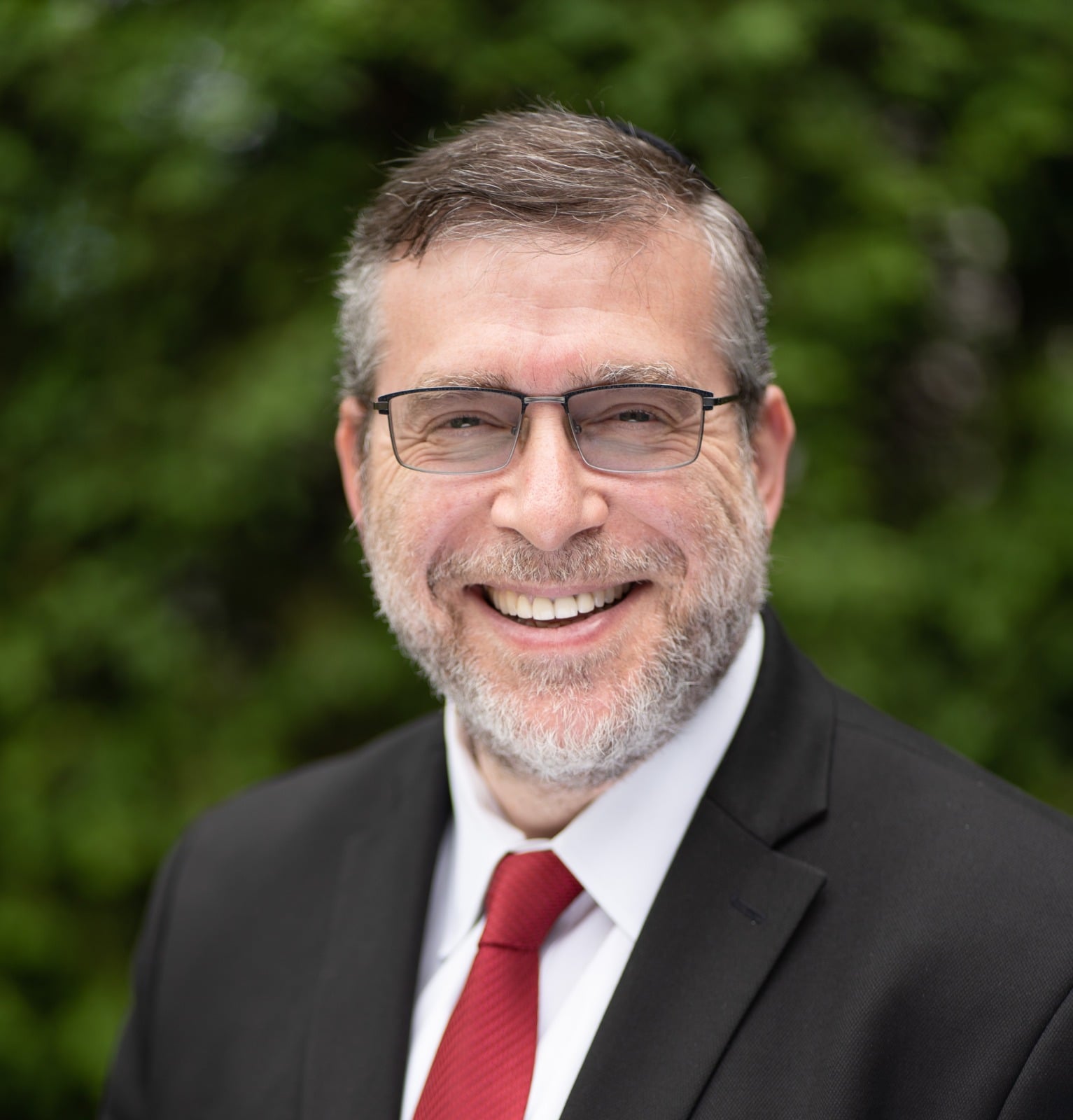
Rabbi Daniel Korobkin of the Beth Avraham Yoseph of Toronto (BAYT) synagogue (Courtesy)
Canadian community leaders worry that there will be a further escalation and more — and more serious — attacks.
After the Toronto synagogue shootings, Israeli President Isaac Herzog held an emergency Zoom call with Canadian Jewish leaders on Sunday to discuss the growing threat. Several days later, B’nai Brith Canada published a list of demands of the Canadian Government to deliver “a serious and immediate response commensurate with the gravity of the moment.” And several figures told The Times of Israel that they feel like a Bondi Beach-type terror attack is lurking right around the corner.
“Every light on the dashboard is flashing,” said Richard Marceau, senior vice president of strategic initiatives and general counsel for the Centre for Israel and Jewish Affairs (CIJA), an umbrella organization representing the country’s Jewish Federations. “It is long past time for people to realize how dangerous the situation is.”
Canadian Prime Minister Mark Carney condemned the shootings as “criminal antisemitic attacks” that are “an assault on the rights of Jewish Canadians to live and pray in safety,” and pledged federal assistance in investigating and prosecuting them.
But Jewish community leaders are calling on government officials to take stronger actions to increase security enforcement, prosecute hate crimes, and invest more resources to secure the Jewish community. They hope their demands — which they have repeated frequently — will be taken more seriously this time.
“Until now, the Jewish community here has tried to be polite and avoid making waves when we’ve confronted our political leaders about antisemitism,” Korobkin said. “That’s the Canadian ethos. But the line has been crossed, and we can no longer take this like good Canadians and comport ourselves in the same way.”
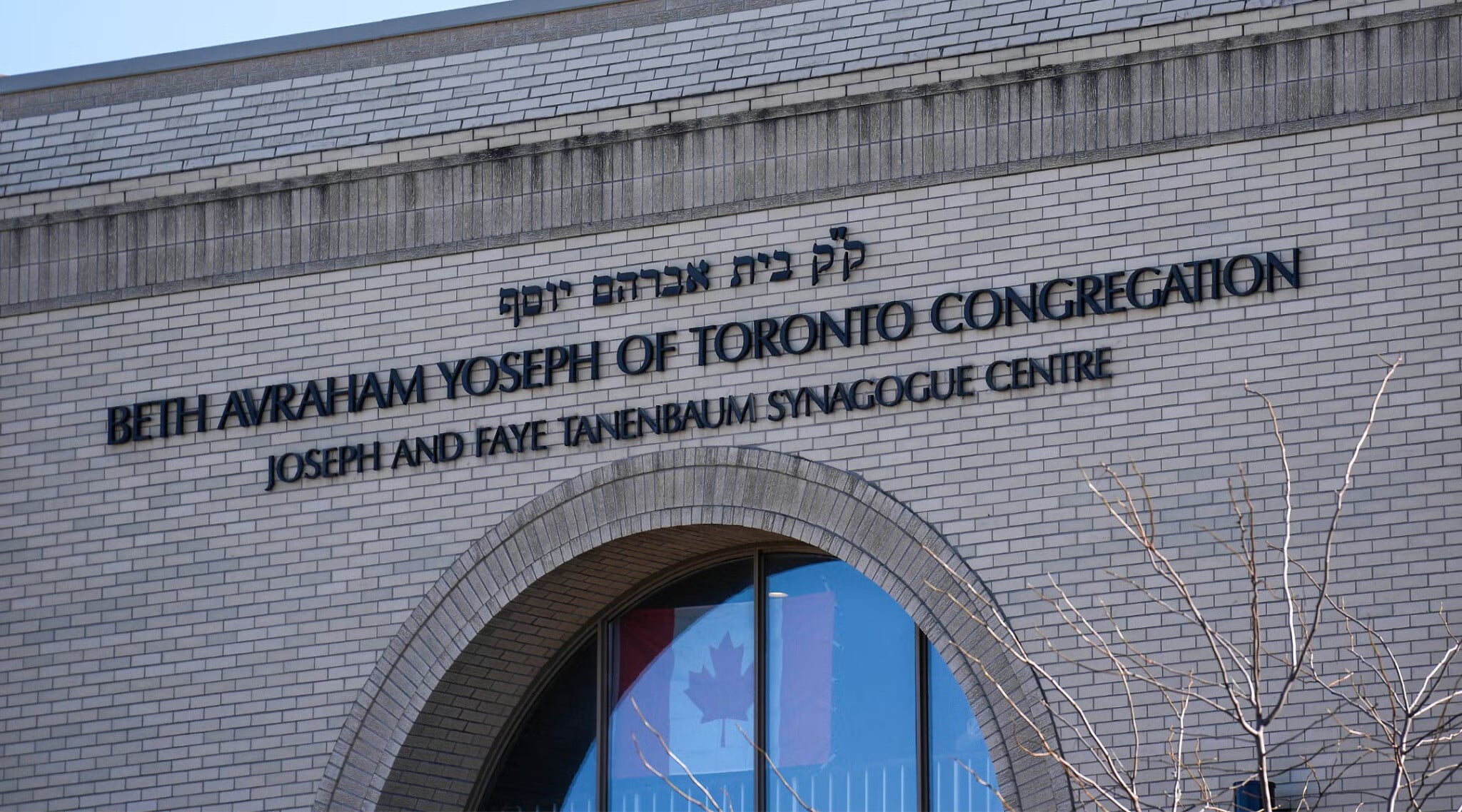
This undated photo shows the Beth Avraham Yoseph synagogue in Toronto, Canada. (Mert Alper Dervis/Anadolu via Getty Images)
Changes in society
For many Canadian Jews, the shootings at synagogues are not isolated incidents but part of a broader shift in the country’s social climate. But it’s still a wonder how they got here.
The world’s fourth-largest Jewish community, with more than 400,000 people, had seen several decades of unprecedented social acceptance and freedom from oppression since the 1980s, experiencing a golden age of safety, public visibility and upward mobility.
Prime ministers like Stephen Harper and Justin Trudeau prided themselves on their special relationships with Israel, even as the latter was often critical of Israeli policies, especially late in his term. A 2021 University of Toronto Press collection of essays entitled “No Better Home?” went so far as to suggest that Canada was the best home that Jews have ever had.
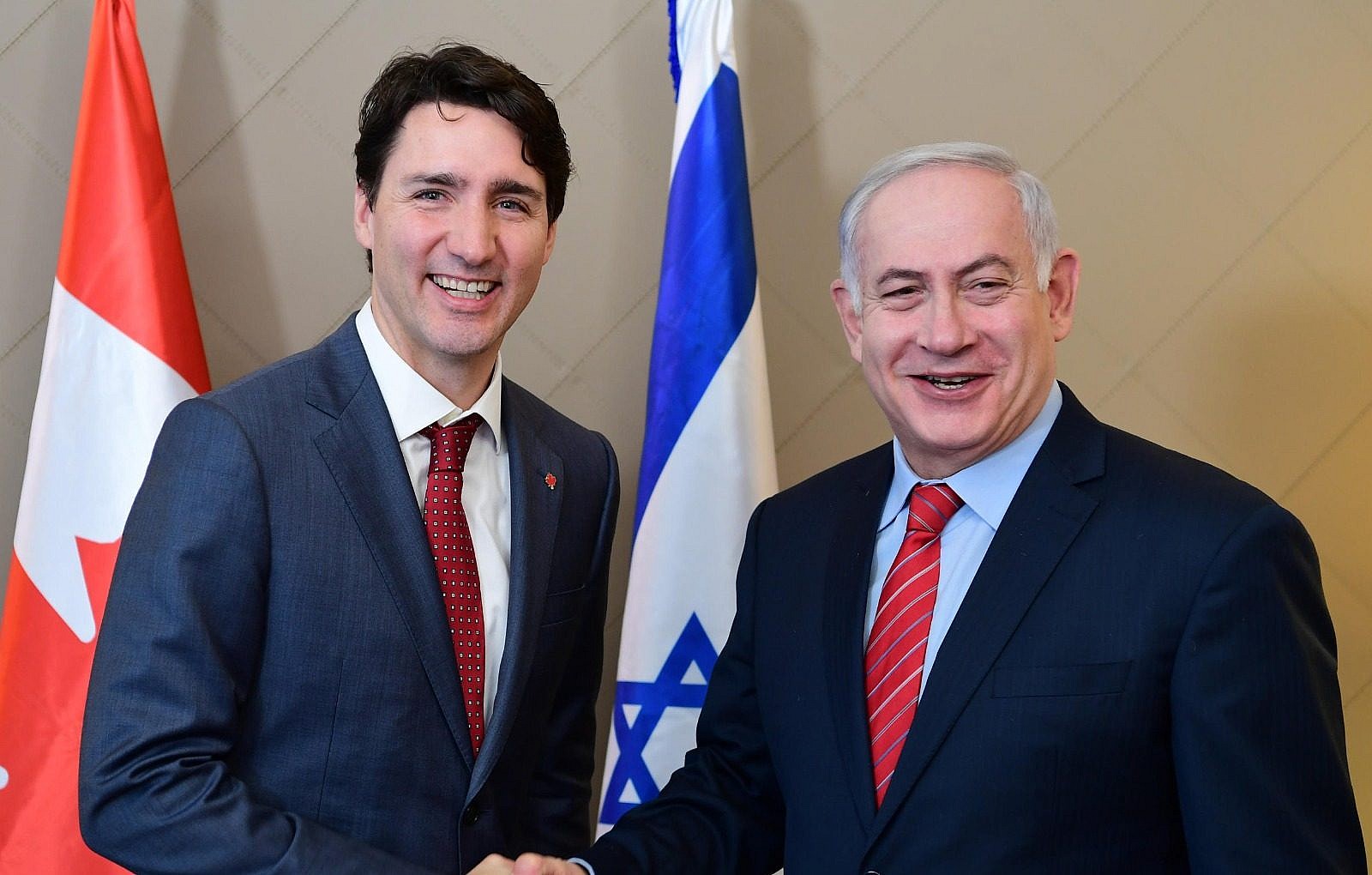
Prime Minister Benjamin Netanyahu (R) shakes hands with Canadian Prime Minister Justin Trudeau at the World Economic Forum in Davos, Switzerland on January 24, 2018. (GPOl)
But things began to shift in recent years, and accelerated with the global surge in antisemitism since the bloody Hamas invasion of southern Israel on October 7, 2023. Carney has shifted the country’s diplomatic tone regarding Israel, recognizing a Palestinian state in September and threatening to arrest Prime Minister Benjamin Netanyahu on an International Criminal Court warrant if he traveled to Canada.
Meanwhile, the country has seen synagogues firebombed, shootings at schools, people assaulted, and discrimination and hate in schools, universities and in the workplace. Jews have begun wondering openly about whether they should consider leaving the country.
A dangerous progression of hatred
The increase in overt antisemitism and violent episodes has been similar to that in Australia, which culminated in the deadly Bondi Beach attack on Hanukkah that killed 15 people and wounded dozens, according to Israel’s Canadian-born Deputy Foreign Minister Sharren Haskel, who has been closely following developments in the country.
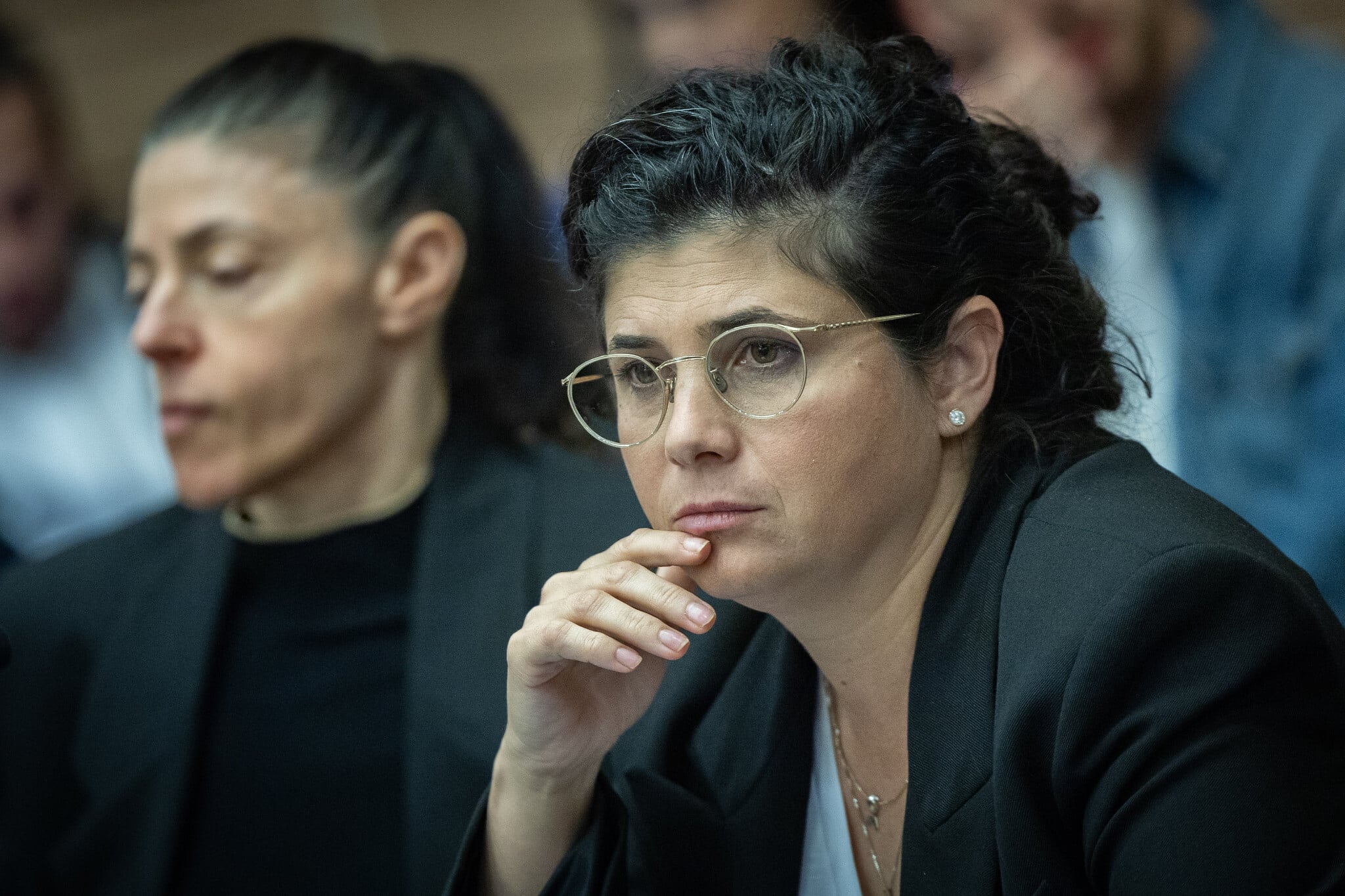
Deputy Foreign Minister MK Sharren Haskel attends a Foreign Affairs and Defense Committee meeting at the Knesset in Jerusalem, December 2, 2025. (Yonatan Sindel/Flash90)
“Over the last two years, many red lines have been crossed,” she said. “It started the day after the October 7 attack, when mobs were marching through Canadian neighborhoods, chanting and glorifying violence, and intimidating Jews.”
A lack of police deterrence created the conditions for more brazen acts of aggression to become thinkable, she said. Demonstrations outside synagogues and on university campuses gave way to attacks on Jewish-owned businesses and institutions. More than 10 shooting attacks against Canadian Jewish targets have followed, with virtually no security enforcement or consequences, Haskel said.
It’s the same pattern that has played out in Australia, where unchecked hate speech and harassment culminated in violence, Haskel added.
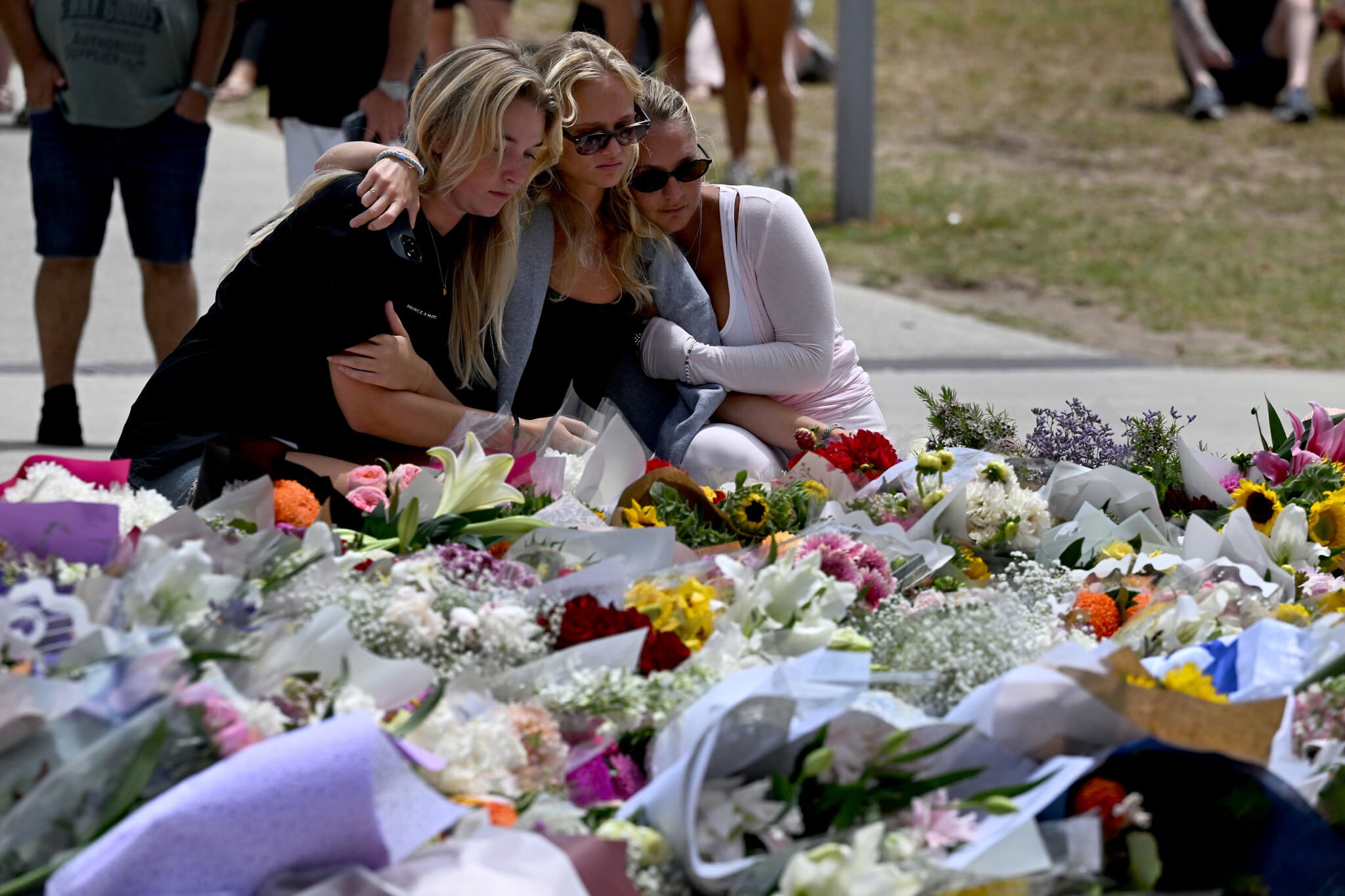
Mourners gather next to floral tributes at the Bondi Pavilion in memory of the victims of a terror attack targeting the Jewish community at Bondi Beach in Sydney on December 15, 2025. (Saeed KHAN / AFP)
“The writing is on the wall,” she said. “The next step is going to be bloodshed if there is no real action.”
Doxxing soldiers and institutions
It’s gotten to the point where former IDF soldiers are being targeted and threatened. Last year, Davide Mastracci, managing editor of left-wing news site The Maple, published a website listing Canadian citizens who had served in the IDF, including their personal information. The site insists that it is not a call for doxxing anyone, even as some of the people on the list said they felt “targeted” and compared it to historical attempts to single out Jews.
More recently, a federal petition by a member of the New Democratic Party has called on the government to investigate Canadian citizens who have served in the IDF for “serious violations of international law.” That petition has already garnered nearly 10,000 signatures.
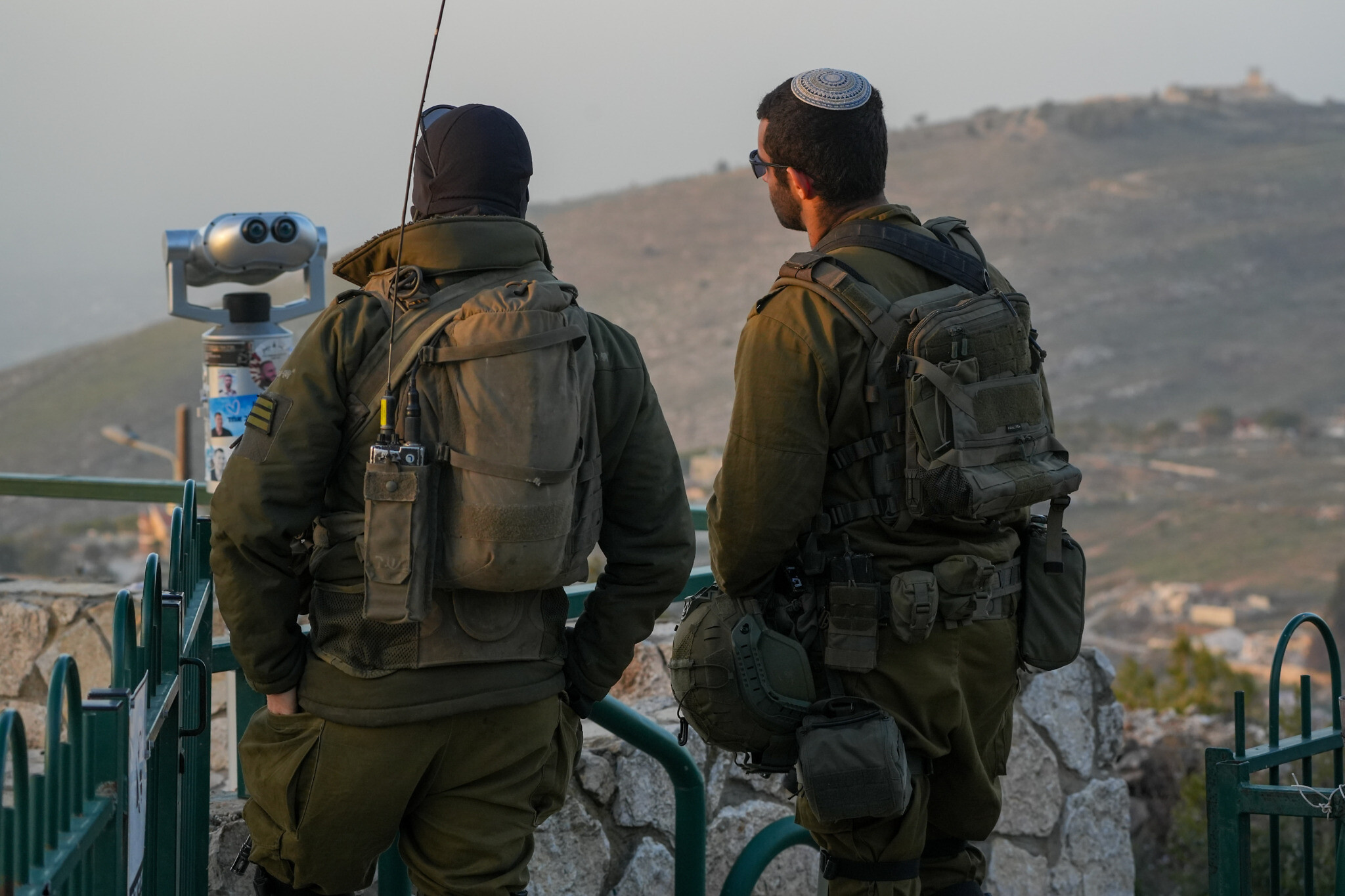
IDF soldiers observe southern Lebanon from a lookout point near the border, January 25, 2026 (Ayal Margolin/Flash90)
IDF veterans in Canada are unlikely to ever be arrested, the CIJA’s Marceau said, but such campaigns are part of a long-term effort to stigmatize those individuals and “divide and weaken Israel and the Jewish community here.”
In December, Mastracci launched a new list, highlighting Jewish institutions in the Greater Toronto Area, including schools, synagogues, and summer camps.
“This, in effect, puts a target on the back of those people and those institutions, and the people who frequent those institutions,” Marceau said. “It is unconscionable that this is happening.”
The website insists that it is merely gathering the information for public knowledge, and doesn’t encourage harassment. But both of the synagogues attacked this past weekend, BAYT and Shaarei Shomayim, were on that list, Marceau said.
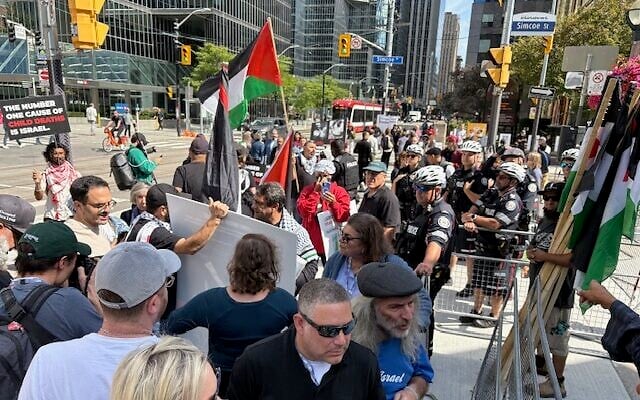
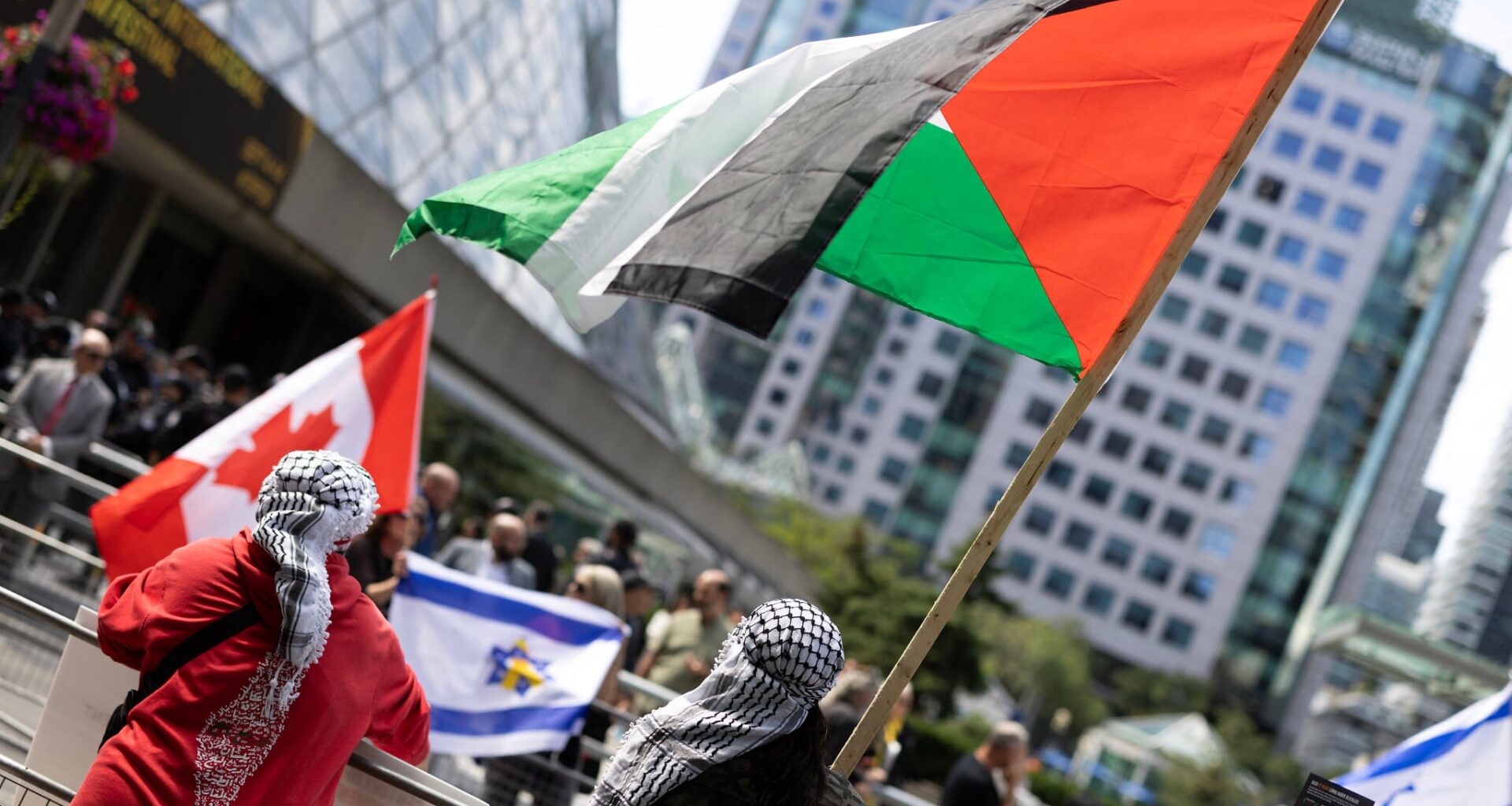
Pro-Palestinian demonstrators gather outside the Toronto International Film Festival in Canada to protest the screening of a documentary about a retired Israeli general who rescued his family from Hamas’s October 7, 2023, massacre, September 10, 2025. (Robert Rotenberg)
The country’s political echelon talks tough about fighting antisemitism domestically, but hasn’t backed it up with concrete actions, Marceau says.
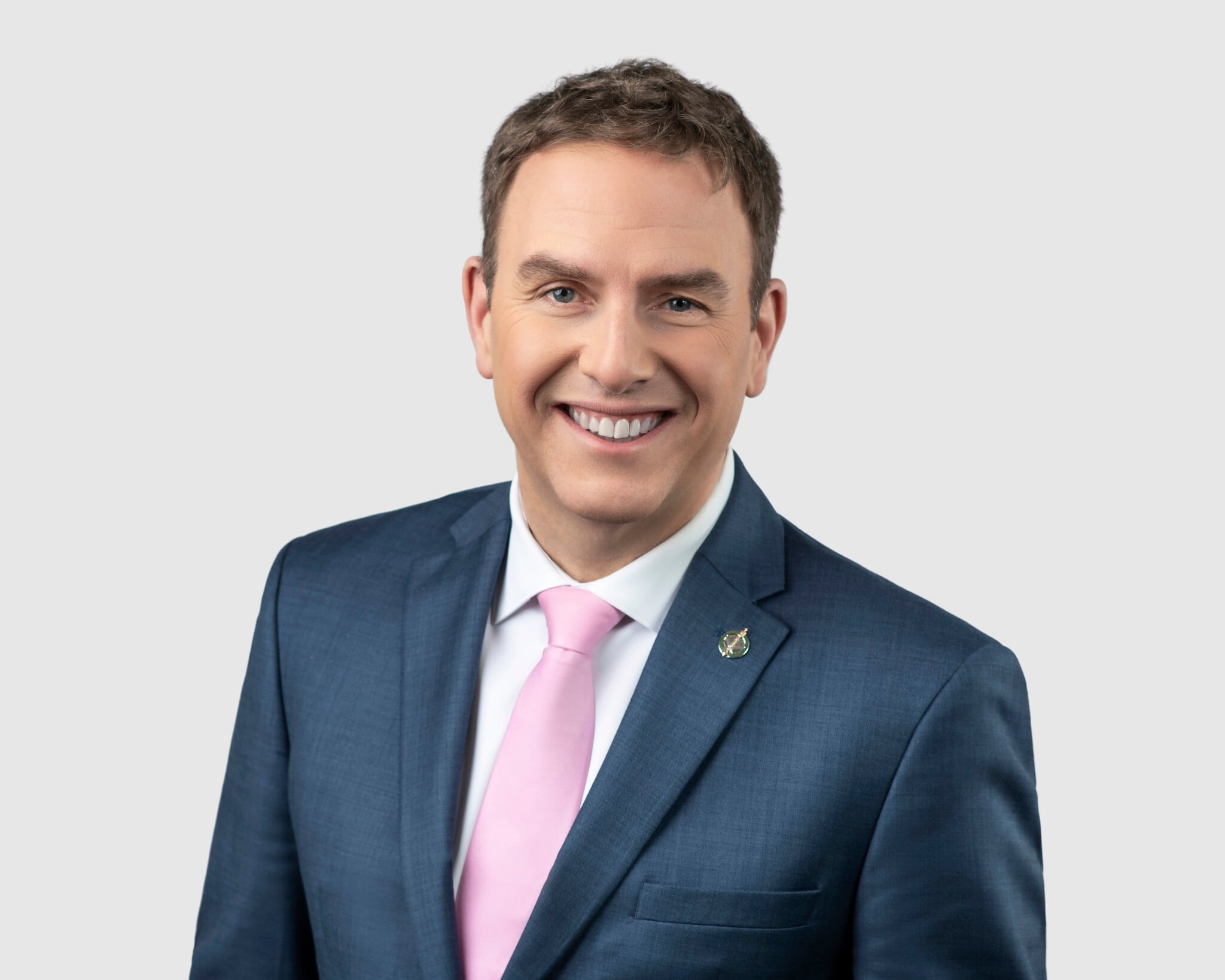
Richard Marceau, senior vice president of Strategic Initiatives and General Counsel for the Centre for Israel and Jewish Affairs (CIJA)
“We have seen a systemic failure in Canada at all levels to address rising hatred,” said Marceau. “There is a lack of resources allocated, there’s a lack of understanding of antisemitism, and there is a refusal to face the current reality.”
CIJA and B’nai Brith have a long list of things that need to change on multiple levels of government. Locally, Jewish neighborhoods and institutions need greater security, including more funding for security infrastructure, and authorities need to take a zero-tolerance approach to intimidation and hate in public spaces. Those who are apprehended must be punished to the full extent of the law to discourage others, they say.
Canadian law has a mechanism in which prosecution for certain minor crimes can be diverted outside of the formal justice system, allowing police to use their discretion to assign more lenient punishments. Hate crimes should be excluded from this track and prosecuted fully, Marceau stressed.
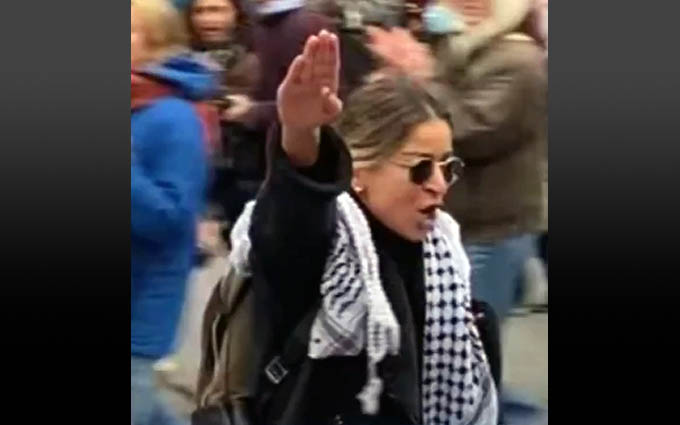
Anti-Israel protester Mai Abdulhadi seen giving Nazi salute at a protest in Montreal, Canada, on November 21, 2024. (Screenshot from @hillelneuer on X, used in accordance with Clause 27a of the Copyright Law)
On a broader scale, hate crimes need to be tackled by federal police, not just municipal forces, and there should be intelligence coordination between police and national agencies to monitor and respond to potential threats. A federal hate-crimes bill — currently stalled in parliamentary proceedings — must move forward as part of a broader strategy to fight hate, said Marceau.
More fundamentally, Jewish leaders are asking governments and public institutions to apply existing regulations in schools, universities, unions and workplaces to curb harassment and incitement. They also want clear, consistent public messaging from federal, provincial and municipal officials that antisemitism is unacceptable and incompatible with Canadian values.
There is some reason to be optimistic that these demands will be taken more seriously now, Marceau said. Toronto’s Jewish leaders are set to meet with the provincial government in the coming days, and British Columbia announced several days ago that it will introduce legislation to protect safe access to places of worship and schools. On Wednesday, the government announced a $10 million investment in Jewish community security, on top of previous grants made in recent years.
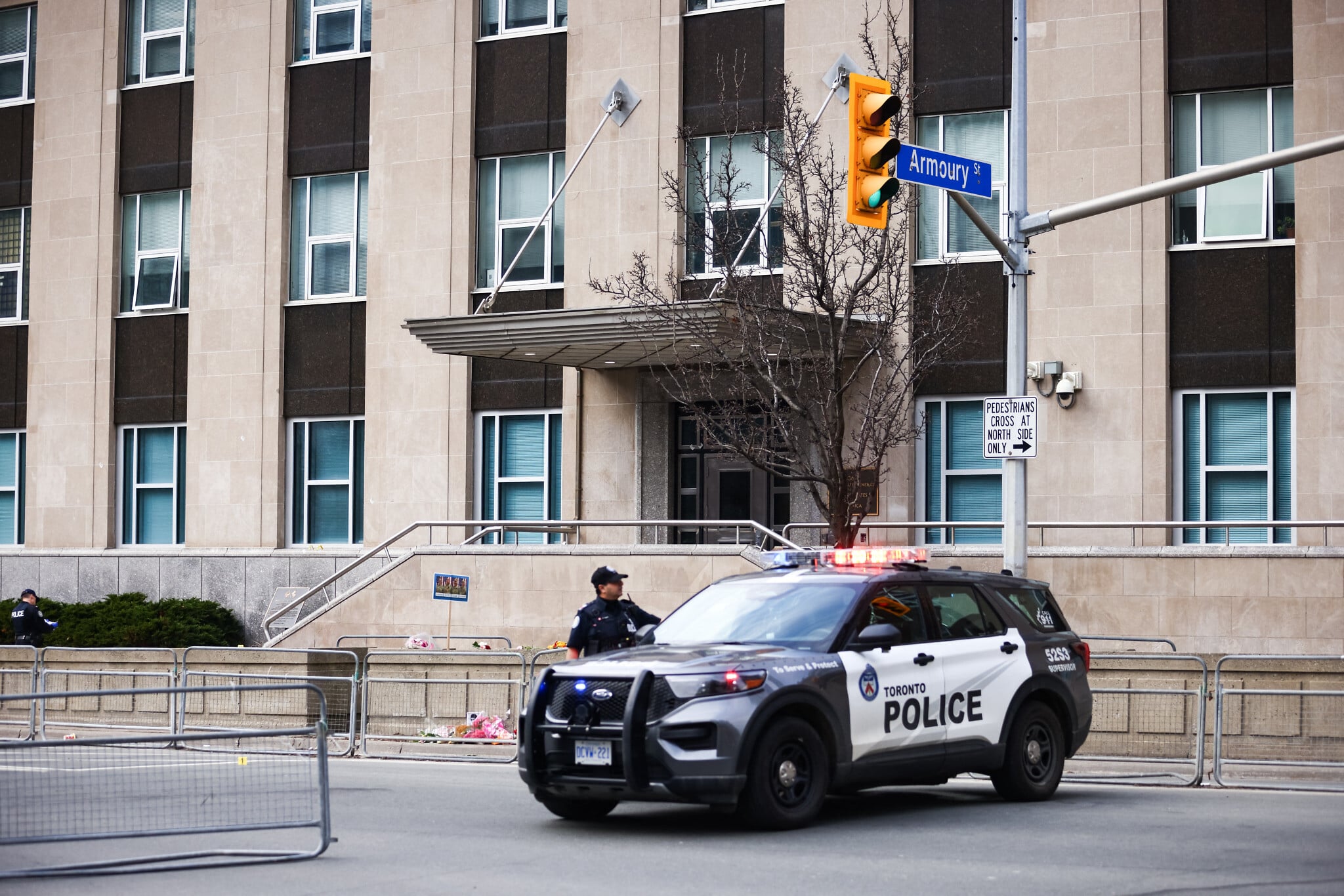
Toronto Police officers work around the scene of a shooting at the US Consulate in Toronto, Canada, on March 10, 2026. (Cole BURSTON / AFP)
“There is a growing realization from policymakers that things cannot remain as they have been,” Marceau said.
A shooting this week at the US consulate in Toronto has also made it clear that violence in Canada is not only a Jewish issue, he added.
“This is an attack on Canadian values and the Canadian way of life,” Marceau said. “The promise of Canada has been broken. It is time to fix this.”