
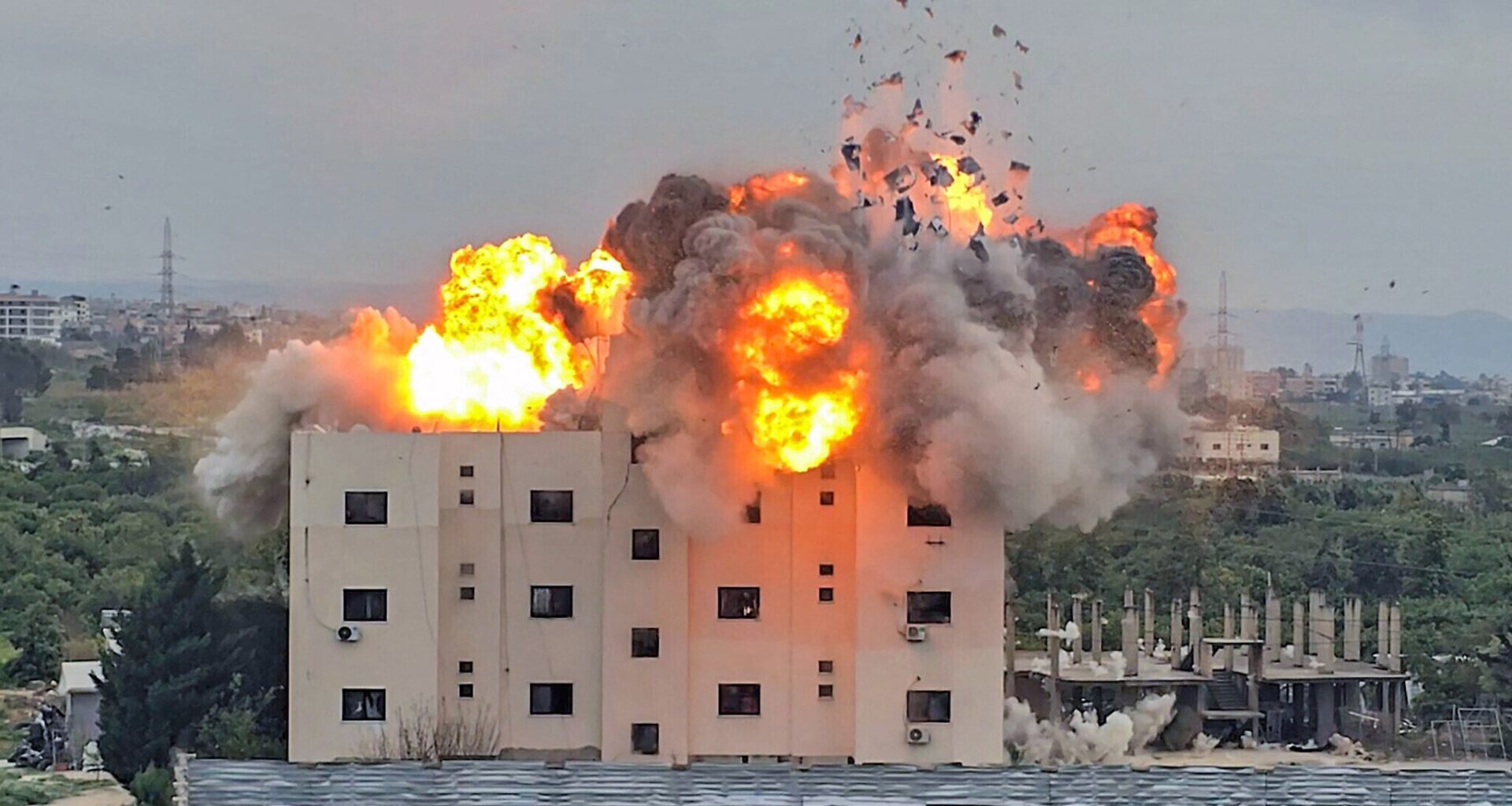
Hezbollah leader Naim Qassem said on Friday his terror group was ready for a long confrontation with Israel, as the latter threatened to make Lebanon pay an “increasing price” in damage to infrastructure.
Lebanon was drawn into the Middle East war last week when the Tehran-backed Hezbollah attacked Israel in response to the killing of Iranian supreme leader Ayatollah Ali Khamenei in US-Israeli strikes.
“We have prepared ourselves for a long confrontation, and God willing, they (Israelis) will be surprised on the battlefield,” Qassem said in his second televised address since the latest war began.
“This is an existential battle, not a limited or simple battle.”
Israel on Friday destroyed a bridge over the Litani River between the towns of Zrarieh and Tayr Falsay, according to Lebanon’s state-run National News Agency. The river bisects southern Lebanon, from east to west.
Get The Times of Israel’s Daily Edition
by email and never miss our top stories
By signing up, you agree to the terms
In a statement, the Israel Defense Forces said the bridge was being used by Hezbollah as a “key crossing” to move from northern to southern Lebanon, “prepare for combat against IDF troops, and operate against the civilians of the State of Israel, while endangering Lebanese civilians and causing extensive destruction in populated areas.”
The attack was the first on Lebanese public infrastructure to be acknowledged by Israel since the start of the Middle East war, with the IDF saying it was necessary to strike the bridge to prevent a “threat to Israeli civilians, and the continued harm to Lebanese civilians.”
The military said Hezbollah also positioned rocket launchers near the bridge and carried out rocket attacks on Israel from the area recently.
צה”ל תקף את גשר א-זרריה בנהר הליטאני ששימש כמעבר מרכזי עבור מחבלים מארגון הטרור חיזבאללה
צה”ל תקף לפני זמן קצר את גשר א-זרריה שעל נהר הליטאני בלבנון, ששימש כמעבר מרכזי עבור מחבלים מארגון הטרור חיזבאללה.
ארגון הטרור חיזבאללה משתמש בגשר זה על מנת להגיע מצפון לדרום המדינה, להיערך… pic.twitter.com/jWK4dw9dup
— צבא ההגנה לישראל (@idfonline) March 13, 2026
“This is only the beginning, and the Lebanese government and the Lebanese state will pay an increasing price through damage to Lebanese national infrastructure that is used by Hezbollah terrorists,” Defense Minister Israel Katz said during an assessment with IDF Chief of Staff Lt. Gen. Eyal Zamir and the military’s top brass.
“The Lebanese government, which misled and did not fulfill its commitment to disarm Hezbollah, will pay increasing prices through damage to infrastructure and the loss of territory, until the central commitment of disarming Hezbollah is fulfilled,” he added.
Earlier this week, Lebanese President Joseph Aoun offered to negotiate directly with Israel, but on Friday he said he had not received a response.
The IDF bombed several roads in southern Lebanon on Friday, according to the official National News Agency, blocking access from the north of the Litani River and from the Bekaa valley, an eastern area Hezbollah uses to transport weaponry.
The NNA also reported that Israeli shells hit the United Nations Interim Force in Lebanon’s Nepalese battalion in the border town of Mays al-Jabal.
Other reported Israeli strikes on Friday included an attack that killed eight people in the south Lebanese village of Miyeh w Miyeh near the port city of Sidon, according to the health ministry.
In the nearby village of Irkey, Mohammad Taqi buried his four daughters, aged six to 13, who were killed in an Israeli strike on Thursday along with five relatives.
“The Israeli enemy says every day that it is targeting infrastructure,” he told AFP at the funeral, his head wrapped in a white bandage and his face covered in wounds.
“Is this the infrastructure? Have you seen it?” he asked, gesturing to his daughters’ bodies.
“I’ve lost four daughters. I don’t have any others. Zainab, Zahra, Malika and Yasmina,” he said, adding that he had also lost his parents, brother, nephew and brother-in-law in the same strike.
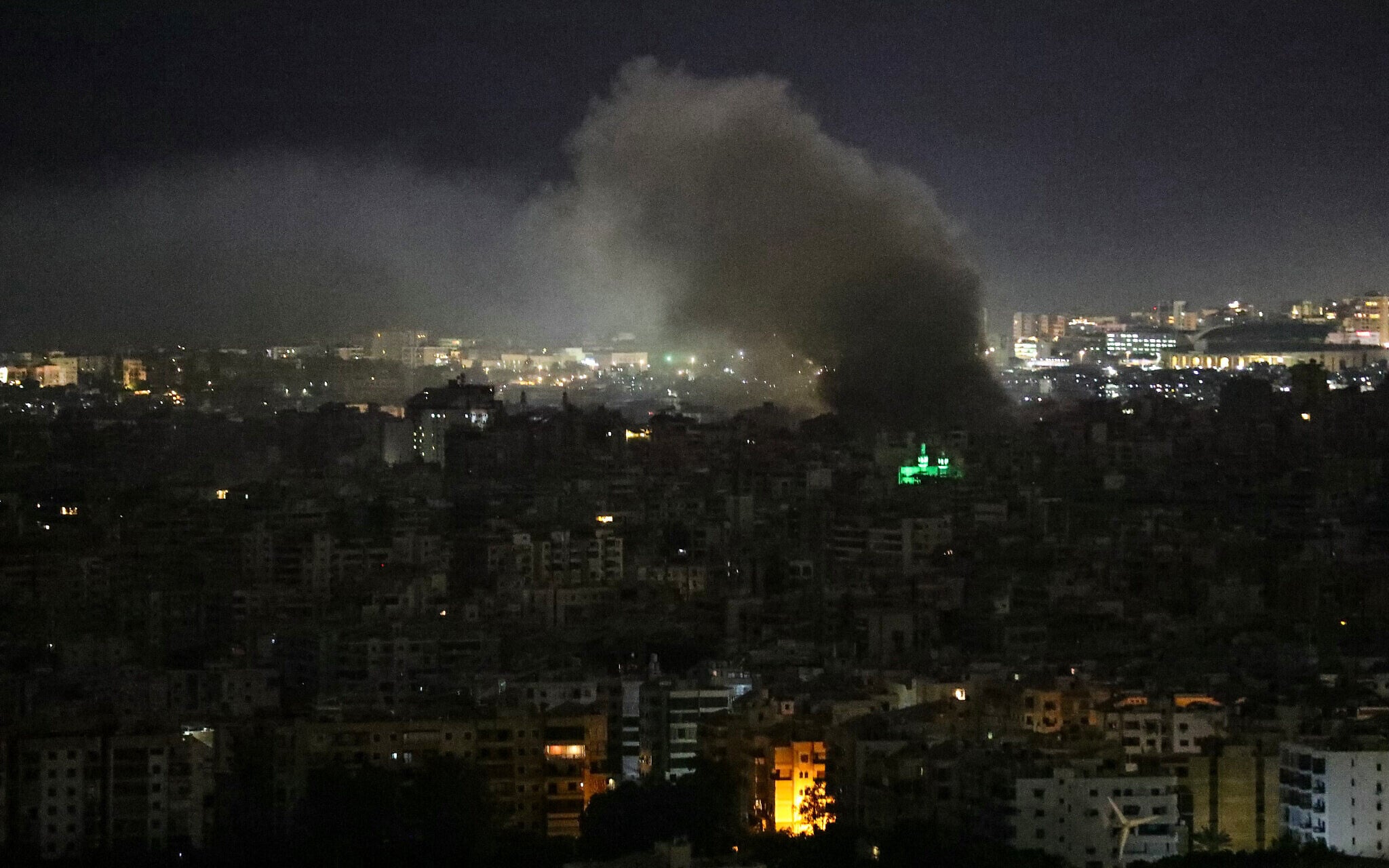
Smoke rises from the site of an Israeli airstrike that targeted an area in Beiruts southern suburbs on March 13, 2026. (AFP)
In Sawaneh, Lebanon’s health ministry said that a strike killed two paramedics, one from the Hezbollah-linked Islamic Health Committee and another from the Risala Scouts association, affiliated with the Amal movement, a Hezbollah ally.
Early Saturday, the ministry said a strike on a primary healthcare centre in Burj Qalawiya killed “12 doctors, paramedics and nurses on duty.”
There was no immediate comment from the IDF, which earlier announced it was further bolstering troops in northern Israel amid the fighting.
The military deployed troops deeper into southern Lebanon last week, saying it aims to “establish a forward defense that will create an additional security layer for the residents of the north.”
So far, the IDF said it has conducted over 1,100 strikes in Lebanon since the hostilities escalated when Hezbollah began attacking Israel earlier this month.
They include 190 targets of Hezbollah’s elite Radwan Force, 200 rocket and missile launchers, 35 command centers and 80 multi-story buildings that were used by the terror group, the military said.
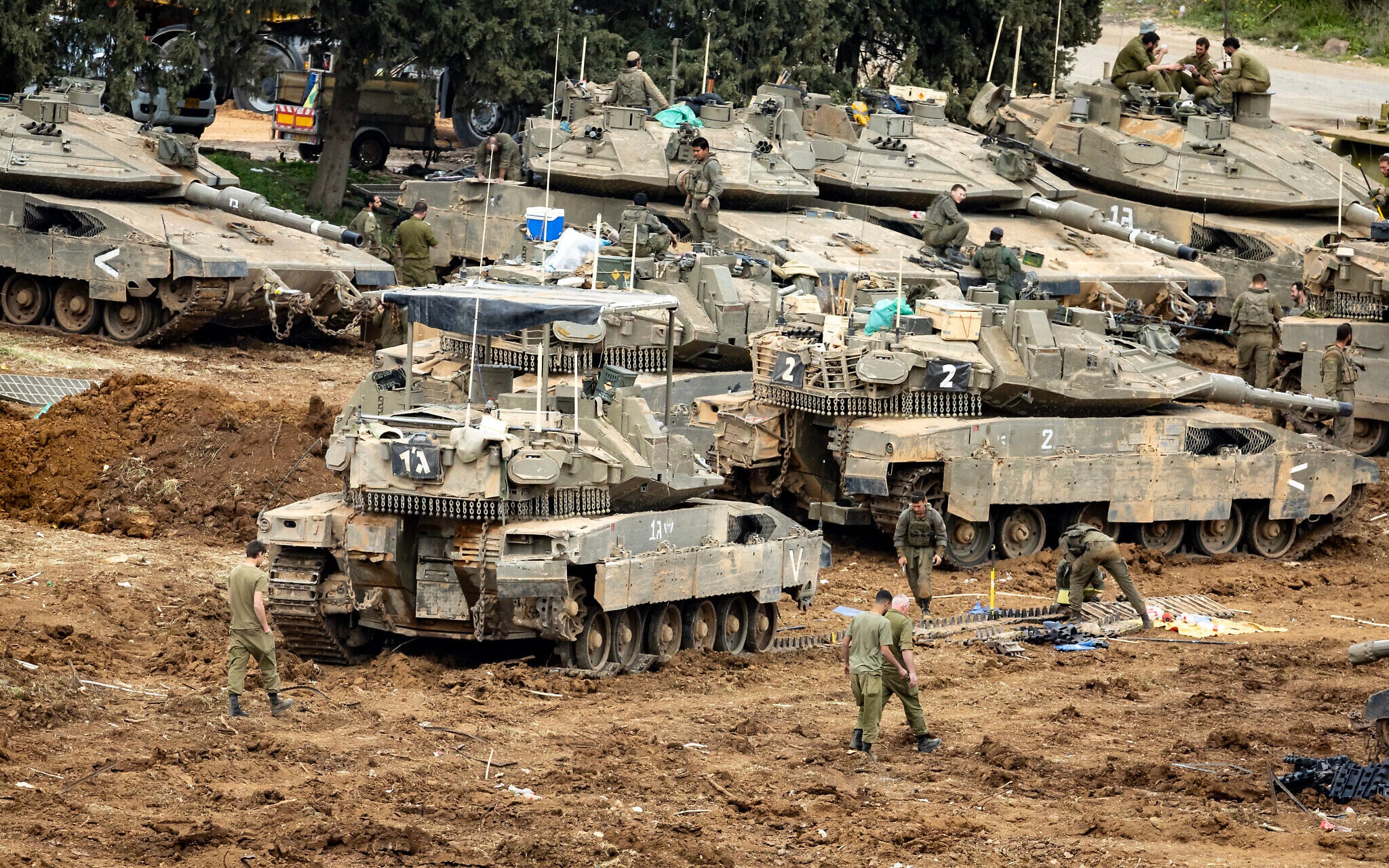
Israeli soldiers work on their tanks at a staging area in the Upper Galilee, near the border with Lebanon, on March 13, 2026. (Odd Andersen/AFP)
The IDF said it has also killed over 380 members of Hezbollah and other terror groups during the fighting, including two Hezbollah commanders responsible for rocket fire on Israel who it reports were killed Thursday.
The strike, which took place north of the Litani River on Thursday, killed Rahif Ali Qassem, the chief of Hezbollah’s rocket and missile unit in the Badr regional division, and Mohammad Baqer Ahmad Ali, the unit’s “firepower management commander,” the IDF said.
Hezbollah’s Badr unit is one of the terror group’s three regional divisions in southern Lebanon, and it is tasked with the area north of the Litani River.
The IDF has said that Hezbollah is launching most of its rocket and drone attacks on Israel from deeper within southern Lebanon, and not from close to the border.
‘Your decision’
Hezbollah also launched attacks against Israel on Friday, as part of what it said was a Quds Day operation.
Quds Day is an annual anti-Israel demonstration in support of the Palestinians that is marked by the Islamic Republic of Iran and its allies, on the last Friday of the holy month of Ramadan.
Israel’s military renewed its evacuation warnings, including for Beirut’s southern suburbs, and launched several strikes on the area according to the NNA.
On Thursday it had issued a similar warning, expanding the evacuation zone in southern Lebanon to reach more than 40 kilometers from the Lebanon-Israel border.
Israeli planes also dropped leaflets over Beirut on Friday.
إلقاء مناشير “إسرائيلية” فوق بيروت #ملحق pic.twitter.com/pEQvQ2wUEn
— Mulhak – ملحق (@Mulhak) March 13, 2026
One of the flyers, addressed to the Lebanese people, said: “You must disarm Hezbollah, Iran’s shield” and “Lebanon is your decision, not someone else’s.” It featured two QR codes to links on WhatsApp and Facebook, accompanied by a message telling Lebanese to make contact if they want to see “real change” in their country.
Another threatened to inflict damage on Lebanon similar to the devastation the IDF wrought on Gaza during its two-year war with Hamas. Much of Gaza has been reduced to rubble and nearly all its population displaced.
“In light of the great success in Gaza, the newspaper of the new reality arrives to Lebanon,” the flyer said.