
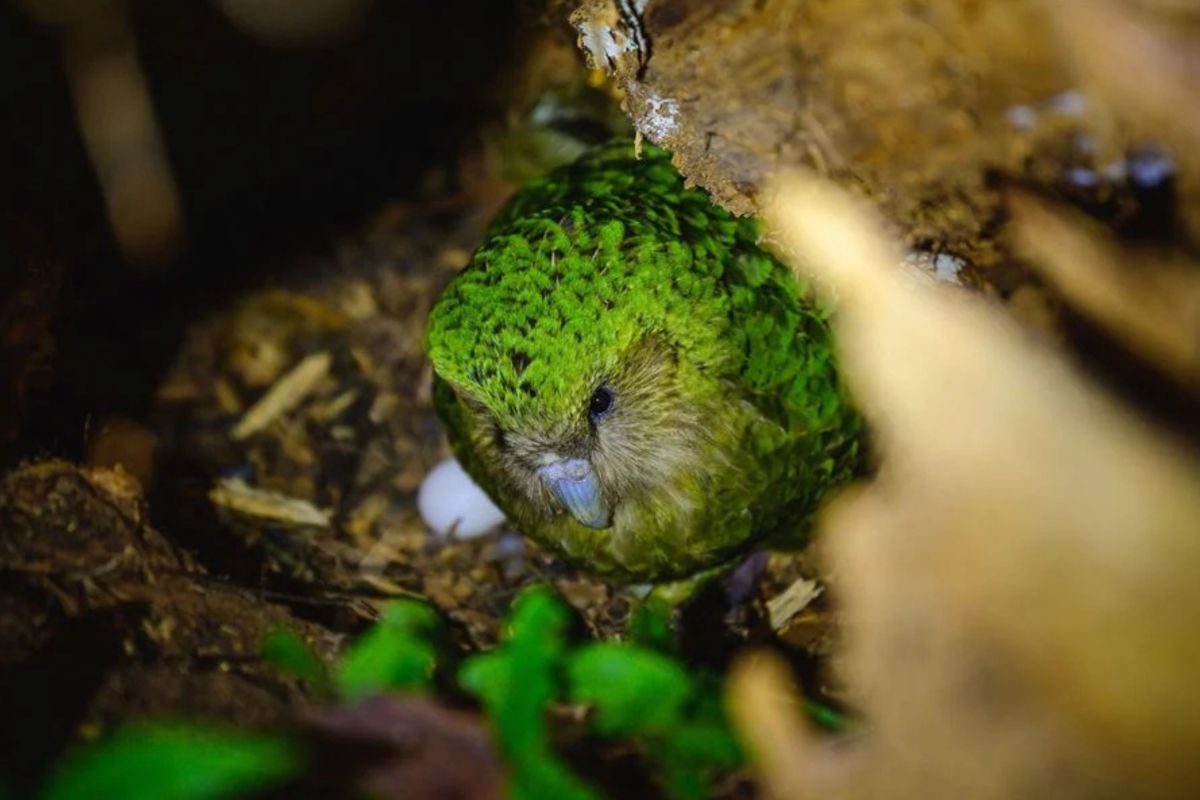
A quiet underground nest on a remote island off New Zealand’s coast is captivating viewers around the globe as the world’s largest parrot species is livestreamed.
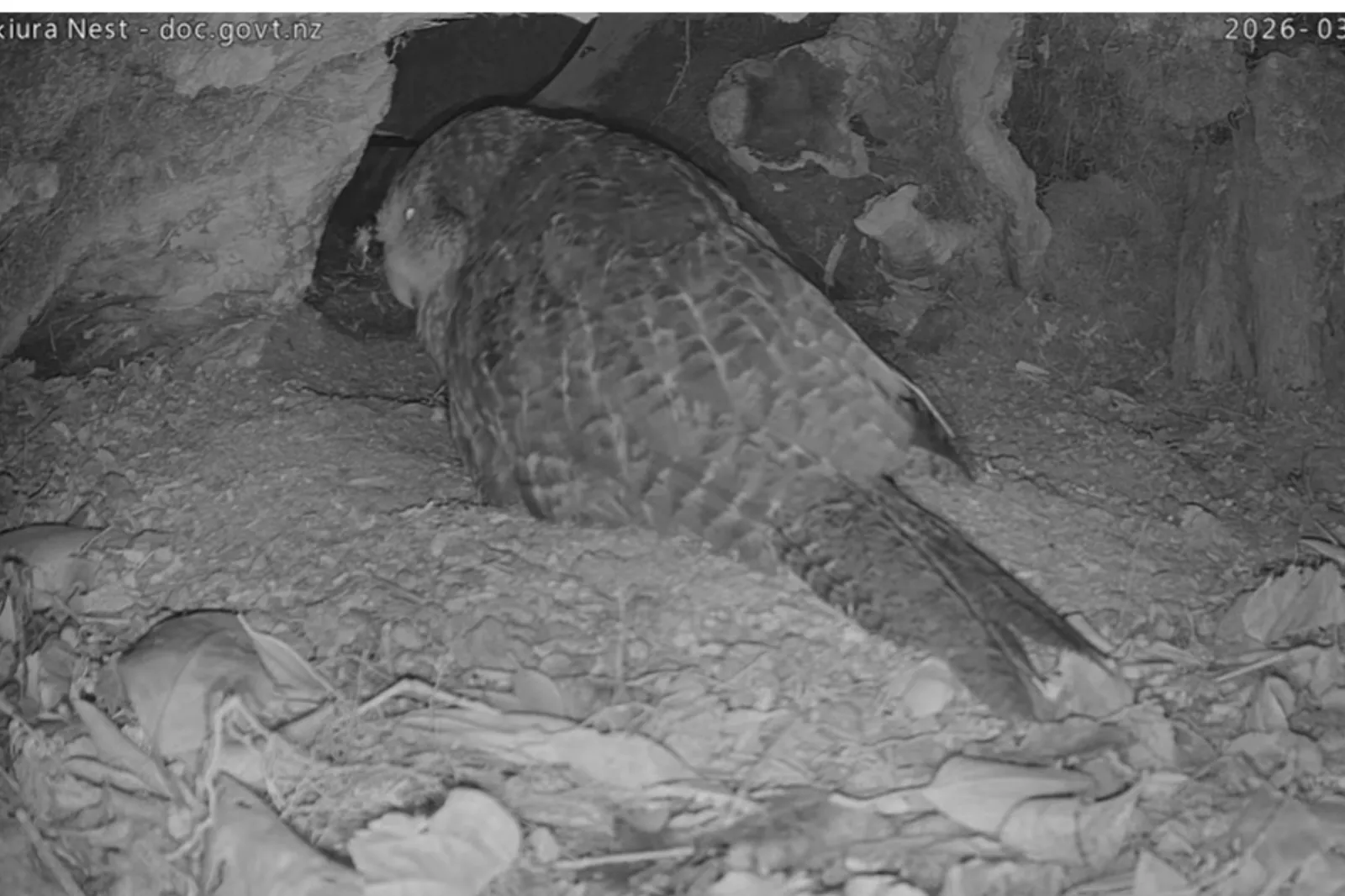
The YouTube livestream, Kākāpō Cam, offers a continuous view inside the nest of Rakiura, a 24-year-old female kākāpō—one of just 236 left worldwide. Rakiura has been living beneath a rātā tree on Codfish Island, also known as Whenua Hou, off the country’s southern coast, where she hatched two chicks this breeding season.
Since January, the footage has offered unpolished, intimate glimpses of the nocturnal, flightless parrot. Rakiura shuffles in the nest, preens her green feathers, settles her body protectively over her chick, and occasionally leaves under the cover of darkness to forage before returning to feed. At times, the screen shows little movement at all—just the soft rise and fall of a bird resting, giving viewers a rare, real‑time look at a species most will never see in person.
“This is the only camera in a kākāpō nest this season, and the only nest we’ve ever streamed live,” Deidre Vercoe, operations manager for Kākāpō at New Zealand’s Department of Conservation (DOC), told Newsweek. “Kākāpō Cam provides insights that help guide us to support their recovery, while also giving people around the world a chance to connect with this incredible species.”
 What Makes the Kākāpō So Unique
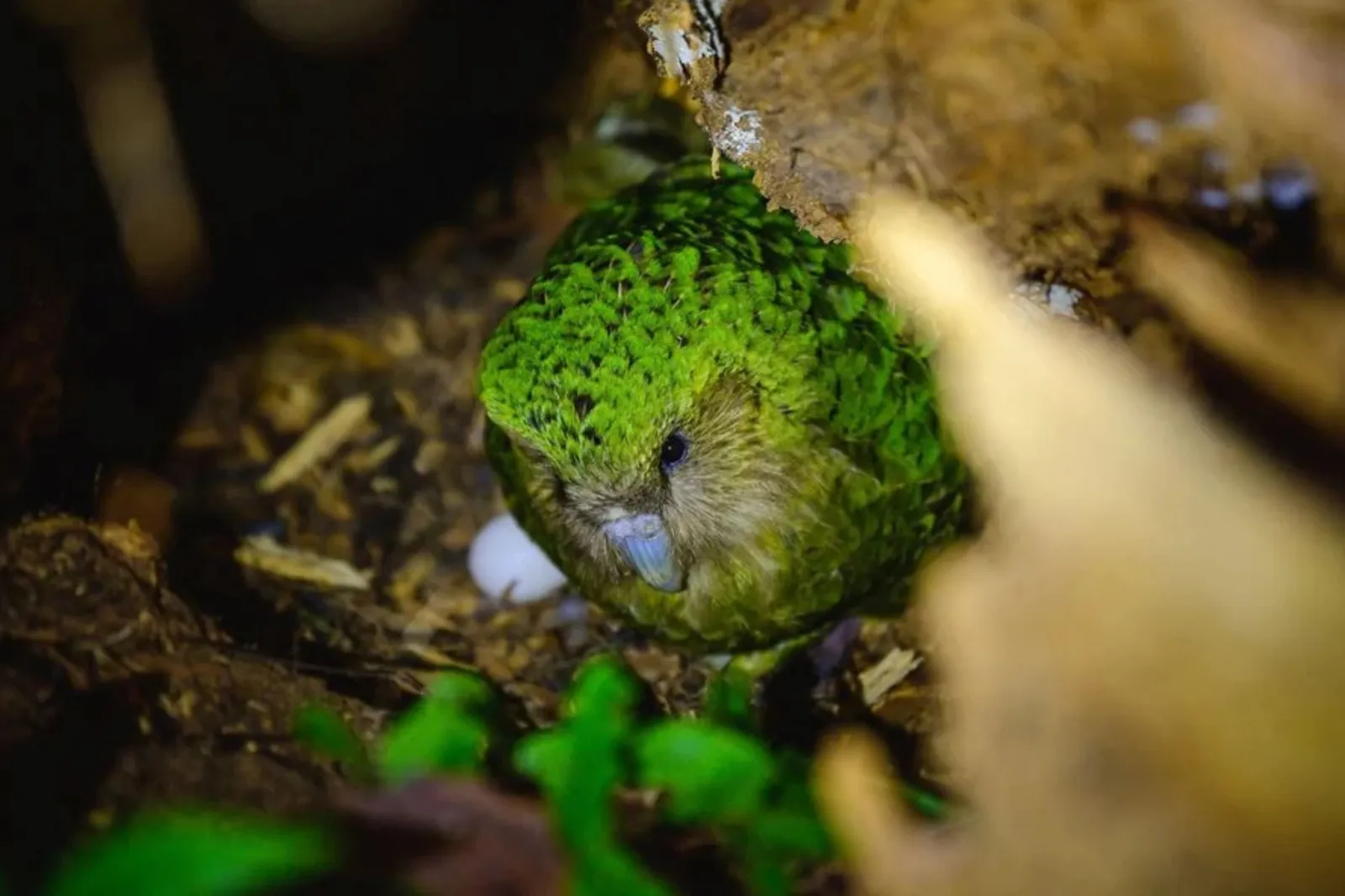
The kākāpō is unlike any other parrot in the world. Native only to New Zealand, kākāpō are the heaviest parrot species on Earth, with males weighing about 8.8 pounds ahead of breeding season and females about half the size. Vercoe said Rakiura has weighed between 3.3 and 4.4 pounds over the last year. For reference, the popular scarlet macaw species of parrot weighs about 2.2 pounds on average.
Often described as owl‑faced, the bird once spread across New Zealand, but numbers plummeted after human arrival due to hunting, predators and habitat loss. The species nearly went extinct by the mid-1900s, the DOC website states. At one point, the species had dwindled to 51 birds.
Conservation efforts began in 1894, and now, kākāpō live only on protected offshore islands in sanctuaries. Every surviving kākāpō is named, tracked, and managed as part of the Kākāpō Recovery Programme.
“There are only 236 kākāpō alive and Kākāpō Cam provides insights that help guide us to support their recovery,” Vercoe said. “Through Kākāpō Cam, we hope to gain greater insight into female nesting behavior, which plays a crucial role in successful breeding seasons.”
Why This Nest Is Being Streamed
While most female kākāpō choose new nesting spots each breeding cycle, Vercoe said Rakiura has returned to the same site every season—allowing conservationists to reinforce the nest and carefully plan a reliable camera setup months in advance through the DOC’s Kākāpō Recovery team.
Hands‑on fieldwork began in October 2025 and will continue for most of the year, involving around 30 DOC staff, specialist support teams and 105 volunteers, each donating two weeks of their time.
The team also added drainage and a small access hatch to protect eggs and chicks without disturbing her natural behavior.
The camera was first trialed during the 2022 breeding season, but this year’s stream went live in time to capture egg‑laying and hatching for the first time.
Rakiura successfully hatched two genetically important chicks on February 24 and March 2, though the older one was later transferred to a foster mother so she could focus on raising the remaining chick, Nora‑A2‑2026, now the star of the livestream. The team will check on the chick every three days until it is one month old.
 A Promising Breeding Season
While breeding can be rare and unpredictable, conservationists believe this could be a breakthrough year for the species. Kākāpō only breed when native rimu trees produce large amounts of fruit, a phenomenon known as masting, which happens once every two to four years.
Experts use summer temperature patterns to predict rimu mast events up to two years in advance.
“Breeding can happen if more than 10 percent of rimu tips bear fruit. This season, the number was around 60 percent, which is a strong indicator for a bumper breeding year,” Vercoe said. “A lot can happen, which is why we never count our chicks before they fledge.”
The last major breeding season occurred in 2022, when 57 chicks fledged, according to the University of Auckland. But this year might surpass it. The Guardian reports that there have been 78 nests, 247 eggs laid and 57 chicks hatched so far.
World Watching With Anticipation
As Rakiura continues to care for her chick beneath the forest floor, thousands of people around the world are watching, reminded that conservation success can sometimes be measured not by dramatic rescues but by patience, protection, and the soft rustle of feathers in the dark.
Users are flooding the live stream chat with reactions as they watch the events unfold in real time, sharing whether Rakiura fed her check before leaving the nest and how long ago she left.
”I’m going to die from cuteness overload!!” wrote one viewer, while another said: “Ah, sleeping again and mama gone. Little round fuzz ball, so cute.”
A third person commented: “Amazing! Love the work of the DOC.”
Do you have funny and adorable videos or pictures of your pet you want to share? Send them to life@newsweek.com with some details about your best friend, and they could appear in our Pet of the Week lineup.