
69
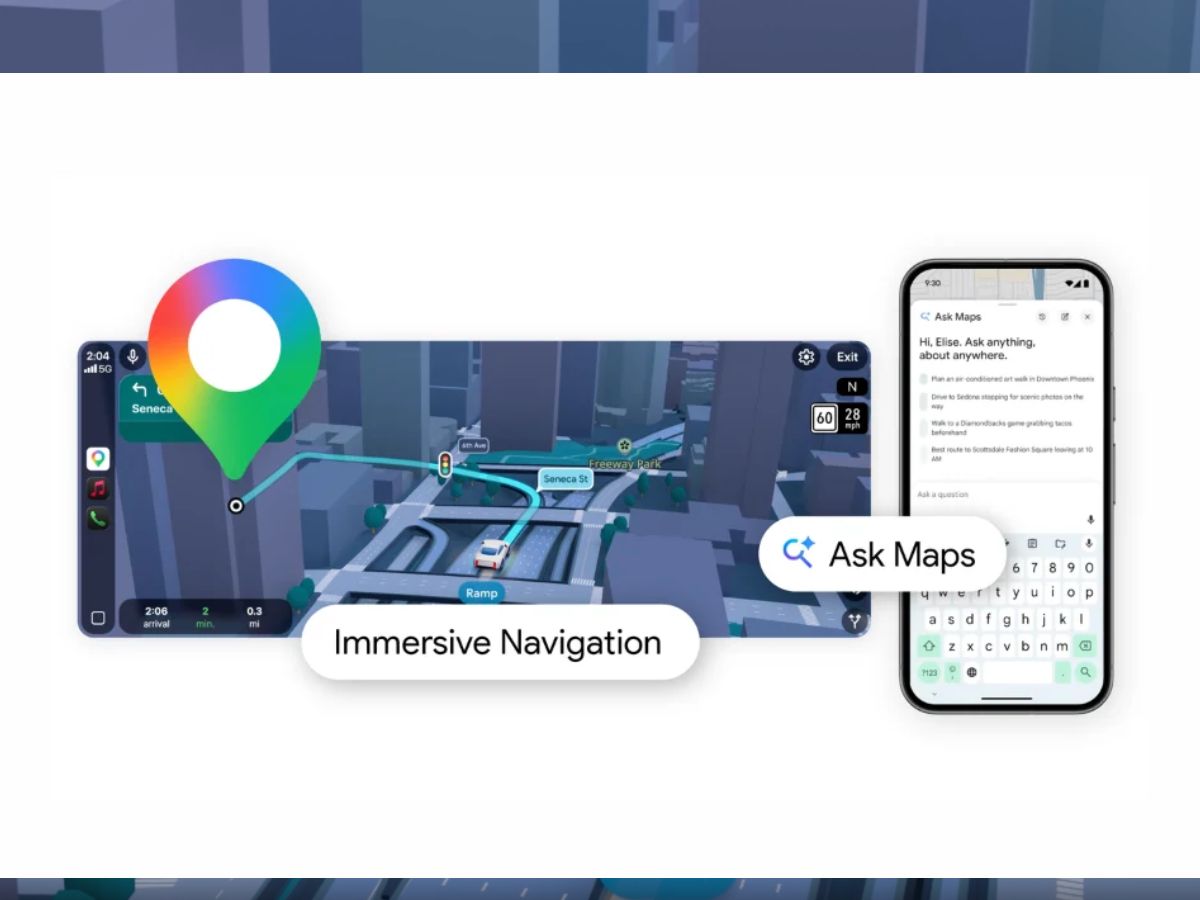
Google has just delivered its most ambitious update to Google Maps in years, transforming the way people search, plan and navigate routes. The tech giant has rolled out Ask Maps, an AI‑driven conversational feature, and a bold redesign of the navigation experience called Immersive Navigation.
Both are powered by its advanced Gemini artificial intelligence. This upgrade marks the biggest change to Maps in over a decade and promises to make travel more intuitive and personalised for users in the US and India.
Gemini in Google Maps: What is ‘Ask Maps’? Conversational AI
Google’s Ask Maps lets users interact with Maps like they would with a travel assistant. Rather than typing simple destination names, you can now ask detailed and practical questions in everyday language.
You Might Be Interested In
The system uses the Gemini AI model to understand intent and deliver personalised answers based on context, preferences and fresh map data. For instance, a user might ask, “Where is the closest public bathroom where I don’t have to stand in a queue?”
“My phone is dying, where can I charge it without having to wait in a long line for coffee?” These thoughtful, hyper‑specific queries get useful responses that include location suggestions and maps tailored to your needs.
Ask Maps isn’t just about navigation – it draws from over 300 million places and reviews from more than 500 million contributors worldwide, offering tips and insights beyond what traditional map search could deliver.
Gemini in Google Maps: Immersive Navigation – A New 3D Driving Experience
Beyond smarter search, Google has reimagined what navigation looks like on the road. The new Immersive Navigation adds a rich 3D‑style visual layer to driving directions that shows real‑world road features, buildings, terrain and traffic details from a driver’s perspective.
This means Streets and landmarks appear more realistically, helping drivers recognise surroundings. Critical road elements like lanes, crosswalks, traffic lights and stop signs are highlighted for easier interpretation.
According to Google, this upgrade “helps you stay focused and informed on the road, with fresh, real‑world information and natural directions that prepare you for the drive ahead.”
Gemini in Google Maps: Smarter Routing and Natural Voice Guidance
The update doesn’t stop at visuals. Navigation now explains route choices more clearly. If there’s a trade‑off between options – such as a shortcut with traffic vs a longer but faster route – Maps will contextualise these decisions in simple terms.
Voice guidance has also been enhanced to feel more conversational and human. Instead of rigid instructions like “turn in 500 metres,” users may hear natural phrases such as, “Go past this exit and take the next one…”
Gemini in Google Maps: Personalised Trip Planning with AI
Ask Maps brings a level of personalisation previously unseen on Maps. When Maps has access to your saved places, searches or visitation history, it can provide tailored recommendations without needing extra input. For example, it can suggest the best route from one city to another and highlight nearby points of interest or restaurants based on your preferences.
This shift moves Google Maps from a simple route‑finder to a proactive travel companion that can help decide everything from where to stop for food to how to avoid crowds, based on real‑time conditions.
Gemini in Google Maps: Rollout & Availability
The new tools are launching first in the United States and India on both Android and iOS devices. Ask Maps is available now, with desktop support coming soon. Immersive Navigation has begun rolling out in the US and will expand to eligible devices and vehicle platforms – including CarPlay, Android Auto and cars equipped with Google built‑in – over the coming months.
Gemini in Google Maps: What Users Can Expect Next?
While the launch represents a major step forward, Google plans to continue expanding both features. Desktop access to Ask Maps is on the horizon, and immersive 3D navigation support will broaden globally.
As these features are adopted more widely, Maps may become even more integrated with daily travel planning, offering options like parking spots, building entrances and post‑trip guidance.
This update positions Google Maps ahead of many competitors in terms of AI‑driven interactivity and visual navigation. The conversational nature of Ask Maps and the realistic visuals of Immersive Navigation significantly raise user expectations for map apps, pushing the boundaries of what navigation tools can do.