
Getting caught up on a week that got away? Here’s your weekly digest of The Globe’s most essential business and investing stories, with insights and analysis on the biggest headlines, stock tips, personal finance strategies and more.
IEA announces record oil stockpile release over Iran war supply disruptionsOpen this photo in gallery:
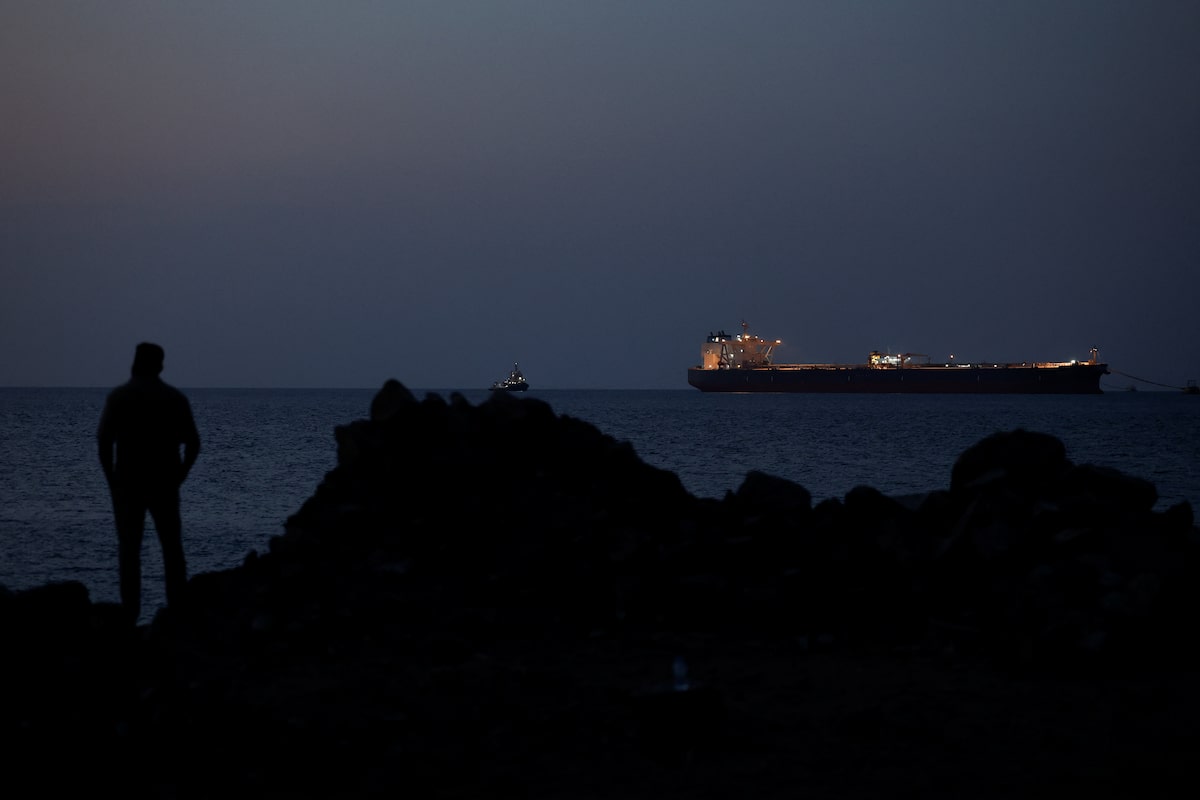
The Parnassos crude oil tanker sits anchored in Muscat, Oman, on Tuesday amid a virtual standstill in the Strait of Hormuz.Benoit Tessier/Reuters
The International Energy Agency agreed on Wednesday to release 400 million barrels of oil from its reserves, the largest-ever move in its history, to combat a spike in prices since the start of the U.S.-Israel war on Iran. The Strait of Hormuz – a crucial passageway for oil and gas from the Persian Gulf – has been effectively shut down, causing global energy prices to soar. The IEA said on Thursday that the conflict in the Middle East is creating the biggest oil supply disruption in history.
Canada, an IEA member, has already been eyeing moves to boost oil supplies to deal with the impact of the global supply shock – but the country is limited in its options without its own national strategic reserve. Ottawa said it has asked Canadian oil producers to assess how much crude they could potentially release into the market, Energy Minister Tim Hodgson said Tuesday.
Canada’s unemployment rate rises, trade deficit widensOpen this photo in gallery:
The production line at a Honda manufacturing plant in Alliston, Ont., in 2023. The manufacturing and construction sectors lost a combined 21,200 jobs last month.Cole Burston/The Canadian Press
Canada’s economy lost an unexpected 83,900 jobs in February while the unemployment rate edged up to 6.7 per cent, Statistics Canada said Friday in a report. The latest job numbers show that trade uncertainty is continuing to weigh heavily on the country’s labour market, Vanmala Subramaniam reports. The largest decline in jobs was seen in wholesale and retail trade, which lost 18,000 jobs last month. Manufacturing and construction also took a hit, with a combined 21,200 jobs lost in those industries last month.
Meanwhile, Canada’s trade deficit increased to $3.6-billion in January, Statistics Canada said Thursday, compared with a trade deficit of $1.3-billion in December. Total exports fell 4.7 per cent in January to $62.5-billion, the largest percentage decline since April, 2025, the agency said. A trade deficit happens when a country imports more goods and services than it exports.
Decoder: Canada’s vehicle exports suffered a historic collapse in JanuaryOpen this photo in gallery:
SUVs on sale at an auto mall in Ottawa. Canada’s exports of automobiles tumbled in January to the lowest level in more than four years.Justin Tang/The Canadian Press
Canada’s exports of automobiles have fallen to the lowest level in more than four years. The value of passenger vehicle exports fell 33 per cent, or $1.3-billion in January, contributing to a larger-than-expected $3.6-billion trade deficit, according to Statistics Canada. The figure marks the steepest decline since U.S. President Donald Trump took aim at Canada’s auto sector.
The good news? Jason Kirby reports that there is some hope that January’s grim auto numbers were a one-off. Statscan blamed the decline on “prolonged seasonal production stoppages,” which it said were due to model changes.
Carney’s newly announced Northern major projectsOpen this photo in gallery:
Prime Minister Mark Carney greets members of the Canadian Armed Forces as he visits the Royal Canadian Air Force 440 Transport Squadron in Yellowknife, on Thursday.Carlos Osorio/Reuters
Prime Minister Mark Carney announced this week that the federal government will spend nearly $35-billion to upgrade military installations in the North. Mr. Carney also announced that four Northern infrastructure projects would be referred to Ottawa’s Major Projects Office for fast-track approval. These include the 800-kilometre Mackenzie Valley Highway, the Grays Bay Road and Port, the Arctic Economic and Security Corridor, and the Taltson Hydro Expansion Project. Jeffrey Jones and Kate Helmore provide the latest details on each of the Northern projects.
Canada has been under pressure from allies to do more to secure the Arctic, particularly because of the increasing presence of Russia and China in the region. Mr. Carney last year unveiled the biggest increase in defence spending in more than 70 years.
Canada’s second chance in the global LNG raceOpen this photo in gallery:
TC Energy CEO and president François Poirier at the company’s headquarters in Calgary.Todd Korol/The Globe and Mail
François Poirier is hoping that Canada will take advantage of a second chance to become one of the global leaders in exporting liquefied natural gas (LNG). The country missed out a decade ago, but changing geopolitics and rising demand for natural gas are presenting new export opportunities in the global LNG race. The chief executive officer of TC Energy Corp. believes that Canada could be well-positioned to diversify its economy by further tapping into massive reserves of natural gas.
Brent Jang spoke to Mr. Poirier and reports on the first story in our new series, Think Big, looking at Canada’s most important nation-building energy and natural resource projects and the trade infrastructure needed to support them.
Goeasy, a lender to subprime borrowers, was a stock market darling – until this week. Why did the share price of the Mississauga-based company suddenly plunge by more than half?
a. The resignation of its chief executive
b. A major court decision
c. A short seller’s report
d. Surging loan losses
d. Goeasy shocked investors by announcing a big jump in loan losses and suspending its dividend, sending its shares tumbling 57 per cent. The company made its name by lending to lower-quality borrowers during a credit boom fuelled by ultra-low interest rates. Lately, though, there have been growing concerns about the quality of Goeasy’s loans.
Get the rest of the questions from the weekly business and investing news quiz here, and prepare for the week ahead with The Globe’s investing calendar.