
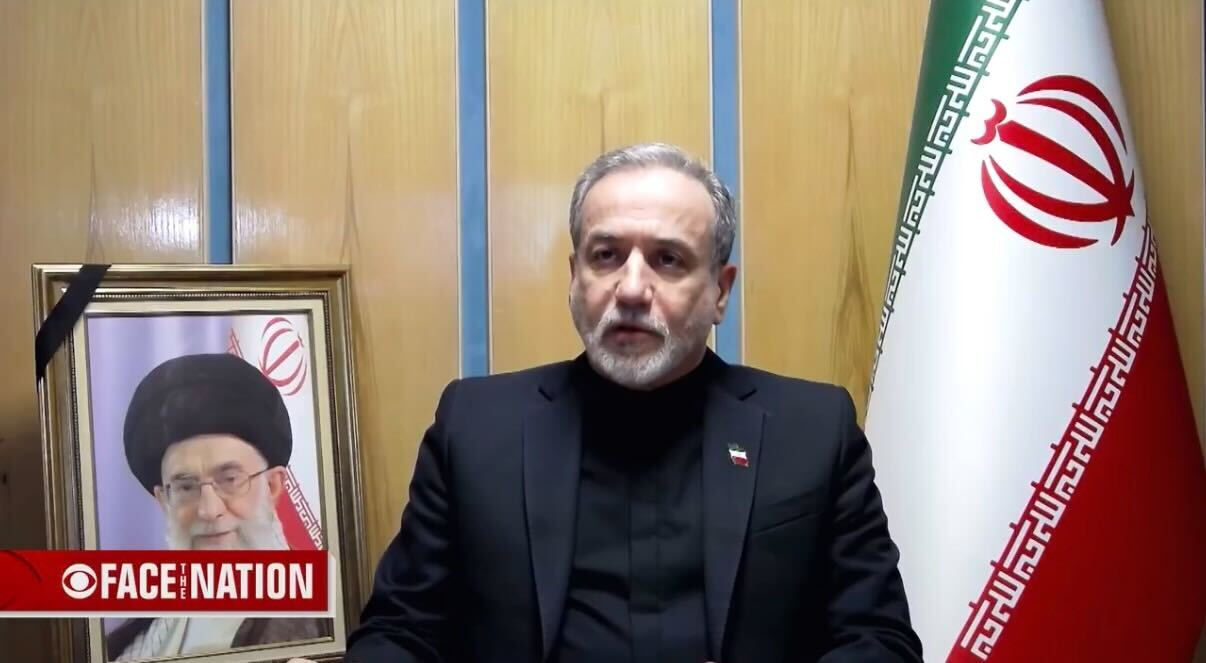
Iranian Foreign Minister Abbas Araghchi said Sunday that Tehran had neither requested a ceasefire nor sought negotiations with Washington amid the ongoing war with the United States and Israel, despite US President Donald Trump claiming Tehran appeared ready to agree on terms unsuitable to Washington.
“No, we never asked for a ceasefire, and we have never asked even for negotiation. We are ready to defend ourselves as long as it takes,” Araghchi said in an interview with CBS’s Face the Nation.
He also rejected the assessment that the conflict represented a “war of survival” for Iran, arguing that his country was “stable and strong enough.”
“We are only defending our people from [this] act of aggression,” he said.
In the same interview, Araghchi said Iran’s stockpile of highly enriched uranium was now buried “under the rubble,” following US and Israeli strikes on the country’s nuclear facilities last June.
Get The Times of Israel’s Daily Edition
by email and never miss our top stories
By signing up, you agree to the terms
Iran’s estimated 440 kilograms of enriched uranium — enriched to up to 60 percent fissile purity, which can relatively easily be raised to the 90% level considered weapons-grade — were believed to be stored deep underground at the Isfahan nuclear site.
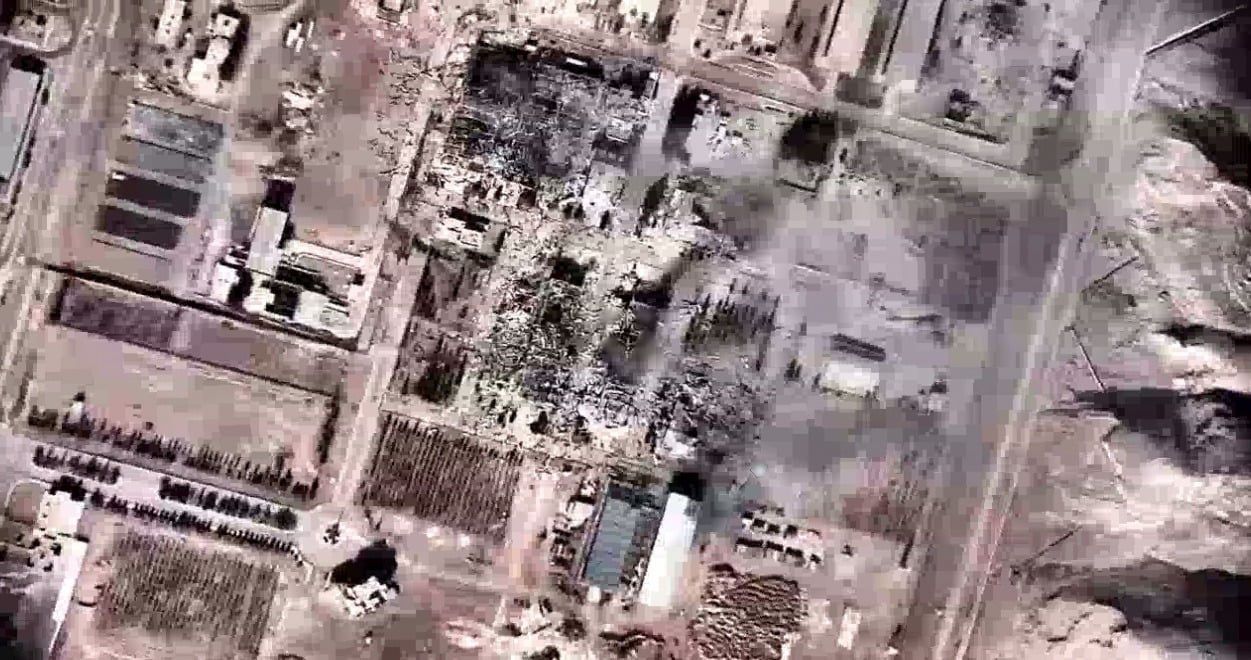
Footage released by the IDF on June 21, 2025, shows the aftermath of Israeli strikes on Iran’s Isfahan nuclear facility. (Israel Defense Forces)
“Our nuclear facilities were attacked, and everything is under the rubble,” Araghchi said.
He acknowledged that the material could potentially be retrieved, but said Tehran currently had no plan to do so.
“Of course, you know there is the possibility to retrieve them, but under the supervision of the [International Atomic Energy Agency],” he said. “If one day we come to the conclusion to do that, it would be under the supervision of the agency. But for the time being, we have no program. We have no plan to recover them from under the rubble.”
Washington had demanded that Iran relinquish the stockpile in nuclear talks that were halted by the bombing campaign. Trump said last week that he would consider sending ground troops in the future to secure the material.
Araghchi suggested that the issue could become part of future negotiations, but said that, for now, Tehran was not prepared to put the matter on the table.
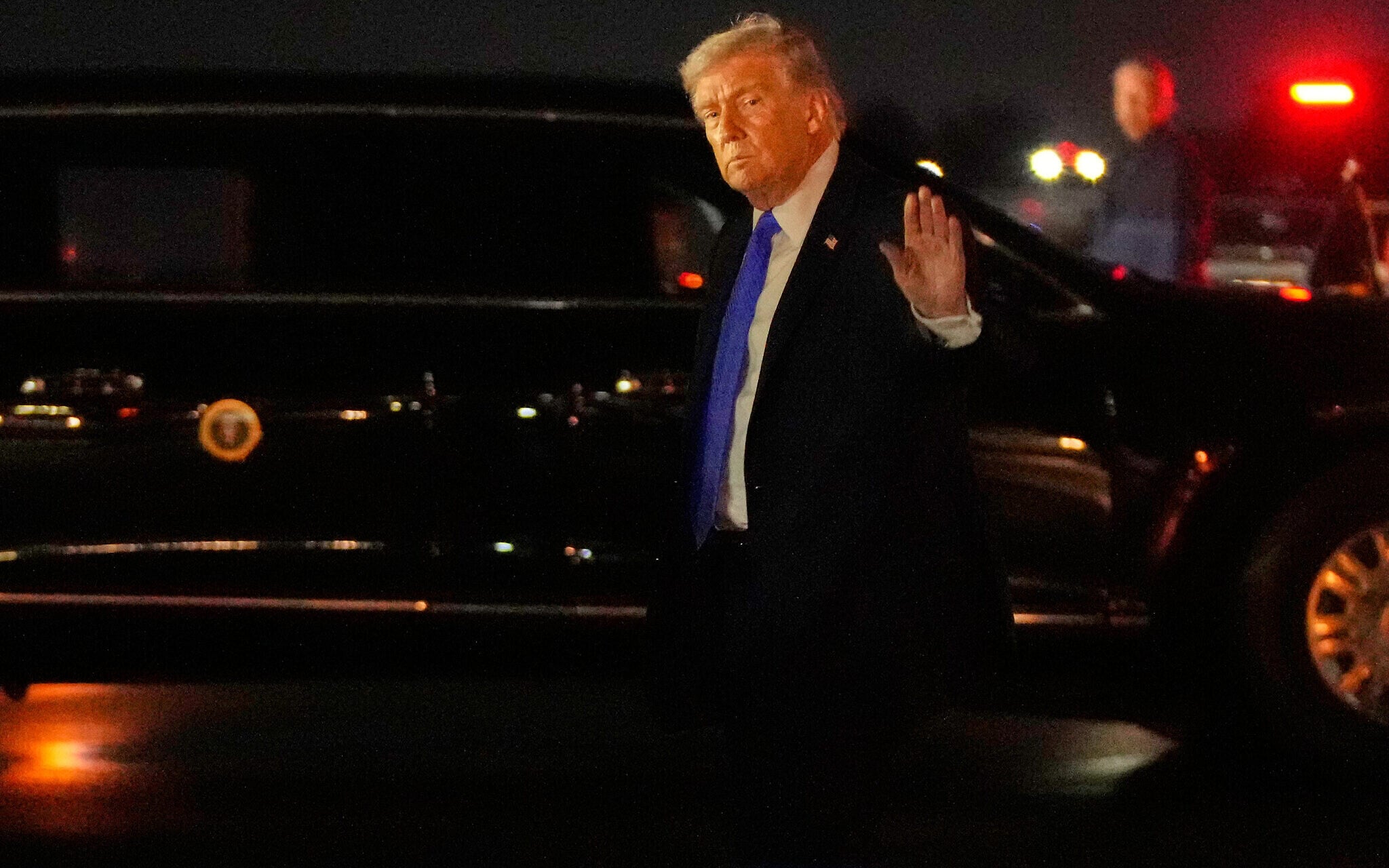
US President Donald Trump waves after arriving on Air Force One at Palm Beach International Airport in West Palm Beach, Florida, March 13, 2026. (AP Photo/Mark Schiefelbein)
“Everything depends on the future,” he said. “If any time in the future we decide to enter into negotiation with US or other interlocutors, you know, we may decide what to put on the table. For the time being, nothing is on the table.”
Araghchi also said that multiple countries have approached Tehran to negotiate the safe passage of oil and gas vessels through the Strait of Hormuz amid Iran’s efforts to block the strategic passage point.
“We are open to countries who want to talk to us about the safe passage of their vessels,” Araghchi said, though he declined to name which countries had approached Iran to win safe passage for their vessels.
The Financial Times reported that France and Italy had contacted Iran to try to arrange passage for their ships.
“This is up to our military to decide, and they have already decided to let, you know, a group of vessels belongs to different countries to pass in a safe and secure,” he continued, repeating claims by Iranian officials that certain countries were permitted to pass ships through the strait, while adding that some of these countries were, by choice, “not coming themselves because of the insecurity which is there, because of the aggression by the US.”
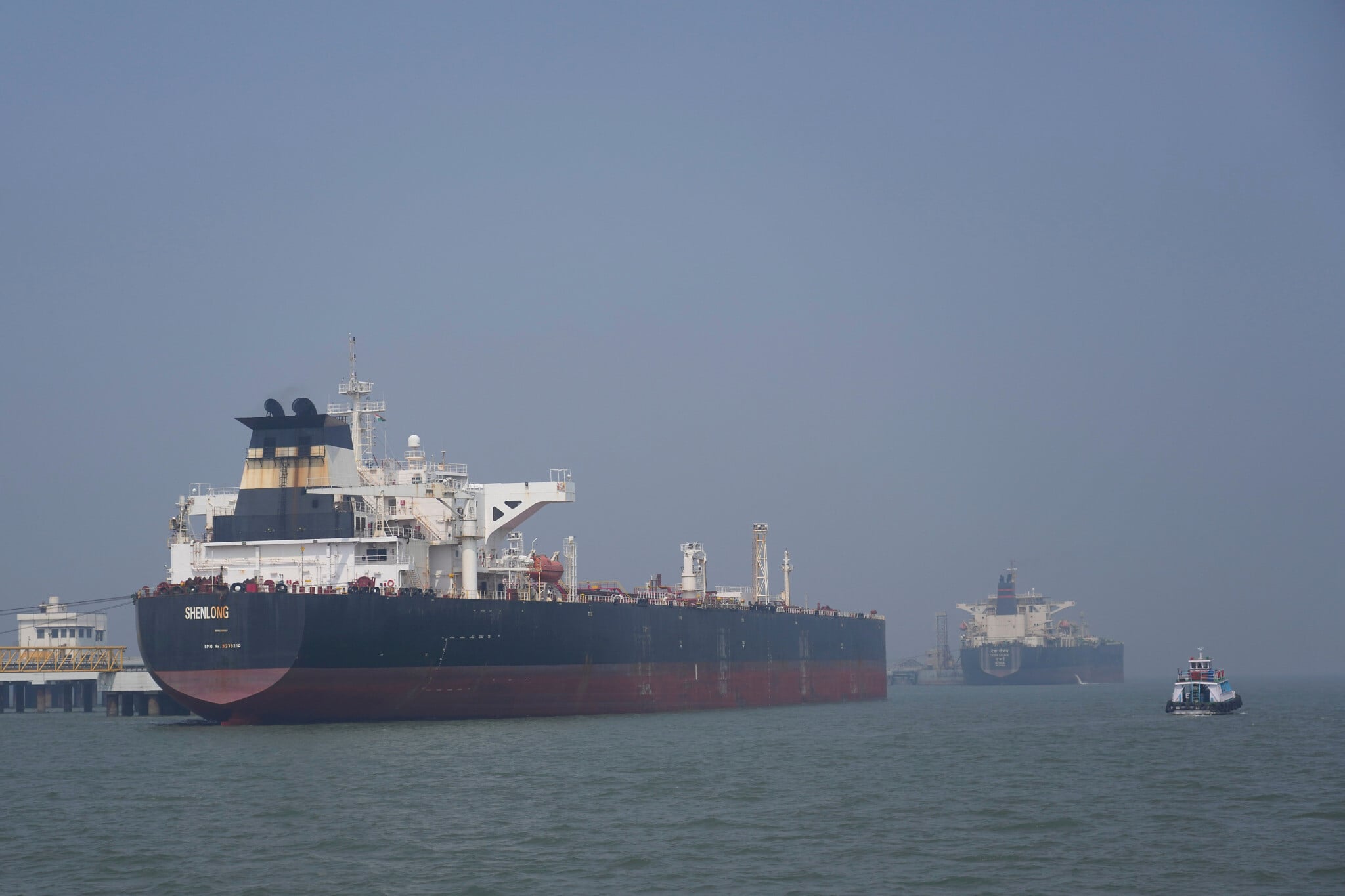
Liberia-flagged tanker Shenlong Suezmax, carrying crude oil from Saudi Arabia, that arrived clearing the Strait of Hormuz, is seen at the Mumbai Port in Mumbai, India, March 12, 2026. (AP Photo/Rafiq Maqbool)
In a separate interview with Al-Araby Al-Jadeed, Araghchi said the Strait of Hormuz remained open, but only to countries other than “America and its allies.”
Araghchi also justified Iran’s hundreds of strikes on its neighbors in the Persian Gulf region and beyond, claiming that it is only targeting American bases situated in these countries.
“We did not attack any residential or civilian targets,” he said. “There may have been collateral damage in residential areas, which is normal in any war.”
Iranian drones and missiles have been fired at civilian infrastructure in the UAE and other US allies, including Dubai’s airport, landmark hotels and the financial hub.
Araghchi also boasted about striking Citibank offices in Manama and in Dubai in response to a US strike on an Iranian bank in Tehran that is used to pay Iranian security forces.
He also blamed the US and Israel for strikes on Arab states, claiming that Iran had “recently received information indicating that the United States and Israel are also launching attacks from specific locations toward Arab countries.”
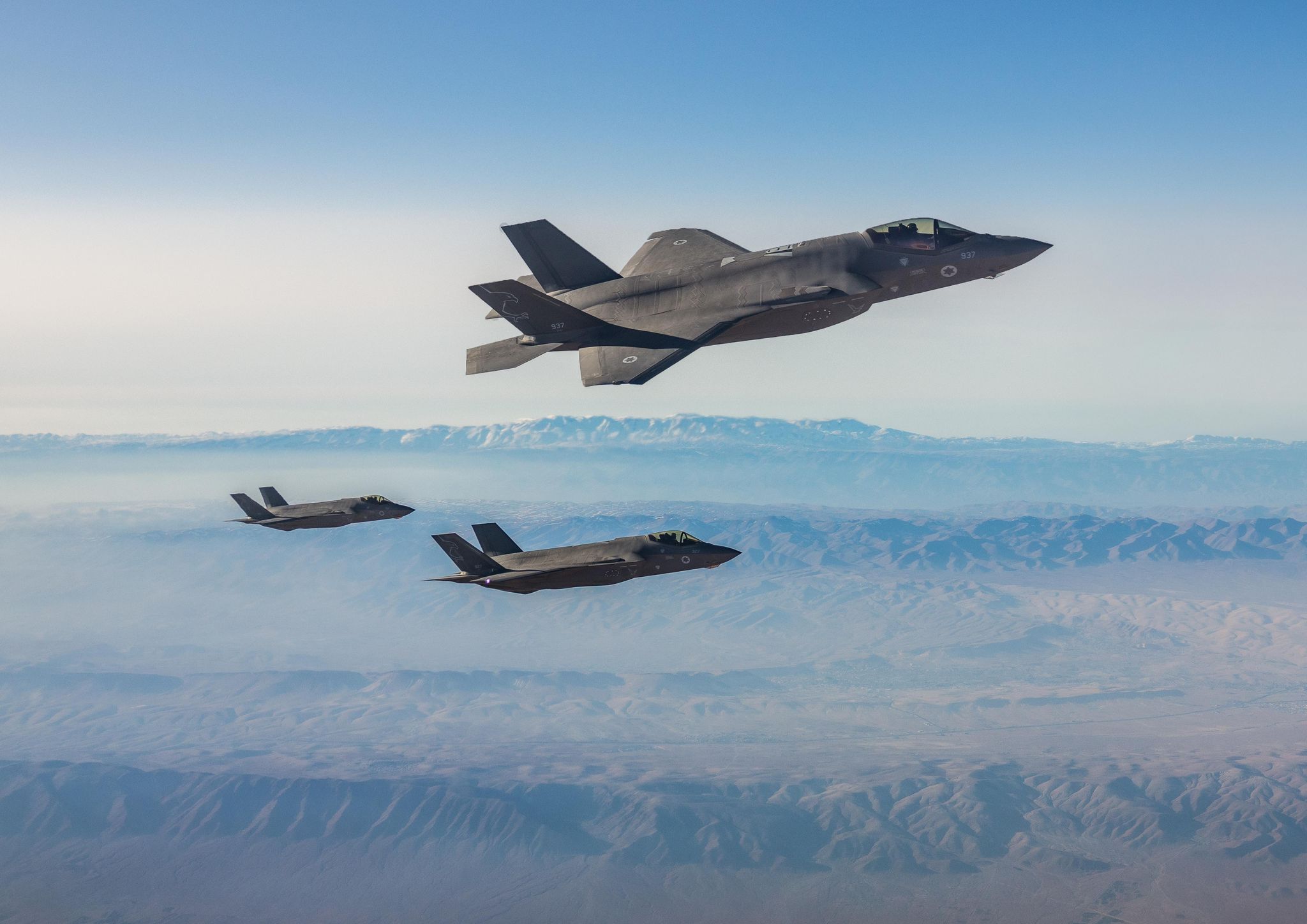
Israeli Air Force F-35I fighter jets head to carry out strikes in Iran, in a photo published by the military on March 15, 2026. (Israel Defense Forces)
His remarks came as the IDF said a wave of strikes in the Hamedan area of western Iran targeted several headquarters belonging to the Islamic Revolutionary Guard Corps and the Basij paramilitary force.
The IDF said it was “expanding” its strikes against Iranian regime infrastructure in western and central Iran, “with the aim of broadly and systematically damaging the regime’s command and control capabilities.”
The Israeli Air Force struck more than 200 targets in western and central Iran over the past day, the military said.
According to the IDF, the targets included command centers manned by Iranian soldiers, as well as air defense systems and weapons storage and production sites.
You appreciate our wartime journalism

You clearly find our careful reporting of the Iran war valuable, at a time when facts are often distorted and news coverage often lacks context.
Your support is essential to continue our work. We want to continue delivering the professional journalism you value, even as the demands on our newsroom have grown dramatically during this ongoing conflict.
So today, please consider joining our reader support group, The Times of Israel Community. For as little as $6 a month you’ll become our partners while enjoying The Times of Israel AD-FREE, as well as accessing exclusive content available only to Times of Israel Community members.
Thank you,
David Horovitz, Founding Editor of The Times of Israel