
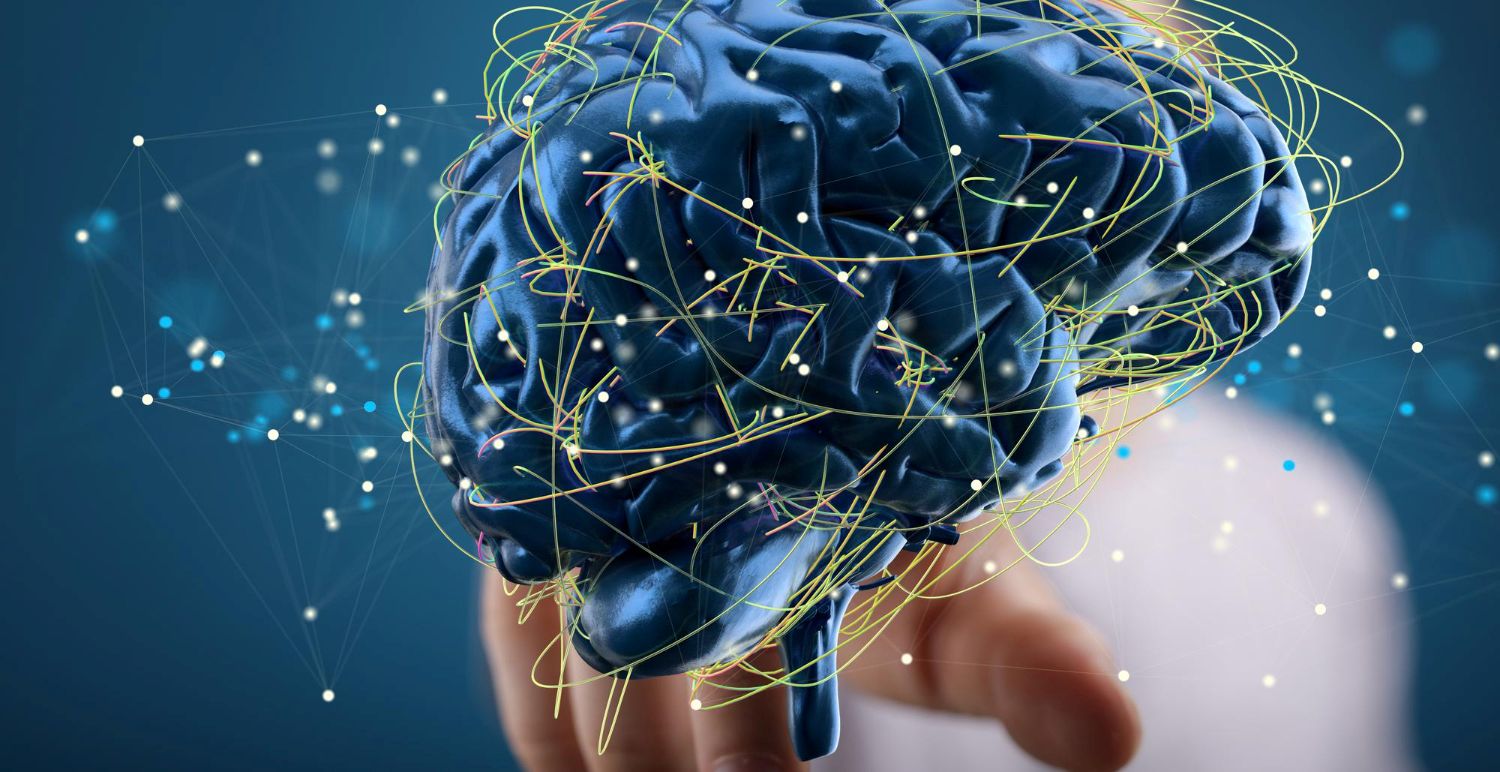
Scientists have found a particularly interesting way that the brain orchestrates its chemical signaling. A newly invented scientific technique shows, for the first time, how one neurological chemical may be directly responsible for calling out another, revealing an elaborate communication system in the brain.
The research focused on the Dorsal Striatum, a critical brain region in learning, movement, and decision-making. The team found that they could directly induce the release of Serotonin, a molecule intimately linked to mood and mental well-being, via a signalling chemical called Acetylcholine.
The study, led by scientists at the Hebrew University of Jerusalem and Stony Brook University, offers a new perspective on how chemical imbalances in the brain may develop. The scientists discovered that a unique type of brain cell, called a cholinergic interneuron (CIN), operates like a conductor in an orchestra, coordinating multiple chemical signals.
These interneurons secrete Acetylcholine and have long been known to powerfully regulate the brain’s pleasure chemical, Dopamine. But they discovered that their influence goes much further than this. Activated, these cells even triggered nearby nerve fibers to release Serotonin in almost no time at all.
A historic milestone: Two people communicate in dreams
This means that a change in one signaling system can rapidly activate another, allowing the brain to coordinate multiple chemical pathways simultaneously.
This finding suggests that when one signaling system shifts, another can be activated immediately, enabling the brain to engage multiple chemical pathways simultaneously.
Using advanced neuroscience methods that enable precise manipulation of specific brain cells, the scientists trained light flashes on cholinergic interneurons to turn them on and off, a technique known as optogenetics. It allowed them to watch the real-time reactions of nearby serotonin-releasing fibers.
Excitement of the cholinergic neurons results in the immediate release of Serotonin into neighbouring brain tissue (the plot explores ms). This release is mediated via nicotinic acetylcholine receptors (nAChRs) on serotonin-containing axons. This effect was notably not observed in the ventral striatum, even though that region has a greater number of serotonin connections.
Deep brain stimulation may significantly improve OCD symptoms
These results may help explain how chemical imbalances contribute to psychiatric and neurological disorders. Through receptor-driven release, serotonin not only increases at a site but also diffuses over a larger area.
The effect was even more pronounced in mice genetically modified to show OCD-like behaviors (Sapap3-/-). A ‘hypercholinergic state’ increased serotonin release, demonstrating how this system can be dysregulated in disease.
Prof. Joshua Goldberg of Hebrew University and Prof. Joshua Plotkin of Stony Brook University said, “Our findings show that the brain’s internal wiring allows one chemical system to take the wheel of another in a highly regional and specific way. In conditions like OCD, where cholinergic signaling may be dysfunctional, this normally helpful coordination may go into overdrive, which could help explain why certain behaviors become so difficult to stop.”
The scientists observed that cholinergic cells were hyperactivated in brain states typical of Obsessive-Compulsive Disorder-like behaviors, leading to an augmented release of serotonin.
Learning and memory problems in OCD helps young people unlock their potential at school
This implies that, rather than simply having too much or too little of a single chemical, the human brain may also experience conditions in which associative element coordination systems become overamplified, transforming typical signaling into aberrant activity.
This view runs counter to the dominant misconception within psychiatry that mental disorders are simple neurotransmitter deficiencies. The finding could eventually change how scientists think about treating mental health conditions.
Many currently prescribed psychiatric drugs, including antidepressants, act on serotonin systems. By explaining how Acetylcholine controls serotonin release, the scientists might offer new therapeutic targets that are more efficient at regulating brain chemistry.
The study suggests that chemical imbalances are not only responsible for triggering mental health problems, but also for brain signals getting mixed up or miscommunicated.
Journal Reference:
Matityahu, L., Hobel, Z.B., Berkowitz, N. et al. Synchronous activation of striatal cholinergic interneurons induces local serotonin release. Nat Commun 17, 2278 (2026). DOI: 10.1038/s41467-026-70359-6