
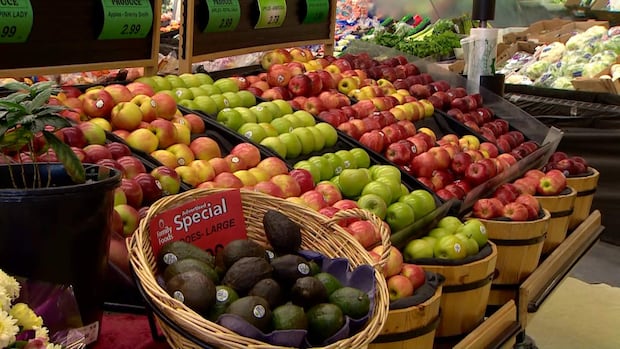
A University of Guelph professor is advising Canadian consumers to brace for higher food prices as the conflict in the Middle East and rising fuel prices continue to create ripple effects through the global supply chain.
Evan Fraser, director of the university’s Arrell Food Institute, said the current crisis is negatively impacting farm inputs, especially fertilizer, which he said requires a lot of energy to produce.
“The price of fertilizer has jumped by about 50 per cent and that directly translates into higher production costs and will be handed on to consumers,” Fraser said on CBC K-W’s The Morning Edition.
LISTEN | Evan Fraser explains how war is affecting food prices:
The Morning Edition – K-W9:43The trickle down effect of war on the global food supply
Evan Fraser, professor and director of the Arrell Food Institute at the University of Guelph, explains how war and rising fuel costs are rippling through the global food supply.
He noted that the Persian Gulf region produces a huge amount of the world’s fertilizer — about 20 per cent. But he said that fertilizer isn’t entering the market because of the conflict, adding that anything that pushes the price of energy up also increases the price of fertilizer.
“If Canadian farmers happen to be buying fertilizer from the Middle East, they’re expensive because there’s a supply challenge,” Fraser said.
“If we’re buying fertilizer from other farmers or buying fertilizer from other parts of the world, it’s expensive because energy is expensive and it’s very energy intensive to produce fertilizer.”
Food system ‘yoked’ to energy system
Fraser said that on all aspects, “our food system is yoked to the energy system and anything that happens in our energy system directly translates into higher prices for consumers at the grocery store till.”
“It’s a tough situation for us all to be in,” he said.
As the conflict continues, Fraser said all food products are likely to see serious price inflation, and fresh products will be the first ones affected.
“Lettuce or tomatoes or apples or things like that, where the products are relatively perishable, they’re moving from farms to grocery stores to consumers relatively quickly, and there’s relatively little processing going on,” he said.
 Fraser is the director of the Arrell Food Institute at the University of Guelph. He says the current U.S. and Israel-Iran war is negatively impacting farm inputs, especially fertilizer, which he says requires a lot of energy to produce. (Portico)
“Those products, the value of say the fertilizers or the farm inputs is a higher percentage of what the consumer is paying. So, it’s those products that I think will be seeing [increases] first, but then it will cascade outward to the more processed products. Nothing is buffered too much from this process,” said Fraser.
Province ‘working on ways to protect farmers’
A spokesperson for Ontario’s Minister of Agriculture, Food and Agri-Business, Trevor Jones, says the government will protect farmers as they deal with challenges arising from the conflict in the Middle East.
“We are always working on ways to protect farmers from rising input costs,” Spencer Fair wrote in an email to CBC News.
According to Fair, since 2022, the government has invested over $60 million to lower costs across the agri‑food sector and strengthen the province’s food supply chain.
“Through the Fertilizer Accelerating Solutions and Technology Challenge, our government invested $2 million to reduce reliance on imported fertilizers and expand made‑in‑Ontario alternatives,” Fair said.
Additionally, he said Ontario’s Risk Management Program (RMP) helps producers manage market risks beyond their control, and in January 2025 the ministry announced an increase in annual RMP funding from $150 million to $250 million by 2027.
“This $100 million phased‑in investment will help farmers respond to market challenges and strengthen their long‑term competitiveness,” Fair said, adding that “our government will always protect our farmers during a time of difficulty.”
Ontario gas prices up 31% since war began: expert
Meanwhile, gas prices are expected to continue an upward trend this week, according to Patrick De Haan, head of petroleum at GasBuddy, the gas price tracking website and app.
“Already the price [Monday] in Ontario is up 2.6 cents a litre, so we may see prices get closer to $1.65,” De Haan told CBC K-W.
“The average rate now, provincially, is about [$1.62], but once we do hit that $1.65, we may start to see prices rolling back slightly as long as the situation continues to improve between the U.S. and Iran.”
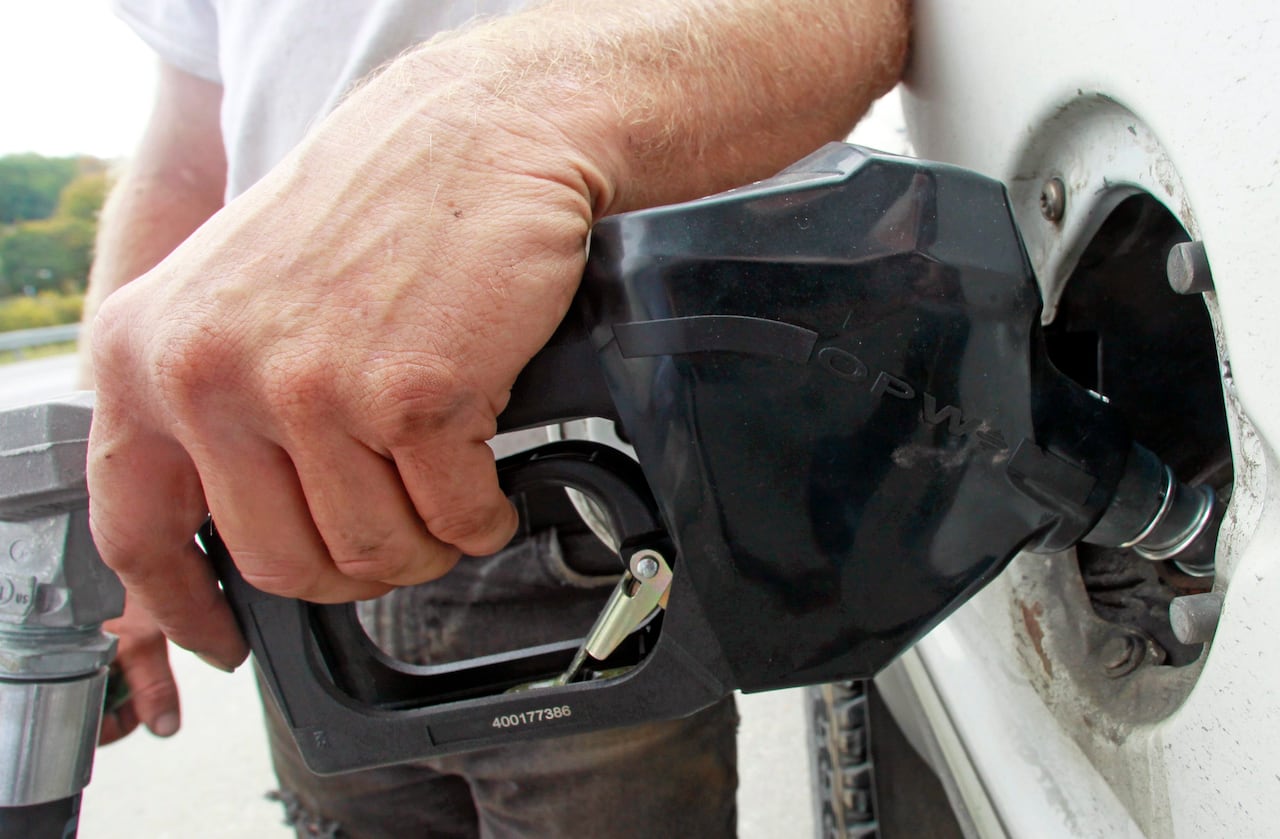 Patrick De Haan, head of petroleum at GasBuddy, says by reducing speed, using cruise control, trying not to accelerate significantly or hard, drivers can increase the amount of distance per tank. (The Associated Press)
De Haan said gas prices in Ontario are up about $0.38 a litre compared to a month ago — an average of about 31 per cent, and much of the increase is a direct result of what’s happening in the Middle East.
“It looks like some ships may be starting to get through the Strait of Hormuz, which would potentially be good news, but for now the impact of the situation in the Middle East is very much being felt globally,” he said.
In the meantime, De Haan said there are things drivers can do to help them cope.
“Drivers that are able to improve their driving behavior may certainly yield more fuel efficiency — things like reducing your speed, using cruise control, trying not to accelerate significantly or hard can certainly increase the amount of distance per tank,” he said.
“In addition to driving more fuel efficiently, certainly I would have motorists using apps like GasBuddy and Google Maps and other apps that may show gasoline prices in real time around them. I think with those two combined, motorists can likely save hundreds of dollars per year.”