
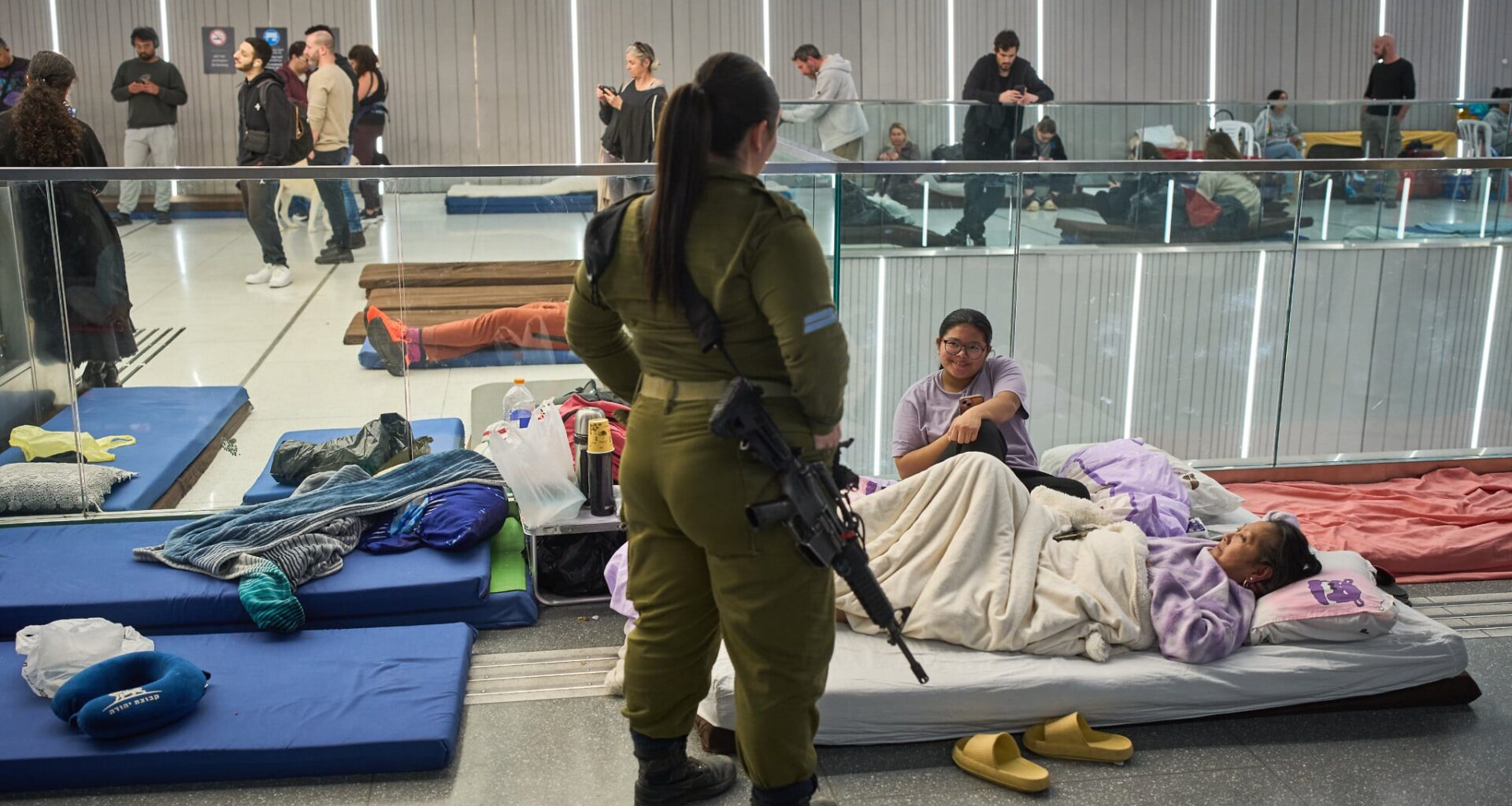
Last week, the psychoanalyst Yoram Yovell made waves when he went on TV and, in the middle of a conversation about the Iran war, accused part of the country of being “a bunch of spoiled prima donnas.”
“I’ve never seen anything like this,” he said on Channel 12. “Gentlemen, ladies, the people of Israel, you need to kiss the Air Force’s feet. You need to wake up, to say thank you. There’s never been a war like this. There’s never been an army like this.”
He went on, “The Air Force, the pilots, and the Home Front Command are giving you a deluxe war. Say thank you, for God’s sake!”
If you’re wondering why, going on three weeks into the war with Iran, the vast majority of Israelis still support it, there’s your answer.
The past 18 days have not been easy here in Israel. As of early Wednesday morning, 14 people have been killed in Israel from Iranian missile attacks. The north is under a constant barrage of rockets and drones from Hezbollah, with IDF soldiers pushing deeper into Lebanon. Routinely, Israel’s hospitals record more than 100 people admitted per day due to injuries from the fighting — whether from missile attacks themselves or the constant rush to shelter every time a siren sounds.
Get The Times of Israel’s Daily Edition
by email and never miss our top stories
By signing up, you agree to the terms
Speaking of bomb sirens: Quiet nights in central Israel, where the population is concentrated, feel like an increasingly distant memory, especially for people who need to leave their apartment every time the alarm blares. During the writing of this analysis alone, two sirens went off in Tel Aviv. It was at complaints about the sirens that Yovell aimed his rebuke.
In most of the country, parents have had almost three trying weeks at home with their kids as workplaces stay open but schools remain shuttered, with the two-week Passover break around the corner.
And this is all after, not nine months ago, Prime Minister Benjamin Netanyahu declared that the last Iran war in June was a “historic victory” that would “abide for generations.”
Considering all of that, you could be forgiven for thinking Israelis would no longer support this war — except they do, in spades.
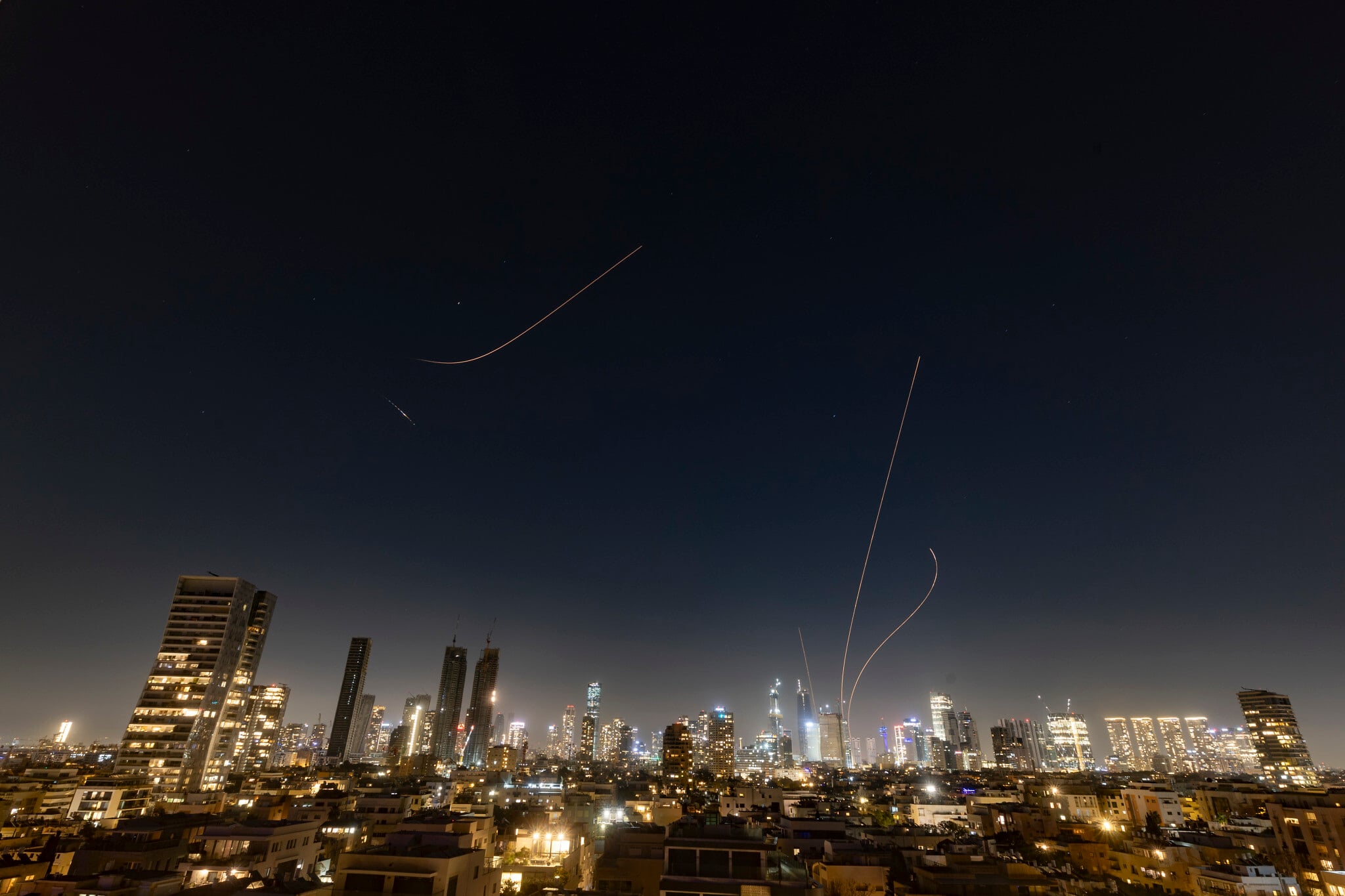
Anti-missile batteries fire interception missiles toward incoming ballistic missiles launched from Iran, as seen over Tel Aviv, March 16, 2026. (Chaim Goldberg/Flash90)
High levels of resilience to fight an ‘existential danger’
A survey by the Israel Democracy Institute taken on the war’s third and fourth day found that 82 percent of Israelis overall, including 93% of Jewish Israelis, support the US-Israeli operation against Iran. In the IDI’s second survey, taken a week or so later, the numbers were 81% and 92.5%, respectively. In both polls, about a quarter of Arab Israelis conveyed support.
Surveys by the Institute for National Security Studies likewise show overall support holding firm. Its first poll, released on March 3, found that 81% of Israelis backed the operation. In a second poll released on Tuesday, the number was 78.5%.
All of the shifts, in both the IDI and INSS polls, were within the margin of error. In other words, it’s reasonable to say support for the war has basically not budged at all.

Tamar Hermann, senior research fellow at the Israel Democracy Institute and academic director of the Viterbi Family Center for Public Opinion. (Courtesy of the Israel Democracy Institute)
Why is that? According to pollsters, it’s because of what Yovell said. Most Israelis see Iran as a pressing, existential threat. And to defeat it, all they’ve been asked to endure is a “deluxe war” where the risk of casualty is low, and most, if not all, of life can continue as normal.
The latest IDI survey found that 79% of Jews feel somewhat or very protected from Iran’s attacks. Among Arabs, the number was 15%.
“Altogether, look, the economic situation is good overall, and there’s a support system — now there’s the whole issue of [government-backed] unpaid leave, and so on,” Tamar Hermann, academic director of IDI’s Viterbi Family Center for Public Opinion and Policy Research, told The Times of Israel. “The medical system is working, only the educational system is not. But stores are full of food. Public transit is working.”
She added at another point, “Whoever really thinks Iran is an existential danger sees this as an action that has strategic justification, right? This is a public whose resilience to these things is very high.”
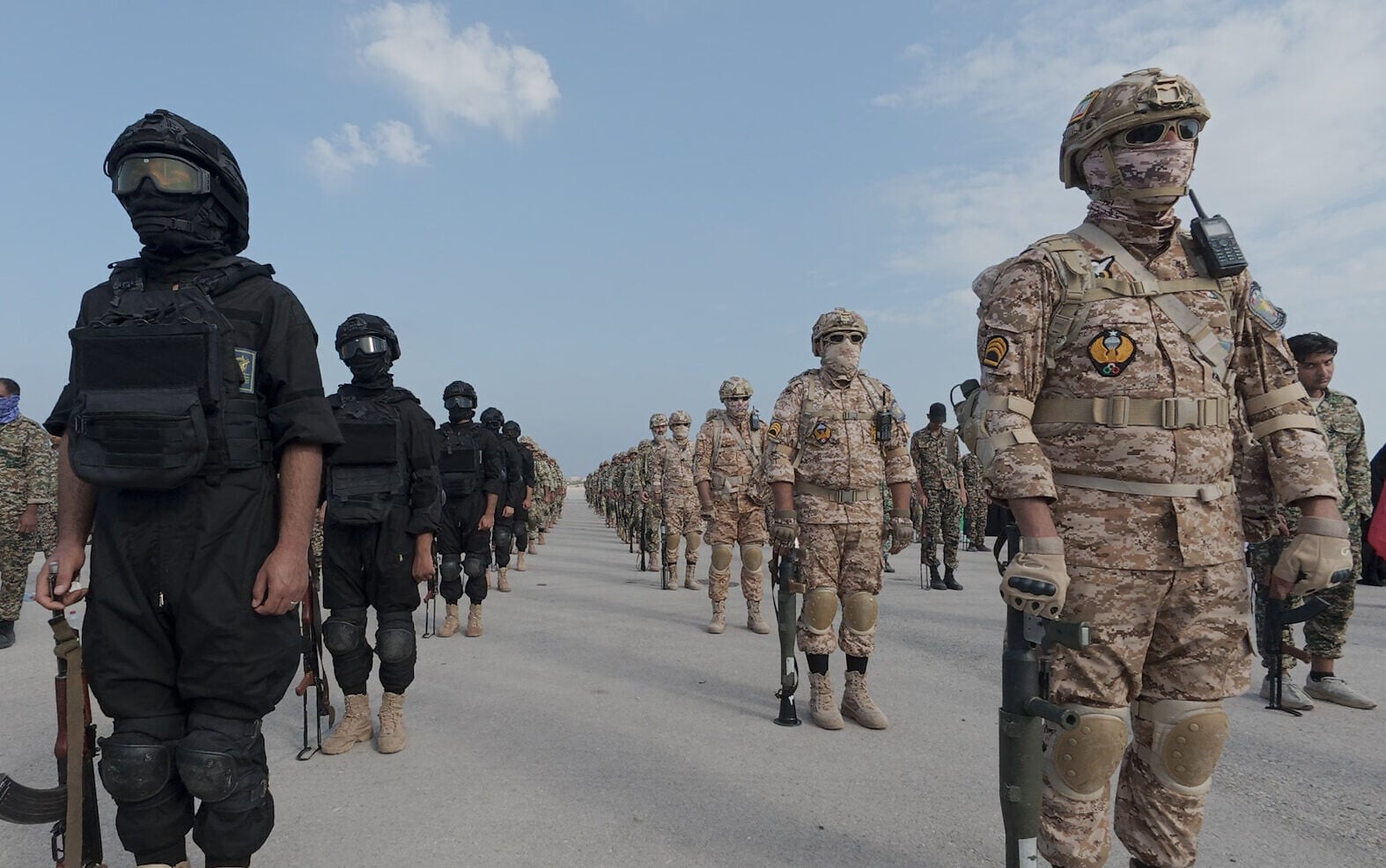
Illustrative: This image provided by Sepahnews of Iran’s Islamic Revolutionary Guard Corps on February 16, 2026, shows troops standing at attention during the IRGC’s drill in the Persian Gulf. (Sepahnews via AP)
Something else that sets this war apart from some others Israelis have fought since October 7, 2023, is that in the case of Iran, most Israelis appear to trust the government led by Netanyahu, who has dedicated his career to warning of the threats posed by Iran.
The INSS survey found that more than 60% of coalition and opposition voters “believe the political leadership is managing the campaign with security interests as the top priority.”
“People believe the Iran threat, it’s not theoretical, it’s not just his brainwashing,” Dahlia Scheindlin, a pollster, political analyst and Haaretz columnist, told The Times of Israel. “Messaging over years only takes you so far, I think. People see the reality that Iran really is a bad actor in the region.”
In addition, the two and a half years since October 7, 2023, may have accustomed Israelis to life amid sirens. The continued high level of support, said Scheindlin, isn’t surprising because the first couple weeks of a war often come with a “rallying effect” that leads people to back their country in wartime.
Whoever really thinks Iran is an existential danger sees this as an action that has strategic justification, right? This is a public whose resilience to these things is very high.
Hermann also said the sky-high rates of support among Jews may be due to social desirability bias, or the idea that you answer survey questions in ways you believe are socially acceptable.
“I think Israelis have really habituated themselves to long wars at this point,” Scheindlin said. “And I think also, you know, the buildup to this war has been years and years of telling Israelis that this is a real huge, game-changing kind of effort that has to be made.”
Israelis believe that effort must be undertaken, Hermann said, even if they don’t necessarily think Iran’s regime will fall or that all of its threats will be indelibly vanquished. Only 11% of respondents to the INSS poll, for example, think the regime will topple.
“Even if you say it’s impossible to achieve now, that doesn’t mean you won’t be able to achieve it [in the future] if you make progress in the operation,” she said.
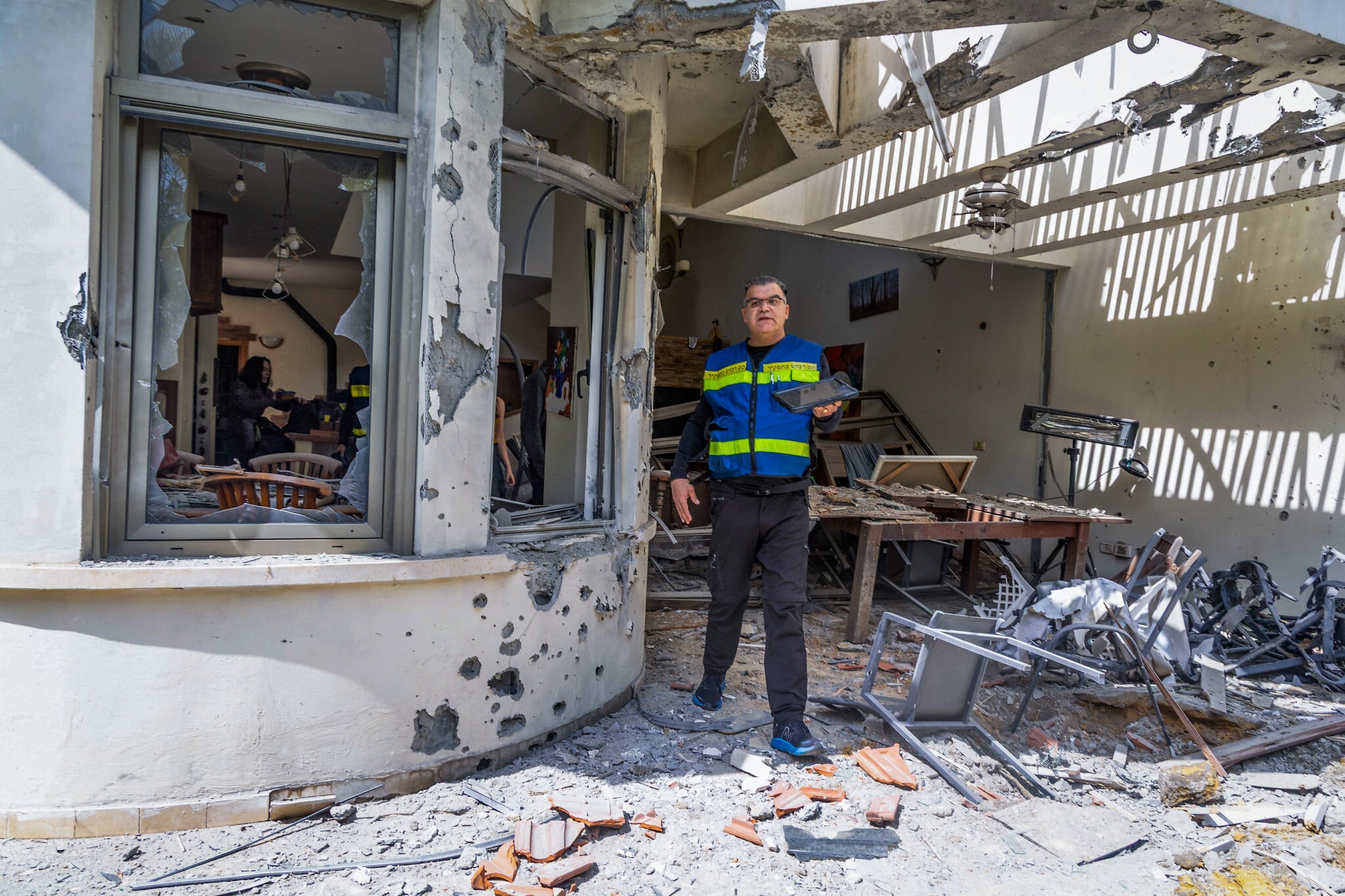
Security and rescue forces at a house damaged in an Iranian missile attack in Shoham, March 16, 2026 (Yossi Aloni/Flash90)
What could cause support to decline?
What could cause the support to flag? In short, Hermann said, if the conditions that have made the war extremely popular and kept Israelis relatively safe were to change. Both she and Scheindlin pointed to the joint combat between Israel and the US as a reason many Israelis back the war.
“If many will get killed, if there’s going to be a lot of damage, if the United States will pull out and Netanyahu will go on, that could all certainly bring this down,” Hermann said.
Scheindlin pointed to indications in the second IDI survey that support for the war has fallen, ever so slightly. The percentage of Jews who strongly support the war has dipped from 74% to 68%. Among the sliver of Jewish Israelis who identify as left-wing, support has declined from 76% to 68%.

Pollster Dahlia Scheindlin. (Oren Ziv)
“It’s a little bit notable to me that after just two weeks of what could be a very long war, we’re seeing an indication of a mild decline,” she said.
She added later, “The longer a war goes on, in general, the less the public supports it. And so if you think about who’s gonna go first in terms of losing support, it’s probably the left the longer it goes on.”
But so far, Hermann noted, there hasn’t been much political opposition to the war, despite the sharp divides between Netanyahu and his critics. “The internal political issue hasn’t entered into this arena,” she said.
Eventually, Israelis will want to be through with the fighting. But Scheindlin said that many believe that peacetime, for now, is simply out of the question.
“You don’t need data to know that Israelis would like to not be living with permanent war,” she said. “The question is whether they feel they have that option, and if they feel that they don’t have the option because they will be existentially destroyed.”

Israelis take cover at bomb shelter in Jerusalem as a siren sounds warning of incoming ballistic missiles fired from Iran toward Israel, March 11, 2026. (Yonatan Sindel/Flash90)
She added, “They’ll just say, ‘Yeah, I mean, I would love to live in peace, but we have to defend our country and defend our lives.’”