
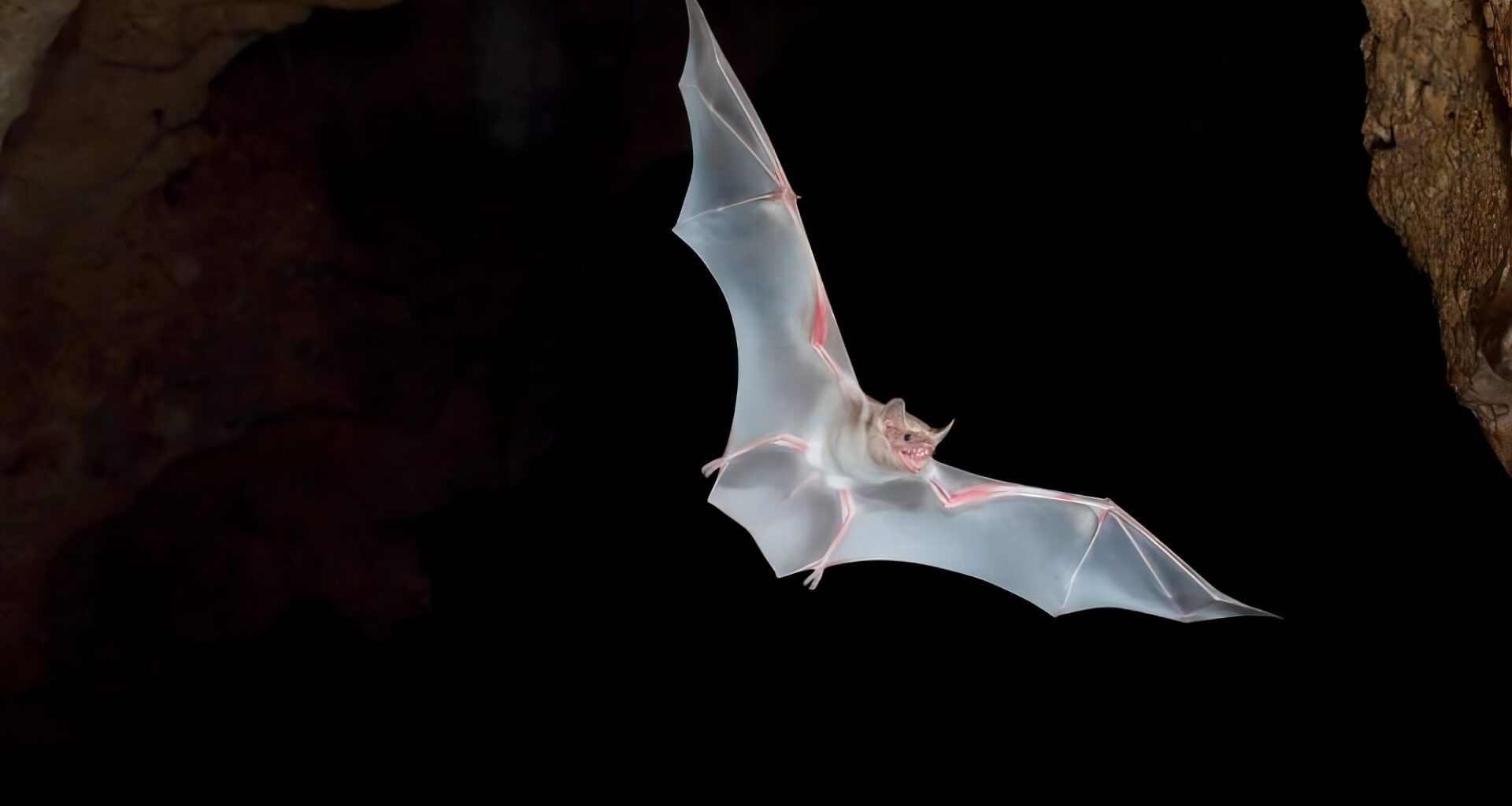
David Wechuli and other researchers are studying bats living in cave systems in Kenya, to better understand how they interact with their environment and how human activities affect bat habitat.Research shows that many bat species are highly sensitive to disturbances, sometimes abandoning their roosts, with damaging consequences.Wechuli works for Bat Conservation International, which has helped communities develop guidelines to protect caves hosting bat colonies from disturbance.
See All Key Ideas
As the afternoon fades at the Three Sisters Caves in Kenya’s Kwale county, David Wechuli’s team begins setting up nearly invisible nets along the hillsides in the coastal forest. “When dusk arrives, bats begin pouring out of the caves,” Wechuli says.
“Some fly straight into the nets. We quickly remove them, carefully untangling each bat before taking morphometric measurements such as body size, weight and wing length.”
The captured bats are carefully placed in small cotton bags, allowing them to breathe while preventing escape over the next two or three hours. The research team from Bat Conservation International (BCI) will work into the night, measuring each animal, determining their sex, and taking tissue samples to check for the presence of disease, before photographing each one and releasing it back into the night.
Earlier in the afternoon, the team will have inspected the site, moving carefully through the dark cave filled with thousands of bats clinging to the cave’s roof and rock walls. “Some caves are deep tunnels, more than 100 meters [330 feet] long,” Wechuli tells Mongabay in a phone interview. “Others have bats roosting very high. You have to know the cave before you even start capturing anything.”
Wechuli and other researchers are working to better understand how bats live, the role these flying mammals play in ecosystems, and how human activities are reshaping their habitats. His research and conservation work is focused on the coastal caves in the Shimoni region of Kwale county, as well as in volcanic cave systems in the Mount Suswa Conservancy, roughly 600 kilometers (370 miles) northwest, in the Kenyan highlands.
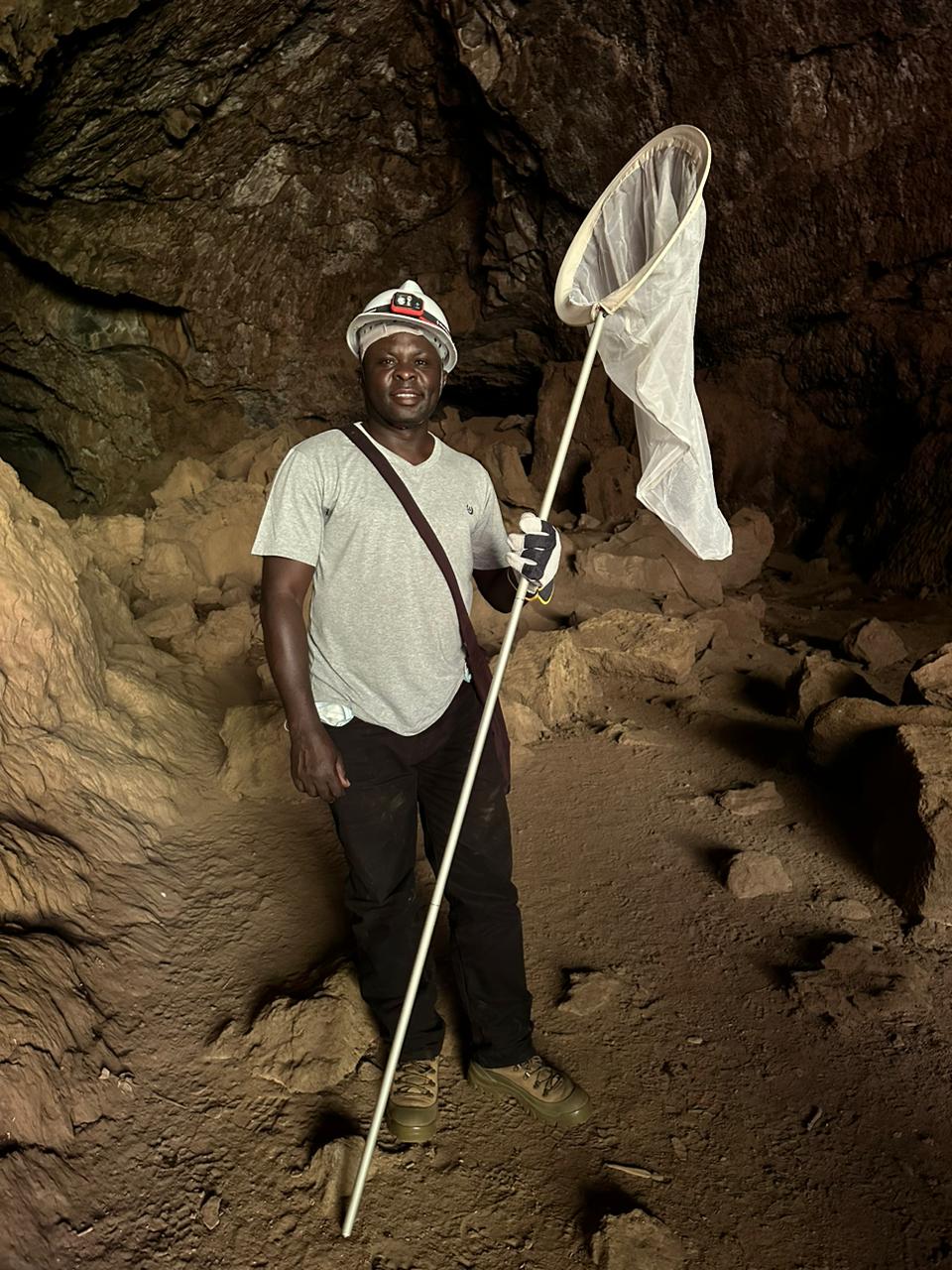 Researcher David Wechuli with a hand net at Mount Suswa caves, Kenya. Image courtesy of Jackson Shonko.
Listening to bats humans cannot hear
Capturing bats is only one way to study them. The team also places audio-recording devices near cave entrances and along known flight paths before sunset. “Each species produces calls at distinct frequencies. By analyzing the recordings, we can identify which species are active and when they forage,” Wechuli says.
Guano provides another source of information. “By analyzing droppings beneath the roosts, we can see what bats are eating, whether fragments of insects, fruit or pollen,” Wechuli says. “This tells us a lot about their ecological role. Insect-eating bats suppress crop pests and mosquitoes, while fruit- and nectar-feeding species disperse seeds and pollinate plants, helping forests regenerate.”
In some areas, locals scrape up the nutrient-rich bat droppings that accumulate in dark brown mounds on the cave floor, to use as fertilizer. The pungent, ammonia smell of the guano, as it slowly dries into crumbly pellets, mingles with the damp, earthy aroma of the caves.
For future studies, Wechuli plan to fit bats with tiny trackers. “We will attach small GPS loggers to understand where bats travel to forage and whether their movements extend beyond the caves.”
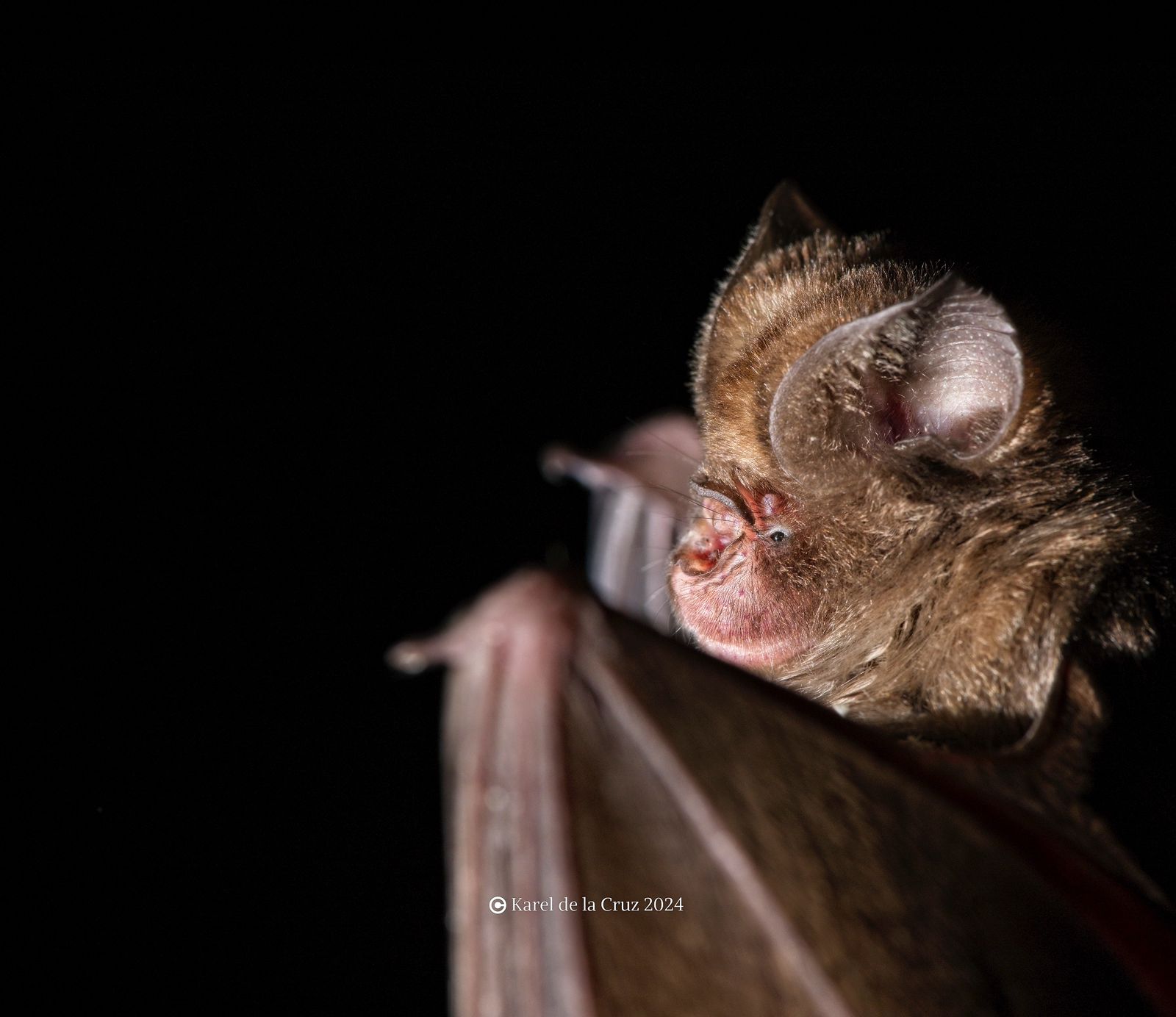 A Harrison’s giant mastiff bat (Otomops harrisoni) in a cave at Mount Suswa caves, Kenya. Image courtesy of Karel de la Cruz.
Protecting caves and the species that depend on them
Paul Webala, a professor at Maasai Mara University specializing in bat ecology and conservation, says protecting these caves is essential: “Africa is so diverse … many areas that would have been suitable for bats no longer exist, so these caves are critical for their survival.”
To reduce these risks, Bat Conservation International and others have helped communities develop guidelines to protect sensitive areas, for instance by limiting visitor numbers. The landscape beyond the caves also needs protection. “Bats rely on nearby forests for food. If forests are cleared for farming or charcoal, they lose feeding opportunities,” Wechuli says. Researchers encourage tree planting and habitat restoration around cave systems.
At Mount Suswa Conservancy, there are additional threats. Bats there find shelter in the dozens of lava tube caves in the area, but drilling for geothermal projects and disturbance for other infrastructure development can affect the roosting colonies. “We monitor how noise and vegetation clearing may impact them. Protecting both caves and surrounding habitats is critical,” Wechuli says.
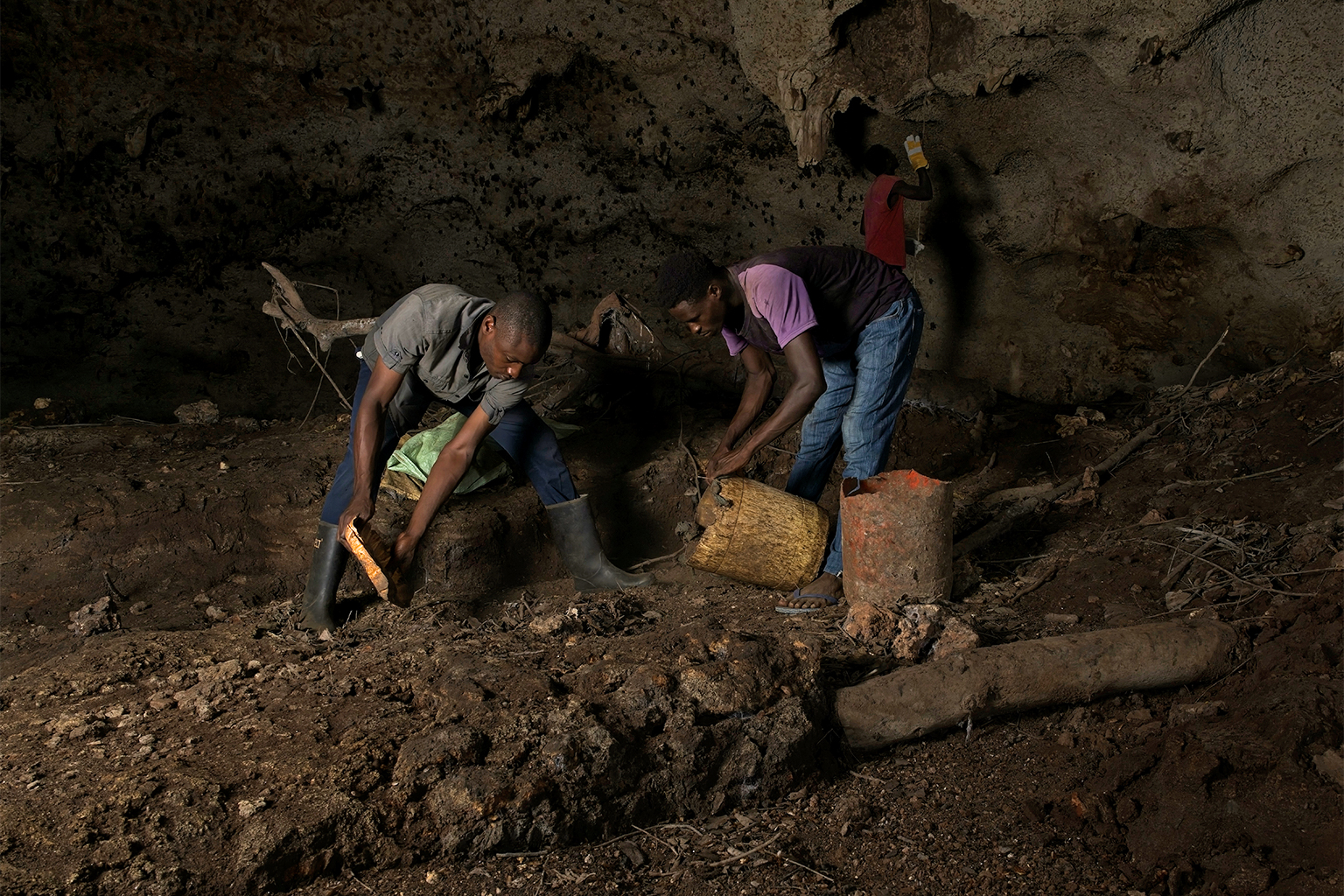 Collecting bat guano inside Three Giant Sister Caves. Image courtesy of Karel de la Cruz.
Community conservation at the Sister Caves
Salim Rimo, chair of the Tswaka Three Giant Sister Caves Community-Based Organisation, oversees conservation and visitor activities at the caves. “As a leader, I stay on top of whatever is happening at the site. We have a group of volunteers who visit daily to maintain the place.”
The Three Sisters cave guides lead visitors through the main caves, Mdenynye, Kisimani and Pangani, providing information about what types of bats roost here and their ecological roles; about how other animals such as baboons also find shelter or water in the caves; and about the human history of the caves, which were reputedly used by locals to escape Arab enslavers in the 19th century.
Rimo says working with Bat Conservation International has shaped the community organization’s practices. “We’ve set rules on how to access the caves, where tourists can go, and how to collect guano safely. At first, some people resisted, but over time they’ve come to understand that protecting the bats supports the ecosystem and even benefits our tourism.”
BCI has also funded tree nurseries to grow seedlings for restoring degraded forests, and installed water tanks that benefit both local farmers and wildlife. Alongside the NGO’s conservation awareness efforts, Rimo says, these initiatives have helped shift local attitudes toward bats.
“At first, some locals thought bats were evil, but through education and awareness campaigns, attitudes have changed,” he says. Now people understand better how bats support agriculture and the wider functioning of the ecosystem, eating insects and pollinating plants, he adds.
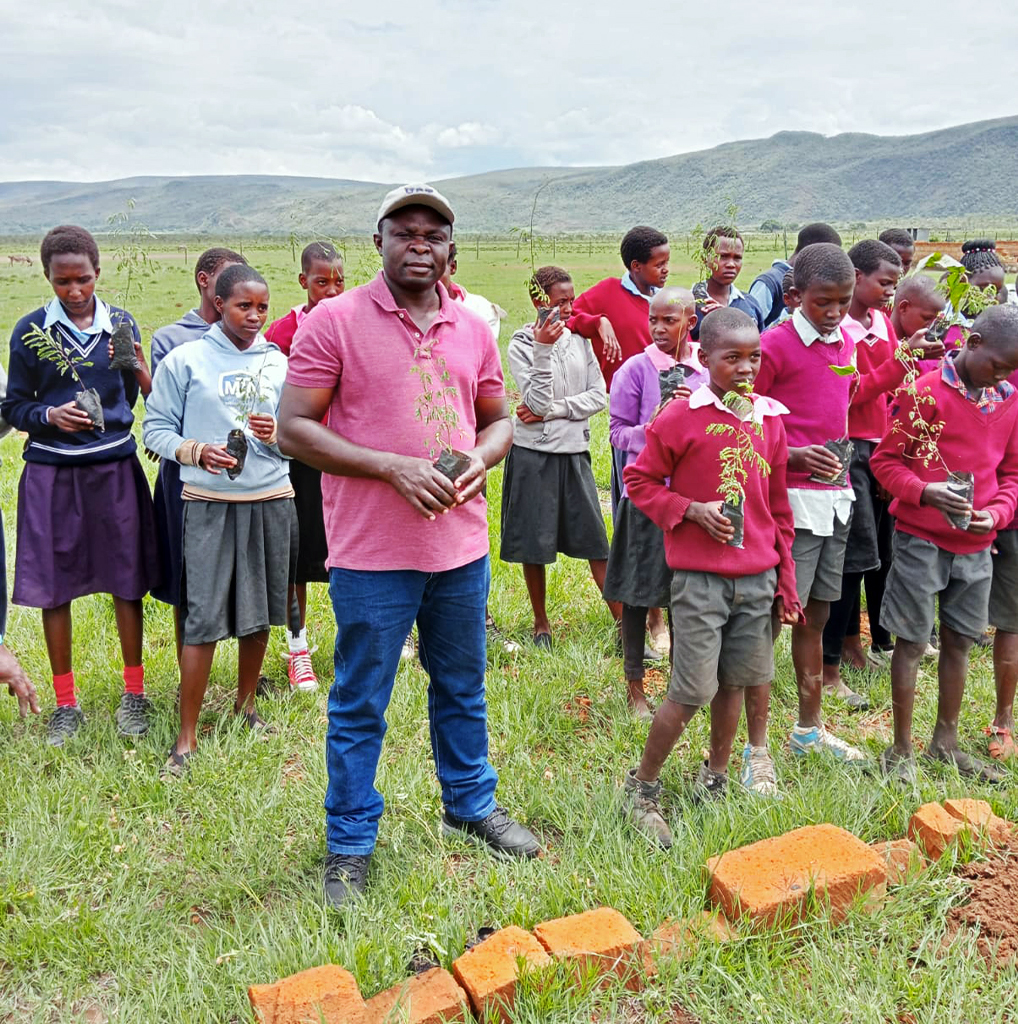 Schoolchildren preparing to plant trees near caves on Mount Suswa, Kenya, as part of conservation awareness and environmental education activities. Image courtesy of Bat Conservation International.
Changing how people see bats
Different species of bats face differing levels of risk if Bat Conservation International’s work doesn’t find a welcome in Kwale county and Suswa.
By some accounts, Rousettus aegyptiacus, a large fruit bat widely found across Africa and beyond, is impressively adaptable — eating wild or domesticated fruit or flowers or even insects if need be, roosting in caves or open wells, underground parking or trees.
But Webala, the bat professor, says a growing body of research shows that other bat species are highly sensitive to human disturbance and may abandon their roosts if caves are disrupted. For example, colonies of the straw-colored fruit bat (Eidolon helvum) have been observed abandoning coastal caves following nearby construction or deforestation activity.
Bat populations can be supported by measures including managing cave access, as in Three Sisters, restoring damaged forests, and maintaining forest corridors that allow them to move safely between roosting and foraging sites.
“For me, research is only part of the work,” Wechuli says. “Equally important is helping communities understand why bats matter. Many people fear bats or see them as pests, yet they play vital roles in ecosystems. Insect-eating bats reduce pests in farms. Fruit bats disperse seeds and help forests regenerate.”
Banner image: The endangered Hildegarde’s tomb bat (Taphozous hildegardeae) in flight near its roost. Image courtesy of Bat Conservation International.
Young Nigerian researcher goes to bat against forest fires
Citation:
Bungei, M. J., Kibiwot, S., Kimanzi, J. K., & Webala, P. W. (2025). Assessing human disturbance threats in caves on community lands in Kenya. African Journal of Education, Science and Technology, 8(3), 116-122. Retrieved from https://ajest.org/index.php/ajest/article/view/908
Feedback: Use this form to send a message to the author of this post. If you want to post a public comment, you can do that at the bottom of the page.
