
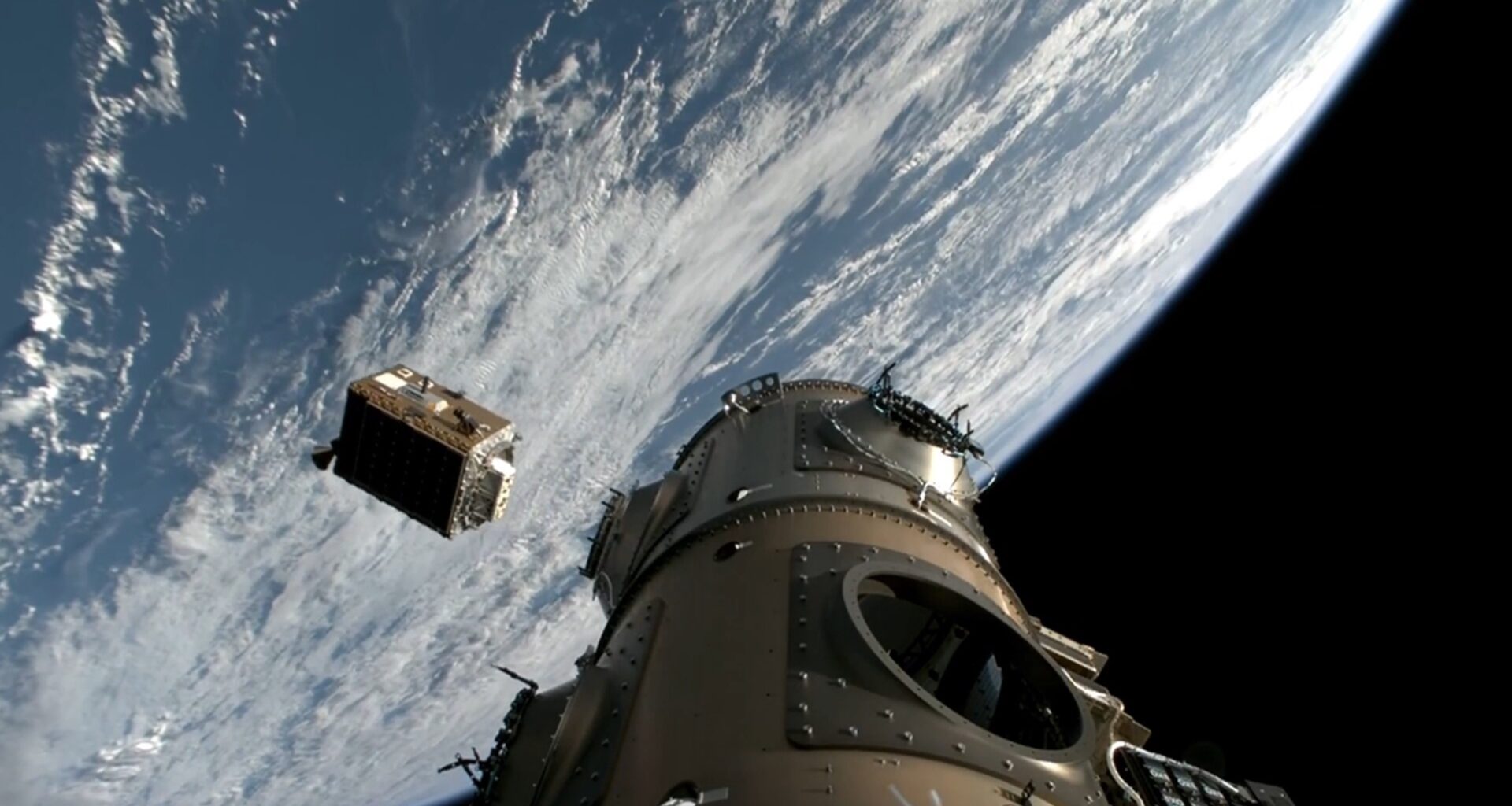
A Nvidia-backed startup is seeking U.S. approval to launch tens of thousands of satellites in orbit to build data centers in space for artificial intelligence workloads.
Starcloud, a company based in Redmond, Washington, has filed an application with the Federal Communications Commission seeking approval to deploy a constellation of as many as 88,000 satellites in low Earth orbit.
The satellites would function as orbital data centers designed to process artificial intelligence workloads in space rather than on Earth.
According to the company, the idea is to bypass growing limits facing terrestrial data centers, including land availability, energy supply, and cooling.
“Starcloud is designing its satellite system to accommodate the explosive growth of datacenter demands driven by AI, which is already encountering severe roadblocks to efforts to scale on the ground,” the company wrote in its filing.
“By avoiding the constraints of terrestrial deployment, space datacenters will be the most cost-effective and scalable way to deliver compute this decade.”
Massive orbital AI plan
If approved, the constellation would operate in several narrow orbital shells between about 600 and 850 kilometers above Earth. Each orbital band would be up to 50 kilometers thick.
The satellites would fly in dusk-dawn sun-synchronous orbits, allowing them to generate nearly continuous solar power. Continuous sunlight would help power onboard computing hardware needed to run AI workloads.
A network of 88,000 spacecraft would dwarf most satellite constellations currently operating in orbit. For comparison, SpaceX operates the world’s largest satellite network today through its Starlink system, which has roughly 10,000 satellites in orbit.
However, the proposed constellation is still smaller than a separate plan filed earlier this year by SpaceX that envisions deploying up to one million satellites designed to host orbital computing infrastructure.
Starcloud’s satellites would rely heavily on optical inter-satellite communication links to move data between spacecraft and connect with existing broadband satellite networks.
Those connections would include systems such as Starlink, Project Kuiper developed by Amazon, and Tera Wave being developed by Blue Origin.
The FCC filing also requests access to portions of the Ka-band radio spectrum to support telemetry, tracking, and command links between the satellites and ground systems.
Safety and sustainability claims
While the company did not disclose the size or mass of the planned satellites, it said the constellation would be designed to reduce risks in already crowded orbital regions.
It stated that the satellites would initially operate in lower orbits for early system checks before moving to their final operational altitude. This approach would ensure that any malfunctioning spacecraft would reenter Earth’s atmosphere quickly.
The company also emphasized that the satellites are designed to avoid creating debris.
“Starcloud will also work closely with the astronomy community to protect essential observations, including implementing established brightness mitigation measures,” the filing states.
Starcloud previously operated under the name Lumen Orbit and has already placed one spacecraft in orbit. Its first satellite, Starcloud-1, launched in November on a rideshare mission with SpaceX.
The 60-kilogram satellite carried an Nvidia H100 processor and was used to run a version of Google’s Gemini artificial intelligence model in orbit.
According to the company’s roadmap, its next spacecraft, Starcloud-2, is expected to launch in 2027 and will include a cluster of processors along with proprietary thermal and power systems designed for small satellites.
Future systems may grow significantly larger. The company’s long-term plans include spacecraft that could deploy massive solar arrays stretching four kilometers across to power a five-gigawatt orbital data center.