
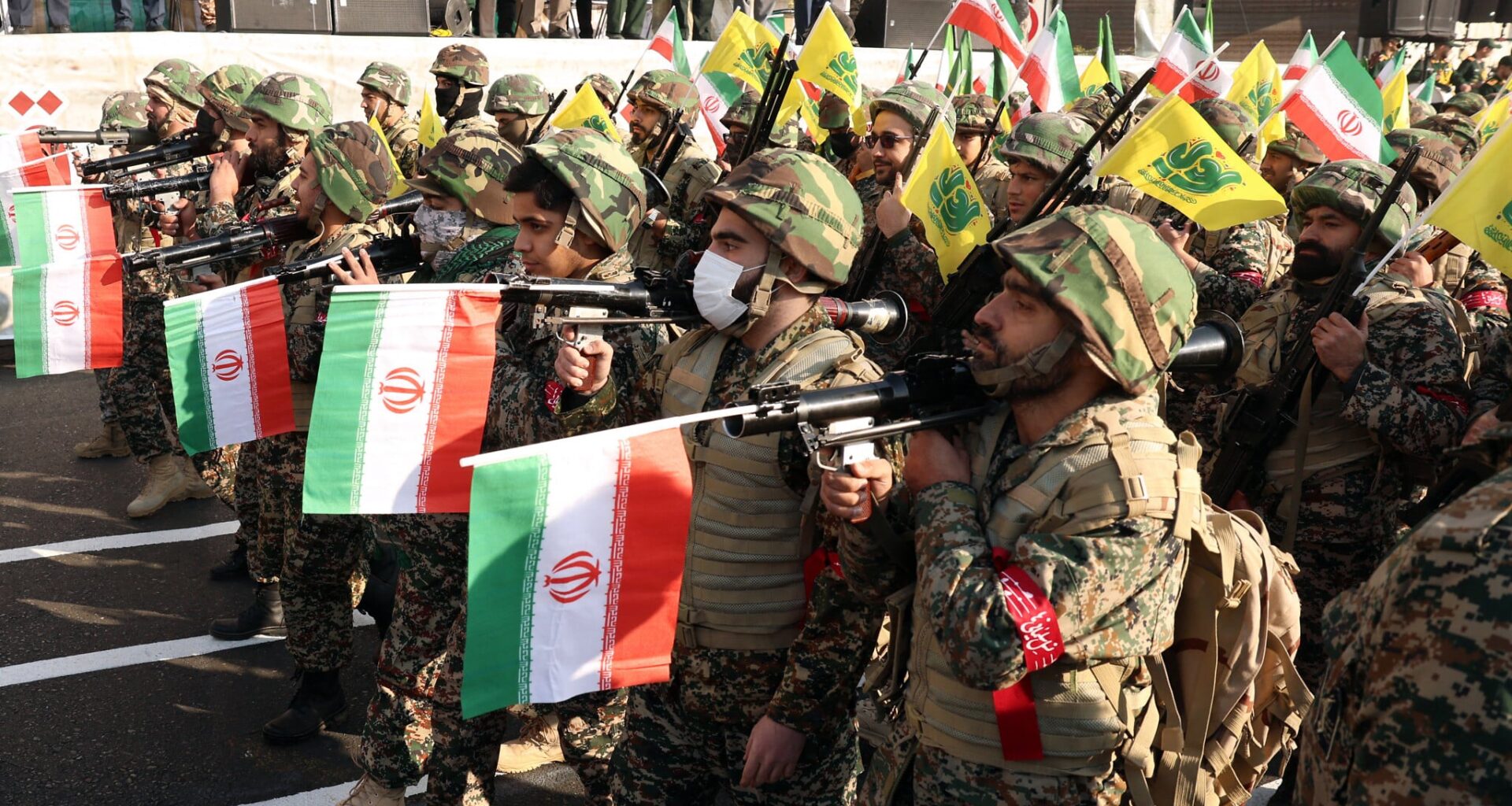
Israeli efforts to topple Iran’s regime in the ongoing war have expanded into the realm of psychological warfare, according to a Wall Street Journal report, which claimed intelligence officials have been placing threatening phone calls to Iranian internal security forces.
The calls are apparently part of a larger campaign by Israel to lay the groundwork for an uprising to oust the Islamic Republic by weakening the morale of its public security personnel, including the Revolutionary Guard’s domestic security arms, the Basij militia and special police forces, per the Wednesday report.
The Wall Street Journal detailed one such phone exchange between a Mossad agent and police commander, in a taped call obtained by the American outlet.
In Farsi, the Israeli agent was reportedly heard saying, “We know everything about you. You are on our blacklist, and we have all the information about you,” to which the commander replied, “OK.”
The agent seemed to urge the officer to join in, or at least step aside, in the case of an uprising against the regime. “I called to warn you in advance that you should stand with your people’s side… if you will not do that, your destiny will be as your leader,” he said.
Get The Times of Israel’s Daily Edition
by email and never miss our top stories
By signing up, you agree to the terms
“Brother, I swear on the Quran, I’m not your enemy,” the commander reportedly responded. “I’m a dead man already. Just please come help us.”
Aside from phone calls, Israeli strikes targeting rank-and-file officers have sent forces scrambling for cover. The strikes are reportedly part of a division of labor by the US and Israel, in which the former goes after the regime’s “military and industrial power” while the latter targets “structures of internal control.”
This began with the targeting of command centers, then the targeting of local sports complexes — which Israeli intelligence officials quickly learned were being used as backup gathering spots for internal security forces. The Wall Stree Journal said the strikes on these stadiums were among the deadliest so far in this war.
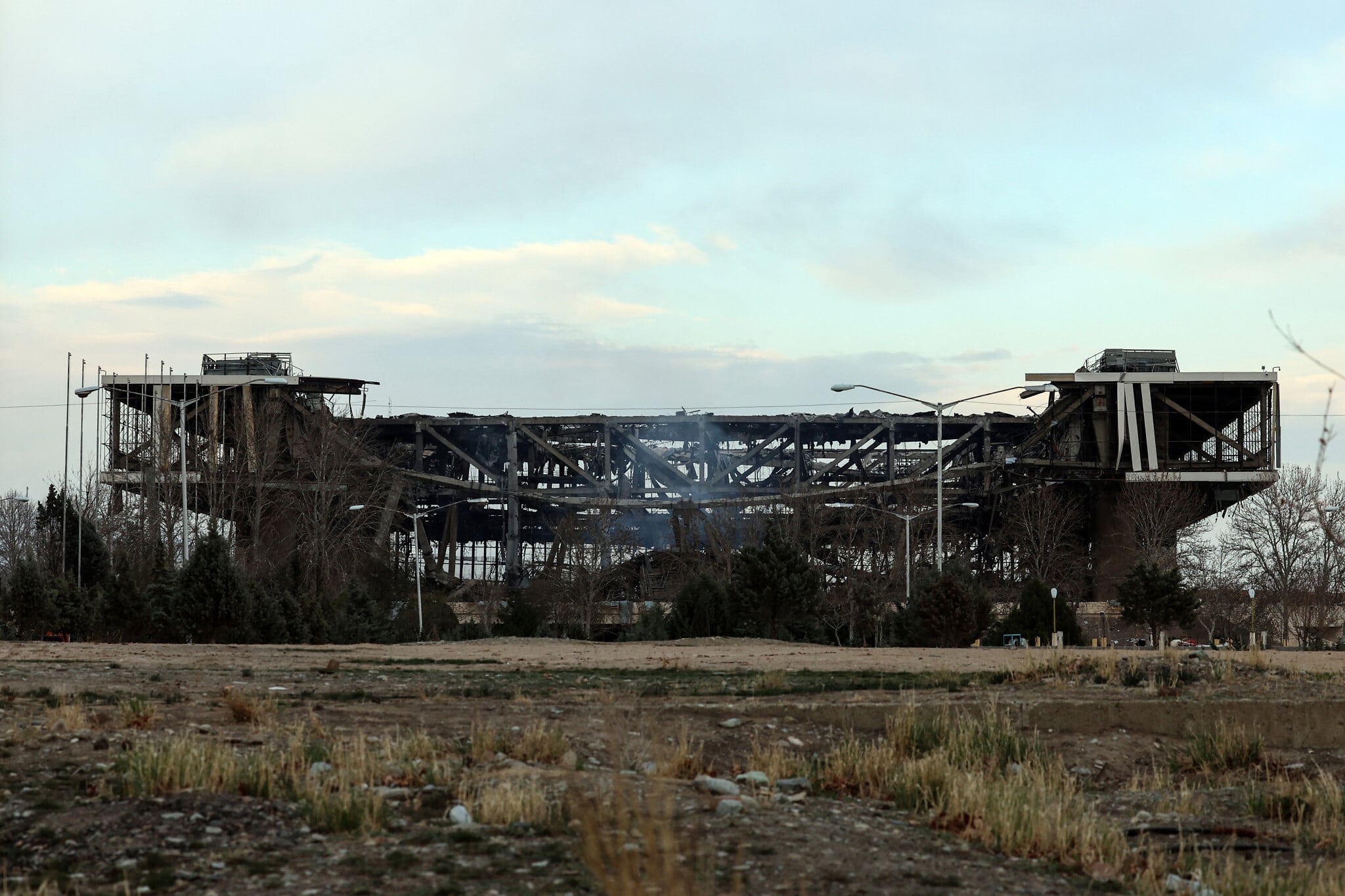
A photograph shows a heavily damaged building at Tehran’s Azadi Sports Complex following a strike, on March 5, 2026. (Photo by AFP)
Israel has reportedly since shifted its focus to individual checkpoints and roadblocks operated by members of the oppressive Basij paramilitary volunteer force, targeting personnel with fleets of loitering drones.
These efforts have played second fiddle in the public eye to the high-profile assassinations of supreme leader Ayatollah Ali Khamenei and Ali Larijani, the powerful secretary of Iran’s National Security Council, but have thrust Iran’s law enforcement system into limbo nonetheless.
At least three different checkpoints were targeted Thursday last week, including at the Imam Reza Highway and on Shahed Street in northern Tehran. On Sunday night, Israeli forces hit 11 checkpoints. According to the report, many of the strikes were guided by tips from ordinary Iranians.
Residents reported security personnel taking over schools, sports halls and other civilian buildings to evade loitering drones. When security officers take cover in apartments, many tenants evacuate, fearing a strike.
Some residents told the Wall Street Journal that police were seen sleeping in tents and buses.
Israel has also struck police warehouses, destroying computer equipment, vehicles and police gear, according to target lists cited in the report. Motorcycle units — which have been crucial to the regime in suppressing protests — were another target for the Israeli Air Force.
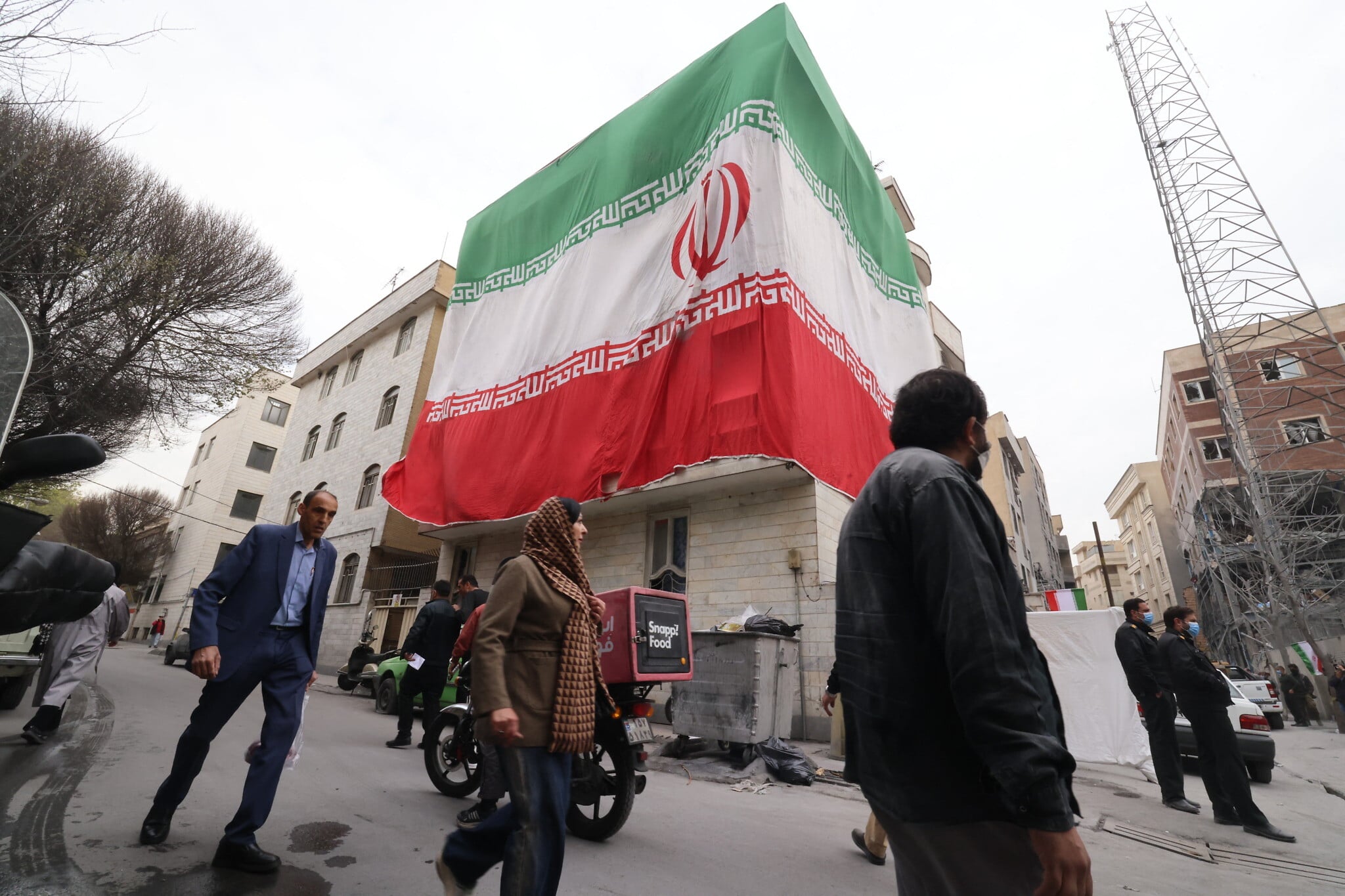
A huge Iranian flag adorns a building as Iranians walk past damaged structures following an earlier military strike in the Iranian capital, Tehran, on March 15, 2026 (Atta KENARE / AFP) /
The report said that investigations into crimes like theft that happened before the war are up in the air with police under attack, while quoting a Tehran resident who said police told him and other shop owners to close before dark, since their security could not be guaranteed by cops.
Despite major setbacks for the regime, its forces have managed to stave off meaningful collective dissent.
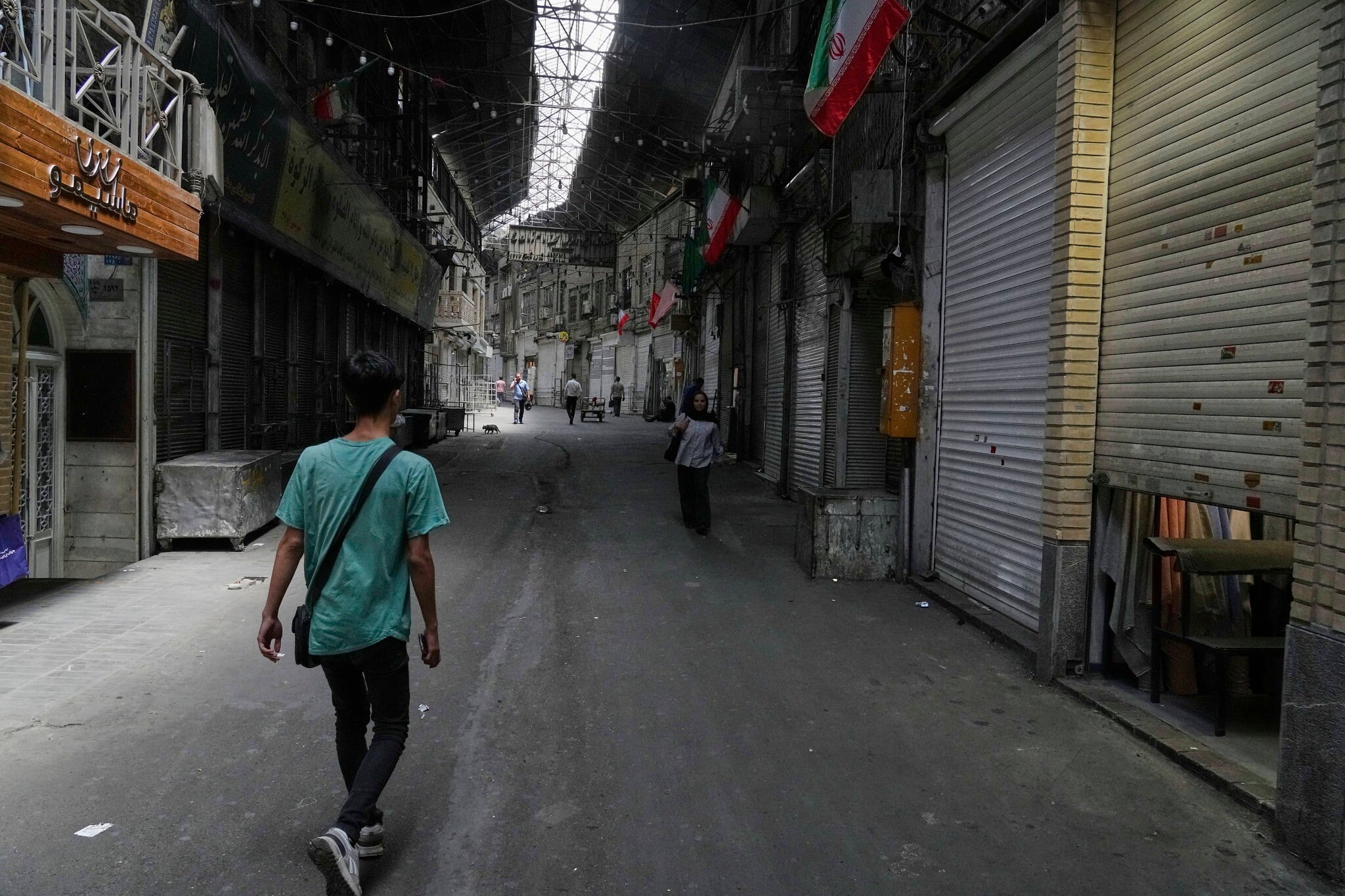
Shops are seen seen shuttered in Tehran’s historic Grand Bazaar on Monday, June 16, 2025. (AP/Vahid Salemi)
Though Israeli officials told the Wall Street Journal that strikes have made a significant dent, it is difficult to gauge to what extent the regime’s command structure has been disrupted, due to its tight grip on internet activity.
Meanwhile, experts speculated that if the Islamic Republic manages to hold onto power, it will emerge more emboldened and hardline than it was before, with one telling the newspaper that “they are seeing a decaying system before their eyes… But it would take a lot more attacks to turn the tables.”
You appreciate our wartime journalism

You clearly find our careful reporting of the Iran war valuable, at a time when facts are often distorted and news coverage often lacks context.
Your support is essential to continue our work. We want to continue delivering the professional journalism you value, even as the demands on our newsroom have grown dramatically during this ongoing conflict.
So today, please consider joining our reader support group, The Times of Israel Community. For as little as $6 a month you’ll become our partners while enjoying The Times of Israel AD-FREE, as well as accessing exclusive content available only to Times of Israel Community members.
Thank you,
David Horovitz, Founding Editor of The Times of Israel