

First off, the app may not even be telling you its readings of the weather where you are, Swain said, but rather feeding you a forecast of what it was supposed to be like. Or they are pulling just one of the hundreds of models that run every few hours and “calling it a day,” he said.
And it turns out that these guesses “can cascade into major differences in a forecast that’s days out,” Swain said.
Apple, Google and Samsung did not respond to KQED’s requests for comment on criticism of their own weather apps’ accuracy. Apple’s website said that Apple Weather provides the iPhone’s Weather app 10-day forecast, but that National Weather Service information informs its severe weather alerts.
Jan Null, a meteorologist who founded the Golden Gate Weather Service, echoed Swain’s concerns.
“The problem with most weather apps is that they’re using some sort of universal computer model to forecast what’s going to happen somewhere,” Null said. “So it’s the same computer model that’s being used back in Pennsylvania that’s being used here. And all computer models are not equal.”
Additionally, weather apps are often ingesting data and spitting it right out without any filter, “even though that’s not how that data was meant to be used,” Swain said. “There’s no human making a weather forecast behind that weather app data.”
The reason why having a human to read that data and interpret it matters is because humans can make “manual adjustments” for places “where conditions are known to diverge from the models,” Swain said — just like they can in the Bay Area. Since those divergences can be somewhat systematic, “human forecasters have a good sense for when to throw the model data out,” he said.
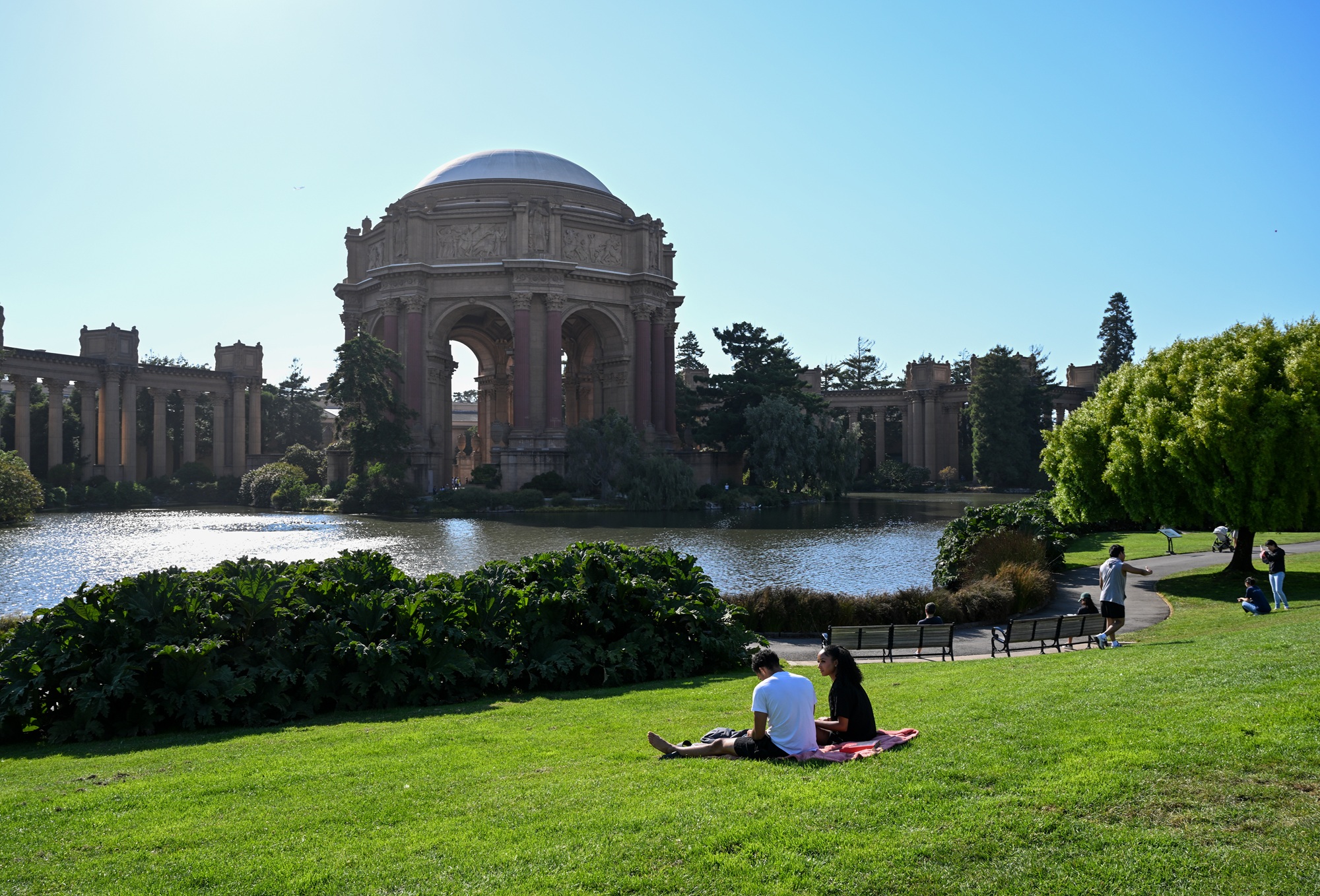 People enjoying the sun at the Palace of Fine Arts as a heat wave rolls through San Francisco on July 11, 2024. (Tayfun Coskun/Anadolu via Getty Images)
Not only that, Null said, but some weather apps might just pull from the closest airport or weather station, without accounting for the many microclimates that naturally occur.
“If you want to see what the weather is in San Mateo, it’s probably going to give you San Francisco International Airport,” he said. “And there can be quite a difference.”
And in the city, “it’s classic in San Francisco when the computer models miss when the sea breeze comes in after a warm spell,” Null said. “I’ve seen it dozens and dozens of times in my career.”
All of this creates real confusion for users, Swain said.
“Sometimes, you look out the window, and it’s completely different than what the app shows,” Swain said — or “the forecast bounces around a lot from hour to hour, and day to day.”
Weather apps vs. extreme weather
A 2025 study led by University of Chicago researchers in collaboration with University of California, Santa Cruz and New York University reported that while AI-powered weather models perform well for day-to-day weather, they often underestimate the scale of more extreme, unprecedented weather events.
While sometimes the differences in the data are negligible, other times these discrepancies “can result in real problems where people aren’t getting the right information,” Swain said. He particularly pointed to the sudden summer storm that hit Lake Tahoe last year, not forecasted on many people’s weather apps, that killed eight people.
“Ultimately, [a phone’s weather app] just doesn’t offer enough nuance,” Swain said.
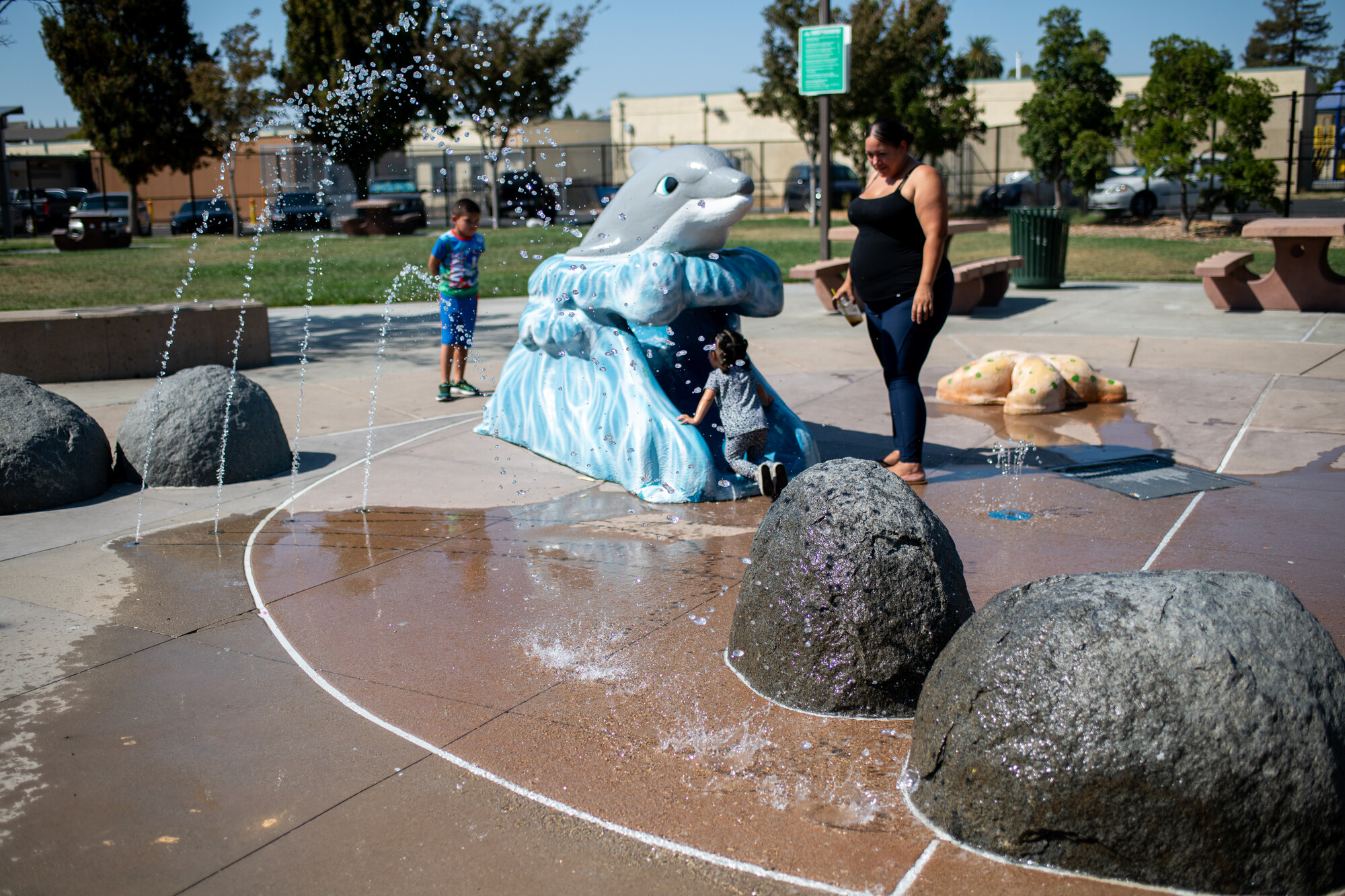 Children play in sprinklers at Meadow Homes Park in Concord on Sept. 8, 2022, as the temperature soared to 108 degrees. (Beth LaBerge/KQED)
Several meteorologists interviewed by The Associated Press earlier this year, as a series of strong winter storms swept the United States, echoed these sentiments. “For extreme weather events, it is especially important to know there are human forecasters interpreting the data and making the best localized forecasts for your area,” University of Oklahoma meteorology professor Jason Furtado told AP.
Like Swain and Null, Furtado warned of “the potential for significant errors” being introduced by the fact that “many of the weather forecast apps use AI methods to either make the forecast or ‘interpolate’ from larger grids to your hometown.”
What’s more, Swain argues, inaccurate app weather reports are even reducing public trust in professional meteorology — because of the gulf between what a person’s phone is telling them about today’s weather and what a meteorologist is reporting.
This gap means an increasing number of people “think that our ability to predict the weather is much worse than it actually is,” Swain said.
Where else can I get accurate weather information on my phone?
Instead of relying on the icons in your phone apps, Swain advises you turn to your local National Weather Service office’s website. With reports driven by human meteorologists rather than algorithms, the analysis from these offices drives crucial alerts — like the current heat advisory in effect — during dangerous weather.
“There are meteorologists working for the weather service in the San Francisco Bay Area or in Los Angeles or any number of other locations who have been forecasting the weather for this particular corner of the world for 20, 30, even 40 years,” Swain said.
“They are world experts in the weather in your backyard.”
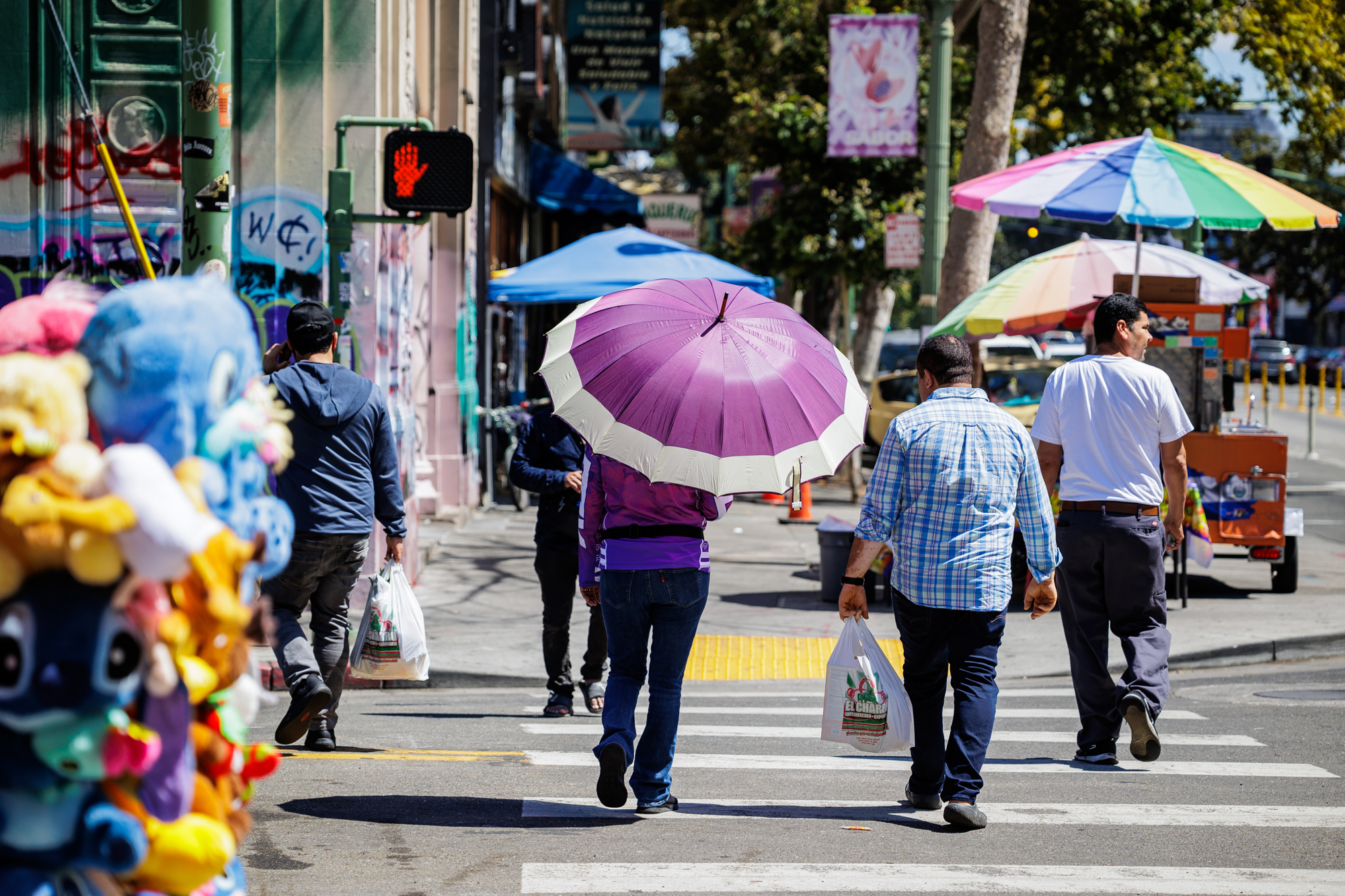 People walk along International Boulevard in Oakland during a heat wave on Aug. 21, 2025. (Martin do Nascimento/KQED)
And if you really want those forecasts on your mobile phone, there’s an app for that. Null suggests downloading EverythingWeather, a new app that, rather than aggregating nationwide info, pulls in local NWS reports — essentially a mobile-friendly version of the office reports.
While it’s not an official NWS app, it was created by off-duty NWS employee Cory Mottice, and it’s frequently maintained, Null said.
The NWS staff are nonetheless under threat due to federal defunding, Swain warned, even as their experience becomes even more valuable during unprecedented events like this heat wave.
“There’s a lot of expert interpolation that goes into reading and interpreting the raw numerical data from a weather model,” he said. “That is the art and the skill of forecasting.”
NWS forecasters can’t predict individual weather events more than a week or two in advance, Swain said — so he recommends you don’t depend on any forecast that’s not in the immediate future.
So what does that mean for the remainder of this unprecedented March heat wave and when it might let up?
“Statistically, it probably should rain again following this extreme heat,” he said. “There’s no immediate indication of significant storms, which is frustrating.”
KQED’s Alexis Madrigal and Carly Severn contributed to this report.