
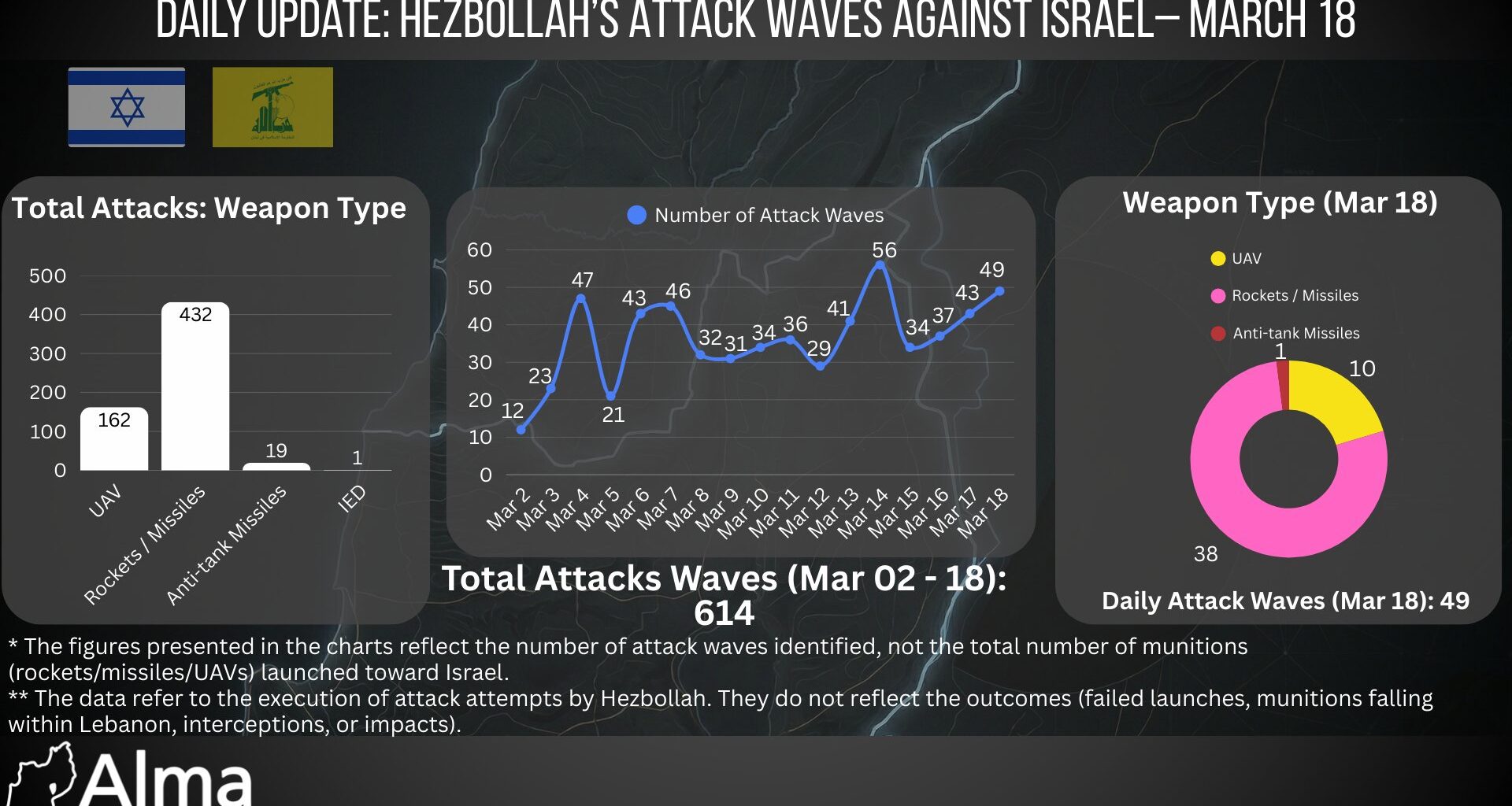
On March 18, 49 attack waves by Hezbollah against Israel were identified. In terms of weapon types, 38 attack waves (approx. 77.6%) were carried out using rockets and missiles, 10 attack waves (approx. 20.4%) using UAVs, and one attack (approx. 2%) using an anti-tank missile. The data refer to the number of identified attack waves, not the total number of munitions launched. Geographically, most of the attacks were directed toward border communities, the Galilee, the Golan Heights, and the Haifa area. In addition, an unusual launch toward the Ashkelon area in southern Israel was recorded, involving a single missile fired from Lebanon. It was also identified that 15 of the attacks during the day were claimed by Hezbollah as targeting IDF forces operating in southern Lebanon. Since Hezbollah joined the fighting on March 2, a total of 614 attack waves against Israel have been identified. An analysis of weapon types shows that rockets and missiles remain the primary means of attack, with 432 attack waves, alongside 162 UAV attack waves, 19 anti-tank missile attacks, and one IED attack. An examination of the daily trend indicates a dynamic pattern in the scope of attacks: following a significant increase recorded on Saturday (March 14), a decline was observed on Sunday (March 15), but in recent days, there has been a gradual and continuous upward trend in the number of attack waves. The current average is approximately 36 attack waves per day from Lebanon. *Note: The data refer to the execution of attack attempts by Hezbollah and do not reflect their outcomes (failed launches, munitions falling within Lebanon, interceptions, or impacts).
