
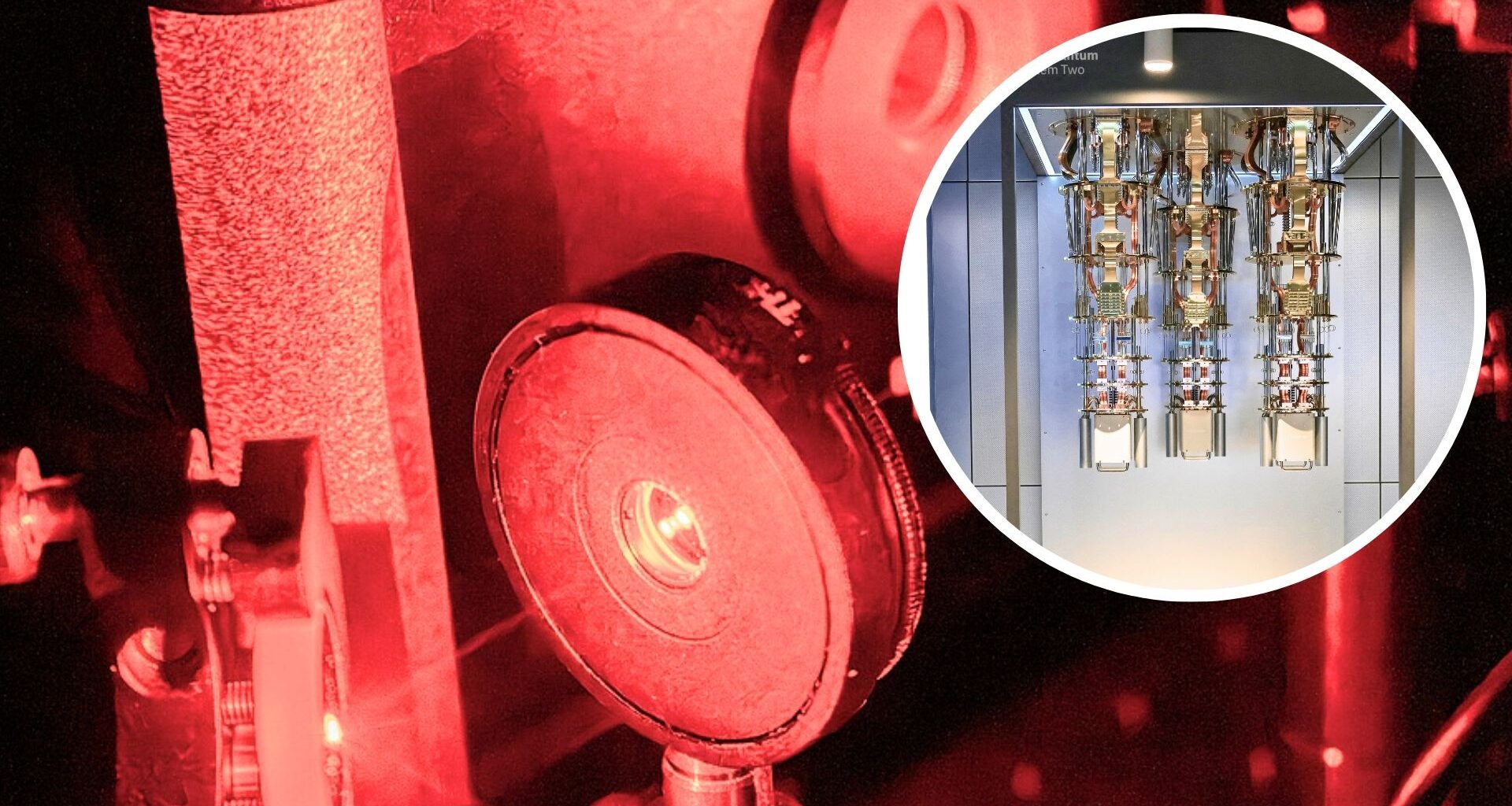
Scientists are steadily advancing toward a future where quantum communication networks could revolutionize how information is transmitted. A recent breakthrough by researchers at Humboldt-Universität zu Berlin demonstrates how ultrafast laser pulses can significantly enhance the development of a diamond-based quantum internet.
They showcased a new method for generating single photons in a diamond-based quantum system. This progress brings quantum technologies an important step closer to practical applications.
Study focuses on diamond crystals
The study focuses on diamond crystals that contain specific defects in their atomic structure – so-called tin vacancy centers (SnV centres), also known as color centers.
These atomic structures serve as stable quantum bits (qubits), which can store and process quantum information and couple it to light particles. A major challenge in quantum technology to date has been controlling these qubits with light while simultaneously clearly detecting the photons emitted by the qubits as information carriers. Conventional approaches often rely on complex filtering techniques that reduce efficiency and limit the scalability of the system for practical applications, according to a press release.
With ultrafast pulses, researchers can control the quantum state
“With ultrafast pulses, we can control the quantum state on completely new time scales. This opens the door to faster and more complex quantum operations in diamond,” said Cem Güney Torun, doctoral student at the Department of Physics and one of the two lead authors of the study. Mustafa Gökçe, also a lead author and former research assistant at the Department of Physics.
“Our method enables us to efficiently excite the system while keeping the emitted single photons clean and usable. That is a key requirement for building practical networks for quantum communication,” said Gökçe.
Another important finding is that the SUPER method preserves the internal quantum spin state of the system. This property is crucial for generating quantum entanglement between distant nodes, another cornerstone of future quantum communication networks, as per the release.
Unlike classical communication systems, which transmit information in binary form, quantum communication uses quantum bits, or qubits. These qubits can exist in multiple states simultaneously, allowing for faster processing and highly secure data transfer. A crucial component of such systems is the ability to generate single photons reliably, as they serve as carriers of quantum information.
However, producing these photons in a controlled and efficient way has been a persistent challenge for scientists.
For the study, the quantum researchers combined various experimental approaches: the fabrication of diamond nanostructures with embedded tin vacancy centers, ultrafast optical technologies, and theoretical modelling. This combination enabled the team to demonstrate that SUPER provides a powerful new tool for solid-state quantum technology. The results bring diamond-based quantum repeaters and distributed quantum computers one step closer to practical application.