
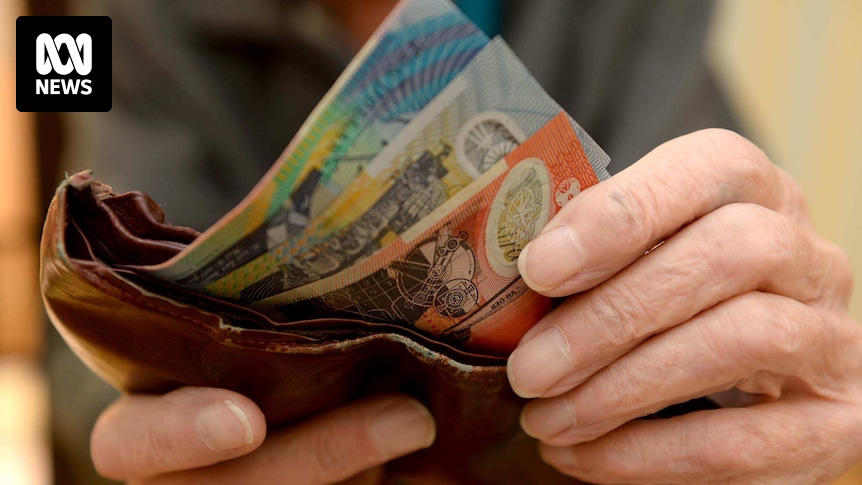
The war in the Middle East is escalating with more attacks on critical energy infrastructure.
The shock and awe has been a reality check for the markets, with the Australian share market, as measured by the S&P ASX 200, losing roughly 7 per cent of its value, or about $250 billion, since the war began.
Iran war live updates: For all the latest news on the war in the Middle East, read our blog.
“The key message for markets from the events in the Middle East is that the war is far from over,” AMP’s head of investment strategy and chief economist Shane Oliver said.
Dr Oliver believes the Australian share market will continue falling into a “correction” that could see a top-to-bottom fall of as much as 15 per cent.
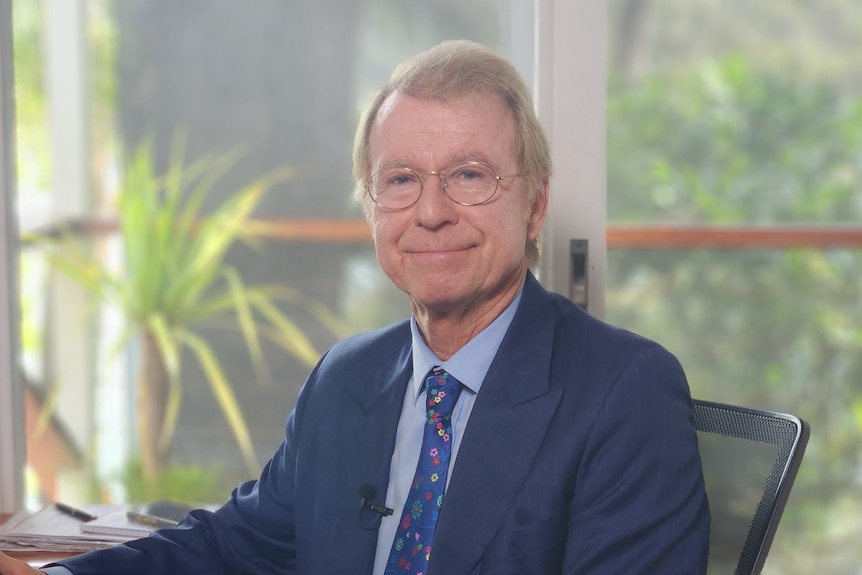
Shane Oliver says there could be a significant drop in the share market. (ABC News: Amy Murray)
“Look, I think the most likely scenario right here, right now, is that we are in the midst of a correction,” he said.
“There’s obviously concern about the impact on inflation, there’s concern about the negative impact on economic growth.”

Brett Craig says the war is affecting consumer confidence. (ABC News: Dan Irvine)
The latest attacks helped pushed the oil price up beyond $US110 per barrel.
“You start to see a war in Iran coming through, oil prices popping, more inflationary pressure, interest rates move up, consumer confidence pulls back,” Aura Group director Brett Craig said.
Colin Park has had his own white-knuckle ride.
He has just turned 67 and is relying on his superannuation balance now more than ever.
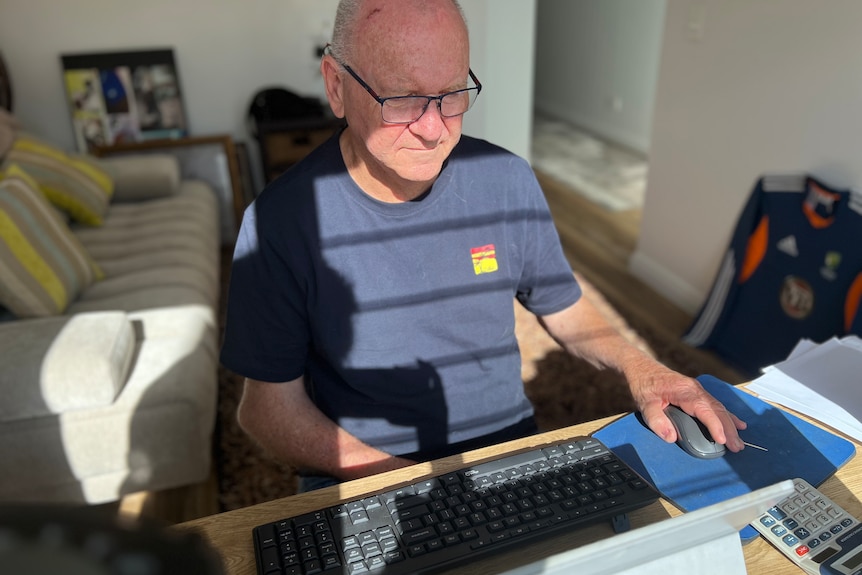
Colin Park’s super took a hit shortly after the war began. (ABC News: Olivia Nunes-Malek)
Mr Park said he saw $17,000 wiped off his super just in the first week of the war.
“Unnerving, I think, is the first thing [I would describe it as],” he said.
“Probably a stiff scotch, followed by a dose of reality.”The temptation to switch to cash
Anyone with superannuation is exposed to movements in financial markets.
The total pool of super savings is worth roughly $4.5 trillion, with the average balance about $250,000 for those approaching retirement.
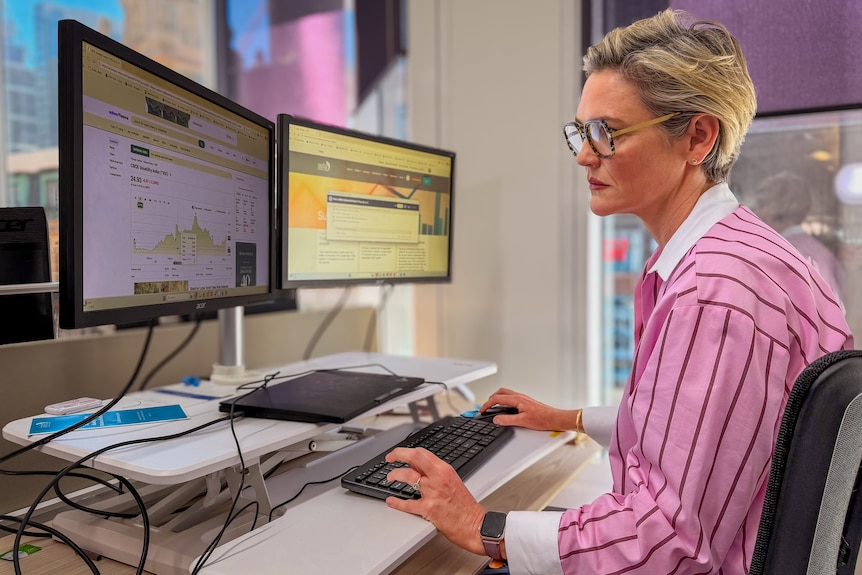
Madeleine Morris says most super funds are comprised of a mix of assets. (ABC News: Dan Irvine)
“It’s really easy for you to jump into your app and to see exactly how your fund is invested,” ASFA’s chief strategy, corporate affairs and experience officer, Madeleine Morris, said.
“Normally it will be a mixture of assets — Australian equities, or the share market is another way of putting that, international equities, bonds, some cash, fixed interest, as well as infrastructure.”
And in any given balanced fund, you are likely exposed to infrastructure such as airports or toll roads, commercial or industrial property, and probably some private equity, according to Super Ratings.
Director Kirby Rappell said times like these were when people started to worry about whether they should all be in cash.
‘Nothing is safe’ on global financial markets
“I think that we always find when we see this sort of discussion around a lot of market volatility, people being tempted to switch into cash,” he said.
“I think you can call your super fund and have a chat and sort of understand or get some insights from them or even some advice.
“Typically, moving to cash is easy. Figuring out when to move back is hard.”Loading
The uncertainty is keeping the world’s biggest central bank on the interest-rate sidelines.
“The implications of events in the Middle East for the US economy are uncertain,” US Federal Reserve chair Jerome Powell said on Thursday, Australian time.
“In the near term, higher energy prices will push up overall inflation, but it is too soon to know the scope and duration of the potential effects on the economy.”
‘Patience is the name of the game’
While not offering financial advice, the process of putting less money in shares and more money in cash can start with a phone call to your super fund or by just a few clicks of a button online.
It can take as little as two days to change the investment balance of your super fund, according to Super Ratings.
The risk of going to a more conservative asset allocation, such as one that is cash heavy, though, is that if assets prices rebound, you miss out on those gains.
“So I would say, be careful not to sell out at the bottom and crystallise your loss,” Mr Craig said, speaking generally and without providing financial advice.
“[If you] hold your nerve, markets will, as we’ve seen in the past, revert to the mean.”
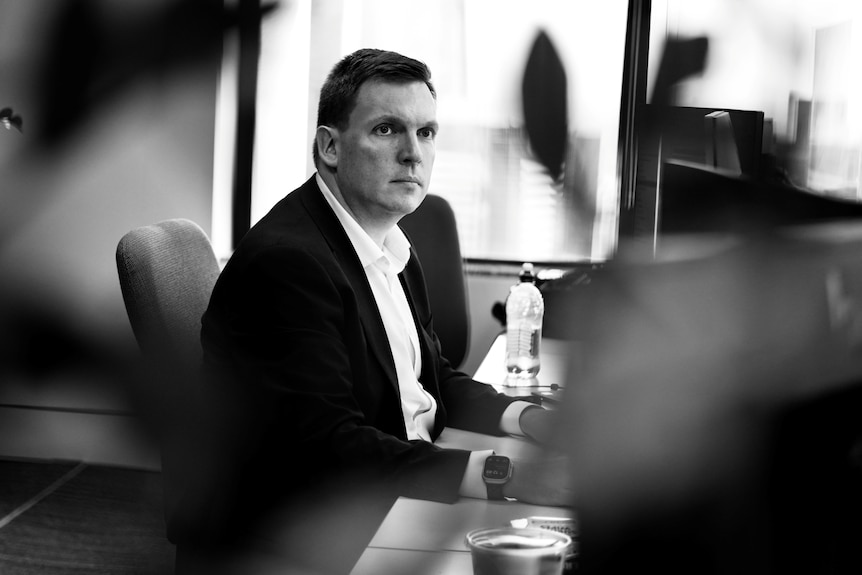
Kirby Rappell says it’s sometimes better not to take action in times of upheaval. (ABC News: John Gunn)
Mr Rappell concedes doing nothing in the middle of a financial storm is tricky, but agrees it can end up being the best approach for some people in certain circumstances.
“It can be really hard for people to understand, if I do nothing, I actually might be doing more,” he said.
“‘And if I’d switched it, say, at the bottom of the GFC into cash and stayed there, my super would have been worth at least double staying in a balanced fund over staying in cash.'”
Expert analysis on the Middle East:
Having lived through those times, Colin Park is holding his nerve.
“I think patience is the name of the game,” he said.
“And a lot of the account holders — or the account managers, I should say — with the superannuation funds are always pushing that line: Just be patient. Don’t panic.
“So [for] people in my situation, yeah, it’s unnerving. Of course it is. But we’ve still got a little bit of time on our side.
“If I was 10 years older, I would be more concerned.”
Disclaimer: The information in this article is general in nature. If you need personalised financial advice, please see a professional.
Loading…