
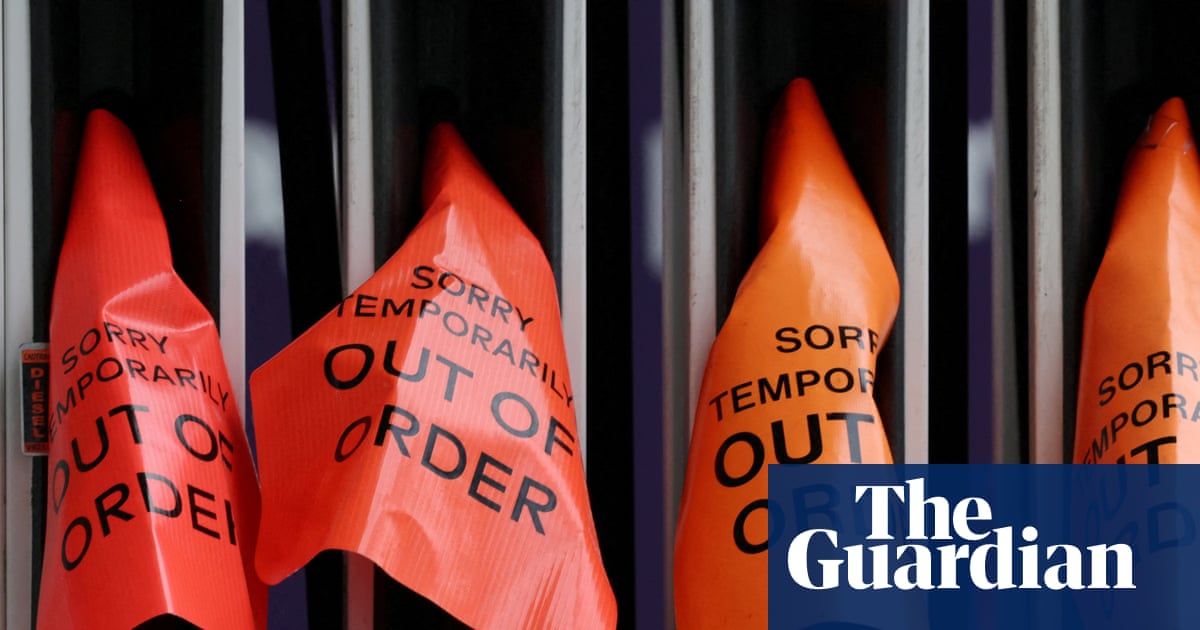
Major sources of Australian oil including Malaysia and South Korea could cut their exports to prioritise local fuel needs, energy experts have warned, as energy minister Chris Bowen concedes that some service stations are running out of stock and governments have “powers” to ration petrol if supplies are more severely disrupted.
Bowen shrugged off reports in the Australian Financial Review on Thursday that the Malaysian embassy said the country’s government would “prioritise our own needs, and only then we can look at whatever demand that we receive from overseas”. Malaysia is Australia’s top source of crude oil.
The minister said he wasn’t aware of any cuts to Australian imports from Malaysia.
“It wasn’t a particular announcement that they were taking any particular action. Malaysia produces and refines a lot more fuel than Malaysia or Malaysians would need at any given time,” he told Radio National.
“At the moment, as I said, the Malaysian government has taken no action to threaten the supply of fuel to Australia and all the ships that we’ve expected to arrive have arrived.”
But Kevin Morrison, an energy finance analyst at the Institute for Energy Economics and Financial Analysis, said the Malaysian official’s warnings were “really significant”, considering Australia’s heavy dependence on the country for petroleum products and especially crude oil to feed two domestic refineries.
Morrison said there was an obvious risk that major suppliers in the region, including Australia’s biggest supplier South Korea, will also prioritise domestic use over selling to Australia.
“South Korea, Japan and India are all very vulnerable. They hardly produce any oil so they are all very dependent on oil imports,” he said.
“If they are facing the situation where crude oil supplies are declining and there’s no sign of the conflict ending, obviously they would prioritise their domestic markets over exports.”
Vinh Thai, a professor of logistics and supply chain management at RMIT University, raised similar concerns, noting reports that India and Vietnam were worried about keeping their citizens and industry supplied with enough fuel.
“Of course a government of a country has to first of all act in the interests of their own citizens; that Malaysian official is saying that for a reason,” he said of the AFR report.
“If India needs to reserve energy for their own manufacturing, then they may impose some export bans or restrictions, and those would have an immediate, direct impact on imports into Australia.”
Chris Bowen says ‘what we’re dealing with is a very big increase in demand’. Photograph: Jesse Thompson/Getty Images
The federal government has repeatedly ruled out any immediate prospect of fuel rationing, and Bowen on Friday again said “we’re not close to there”.
But he did flag the prospect wasn’t entirely impossible.
“That’s not been contemplated as something that we need to do in the immediate future. Of course, again, governments have powers, should supply be very severely disrupted, but the important message for Australians is that supply is not being disrupted at this point,” Bowen told a press conference.
“What we’re dealing with is a very big increase in demand, which is understandable with what people are watching on television, but our message to Australians remains buy as much fuel as you need – not more, not less.”
The New South Wales premier, Chris Minns, said on Friday at least 107 petrol stations in his state did not have any diesel, while 42 have no fuel at all, out of approximately 3,000 stations statewide. The Daily Telegraph reported the NSW government was “war gaming” a fuel rationing system, but Minns has been reluctant to discuss contingency plans publicly.
“We’re preparing for every eventuality, but I don’t want to jump the gun,” he said Friday.
Sign up for the Breaking News Australia email
Under NSW legislation, the premier can declare an “energy supply emergency” if fuel supply is “disrupted to a significant degree”. The state energy minister, Penny Sharpe, would be given wide-ranging powers to control the distribution of fuel including directing it to specific regions, ordering suppliers to sell fuel to particular customers and authorising authorities to take control of businesses that supply fuel.
Minns has already flagged contingencies to ensure fuel for hospitals, emergency services, ambulances and generators.
The Queensland premier, David Crisafulli, said on Thursday that there was enough fuel in place in the Cook Shire for the impact of Tropical Cyclone Narelle, but welcomed efforts to coordinate fuel supply through national cabinet.
“Queensland is the most decentralised state in the country, and that means that having access to fuel is more impactful here than anywhere else in the country,” he said.
The Nationals leader, Matt Canavan, suggested Australia should open up oil drilling in the Great Australian Bight, calling for the federal government to fund exploratory drilling in the critical marine location. In a statement where he copied Donald Trump’s “drill baby drill” slogan, Canavan said that unless Australia launched new oil projects in the Bight and elsewhere, “we will always be at the mercy of unstable regions and international conflicts”.
“Our petrol and diesel shortages are a choice,” he wrote, saying Australia should develop “our God given resources to lower prices and restore our living standards”.
Responding to Canavan’s claims, Bowen said the government would only consider extraction in appropriate areas after environmental approvals.