
Finding the next reward
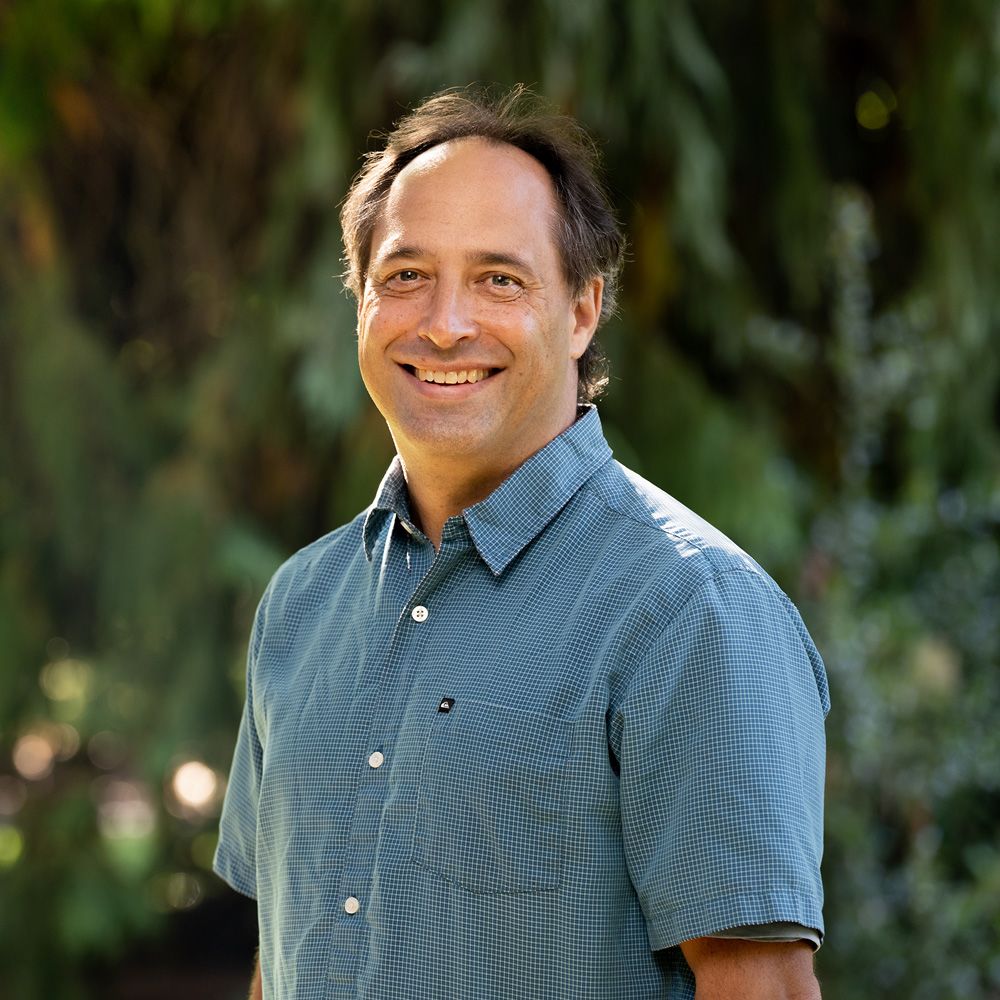
From cracking open a cold one at the end of a long day to getting praise from a colleague, reward drives much of what we do. But the same system that motivates behavior can be pushed into overdrive by addictive drugs or dampened in disorders like depression. Such characteristics of the reward system are what assistant professor Emily Sylwestrak studies.
“My lab thinks a lot about how we set expectations and evaluate outcomes: ‘Does this piece of cake measure up to the waiter’s hype? Does a movie live up to its trailer?'” Sylwestrak said. “After seeing how strongly the brain responds to disappointment, setting expectations appropriately has become a sort of occupational hazard.”
In her research, Sylwestrak investigates which neurons are active during reward-seeking behaviors, like eating, drinking and socializing, and how they work together to evaluate outcomes. Similar to Niell’s process, she uses AI to automatically track and label the behaviors and facial expressions of mice, syncing those with recorded brain activities.
“It’s important to know which brain cell types to target,” Sylwestrak said, “because if you’re going to develop a drug to help with neuropsychiatric disorders, you need to know which knobs to turn.”
For years, neuroscience experiments in this area were limited to tightly controlled conditions, such as pressing a lever for a reward. That’s because analyzing the full range of unconstrained behaviors required data sets too large for manual analysis.
AI allows researchers to measure that complexity instead of filtering it out.
“What I think is so exciting about these tools is that variability is now a feature rather than a bug or limitation,” Sylwestrak said.
Although AI can identify interesting behavioral motifs, Sylwestrak emphasized that scientific intuition remains essential.
“AI can’t completely replace a curious and excited researcher,” she said. “It supercharges the process, but there must be human dialogue with machine-learning-based outputs. I don’t see a researcher’s own curiosity and the power of observation as obsolete.”
And when it comes to AI apps like chatbots that generate content, Sylwestrak reminds her students and next-generation scientists that those tools are designed to find patterns in existing texts and predict the words most likely to follow next.
“In science, we don’t want to do the most likely next experiment. We want to do the most interesting or the most fruitful or the most creative next experiment,” she said. “If you have AI do everything, it’s going to be derivative. Not transformative.”