
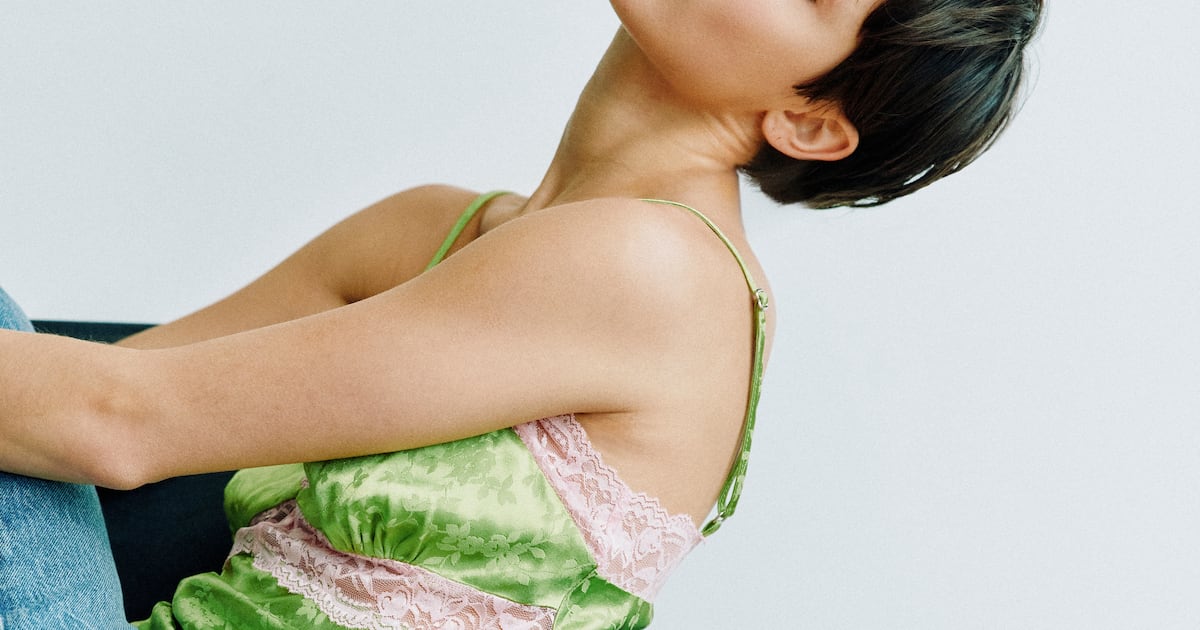
I think I was quite sheltered growing up. My parents were both teachers at a school called Rockport in Co Down. Because my dad did boarding duty there, we got a staff house. I grew up from age five in that school, in a place called Seahill, between Holywood and Bangor.
My mum has this funny story that I was playing on one of the estates in Bangor and a kid came up to me and said: are you Protestant or Catholic? I was seven at the time. And I didn’t know what it meant.
My parents were non-denominational. My mum’s English – she was raised in Exeter in a working-class Catholic family, but English-Catholic. My dad was non-denominational but culturally Protestant. My parents were very liberal and open and encouraged me to accept everyone as they are with open arms.
My family was very sporty. My dad [Josh], was a champion hurdler and my brother [Ben] represented Ireland and Northern Ireland in the 110-metre hurdles. Most of my life was kind of pushed in the sports direction. I did gymnastics for years. I was training four or five times a week from age seven to about 10.
I was the baby of five kids. All my siblings [Luke, Tom, Ben and Sophie] were a lot older. I think being a baby, I was always a bit of a showman and I learned to make everyone laugh. When I turned 12, 13, I hit puberty and really changed. I went quite inward.
I was looking for that outlet, searching for some sort of connection to feeling understood. I stumbled upon an independent film called Thirteen by Catherine Hardwicke. It’s about teenagers going off the rails and struggling to be understood. I was blown away. As soon as I saw that film, I was like: that’s me set. No plan B. I want to be an actress.
I studied at Liverpool Institute for Performing Arts. I had the best time, and learned so much, but I also think drama school made me more self-conscious before I was able to become confident again. Being there and having an Irish accent felt weird. This was 2016. I felt: I’m never going to work professionally with this voice.
Now, things have done a complete 180. Suddenly, people are going: not only do we want Irish stuff, we want stories from Belfast. I couldn’t have imagined getting into my professional career in this industry at a better time. I’m in Belfast at the moment filming Close to Home [the Channel 4 adaptation of Michael Magee’s novel, with Anthony Boyle]. To be sat here doing that is so hard to describe, other than it’s so close to home.
Being in the Kneecap film is something I look back on and think: I’ll keep this in my heart forever. It was amazing going to Sundance and celebrating something that really felt like the first of its kind, a film about ceasefire babies, about my generation, reflected so authentically on-screen. But also, for me, it really opened my eyes to Irish identity, and my Irish identity.
I wasn’t raised being taught that at all. I was raised thinking I was British. I was like: I’m fully British, I’m not Irish. And now I don’t think that. I completely accept people here that do. But Kneecap really opened me up to that world, and Irish republicans, and how entrenched in culture those communities are.
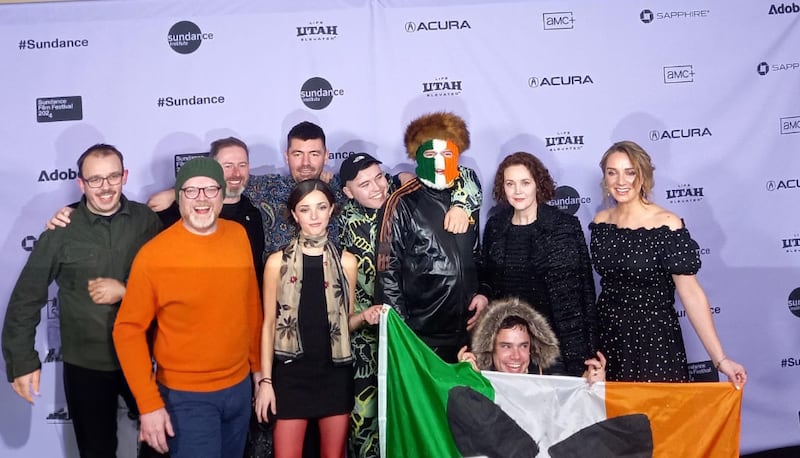 Jessica Reynolds with Kneecap at the Sundance film festival
Calling myself Irish makes the most sense to me. Even the terms Northern Ireland, North of Ireland, whatever you want to call it, everyone has the right to say what rings true to them, but for me, the word Ireland is always there.
We’re on that land. Whatever way you see yourself, British, Irish, we’re on our little island and our isle. We are so connected to this land and this culture and the streets. Going to university [in England], I was like: why do I feel so foreign and different?
But it’s because I am. And that’s something to be celebrated and accepted. There shouldn’t be shame from that. There’s so much shame in this country, from both sides of the community, and I think that needs to be lifted.
Something I love about Ireland is its solidarity. Solidarity with Palestine, for example, and with marginalised communities that have been oppressed. I think a lot of people here will go out of their way to support [marginalised communities]. It makes me feel really safe to be part of a culture and country that does that when so many other countries surrounding it don’t.
Playing Emma Harte in A Woman of Substance [on Channel 4 now] was my first time leading a TV show.
It was like nothing I’ve ever done before. I never saw myself as being able to play English roles, especially because I’ve done so much Irish stuff and also darker, edgier, comedic roles. When I read the script, I thought: this is a page-turner. It’s about deep romance, but also the sheer determination and ferocity in this woman to become self-made, and run away from the trauma and poverty she came from.
When I did go for it, and people saw something in me for a project like that, I was like: Oh my God. We filmed on location in Yorkshire. In my first week, I went to the Yorkshire Sculpture park. It was just gorgeous, vast … There’s so much space up there. You can really feel that. And you can feel, like in Ireland, that people are so connected to the land.
In conversation with Niamh Donnelly. This interview, part of a series about well-known people’s lives and relationship with Ireland, was edited for clarity and length. Jessica Reynolds currently stars in A Woman of Substance on Channel 4, streaming on channel4.com.