
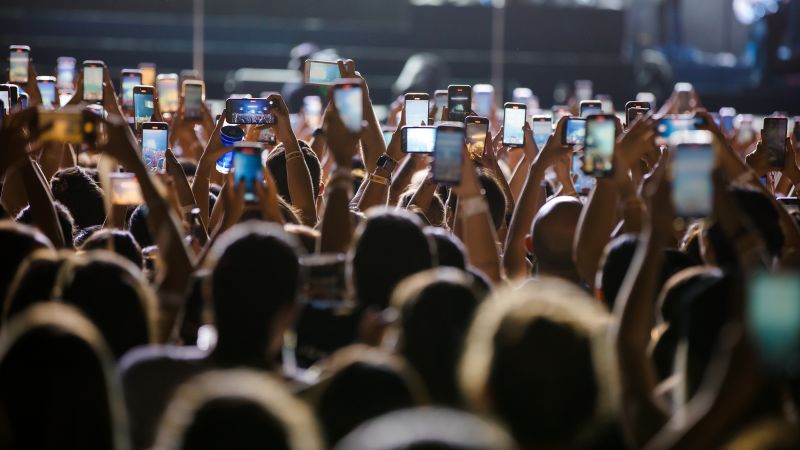
Fans attending Fred Again’s concert in London last month did not have to wait long to secure a memento. On entry to the Alexandra Palace venue, staff placed a black sticker — engraved with the show’s location and date — over fans’ smartphone’s camera lenses.
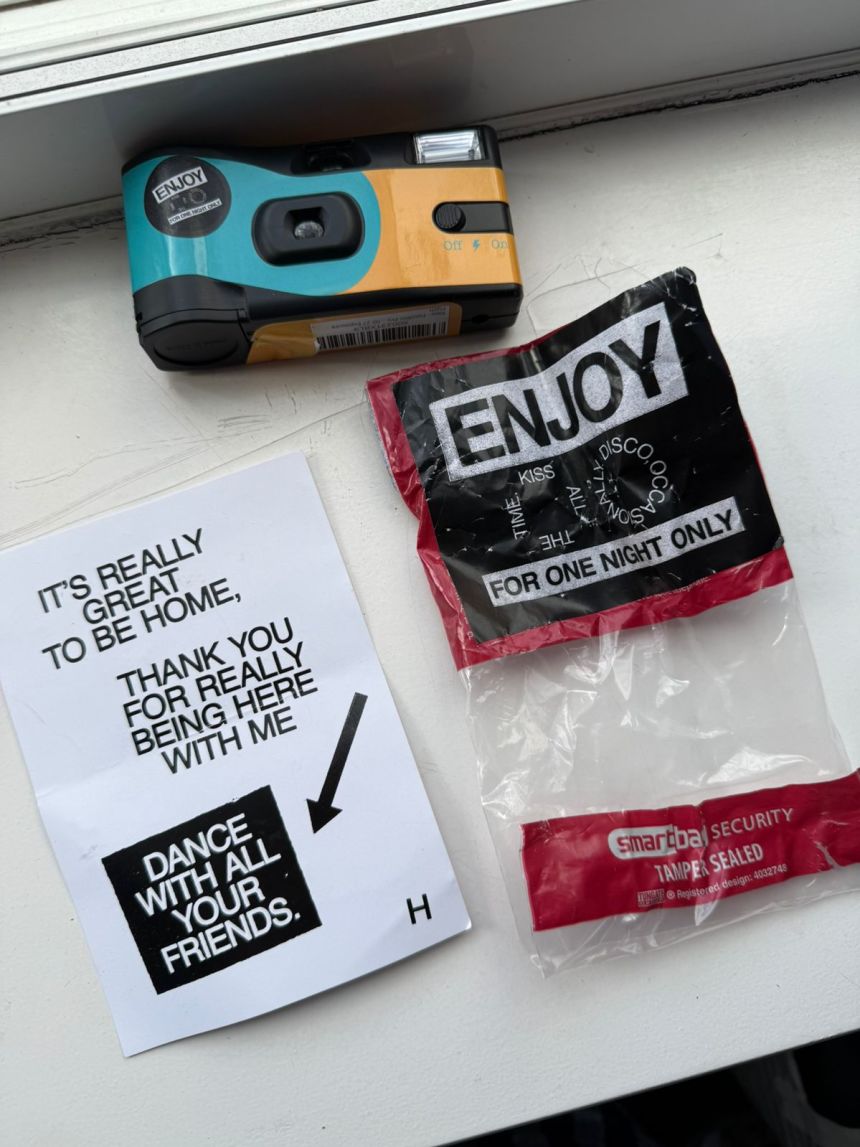
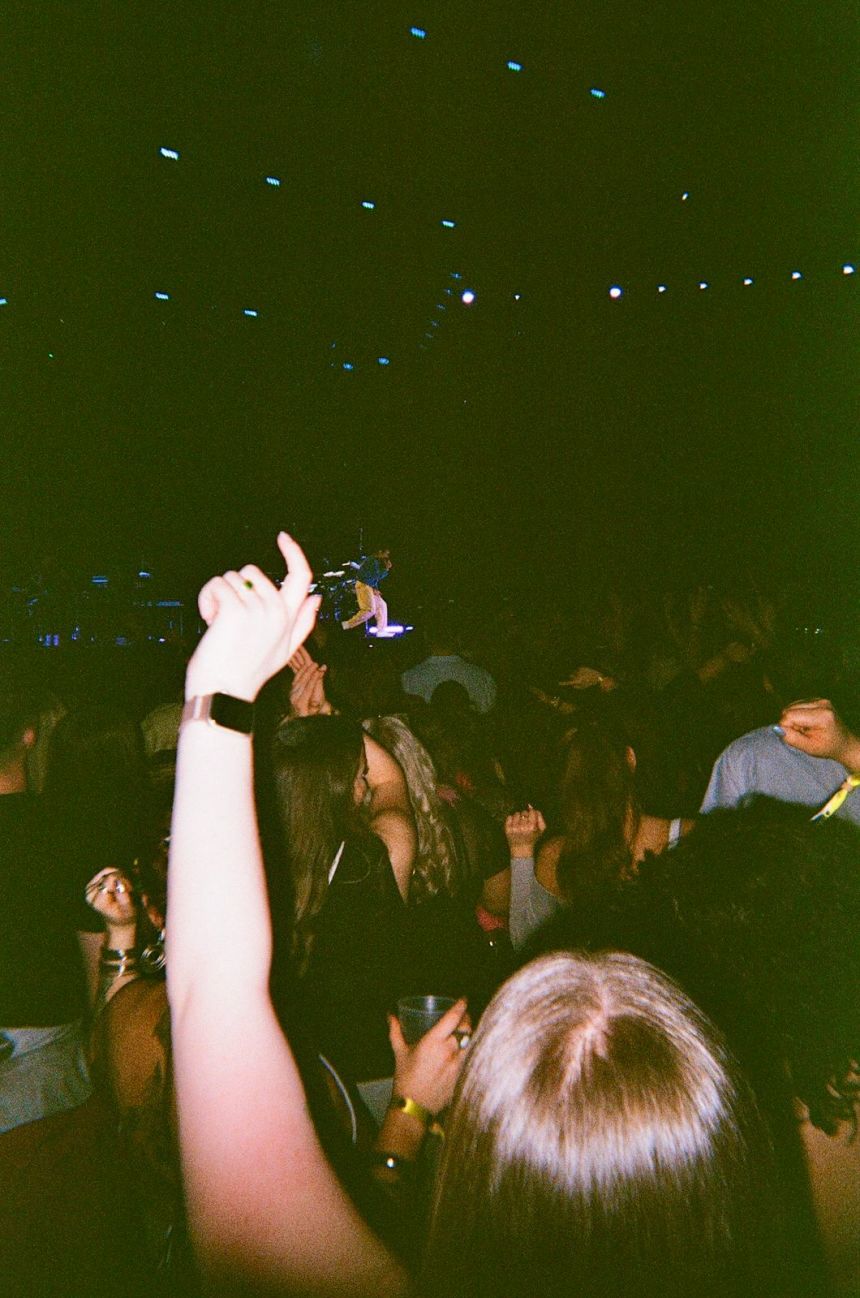
Exactly a week later, music lovers lucky enough to snag a ticket for Harry Styles’ “One Night in Manchester” show received an even snazzier keepsake. Disposable analog cameras, each loaded with roughly 20 shots, were distributed to those entering the Co-op Live arena.
Attendees did not have to pay for the souvenirs, but they still came at personal cost. The two musicians were employing differing tactics in pursuit of a shared goal: to stop their live audiences filming the events on their phones.
It is perhaps, as last week’s Saturday Night Live host Styles sings, a “sign of the times.” Performers Sabrina Carpenter, Billie Eilish, Adele and Childish Gambino are among the superstar artists that have actively implored fans, sometimes despairingly, to put down their cameras at shows.
Others are increasingly willing to go a step further by taking matters into their own hands.
The camera-cover method employed by British DJ Fred Again will have been instantly recognizable to anyone who has visited Fold, Fabric or other UK nightclubs that have a similar sticker policy.
It’s synonymous with, and arguably originates from, popular queer party spaces in Berlin, where techno clubs like Berghain have a near-mythical reputation, partly due to their vigilantly enforced internal privacy rules.
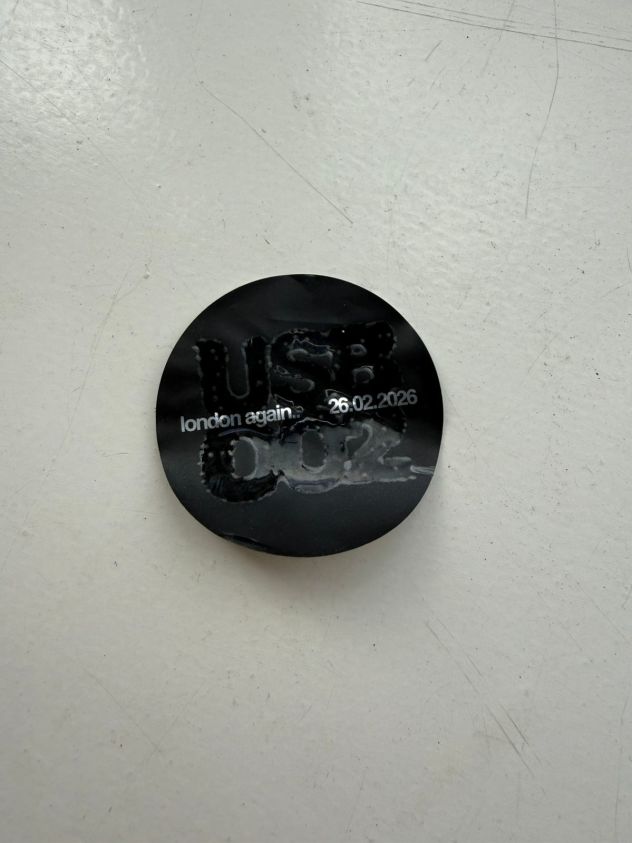
The stickers approach is rooted in the desire to not only protect the experience of the dancefloor, but to also foster a safe space for those raving upon it. Peeling off your sticker at these clubs may not get you ejected, but it will almost certainly raise some disapproving eyebrows.
Fabric says its no filming policy allows clubbers “to focus on what matters, the music.” Styles would seem to concur. Discussing visits last year to Berlin dance clubs, the British singer-songwriter recalled the euphoria of “letting go” in a phone-free environment.
“I’m no longer scanning the room to see if anyone’s filming … I just remember being there in this kind of trance state in the music and feeling tears roll down my face,” he told Canadian podcast CBC’s “Q with Tom Power” in an interview released earlier this month.
Those “beautiful experiences” perhaps informed his decision to implement a no-mobile-recording policy at his Manchester show, streamed on Netflix to celebrate the launch of his new album, “Kiss All the Time. Disco, Occasionally.”
Organizers at the 23,500-capacity Co-op Live arena went beyond stickers, instead asking ticketholders to place their phones into a recyclable “smart bag” that — while still allowing users to access basic phone functions — blocked camera lenses.
Barring a rebellious few who managed to circumvent it, the approach worked exactly as intended, reflected concert reviewer and photographer Ali Al Hashimi, especially in contrast to the “sea of phones” he had seen in footage of previous Styles gigs.
“Everyone else was very much just there living in the moment. I thought it was really, really special,” he told CNN.
Having also attended a night of Fred Again’s London residency, Al Hashimi believed the bags added a comparative extra layer of security against the temptation of recording.
The itch to capture a few moments to relive later, the reason he would usually use his phone at gigs, was scratched by the complimentary disposable cameras, as well as the fleet of professional photographers at the arena whose images were uploaded to a website for fans to peruse later and download.
“I had a photo taken of me and I really like it. It’s a really cool keepsake,” Al Hashimi said.
“At the end of the day, live music is about connection,” he added. “Feeling a connection with the artist, feeling the connection with the thousands of people that have come there with you.”
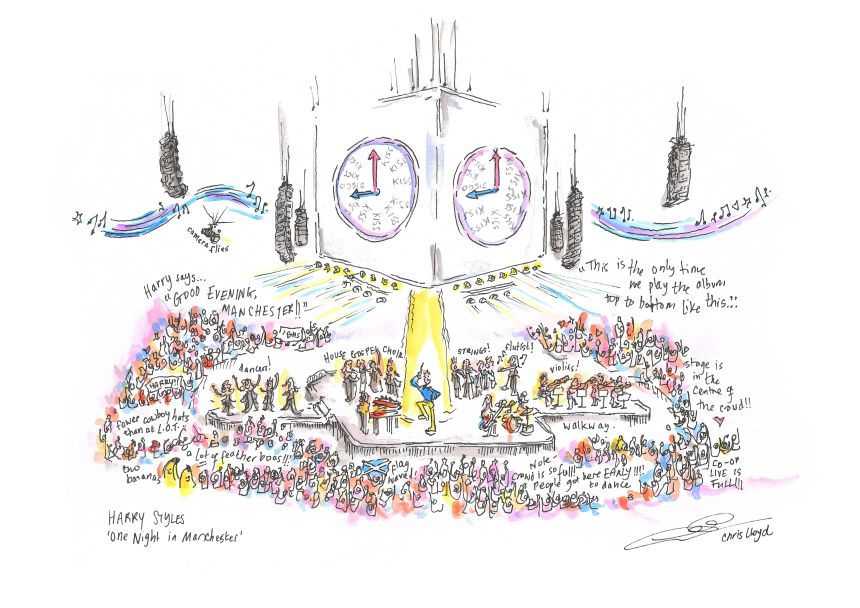
Yet nobody in the Co-Op Live arena, or likely anyone in any concert crowd he has been part of, had a perspective quite as unique as Chris Lloyd’s.
While Al Hashimi and company danced, Lloyd twirled his watercolor paints across a canvas to create the latest in an ever-expanding series of live sketches he makes at music, arts and sports events.
From the Super Bowl half-time show to Rio Carnival, his “accidental” talent — born of a hobby picked up to escape work stress — has blossomed into a globe-trotting self-run business and, in the process, heightened his awareness of the smartphone’s grip on audiences.
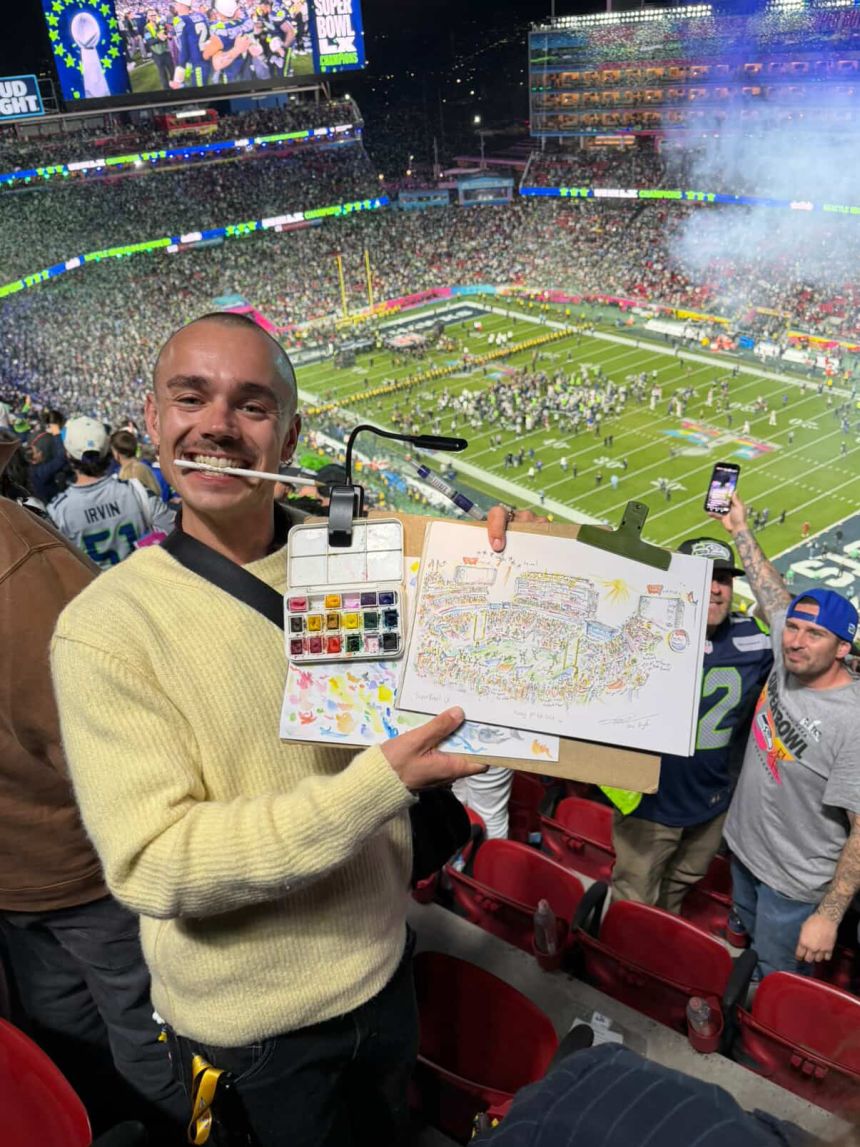
“I do notice so many people just filming entire concerts through their phone and while I’m also guilty of seeing the show in a different way, I do think whenever I get my phone out to record something, there’s an odd disconnect,” London-based Lloyd, who sells prints of his sketches online, reflected.
“I don’t need a photo that I won’t look at again — it’s a bad, grainy photo. And I largely don’t think my friends need to see a shoddy 16 second video from the back of the room.”
Having reveled in the joy of seeing strangers at Styles’ gig take photos of each other with their disposable cameras, Lloyd is keen to see more concerts transition to no-phone policies.
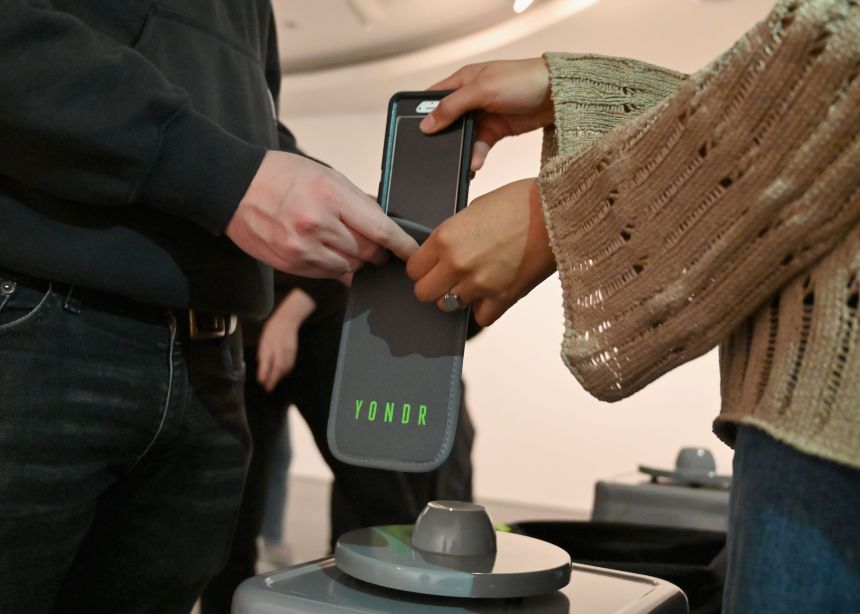
That shift is “accelerating,” believes Graham Dugoni, the founder of Los Angeles-based company Yondr.
Employed by Bob Dylan, Madonna, Paul McCartney and a host of other performers, more than 20 million devices across 10,000 events have been secured in Yondr’s lockable magnetic pouches, the company said. Users maintain possession of the pouch and can access their phone at any time by visiting “unlocking bases” outside performance areas.
“Once you’ve been at a show where no one is holding up a screen, you understand what’s been missing,” he told CNN. “The shared energy, the feeling of being somewhere together, the spontaneity and freedom that comes with enjoying a moment that isn’t being recorded or splintered by constant distractions.”
Among those to work with Yondr is This Never Happened (TNH), an event series created by American DJ Lane 8, real name Daniel Goldstein. Celebrating its 10th anniversary this year, the mantra is simple: “No recording, no filming. If you weren’t there, this never happened.”
A no-phones policy limited to a smattering of underground clubs a decade ago is now hitting the mainstream, says Goldstein, who believes the increasing adoption of the approach is reflective of a wider cultural realization that that the “domination” of phones on attention spans “isn’t necessarily the best thing.”
“It often feels like when people get four hours away from technology, all sorts of realizations, emotions and energy come to the surface,” Goldstein told CNN.
“There is an element of self-discovery that happens at these shows, and it can take on very different forms for different people. Some might feel the joyous realization that they’re not as alone as they thought they were. Some make deeper realizations about issues in their lives. Some may just realize they really missed jumping around and dancing like a little kid because nobody’s watching.”
Yet no-phone policies have drawbacks.
One is simply a matter of logistics: dealing with phones is an added strain on a venue’s time and resources. Al Hashimi said he had “never seen” queues quite like the ones at Co-op Live to get into Styles’ gig.
Other factors are crowd safety and peace of mind. Phones are a vital resource in case of emergency; Al Hashimi said he had spoken to someone at the Styles gig who needed access to his device to check his diabetic wife’s blood sugar levels.
The fact that the event was taking place in Manchester, a city still scarred by the terror attack at an Ariana Grande concert at Manchester Arena in 2017, only heightened security anxieties for some attendees, he added.
Somewhat ironically, too, phones in crowds can help connect artists to a wider audience. Viral clips from concerts can provide a boost to performers, be it by driving more ticket sales or by simply keeping them at the heart of the conversation.
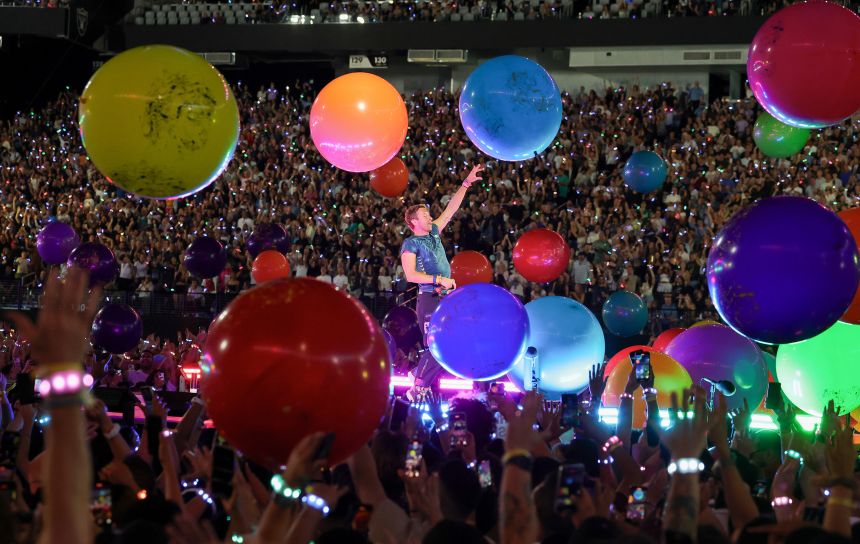
Coldplay singer Chris Martin regularly asks crowds to drop their phones for performances of the song “A Sky Full of Stars,” but footage from their gigs — a sensory spectacle of LED wristbands and lasers — posted to social media generates millions of views, although some in the audience, infamously, would rather not have been seen.
For those reasons, neither Al Hashimi nor Lloyd expect phones to suddenly disappear from crowds, but it’s not lost on them that it’s a younger generation of artists and fans, those perhaps most deeply connected to smartphones, that are driving the movement to reduce their presence at shows.
“If I speak to my parents about gigs and stuff, they talk about all the good old days of not having loads of phones in the sky. I definitely resonate with them about it taking away from the moment,” Al Hashimi said.
“It used to be my mum and dad that would be like, ‘Put your phone away at the dinner table. You’re not present,’” said Lloyd. “Now it’s my dad that’s the one filming whole songs at concerts.”
“I think every year that passes, there’s both a bigger dependency on our phones and a bigger desire to be separated from them, and the two both co-exist,” he added. “So hopefully it’s changing.”