
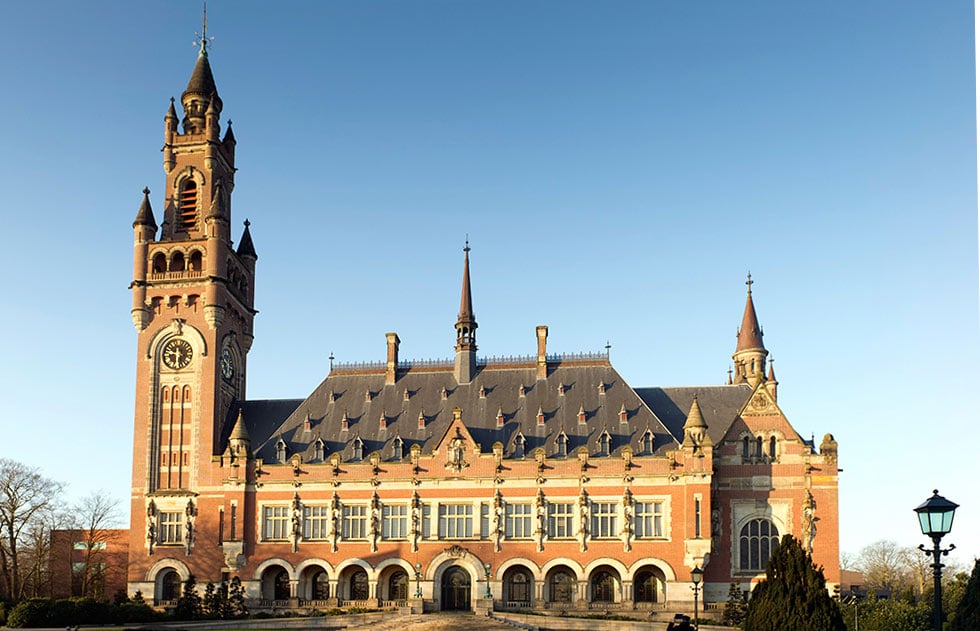
When a case comes before the International Court of Justice, it must be assessed through the discipline of law, not the volatility of political language. The current genocide proceedings against Israel test that discipline by placing one of the most narrowly defined crimes in international law under intense global scrutiny. The central issue is whether the legal threshold for genocide – carefully defined and consistently interpreted – has been met.
At the core of this framework lies the Genocide Convention. Its definition is precise and demanding. Genocide is not established by the scale of violence or the severity of suffering. It requires proof of a specific intent to destroy a protected group, in whole or in part. This element, dolus specialis, is the defining threshold and the central safeguard of the Convention. Without it, the crime is not made out.
The jurisprudence of the International Court of Justice reinforces this structure with consistency and clarity. The Court has held that genocidal intent must be the only reasonable inference that can be drawn from the evidence. This is not a flexible standard; it requires the exclusion of all alternative explanations. The Court further confirms in its case law that conduct amounting even to grave atrocities does not meet the legal definition without proof of such intent. The logic is direct: where other plausible explanations exist, genocide cannot be established.
This principle is not unique to the ICJ. It is embedded across international criminal law. In the Akayesu judgment, genocide was defined as requiring a special intent directed at group destruction. The Krstić judgment adds that such intent may only be inferred where it excludes all other reasonable explanations. In the Jelisic case, even direct participation in killings was found insufficient to establish genocidal intent absent proof of that specific purpose. Across all major tribunals, the conclusion is uniform: genocide is a crime of intent, not of consequence.
It follows that, in assessing intent, full account must be taken of the context and circumstances at hand. The legal assessment must therefore consider the operational environment in which events occur. This is where international humanitarian law becomes central. The Geneva Conventions provide the governing framework for armed conflict. They regulate conduct through binding principles designed to limit harm while recognizing the realities of warfare. These include the obligation to distinguish between civilians and combatants, the prohibition of disproportionate attacks, and the prohibition of using civilians to shield military objectives.
These rules directly shape the legal analysis in modern conflicts involving non-state armed groups. Where organizations such as Hamas and Palestinian Islamic Jihad operate from within densely populated civilian areas, embed military infrastructure in protected sites, and rely on the presence of civilians to deter attack, they engage in conduct that violates these principles. This conduct fundamentally alters the factual and legal environment in which military operations occur.
The events of 7 October further underscore this legal context. The deliberate killing, targeting, and abduction of civilians constitute serious violations of international humanitarian law and trigger obligations of accountability and prosecution. These acts are not isolated; they form part of a broader pattern that includes the systematic use of civilians as shields and the integration of military activity into civilian environments. Together, these actions create conditions in which civilian harm becomes more likely—not as a matter of intent to destroy a population, but as a consequence of unlawful methods of warfare.
Under the jurisprudence of the ICJ and international criminal tribunals, genocidal intent must be the only reasonable inference that can be drawn from the evidence. Where the alleged harm can plausibly be explained by the dynamics of armed conflict, including unlawful tactics by an opposing armed group, that inference becomes significantly more difficult to sustain.
International case law supports this contextual approach. In the Galić case, the tribunal examined military operations in densely populated areas and addressed the realities of urban warfare. Where armed groups embed within civilian infrastructure, the resulting harm must be assessed within that operational context. It does not, in itself, evidence a plan to destroy a civilian population; rather, it reflects the conditions created by the conduct of hostilities.
The same logic applies to precautionary obligations. Parties to a conflict are required to take all feasible measures to minimize civilian harm. Palestinian armed groups operating in Gaza do not adhere to these obligations and instead exploit civilian environments, thereby increasing the risk of harm. By contrast, the implementation of warnings, evacuation measures, and humanitarian facilitation by Israel demonstrates adherence to humanitarian obligations. Repeated notifications of operations, the provision of evacuation routes, and time to relocate are measures that are inconsistent with any intent to destroy a protected group. They reinforce that the governing framework is one of armed conflict regulated by humanitarian law, not one of genocide.
State responsibility further narrows the inquiry. Under the law of state responsibility, only conduct attributable to state organs, entities exercising governmental authority, or persons acting under state direction or control can establish state responsibility. The ICJ has made clear that genocidal intent must be derived from institutional conduct and policy. The analysis is therefore anchored in objective patterns of behavior, not in isolated statements or rhetoric that cannot be attributed to the state.
The requirement that destruction be directed at a group “in whole or in part” adds a further layer of precision. The ICJ has interpreted this to mean a substantial part of the group, whether quantitatively or qualitatively. This requirement underscores that genocide concerns the destruction of a group as such, not incidental or collateral harm arising in the course of hostilities. In the absence of evidence demonstrating a targeted intent to destroy a substantial part of a protected group, the legal threshold for genocide is not met.
Taken together, the structure of international law is clear and internally consistent. The Genocide Convention, ICJ jurisprudence, and international criminal case law converge on a single principle:
Genocide is an exceptional crime requiring clear, specific, and exclusive proof of intent to destroy a protected group.
Where the factual context is shaped by armed conflict, where unlawful tactics by non-state actors create alternative explanations for harm, and where the evidentiary threshold for intent is not satisfied, the legal definition of genocide cannot be met.
The proceedings before the Court therefore carry significance beyond the immediate dispute. They test whether international law will maintain its doctrinal clarity and evidentiary rigor in the face of complex modern conflicts, or whether it will instead be instrumentalized as a political tool for advancing extraneous agendas. States that do not stand on the right side of history risk contributing to the weaponization of international law, allowing it to be used and abused by terrorist actors and their allies to legitimize their actions, thereby undermining and trivializing the very legal principles it was meant to uphold.
Ambrogino Awesta is a legal scholar and author, holding a doctorate in law with a focus on international legal frameworks and their societal impact. His academic and professional work spans a range of disciplines, including international and European law, human rights, political communication, and philosophy of law.