
India, one of the world’s largest importers of oil and natural gas, is among the countries hardest hit by breaks in the natural gas and petrochemical supply chains caused by Iran’s closure of the Strait of Hormuz in response to attacks by the US and Israel.
In the Indian chemical industry, fertilizer makers were the first affected. Now, even specialty chemical makers are beginning to feel the pain. The woes of both sectors are largely due to the scarce availability of a single molecule: ammonia, a pungent gas that is a lifeline for many chemical plants. India is one of the world’s leading importers of ammonia, with most of its supplies coming from Oman, Saudi Arabia, and Qatar.
Mumbai-based Alkyl Amines Chemicals announced March 16 that it has suspended manufacturing of methyl and ethyl amines and their derivatives at three of its sites due to ammonia shortages.
The war has disrupted the supply of liquefied natural gas, the starting material for making ammonia, the company notes in a press release. “Consequently, several Ammonia manufacturers have indicated their inability to supply the product during this period due to Force Majeure conditions,” Alkyl Amines says in the release.
Another Indian amines maker, Balaji Amines, also halted manufacturing due to ammonia shortages. “At present, the financial and operational impact of the shortage of this key raw material (ammonia) cannot be estimated at this point of time,” Balaji Amines says in a press release.
Ajay Joshi, founder of an eponymous consulting firm that advises companies in the Indian chemical sector, says shortages of amines from firms like Alkyl Amines and Balaji Amines could have effects on the agrochemical, pharmaceutical, and personal care product industries, where amine-based chemicals are routinely used.
“Ammonia is hard to store. Whatever ammonia companies buy has to be used immediately. And most of the ammonia imports come from the Strait of Hormuz,” Joshi says.
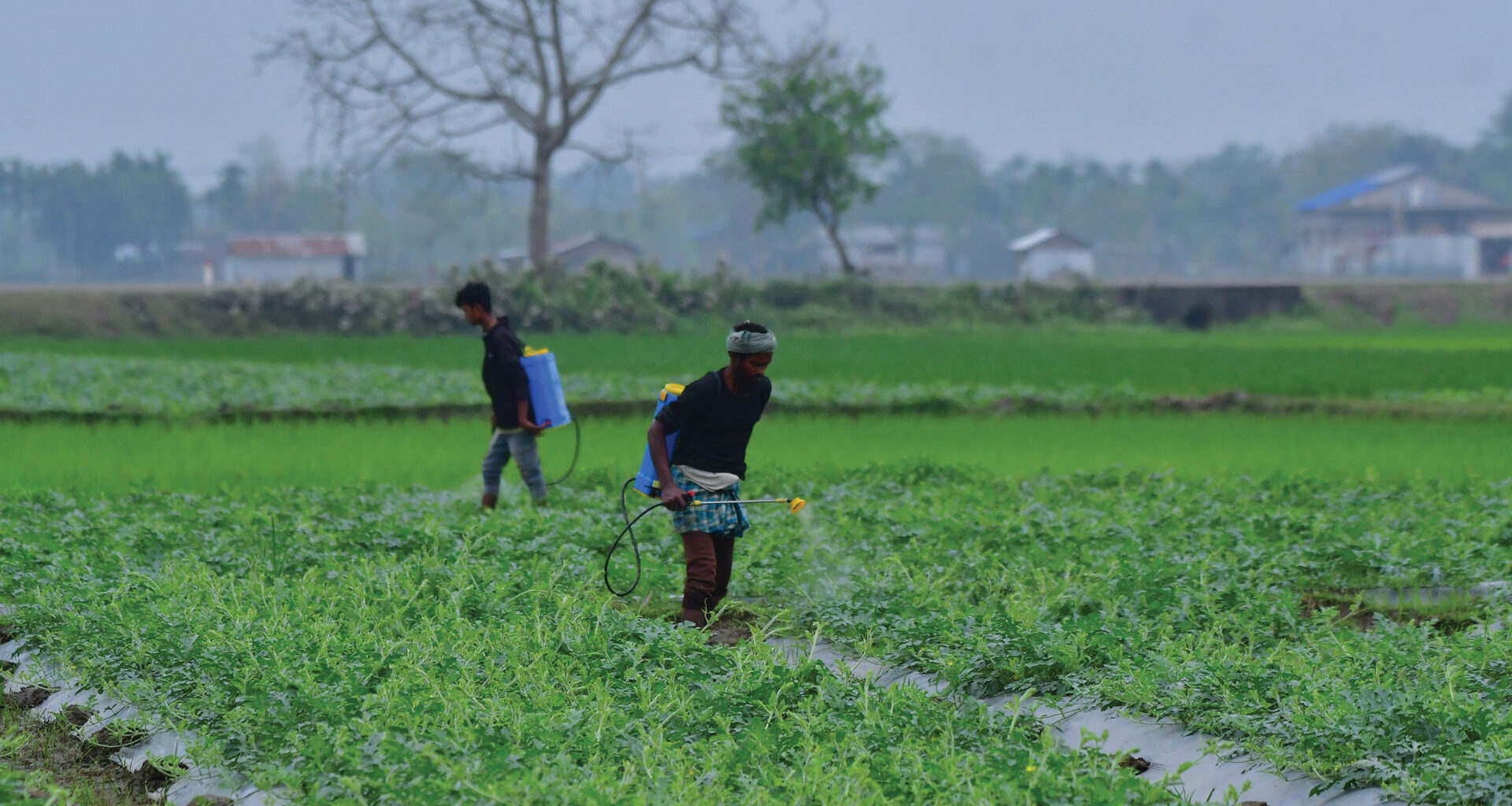
Indian farmers are also poised to feel the impact. A recent analysis by Joshi’s firm found that Indian fertilizer manufacturers, such as Chambal Fertilizers, Deepak Fertilizers, and Gujarat Narmada Valley Fertilizers & Chemicals, are vulnerable due to shortages of natural gas and ammonia, which is used to make urea, a key plant fertilizer.
The Indian Ministry of Petroleum and Natural Gas, in a March 11 press release, says that nearly half of the country’s natural gas demand is met by imports, which have slowed significantly because of the war. “Fertilizer plants will receive about 70 percent supply, while refineries and petrochemical units will take a reduction of about 35 percent so that higher priority sectors can be protected,” the ministry says.
The Center for Strategic and International Studies (CSIS), a US think tank, notes in a post that the shortages are coming just before India’s rainy monsoon season, when farmers ramp up fertilizer use.
“Prolonged shipping disruptions could leave Indian farmers facing fertilizer shortages and higher input costs,” CSIS notes. “These pressures extend across the region, with Southeast Asian granular urea prices jumping over 40 percent since the conflict began.”

Chemical & Engineering News
ISSN 0009-2347
Copyright ©
2026 American Chemical Society