
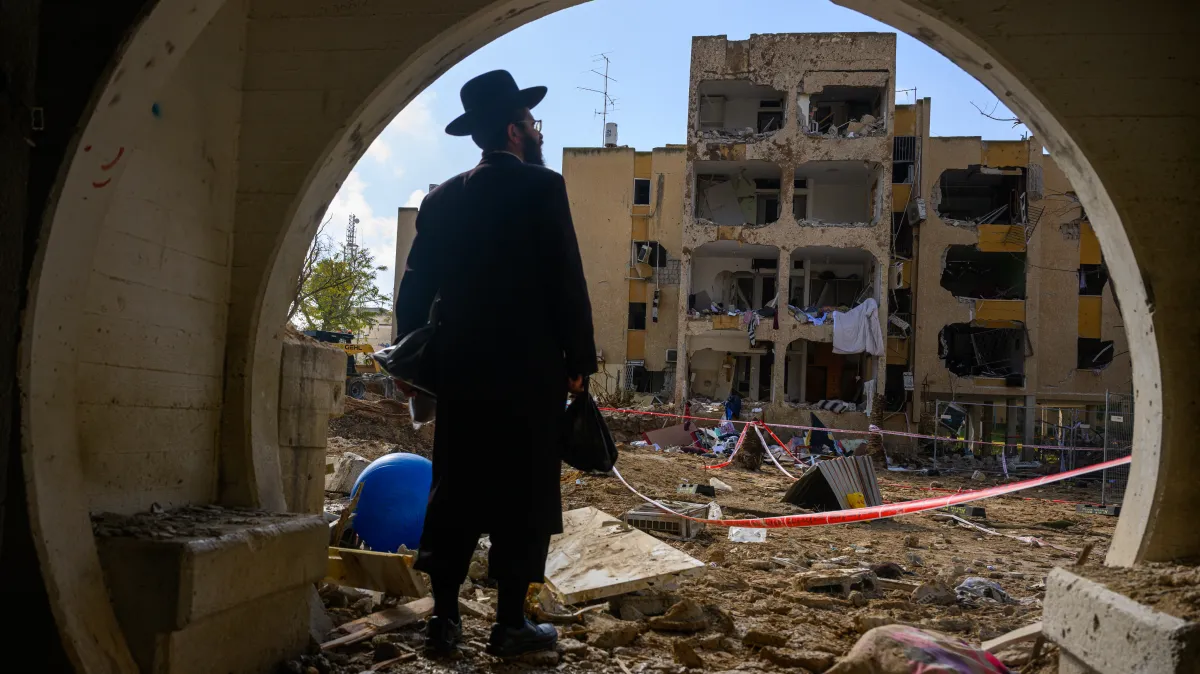
After the explosion there followed a deep silence. People emerged into the smoke-filled night from the shelters and from the ruins of their homes dazed and startled to find themselves alive. Only after several minutes did the silence break.
“Where is my child?” shouted one mother, and then another and then another.
“There were so many desperate parents looking for their children, and so many children crying for their mothers,” said Rachel Haide, 46, who herself spent much of the night searching for her son and his young family. When she eventually found them in the hospital to which they had been taken, she saw her three-year-old grandson Asher’s face was studded with shards of glass.
The Iranian Qader ballistic missile that struck the city of Arad, in southern Israel, just after 10pm on Saturday was one of the most destructive attacks on Israel since the start of the war on February 28. The warhead landed in the middle of a housing estate and tore through more than a dozen four-storey residential blocks.
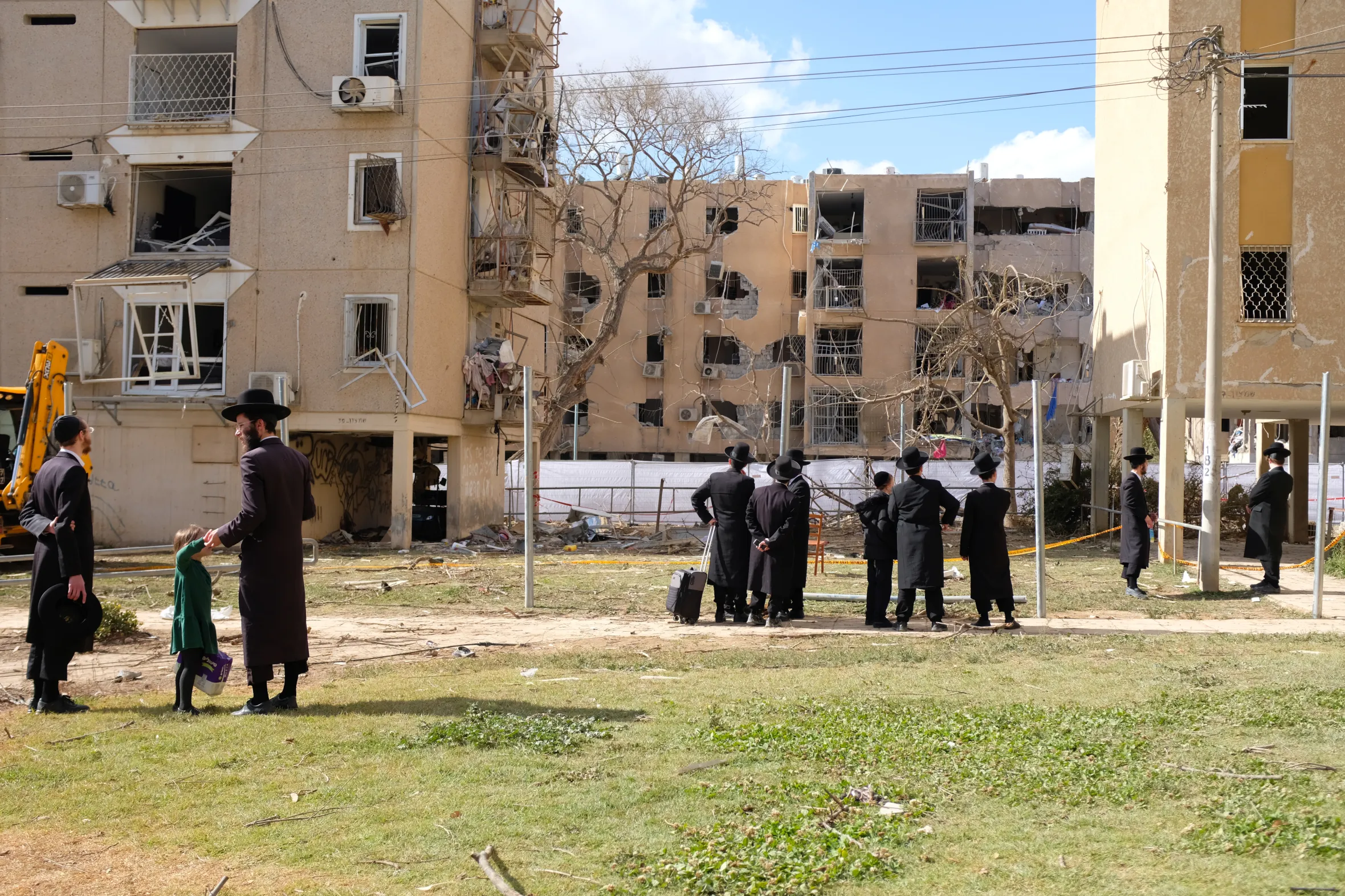 An Iranian warhead landed in a housing estate, causing mass devastationTom Ball for The Times
As of Sunday night, 115 people, including dozens of children, are known to have been wounded, most of whom were members of Arad’s large ultra-orthodox community. Many were nearly buried alive beneath the wreckage of their homes. Emergency service workers were still pulling adults and children from the rubble until 4am.
Three hours earlier, another ballistic missile landed in another residential area in the nearby town of Dimona with similar effect, wounding 78 people.
Binyamin Netanyahu, the Israeli prime minister, Isaac Herzog, the president, and Yair Lapid, the main opposition leader, all visited Arad on Sunday.
“We’re responding with great force, but not after civilians,” Netanyahu said when asked by the press what Israel’s actions would be to the Iranian attacks.
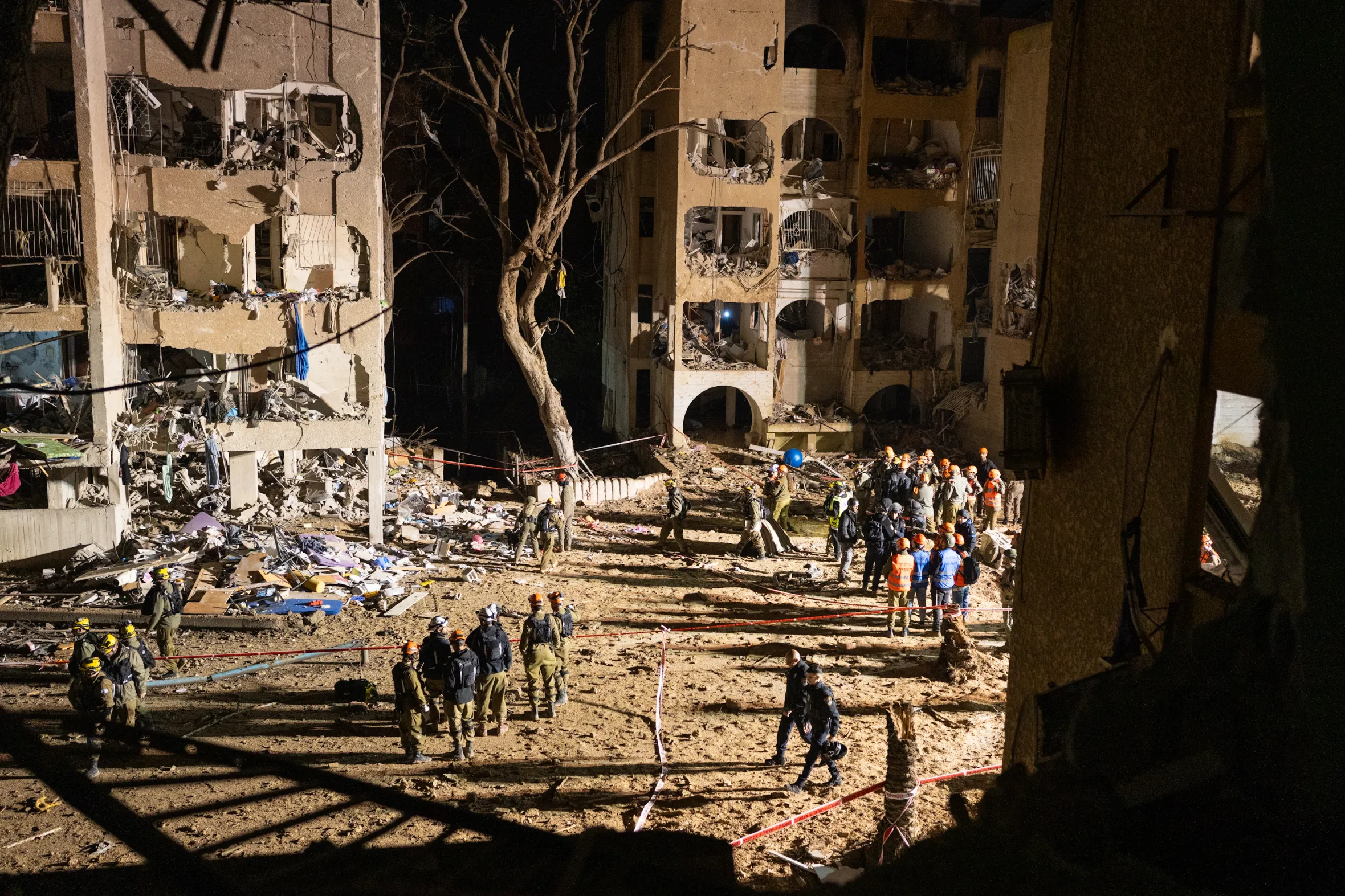 Rescuers came to the aid of 115 people, including dozens of children, who are known to have been woundedErik Marmor/Getty Images
The prime minister added that it was “a miracle” that no one had died in the missile attack in Arad.
The injured have been taken to Soroka Medical Centre in Beersheba. Its director, Shlomi Codish,said that of the 115 people who had been admitted to his hospital from the strikes, more than half were children.
Speaking after a long night from the only trauma hospital in Israel’s south, Codish said he had not seen so severe a mass casualty event in Israel since October 7. Soroka sits almost exactly at the midpoint between the Gaza border, Dimona and Arad.
He said: “Really small children — kindergarten and elementary school grade — and some of them really badly hurt. We have five children in our paediatric intensive care unit now, 11 more in our paediatric surgery unit. All of them require surgery. That’s a very large number of very badly hit children, adults.”
As devastating as the attacks were, they might have been far worse. Dimona is less than eight miles from the Shimon Peres Negev Nuclear Research Centre, widely believed to be at the heart of Israel’s undeclared nuclear weapons programme. Arad is about 30 miles away.
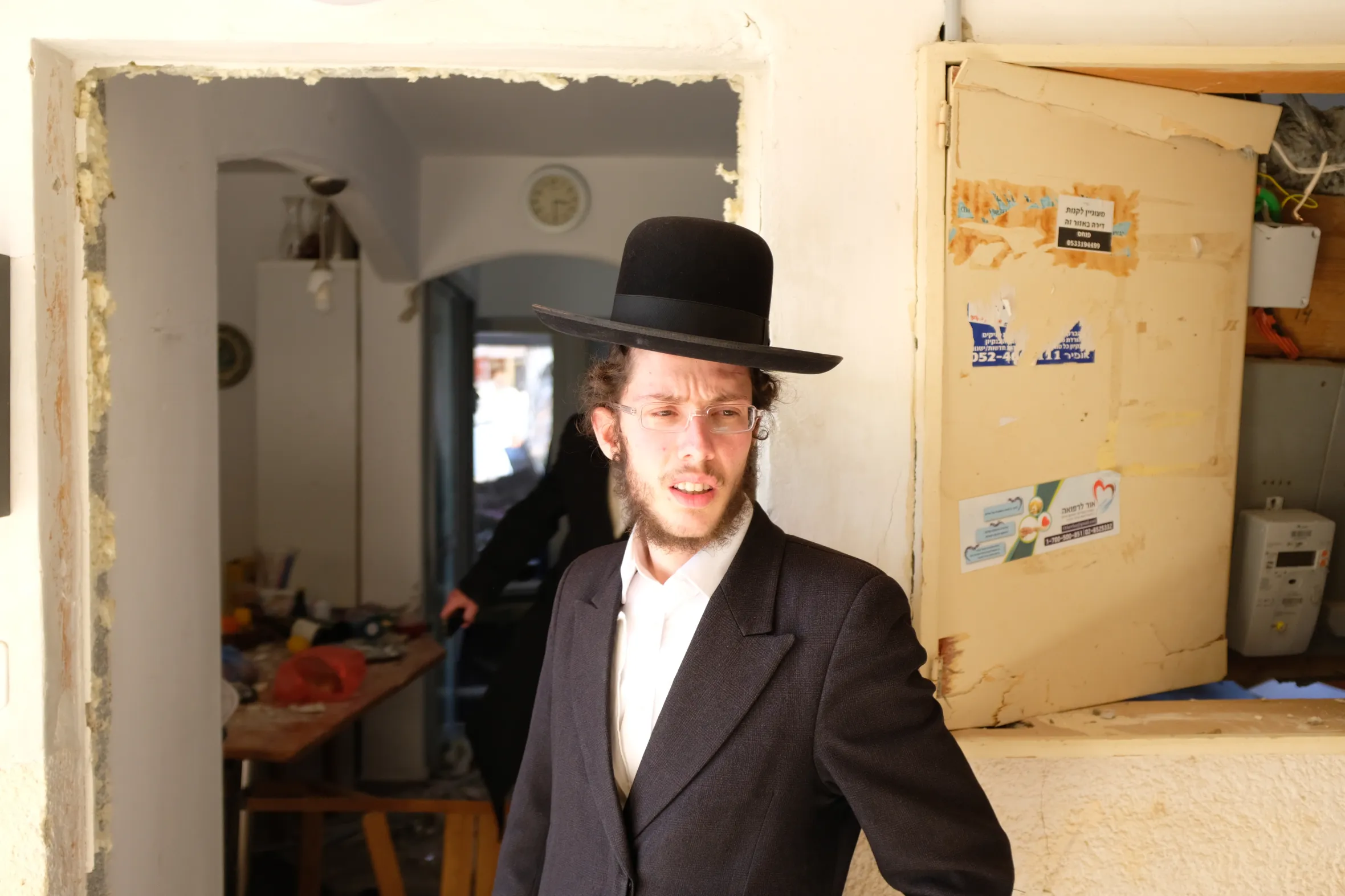 Lozor, 22, sought shelter with his wife and young daughterTom Ball for The Times
Tehran later stated that the bombing of both towns was a direct response to a missile strike on the Iranian nuclear facility at Natanz on Saturday. “The enemy has once again received an unforgettable lesson,” Iran’s Tasnim news agency said. “No area is safe from Iranian missiles.”
Israeli officials say, however, that both strikes were primarily intended to kill and injure civilians. Lieutenant Dean Elsdunne, a spokesman for the Israeli police, said the attacks were the latest in a “clear pattern” of the Iranians targeting residential areas, as they had done in Beit Shemesh, where nine people were killed earlier this month, and in Ramat Gan, where two were killed last week.
“The regime has no problem with killing their own civilians, so why would they have any problem about killing ours?” he said, speaking in Arad alongside the crater gouged out by the missile.
That two ballistic missiles struck in quick succession and were able to penetrate Israel’s air defence system, the much vaunted Iron Dome, will raise concerns.
The Israel Air Force has opened an investigation into the failure and said on Sunday that its initial findings indicated that the missiles had not been intercepted due to a “chain of malfunctions” rather than a systemic failure.
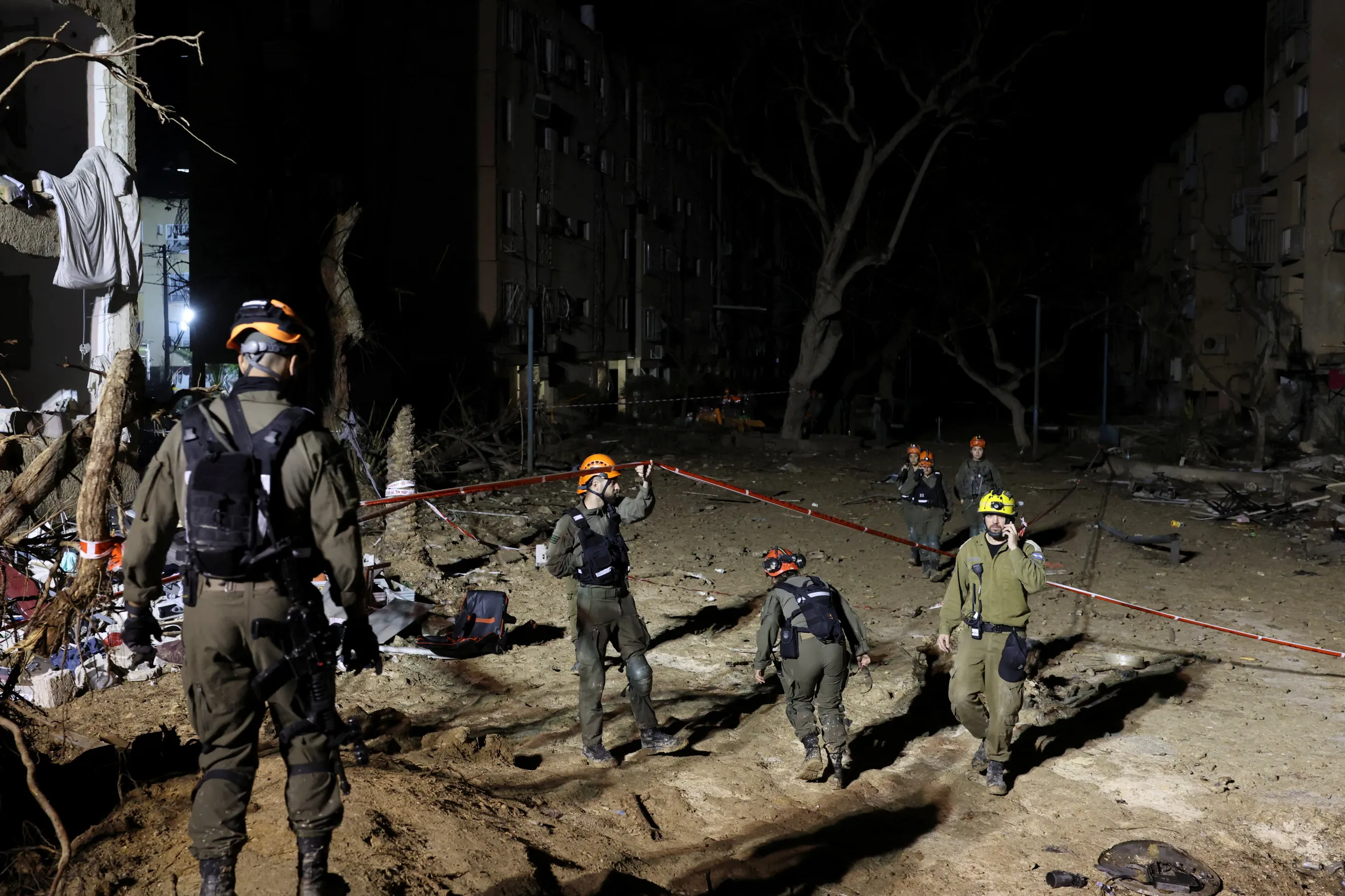 The strike was in response to Israeli attacks on the Iranian nuclear facility at Natanz, Tehran claimedRonen Zvulun/Reuters
The military also noted that Iran had fired more than 400 ballistic missiles at Israel since the start of the war, roughly 92 per cent of which had been intercepted.
Arad, a city in the Negev desert, was founded in 1962 to house the rising influx of Jewish immigrants settling in Israel. It is home to a significant Russian and Ukrainian population who arrived during the chaotic years that followed the collapse of the Soviet Union. In recent years, large numbers of ultraorthodox Jews from the Ger Hasidic sect have also made the city their home.
On Sunday, many of those whose homes had been destroyed or wrecked returned with newly bought suitcases in which to load whatever possessions they could salvage and take back to the hotels along the Dead Sea where most of the displaced have been accommodated.
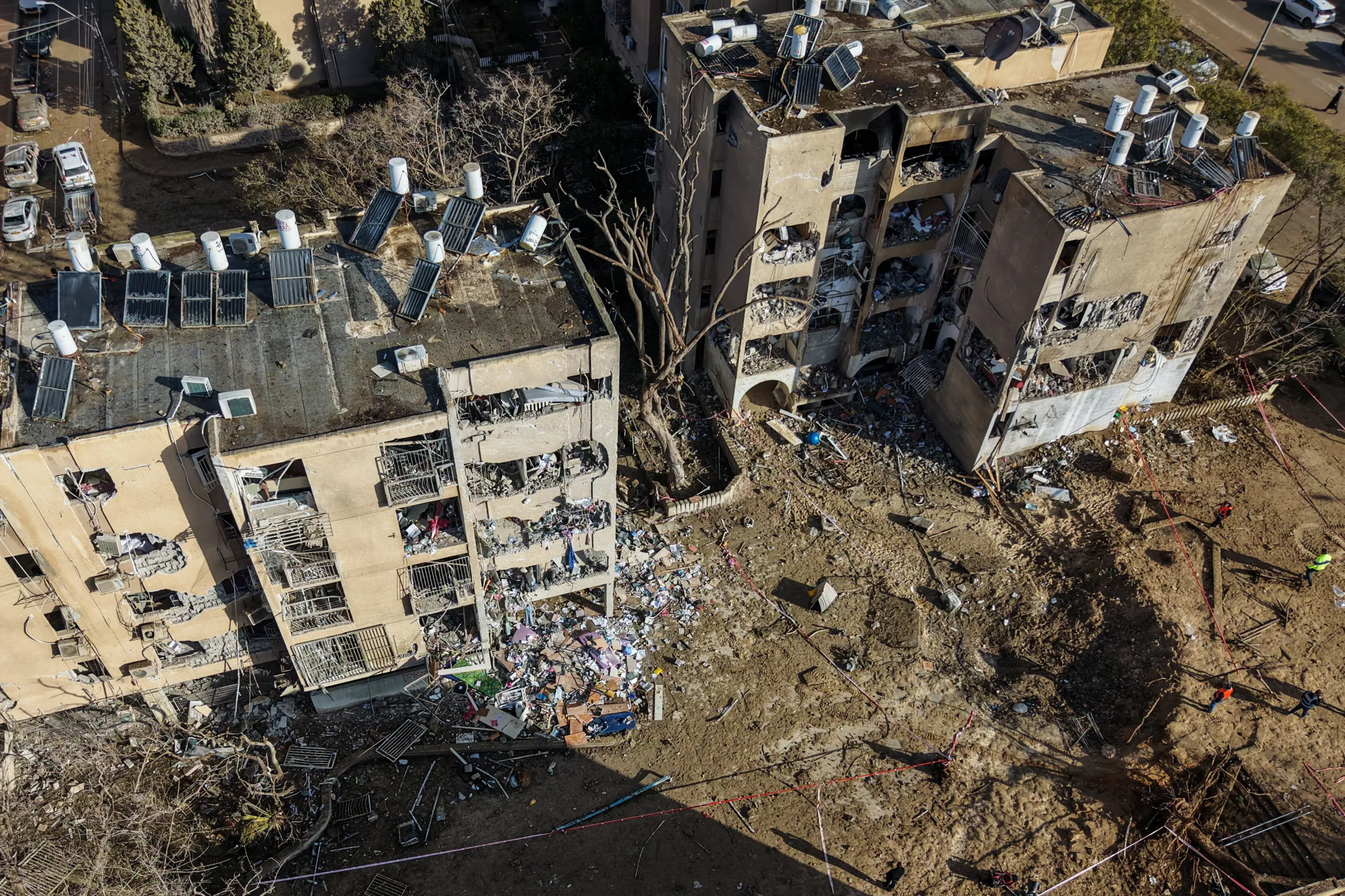 A drone view of the damage. Civilians are feared to be buried alive under the rubbleDedi Hayun/Reuters
The shock of what had happened to them was still apparent in the tremulous voices of several of those The Times spoke to.
Lozor, 22, had just arrived home with his wife and one-year-old daughter after having dinner with his parents when the air raid siren sounded. Living on the first floor of their block, it was only a short walk down to the shelter. But almost as soon as they had made it inside, roughly a minute after the siren first sounded, the missile struck.
“The bang was unbelievable,” said Lozor, whose parents are both from Britain. “You could feel it in your ears popping. You could feel the earth move.”
Additional reporting by Shakked Auerbach