
March 23, 2026
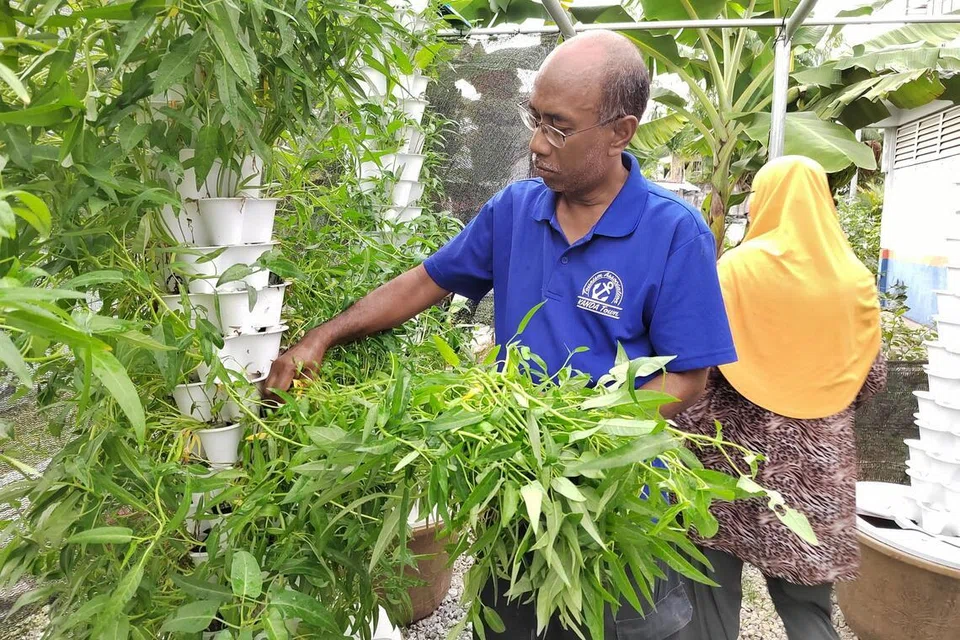
KUALA LUMPUR – For some, the war in the Middle East may feel far away. But for Mr Latiff Abu Hassan, a community leader and seed supplier, the conflict has already landed in his garden.
Over the past few weeks, the 55-year-old has been spending mornings scouring fertiliser shops across the Klang Valley, comparing prices that shift with the volatility of crude oil. His goal is to keep his housing estate’s five community plots running despite rising costs.
A standard 25kg bag of nitrogen-based fertiliser, enough to last about a month, is currently priced at RM305 (S$99). It is projected to hit RM350 after the Hari Raya festivities.
“I heard about the hike last week and the supplier confirmed it today. We are using savings to stockpile. The Iran war may be far away but it now feels closer to home,” he told The Straits Times on March 17.
Tensions in the Middle East have risen sharply following the US-Israeli strike on Iran at the end of February, which has triggered retaliatory attacks across the region and raised fears of a wider conflict. This has pushed global oil prices higher and threatened key shipping routes linking Asia with Europe.
What is happening on Mr Latiff’s farm reflects a broader concern.
Even as Malaysian officials stress that food supplies and the economy remain stable, the expanding Iran conflict is pressuring policymakers to assess risks to energy prices and multiple supply chains, ranging from kitchen staples such as onions and chillies to crop fertilisers and animal feed, raising costs across the entire food chain.
Meetings in Putrajaya, Malaysia’s administrative capital, intensified as the situation in the Middle East escalated, with senior officials, including seven ministers, holding daily sessions in the week leading up to the Cabinet meeting on March 11, to assess developments linked to the crisis and align the national response.
Oversight has since shifted to the National Economic Action Council. Prime Minister Anwar Ibrahim on March 16 said the council will hold weekly discussions involving greater participation from industry players.
“Overall, the situation is under control,” he said, following the council’s briefing on the country’s key economic indicators.
Separately, while Domestic Trade and Cost of Living Minister Armizan Mohd Ali has sought to reassure Malaysians that there are no immediate concerns over rice supply, Agriculture and Food Security Minister Mohamad Sabu has encouraged ministry staff with landed homes to plant quick-yielding vegetables as a precaution against possible supply disruptions.
However, details of national contingency plans remain limited, and there has been little public clarity on alternative sources for oil and various supply chains should the Strait of Hormuz, the world’s most important oil chokepoint, remain a zone of prolonged tension.
Malaysia relies on imports for about 60 per cent of its food. Much of these come from Thailand, China and major agricultural producers such as Brazil and Argentina, according to trade data. India and regional suppliers play key roles in specific staples.
Mr Zakaria Kamantasha, 60, a food security expert with Pertubuhan Lembah Organik, a Malaysian group promoting organic and sustainable farming, told ST that the issue is not about crisis communication but whether Malaysia’s food ecosystem is strong enough to withstand external shocks.
“Looking for alternative supplies is only a temporary painkiller. The real solution is to return to the land,” he stressed.
Among the most import-dependent staples are chillies, shallots, beef, mutton, ginger and round cabbage, based on government self-sufficiency data, showing how local production meets less than half of the demand.
Almost all of the onions and shallots consumed in Malaysia are imported, with India being the lead supplier. These items are the foundational DNA of Malaysian cooking, used daily in almost every household.
Efforts to build local resilience are already in place with 4,813 community agriculture projects established nationwide. But these remain too small in scale to offset the disruption of shipments and higher freight costs.
As for chicken, duck meat and eggs, Malaysia has ample supplies, but prices could still rise. This is because poultry farming is heavily dependent on imported feed made from corn and soya bean, leaving the sector exposed to global price swings.
Feed accounts for about 60 per cent to 70 per cent of total production cost, according to local health publication and advocate CodeBlue, citing Dr Saravanakumar S. Pillai, a former senior deputy director at the Department of Veterinary Services.
“Malaysia relies heavily on imported feed ingredients, particularly corn and soya bean meal sourced from major agricultural exporters such as Brazil, Argentina and the United States,” he said on CodeBlue’s website on March 17.
“When global prices of these commodities increase, the cost of feed production rises almost immediately for local feed millers. This eventually translates into higher production costs for poultry farmers,” he added.
The impact could spill over to Singapore. Malaysia is one of the city state’s most important suppliers, particularly for fresh and perishable items such as poultry, eggs and vegetables. About a third of Singapore’s chicken imports come from Malaysia, alongside a significant share of its egg supply and fresh produce, based on the latest available data.
Mr Zakaria said his experience in agriculture shows how closely food security is tied to national resilience. “When we import 60 per cent of our food, we are exposed to decisions made outside our control.”
Reducing reliance on imports should be the priority, including building farming systems that depend less on imported inputs, he added.
Fertiliser manufacturers are expected to raise prices in early April, driven by high crude oil prices, according to Cameron Highlands Agriculture Entrepreneurs Association chairman Cheng Nam Hong.
“The fertiliser manufacturers have told us the price would increase by a minimum of 15 per cent,” he told ST.
In Cameron Highlands, the country’s primary highland farming region, demand runs into more than 1,000 tonnes of chemical fertilisers each month.
Federation of Malaysia Fruit Farmers Association president Koh Lai Ann warned that farmers could face a double blow from rising prices and tightening supply.
“As Malaysia is heavily reliant on imports, farmers may struggle to secure supplies even if they have sufficient funds,” he told ST.
Malaysia has imported fertilisers sourced from the Middle East, China, Canada and Russia. In 2025, imports totalled about US$1.33 billion (S$1.7 billion), with China supplying roughly US$300 million, according to UN Comtrade data. Supplies from the Middle East are largely nitrogen-based, making them especially sensitive to shocks in oil and gas markets.
Mr Latiff is now weighing difficult choices – scaling back vegetable varieties, shrinking portions for sale or seeking more subsidies to manage growing costs.
“People are very sensitive about price hikes,” he said.
For the community leader, the concern goes beyond rising costs, as a faraway conflict increasingly shapes decisions closer to home – from what gets planted in the garden to what ends up on the dinner table.