

U.S. officials, citing current American intelligence, told CBS News that roughly a dozen Iranian naval mines are currently in the Strait of Hormuz, a vital oil transit route. One official said the number could be slightly lower.
President Donald Trump eased earlier threats to strike Iran’s power plants, saying the strait “will be open very soon, if this works,” adding control of the strait’s oil flow would ultimately be shared by “me and the Ayatollah, whoever the Ayatollah is,” CBS reported. Tehran has denied that any direct talks have occurred.
 Close
Close
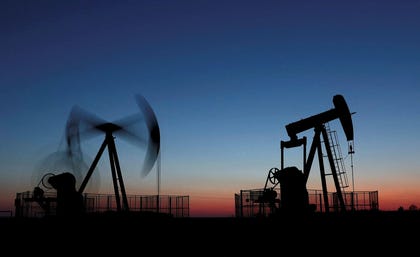
Oil pumps operate after sunset outside Vaudoy-en-Brie, near Paris, France, Wednesday. Credit: Christian Hartmann/REUTERS
Oil pumps operate after sunset outside Vaudoy-en-Brie, near Paris, France, Wednesday. Credit: Christian Hartmann/REUTERS
U.S. officials outlined the threat posed by Iran’s mines: the Maham 3 is a moored magnetic‑acoustic mine that can activate without contact, while the Maham 7, a bottom‑resting “sticking mine,” is designed to evade detection and target medium‑sized ships, landing craft, and small submarines. Both can be deployed from small boats or aircraft, CBS reported, citing ordnance experts.
The report notes that U.S. Central Command has conducted multiple strikes on Iranian minelayers and storage sites, including Kharg Island, targeting more than 120 vessels and 44 minelaying assets. The White House says international partners are assisting efforts to prevent disruptions to global energy flows.
 Close
Close
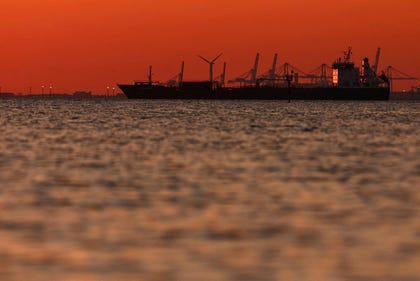
The silhouette of an oil and chemical tanker off the Gulf of Fos-sur-Mer at sunset, in Martigues, France, Friday. Credit: Manon Cruz/REUTERS
The silhouette of an oil and chemical tanker off the Gulf of Fos-sur-Mer at sunset, in Martigues, France, Friday. Credit: Manon Cruz/REUTERS
Economic and public impacts continue. Roughly 20 percent of global oil passed through the strait before the war began on February 28, and U.S. gas prices have risen sharply. A CBS poll shows 62 percent of Americans disapprove of Trump’s handling of the conflict, while markets surged after reports of delayed ultimatums and potential diplomatic progress.