 Credit: Imaggeo.
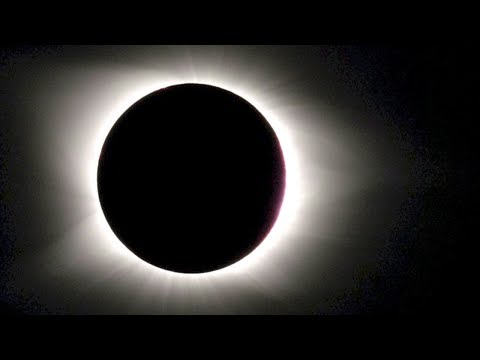
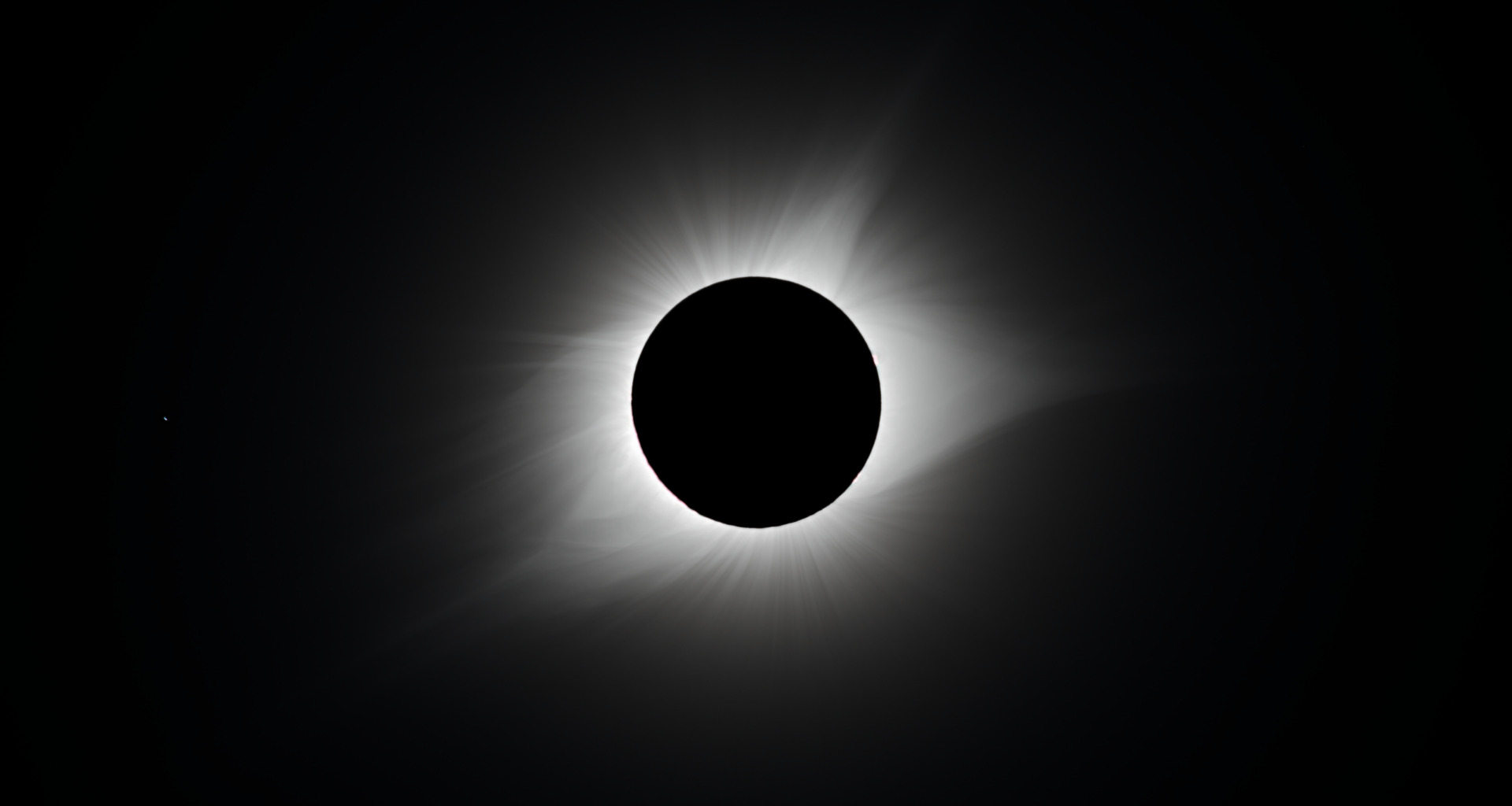
On August 2, 2027, the moon will completely block the sun for a staggering six minutes and 23 seconds. The alignment will plunge millions of people across southern Spain, North Africa, and the Middle East into deep midday darkness.
Eclipses are always exciting if you are lucky enough to experience one, but astronomers call this upcoming event the “eclipse of the century.” It will be the longest total solar eclipse on easily accessible land for the rest of the 21st century.
Recent eclipses, like the 2024 North American event, offered about four and a half minutes of totality. A highly anticipated European eclipse on August 12, 2026, will give observers in Iceland and Spain just over two minutes. The 2027 eclipse nearly triples that time along a 9,462-mile path across the globe. It gives skywatchers a massive window to stare directly into the sun’s hidden, wispy corona.
Long-time eclipse chasers are already booking flights to prime viewing spots like Luxor, Egypt, and Málaga, Spain.
Total solar eclipses occur when the sun becomes fully blocked out by the moon. While these celestial events occur a handful of times each year, they are rare at any given location. On average, a total solar eclipse will occur at any one specific location on Earth once every 375 years.
The Perfect Cosmic Coincidence
Many other worlds in the solar system have moons. Mars has two small, potato-shaped moons, while Saturn has a staggering 274 confirmed moons as of March 2025, after the International Astronomical Union recently recognized a batch of 128 new moons around the gas giant.
However, only Earth has the perfect conditions for total eclipses to form.
“So far, Earth is the only planet we know that gets this type of solar eclipse,” said Dr. Kelly Korreck, a program scientist for eclipses at NASA Headquarters.
×
Thank you! One more thing…
Please check your inbox and confirm your subscription.
We owe this spectacle to a special geometric relationship between Earth, the Moon, and the Sun. The Sun is roughly 400 times larger than our Moon. However, it also sits exactly 400 times farther away. From our vantage point on the ground, the two spheres appear identical in size. When they align perfectly, the moon acts as an exact lid over the sun.
“There are other moons that pass in front of the sun, but to have a moon that is the perfect size and the perfect distance to be able to witness this is really special,” Korreck added.
So, why don’t we see this happen more often? The moon’s orbit tilts about five degrees off the plane of Earth’s orbit around the sun. Most of the time, the moon’s shadow swoops just above or below our planet. A total eclipse requires a precise alignment during a short eclipse season roughly every six months.
Unpacking the Century’s Longest Eclipse
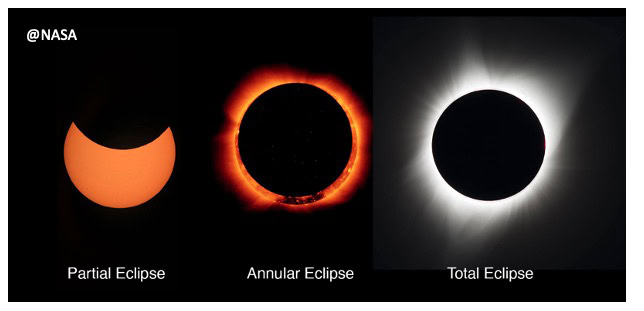
Not all eclipses deliver the same kind of darkness. Sometimes, the moon hits the farthest point in its orbit, known as apogee. It looks slightly smaller from Earth, failing to cover the sun entirely. This leaves a fiery ring in the sky, creating an annular eclipse.
For the ultimate total solar eclipse, you need the exact opposite. You need the sun at its farthest distance from Earth and the moon at its absolute closest point, known as perigee.
The August 2027 event flirts with the theoretical limit for eclipses on Earth. Moon shadows travel in predictable mathematical families called Saros cycles. The 2027 eclipse belongs to Saros 136. This specific cycle produces exceptionally long totalities every 18 years, 11 days, and eight hours.
We haven’t seen an eclipse this long since July 22, 2009. That event cast a six-minute and 39-second shadow over the waters near Japan. After 2027, the next event to break the six-minute mark (but still shorter than the one expected next year) won’t happen until August 12, 2045. If you miss the 2027 eclipse and want to see a longer one, you will have to wait until the year 2132.
Where to Chase the Shadow
 For an interactive map of the path of totality, use the interactive eclipse maps developed by Xavier Jubier. Credit: National Eclipse
The 2027 eclipse is a once-in-a-lifetime opportunity for the 89 million people living directly inside the path of totality. The 9,462-mile path will sweep across Spain, Morocco, Algeria, Tunisia, Libya, Egypt, Saudi Arabia, Yemen, and Somalia.
Where should you actually go to catch the show? That’s of course up to you, but many astro-tourists seem to be choosing Egypt, and it’s not hard to tell why. Observers will gather at iconic ancient sites like the Karnak and Luxor Temples, the Colossi of Memnon, and the vast Hatshepsut Temple.
But Egypt in August is brutally hot. If you prefer a cooler, more affordable experience, you have excellent alternatives.
You can position yourself in coastal cities like Cádiz in Spain, or Tangier in Morocco. You might even book a spot on a cruise ship floating in the Mediterranean Sea off the coast of Tunisia or Libya.
A Total Spectacle
When totality hits, the world below the moon’s shadow fundamentally changes for a few minutes. The temperature plummets. Bright stars and planets suddenly emerge in the midday sky. Local wildlife becomes deeply confused, with birds bursting into their morning songs in the moments right after totality, mistaking the sudden darkness and returning light for nightfall and dawn.
As a species ruled by the sun, humans many also experience a profound psychological shift.
“Human brains tend to start interpreting [the eclipse] as weird, and there might be some anxiety or fear because it’s becoming dark in a way we’re not used to,” Dr. Korreck told EuroNews, adding that this response is totally natural.
“We’re perplexed. But then once you actually see totality, and see this beautiful outer part of the sun that you can’t see on a day-to-day basis, it’s awe-inspiring. As many times as you see it, you just want to see it again.”
Viewing the Spectacle Safely
During the few minutes of totality, you can actually take off your safety glasses, although you should do this only if you know what you’re doing. This safety exception only applies when the sun is completely blocked. Even a 99% partial eclipse is bright enough to cause permanent retina damage, a condition known as solar retinopathy.
You must strictly protect your eyes before and after totality. You cannot use regular sunglasses, no matter how dark they seem. You need specific solar viewing glasses that meet the ISO 12312-2 international standard. These glasses are thousands of times darker than everyday eyewear.