
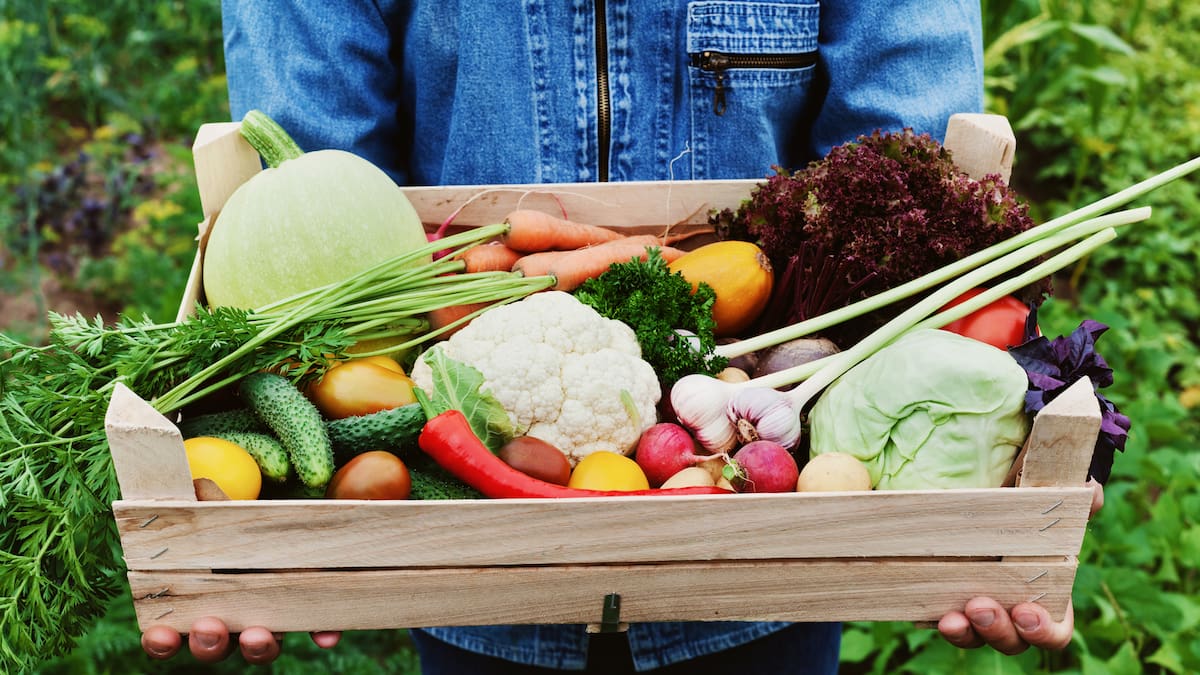
Further, what we are purchasing in the food basket is at a higher state of preparation than ever before – somebody else’s time is being substituted for ours in kneading dough, scrubbing potatoes and roasting chickens.
More of the household income is going to the providers of ready-to-eat food, in the supermarket, food carts, cafes and restaurants.
Since 1970, the University of Otago’s Department of Human Nutrition has surveyed the cost of food in four main centres and calculated the minimum weekly cost of dietary needs.
In 2023 (the year of the last survey) Otago researchers reported that feeding a family of four (children 10 and 4) would cost $264, $343 and $412 on basic (carrots, oats and drumsticks), moderate (mushrooms, nutrigrain and thighs) and liberal (avocado, muesli and chicken breast) diets in Auckland, in comparison with $278, $362 and $434 in Wellington.
The calculations assume that the families have basic food preparation and cooking skills, as well as access to a large supermarket and cooking facilities to prepare meals.
Choice of food type (the calculations are not based on increasing quantity) makes a big difference to the wallet.
In the Stats NZ data, the reality of choices appears in the food and CPI basket.
In 2020, the food basket was adjusted to increase the weighting on restaurant meals and ready-to-eat food to 27.2%; in 2014, the category was 22% of expenditure.
Last year, the basket was updated to include meal kits and remove celery.
Expectations have changed, and a new norm has appeared, but for those on the land, it does feel like a beat-up when every month, Stats NZ data are greeted with “food prices up again”.
Questions then emerge on who is taking advantage of the Kiwi battler?
Farmers, supermarkets and banks are the usual suspects.
Various investigations have been done over the years along the food chain, including Commerce Commission reports into supermarket and bank behaviour.
The United States has the most comprehensive set of analyses, dividing a dollar spent by a consumer into the different beneficiaries in different ways.
The first is simply the amount of the supermarket dollar that, on average, reaches the farmer and grower.
Dr Jacqueline Rowarth, Adjunct Professor, Lincoln University, is a farmer-elected director of DairyNZ and Ravensdown. She is also a member of the Scientific Council of the World Farmers’ Organisation.
The answer is just over 9%.
The people who actually till the soil receive 9.1c on average.
The processors (which, for most meat and dairy producers, are vital in turning the ‘raw’ product into something that customers want to buy) receive 13.2%.
Retail trade, the supermarkets and other outlets, receive 14.7%.
Food services receive the biggest proportion (31.5%, almost three-quarters of which is salary and benefits), and the rest goes to services like advertising, insurance and power.
Which part could we do without?
Australian analysis has shown that in 2023, Woolworths and Coles supermarkets made 6.0% and 4.8% profit margins on total revenue, respectively.
In New Zealand, an increase in the number of providers for the mere 5.34 million people could result in increased prices.
In contrast, it might be that the banks are being a trifle over-cautious about protecting survival and keeping interest rates higher than strictly required.
In all these calculations, a small change at the bottom – such as the minimum wage – has a compounding effect.
A percentage margin is made at every step to cover costs and risks.
At each step, the actual figure increases.
The result can be record profits – or an unviable business.
Stock turn also makes a difference.
Farms have tended to become larger over the years for this reason.
The margin on a kilogram of milk solids or carton of apples won’t keep the farming family in food, but adds scale, and economies start becoming viable.
Small businesses tend to fold into bigger ones for this reason.
The ANZ report on farm costs released this month reported that, on average, farm costs increased 31% between 2019 and 2024.
The Reserve Bank Calculator indicates that consumer price index (CPI) inflation between 2019 and 2024 was 1.23% for general inflation, 1.27% for food and 1.30% for wages.
In the American analysis of the food dollar, salaries and benefits are the biggest overall component.
In New Zealand, that is what keeps the economy humming and nutritious, safe food on the table.
Dr Jacqueline Rowarth, adjunct professor, Lincoln University, is a farmer-elected director of DairyNZ and Ravensdown. She is also a member of the Scientific Council of the World Farmers’ Organisation.