
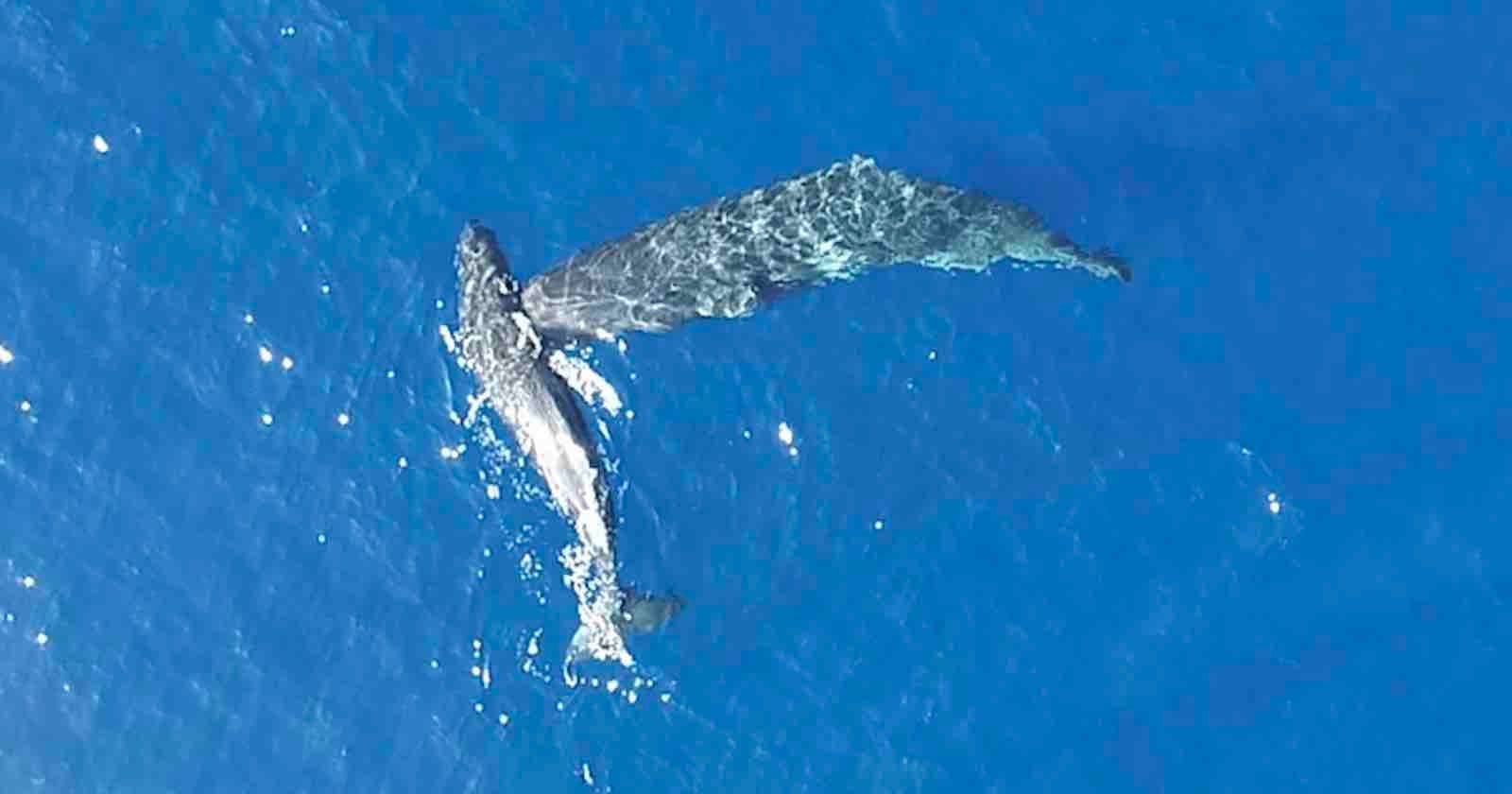
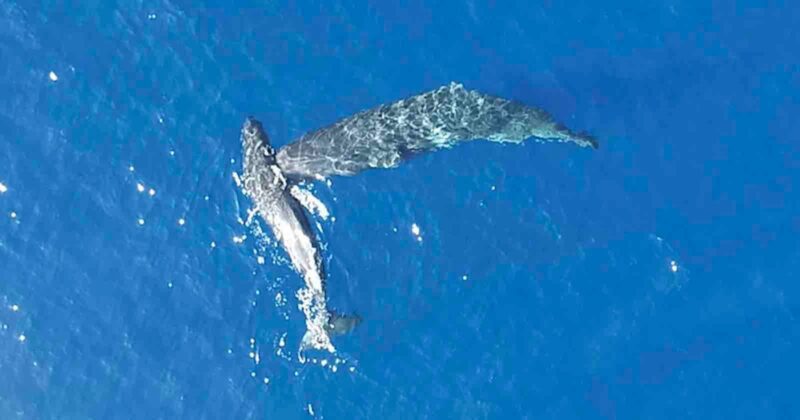
 Photo credit: Association Tursiops
Scientists have captured the first-ever footage of sperm whales headbutting each other, documenting a behavior long described by sailors but never previously confirmed.
Sperm whales — also known as “Moby Dick” whales — have historically been blamed for ramming ships. Accounts from ship captains over centuries describe whales striking vessels and each other — including the 1820 sinking of the whaling ship Essex, reportedly by a 26-meter sperm whale. This sinking later inspired Herman Melville’s novel Moby Dick.
Despite these reports, the species has remained difficult to study, and biologists have long debated whether deliberate headbutting actually occurs between sperm whales.
Now, researchers from the University of St Andrews say they have captured the first recorded footage of the behavior and observed it directly in the water. The study, published in Marine Mammal Science, was led by scientists from the University of St Andrews, who say drone footage provides the first verified evidence of sperm whales forcefully striking one another with their heads.
The footage was collected using drones during fieldwork conducted between 2020 and 2022 in the Azores and the Balearic Islands. In the aerial footage, a juvenile male is seen ramming into a smaller female. The team also documented the broader behavioral and social context surrounding these interactions.
The use of drone technology allowed researchers to observe the animals from above without disturbing them, making it possible to capture behavior that is typically difficult to witness.
“This unique overhead perspective for observing and documenting near-surface behaviour is just one of the ways drone technology is transforming the study of wildlife biology,” lead author Dr Burslem, who is now based at the University of Hawaii says in a statement. “It’s exciting to think about what as-yet unseen behaviours we may soon uncover, as well how more headbutting observations may help us to shed light on the functions the behaviour may serve. If there are people out there with similar footage, we would be very keen to hear from them”.
Previous assumptions suggested that large adult males were responsible for such forceful interactions. However, the new findings indicate that younger whales may also play a significant role.
Researchers are now working to better understand why sperm whales engage in headbutting. According to a report by PopSci, one possibility is that headbutting represents a form of physical competition, potentially linked to male-to-male rivalry. Such interactions are thought to occur mostly below the surface, which has made them difficult to study. Other scientists have raised questions about whether frequent headbutting would be favored by evolution, given the importance of the whale’s head in producing sounds used for echolocation and communication.
Image credits: Header photo by Association Tursiops.