
Medically reviewed by Kierra Brown, RD
Credit: margouillatphotos / Getty Images
Your body needs protein for essential functions, as well as muscle health, immunity, and hormone regulation.
Greek yogurt, eggs, kefir, and chicken are high-protein snacks.
Choosing premade high-protein snacks with whole ingredients can help you meet your protein intake goals.
Protein is an essential nutrient your body needs to build muscles, maintain skeletal and immune health, and produce hormones and neurotransmitters. Snacks like Greek yogurt, tuna salad, and hard-boiled eggs are high-protein options.
1. Turkey Sticks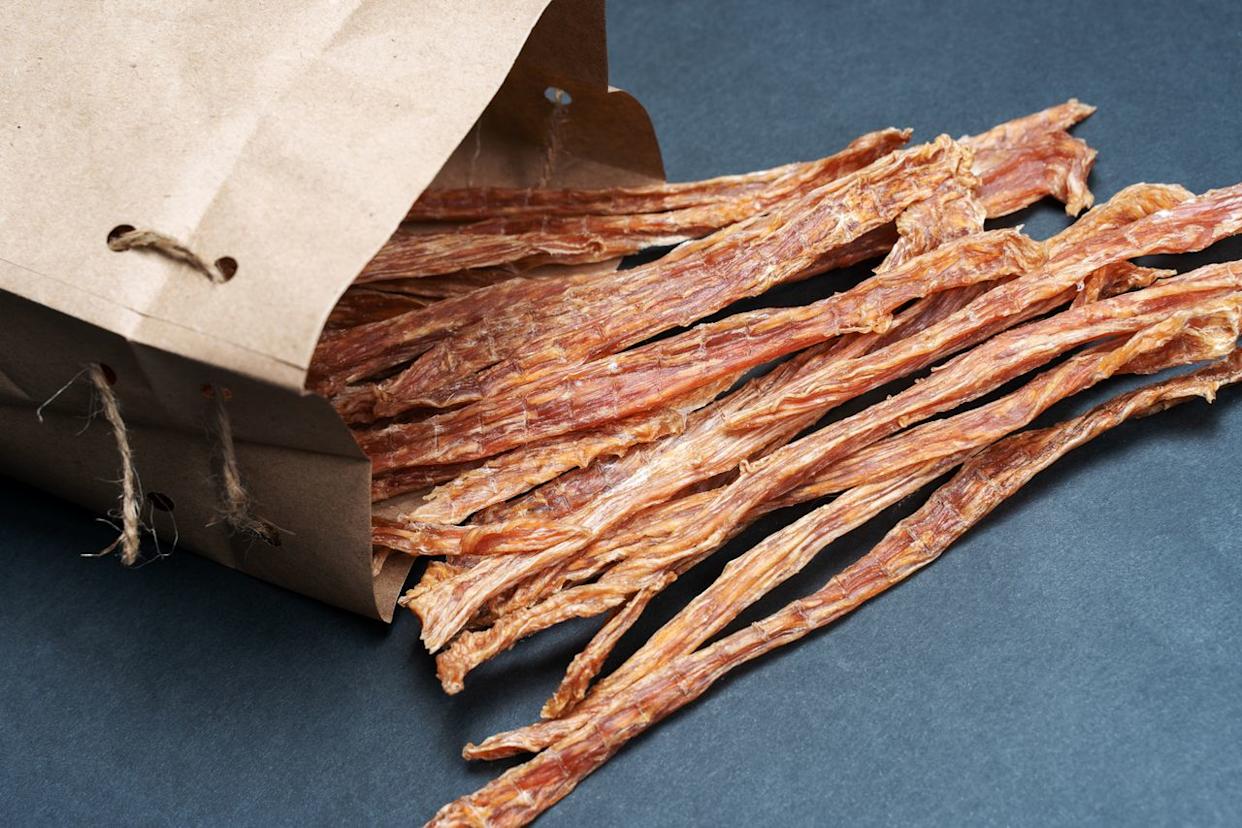
Credit: All the rights for presented photos are my own. / Getty Image
Chomps Free-Range Turkey Sticks are a high-protein snack option for on-the-go. Each individually wrapped stick pack contains 12 grams of protein.
They are also carbohydrate-free, making them a good choice for those following low-carb diets.
These shelf-stable sticks can be stored in your bag, desk drawer, or car.
2. Greek Yogurt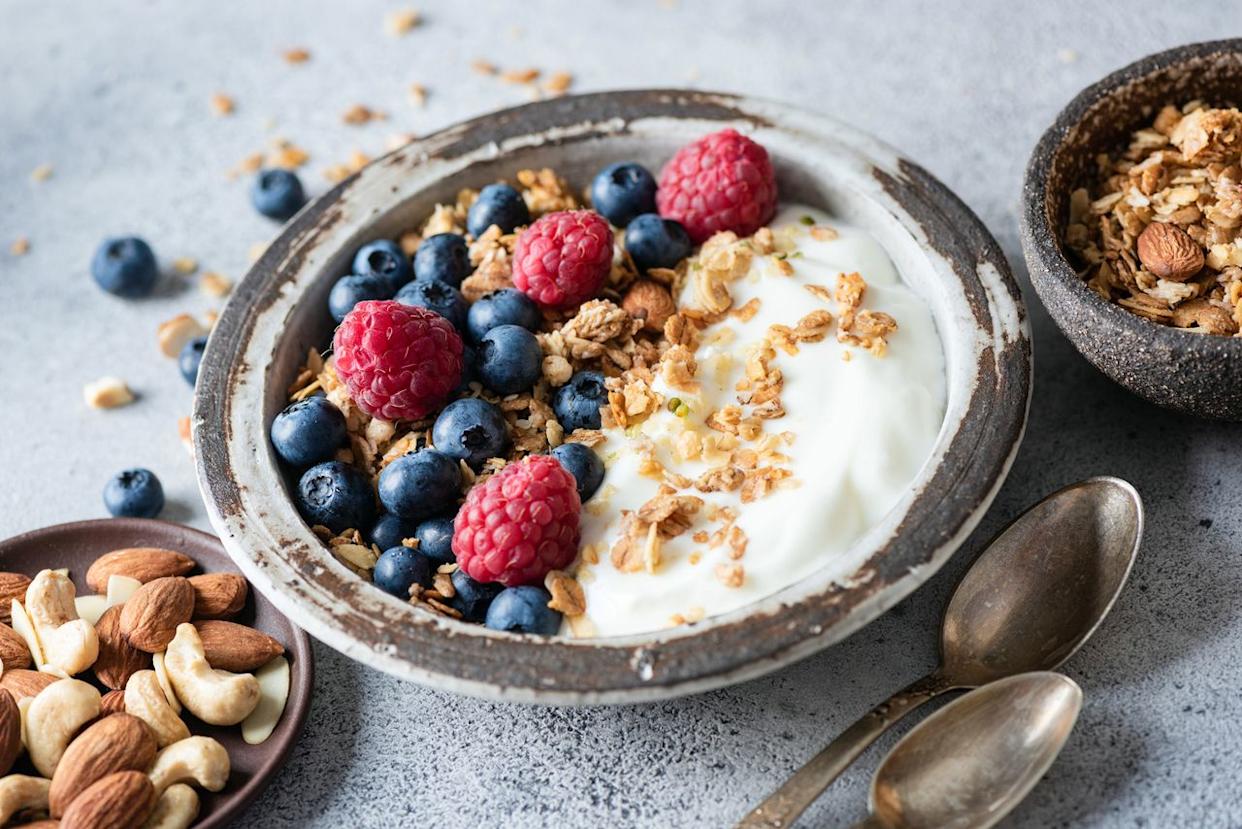
Credit: Arx0nt / Getty Images
Greek yogurt provides around twice as much protein as regular yogurt. It provides 17 grams of protein in a three-quarter cup serving.
Individually portioned Greek yogurt can be packed into an insulated lunchbox or stored in a refrigerator at home or work for a quick, portable snack.
3. Pumpkin Seeds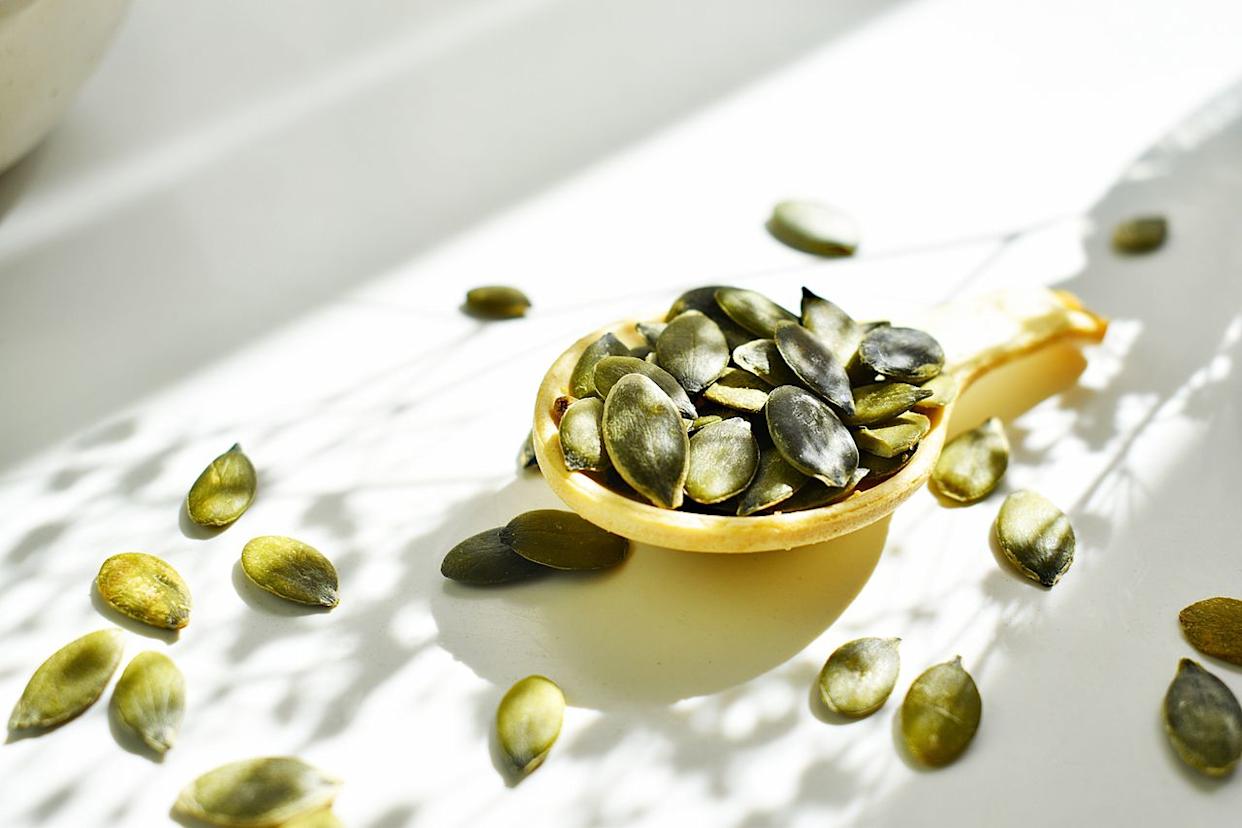
Credit: Blanchi Costela / Getty Images
Pumpkin seeds contain 8 grams of protein per quarter-cup serving. They are portable and can be added to other high-protein foods, like Greek yogurt, for an extra protein boost.
Pumpkin seeds are also high in essential vitamins and minerals like magnesium, which is needed for blood sugar and blood pressure regulation.
4. Hard-Boiled Eggs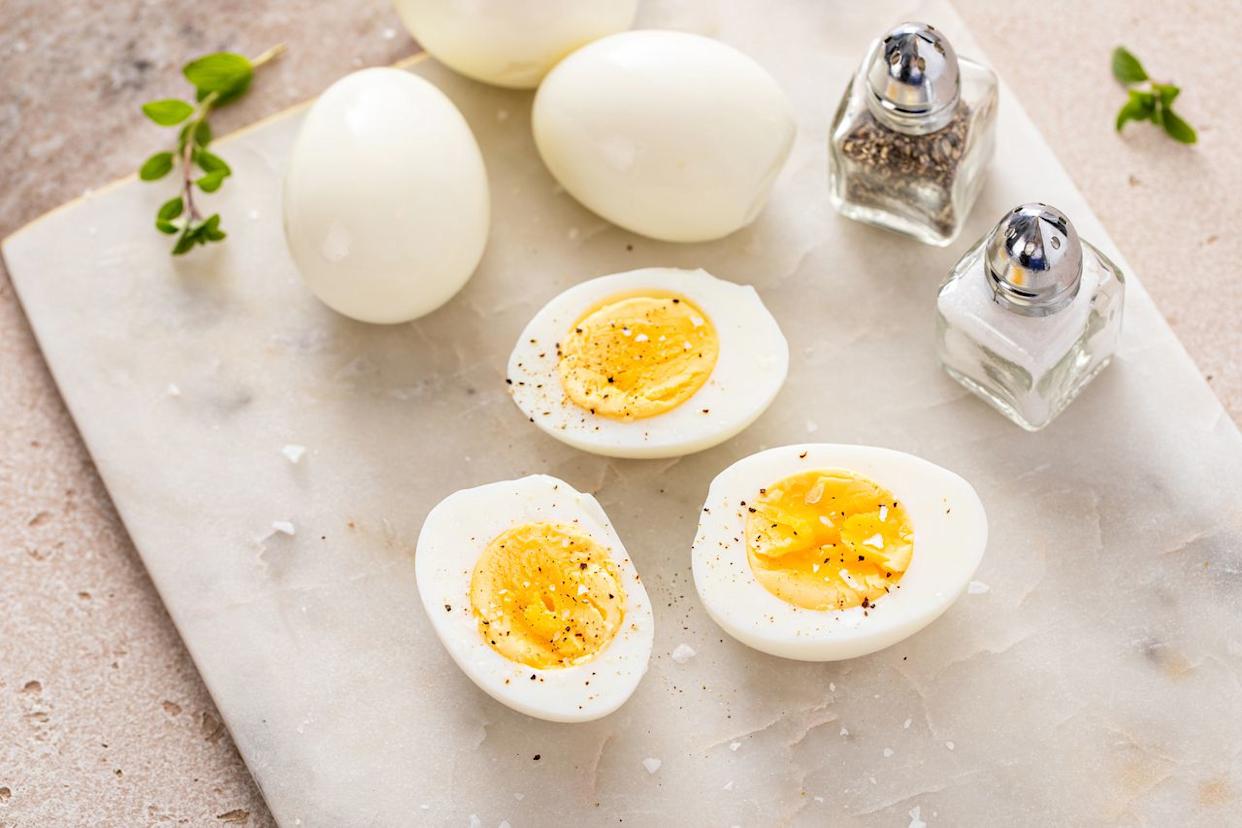
Credit: VeselovaElena / Getty Images
Hard-boiled eggs are portable and filling. A serving of two hard-boiled eggs contains over 12 grams of high-quality protein.
Eggs are also rich in nutrients like choline, which is critical for fetal growth and development.
5. Turkey and Swiss Roll-Ups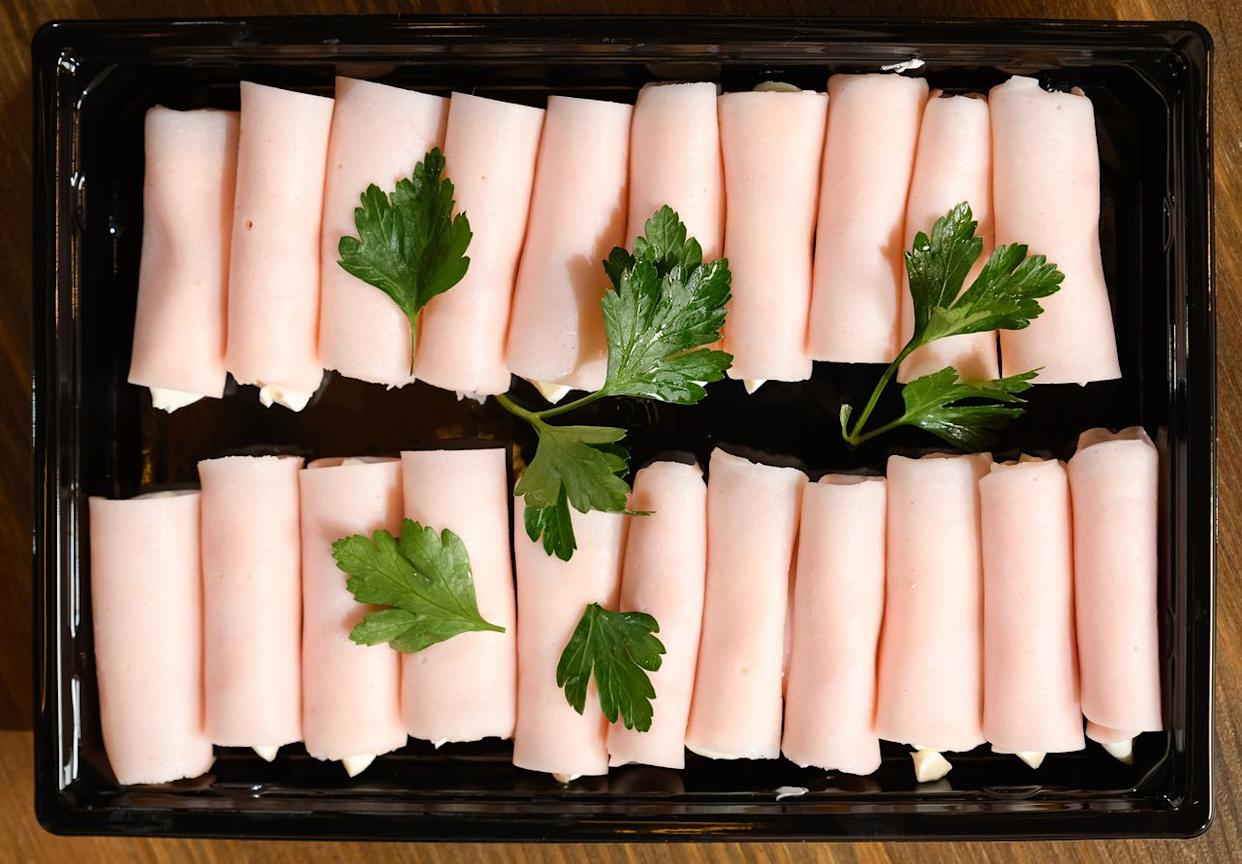
Credit: Sergey Spritnyuk / Getty Images
For more protein, try turkey-and-cheese roll-ups. Roll-ups made with two slices of turkey and two slices of Swiss cheese provide just under 20 grams of protein.
6. Tuna Salad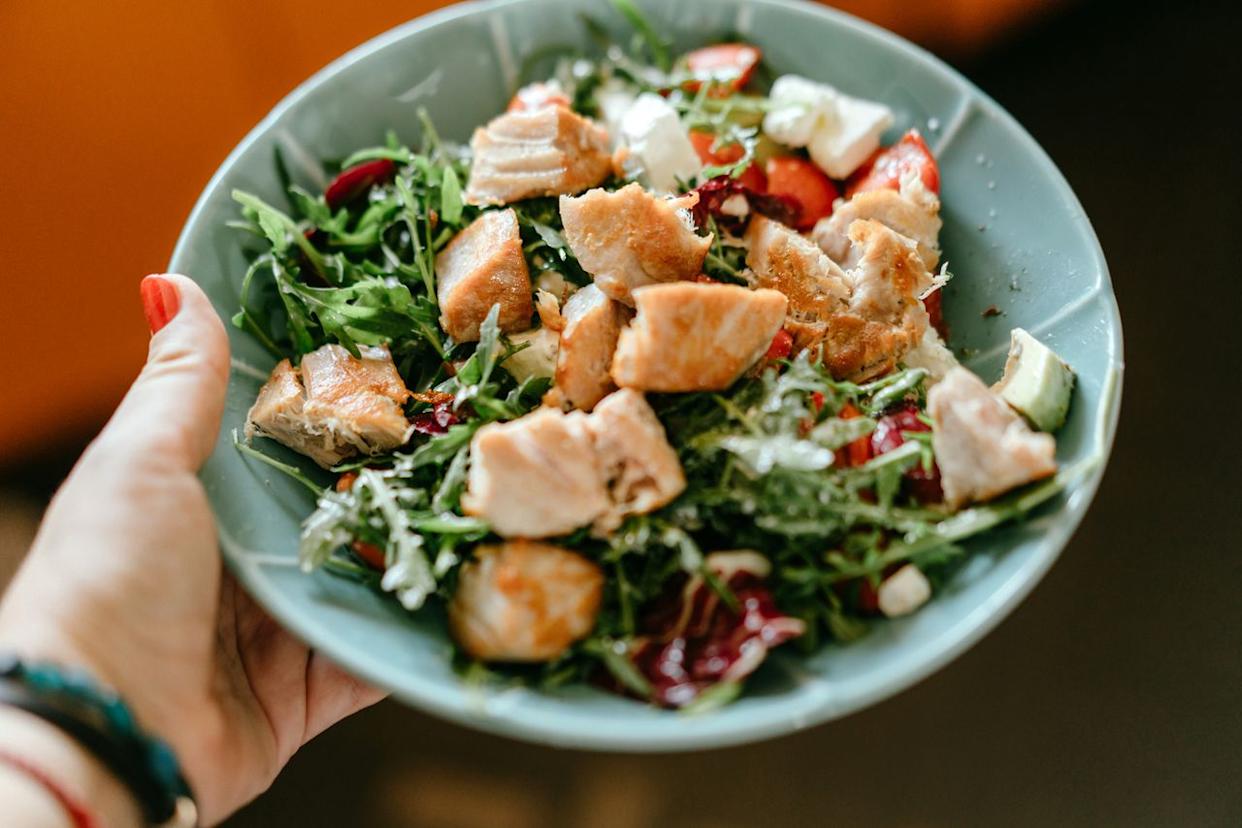
Credit: Fiordaliso / Getty Images
Canned or packaged tuna is a shelf-stable, protein-packed snack. One can of tuna contains 40.6 grams of protein.
Tuna is also high in anti-inflammatory omega-3 fats and other essential nutrients like selenium and vitamins D, B12, and E.
7. Kefir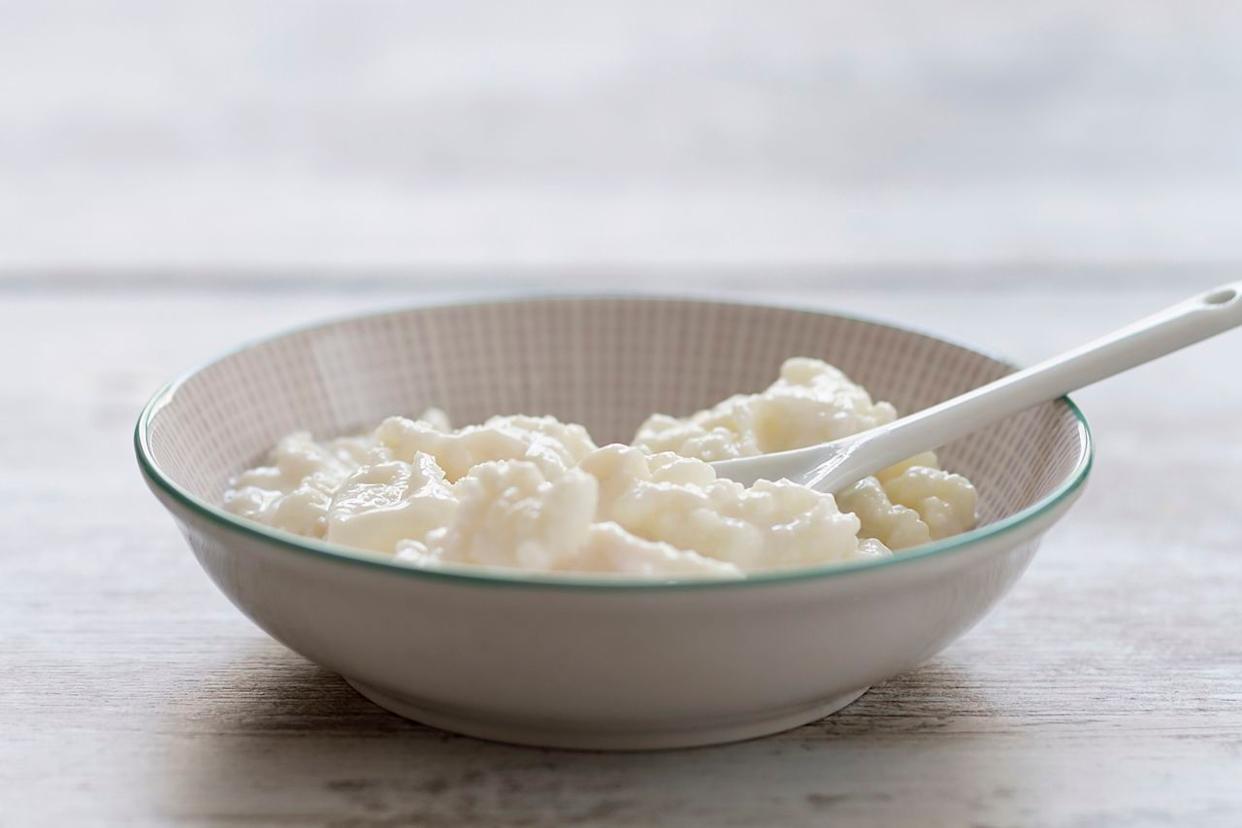
Credit: ondacaracola photography / Getty Images
Kefir is a fermented, protein-rich yogurt drink. A cup of kefir contains 9.21 grams of protein, making it a filling beverage option. You can enjoy kefir as a portable drink or use it to make high-protein smoothies and shakes.
Kefir is a good source of probiotics, like lactic acid bacteria, which support gut health by promoting the growth of beneficial bacteria in the large intestine.
8. Cheese Sticks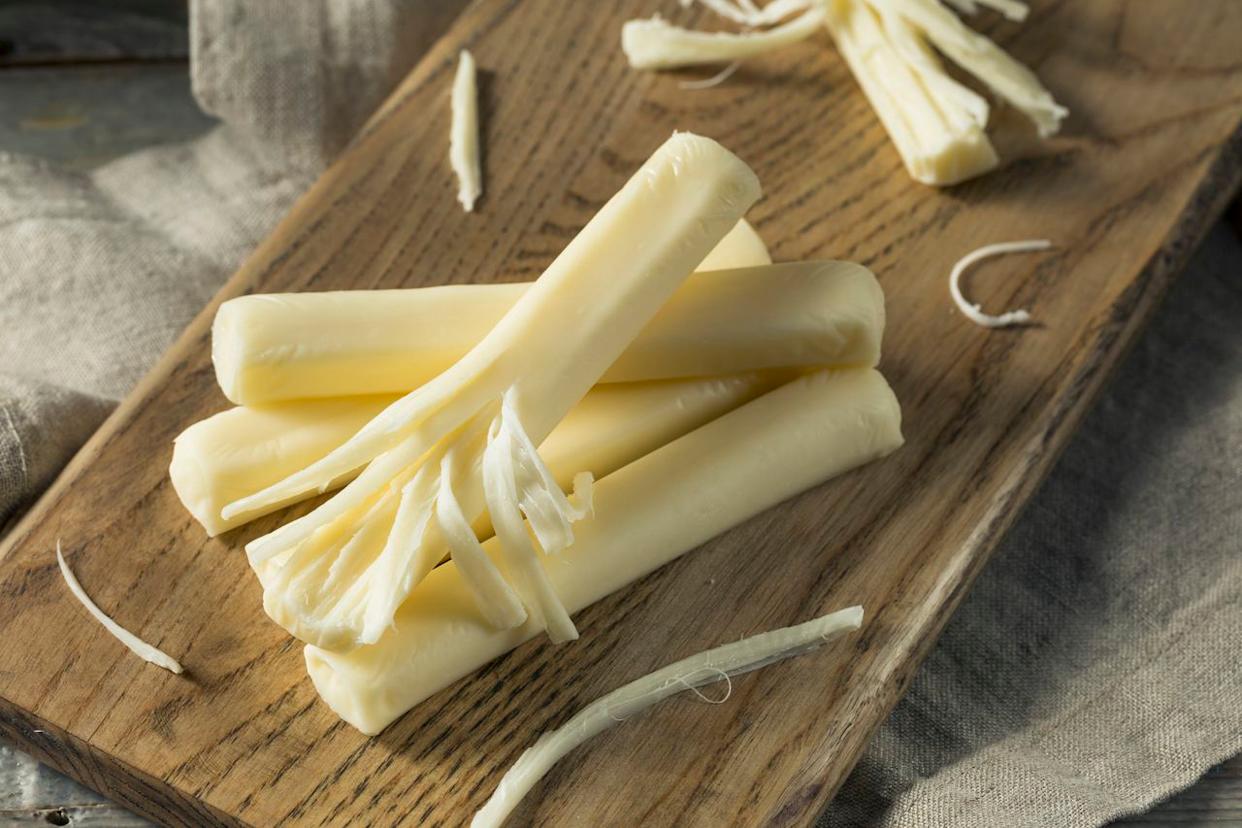
Credit: bhofack2 / Getty Image
Individually wrapped cheese sticks are a portable, high-protein snack option. A 28-gram mozzarella cheese stick packs 8 grams of protein.
There are many cheese snacks, including those made with cheddar, parmesan, and mozzarella.
9. Jerky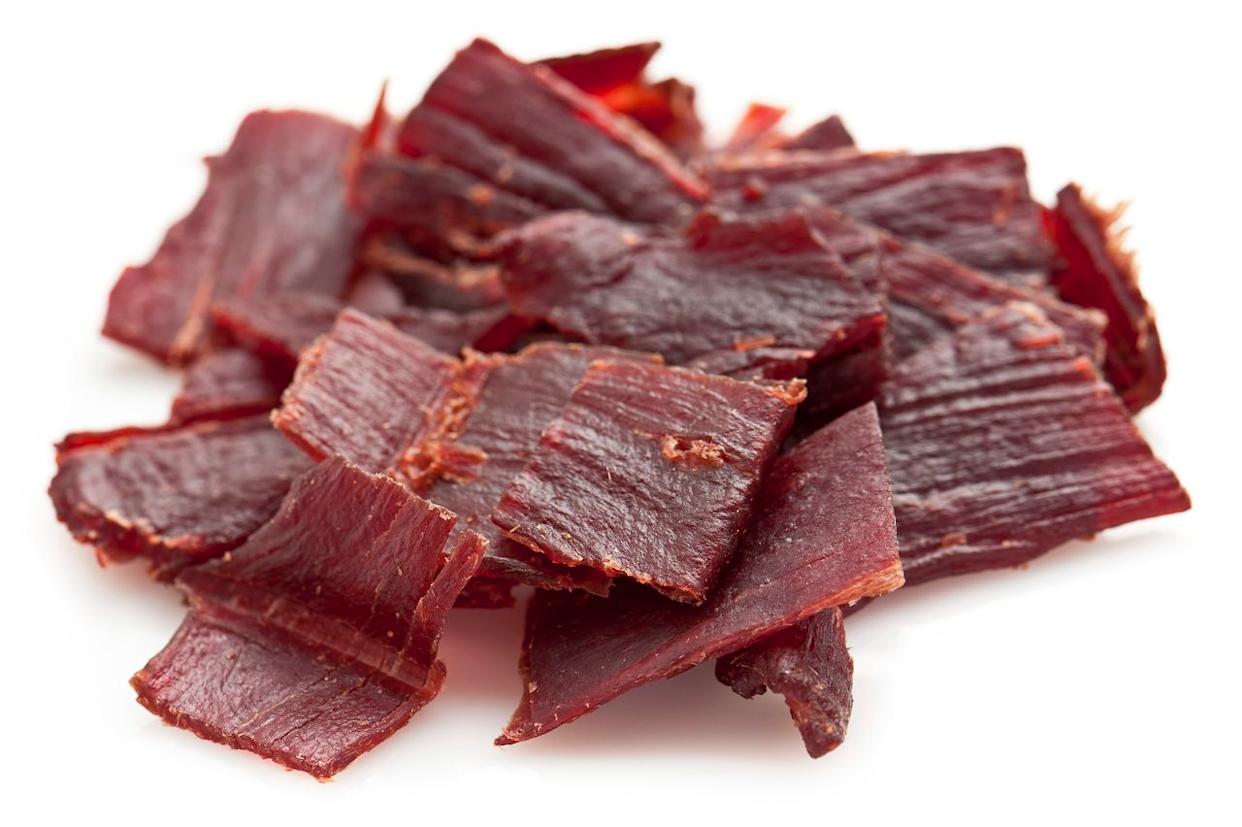
Credit: Juanmonino / Getty Images
Jerky is a shelf-stable, portable snack option that can help you hit your protein goals. An ounce of salmon jerky packs 14 grams of protein, while the same serving of beef jerky contains 10 grams.
There are several types of protein-rich jerky, including beef, turkey, and salmon, all of which can fit into a healthy diet.
It’s best to purchase low-sodium jerky made without added sugar.
10. Cottage Cheese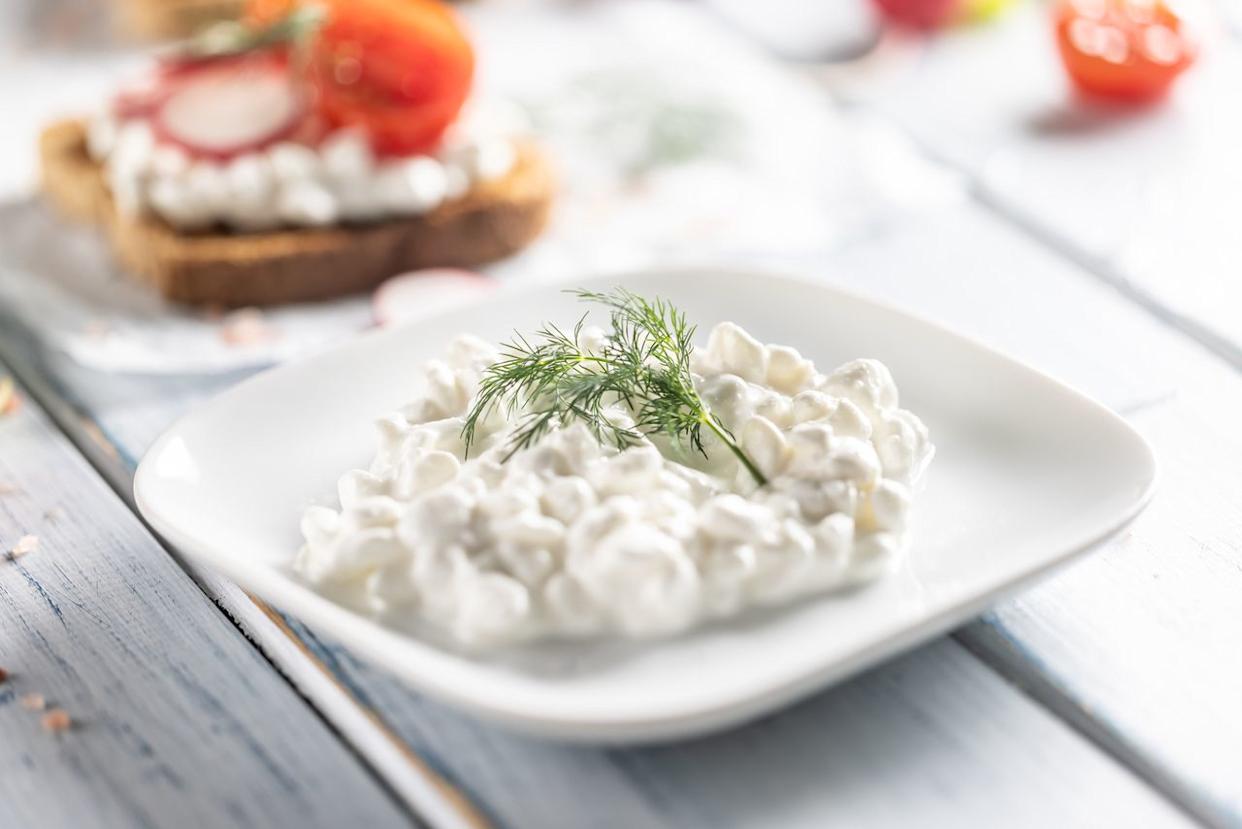
Credit: SimpleImages / Getty Images
Cottage cheese is a high-protein, dairy-based snack that you can buy in individually portioned containers. A 5.3-ounce snack cup of Good Culture Cottage Cheese contains 19 grams of protein.
Cottage cheese also contains vitamins and minerals like B12, calcium, selenium, and zinc.
11. Roasted Edamame Beans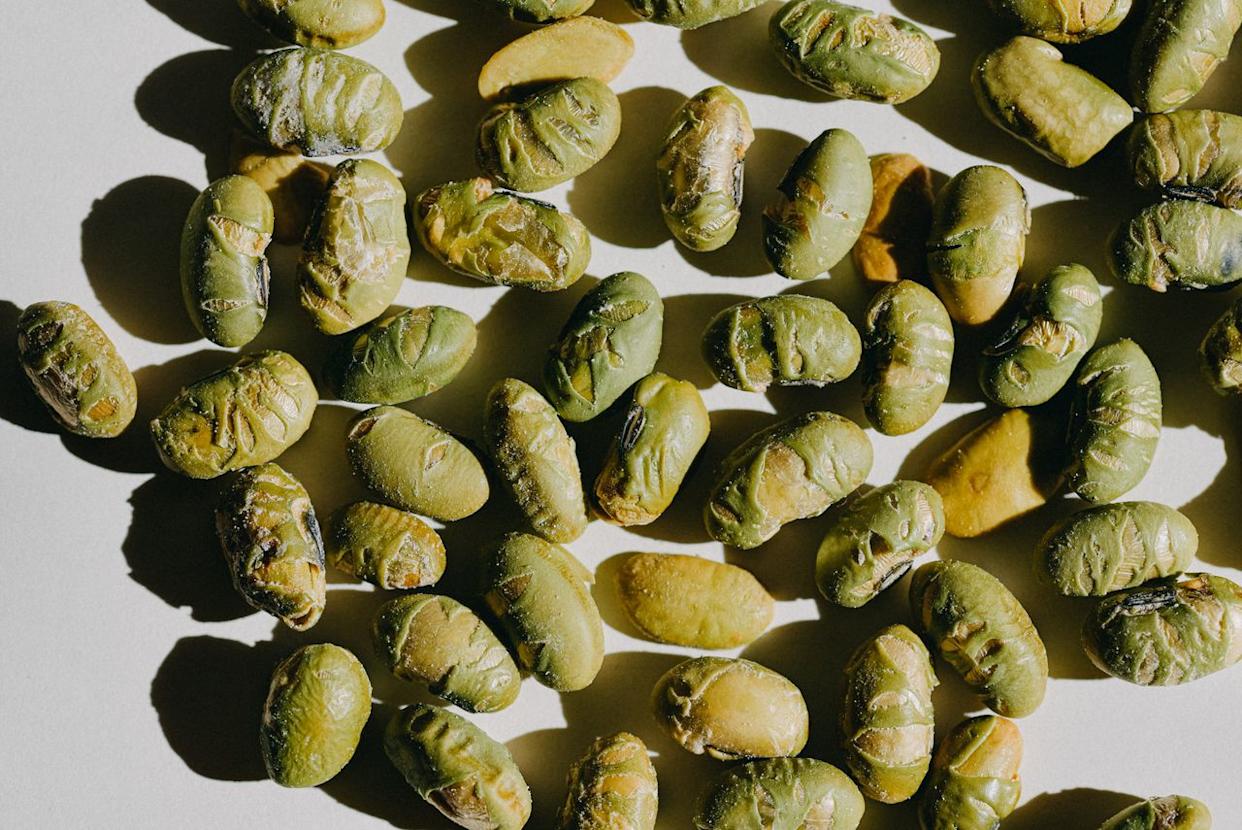
Credit: Stefania Pelfini, La Waziya Photography / Getty Images
Edamame are immature soybeans that are loaded with protein. A 26-gram package of The Only Bean Crunchy Dry Roasted Edamame contains 11 grams of protein.
The same serving packs 4 grams of fiber, which, like protein, helps you feel full by slowing digestion.
12. Roasted Chickpeas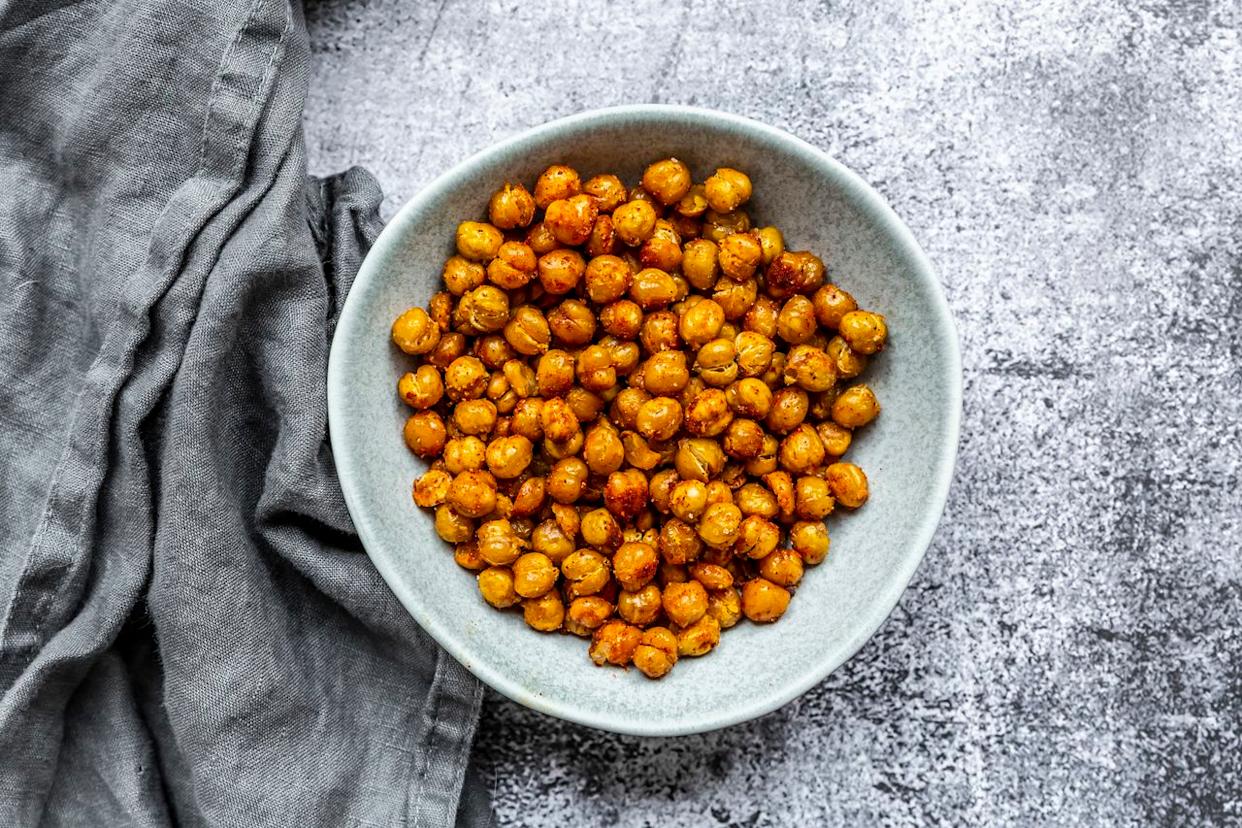
Credit: lacaosa / Getty Images
Like edamame, chickpeas are an excellent high-protein snack option for those on plant-based diets. A 2-ounce serving of Biena Roasted Chickpeas provides 12 grams of protein.
Chickpeas are also a good source of fiber and several vitamins and minerals, like magnesium and folate.
13. Protein Bars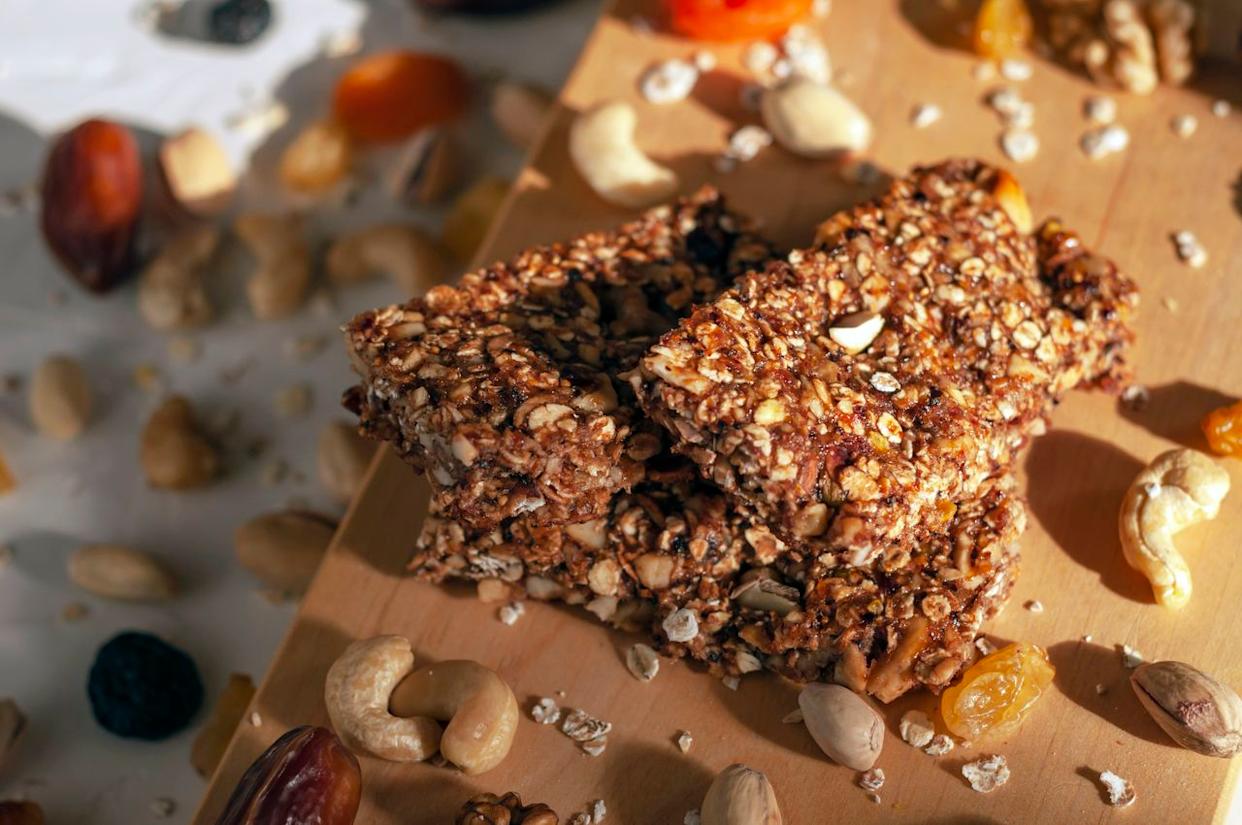
Credit: Lyubov Kulikova / Getty Images
Protein bars are one of the most popular snacking options for people on high-protein diets. When shopping for protein bars, it’s best to avoid products high in added sugar.
For example, an Aloha Chocolate Chip Cookie Dough protein bar contains 14 grams of protein and under 4 grams, or 1 teaspoon, of added sugar, making it a healthy and filling choice.
14. High-Protein Smoothie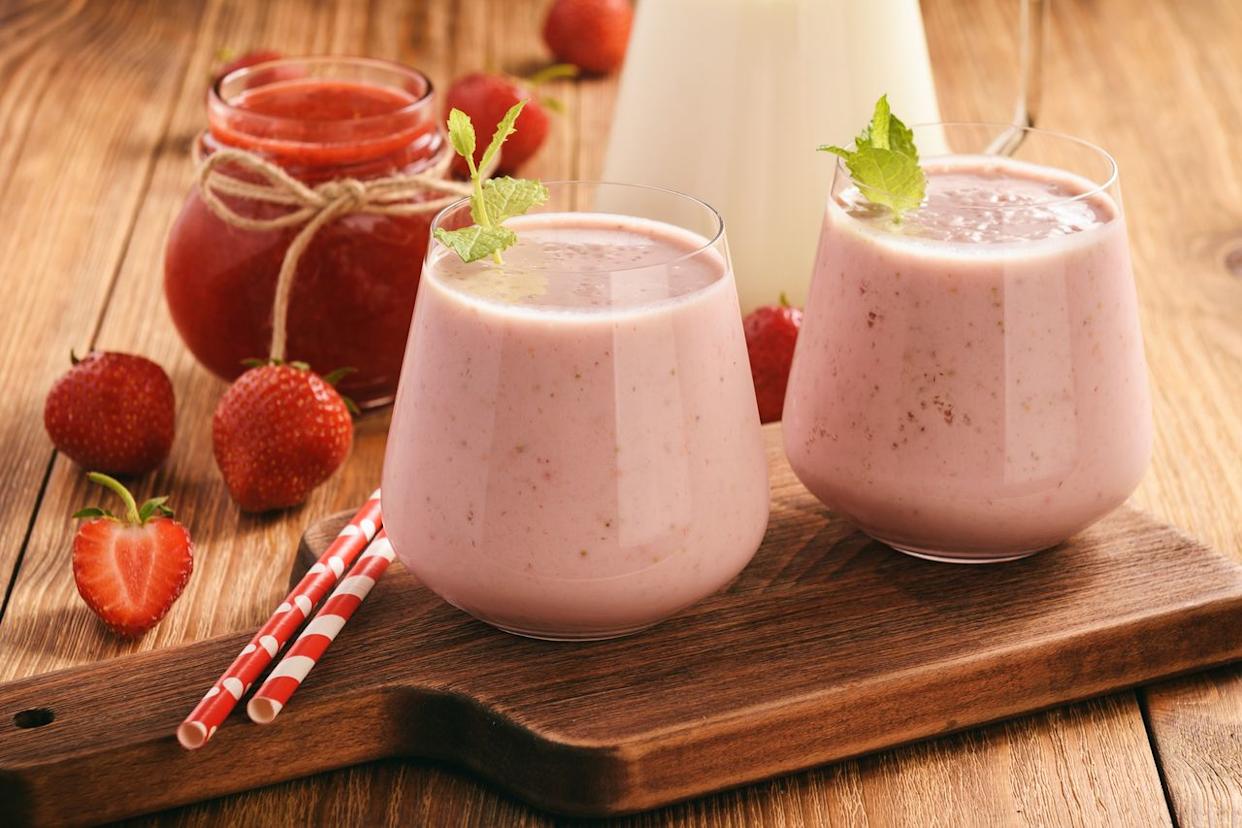
Credit: iko636 / Getty Images
You can whip up smoothies in bulk and store them in individual containers in your fridge for a quick, portable snack.
Choose high-protein ingredients, like whey protein, which contains 25 grams per 28-gram serving.
15. Peanut Butter Packets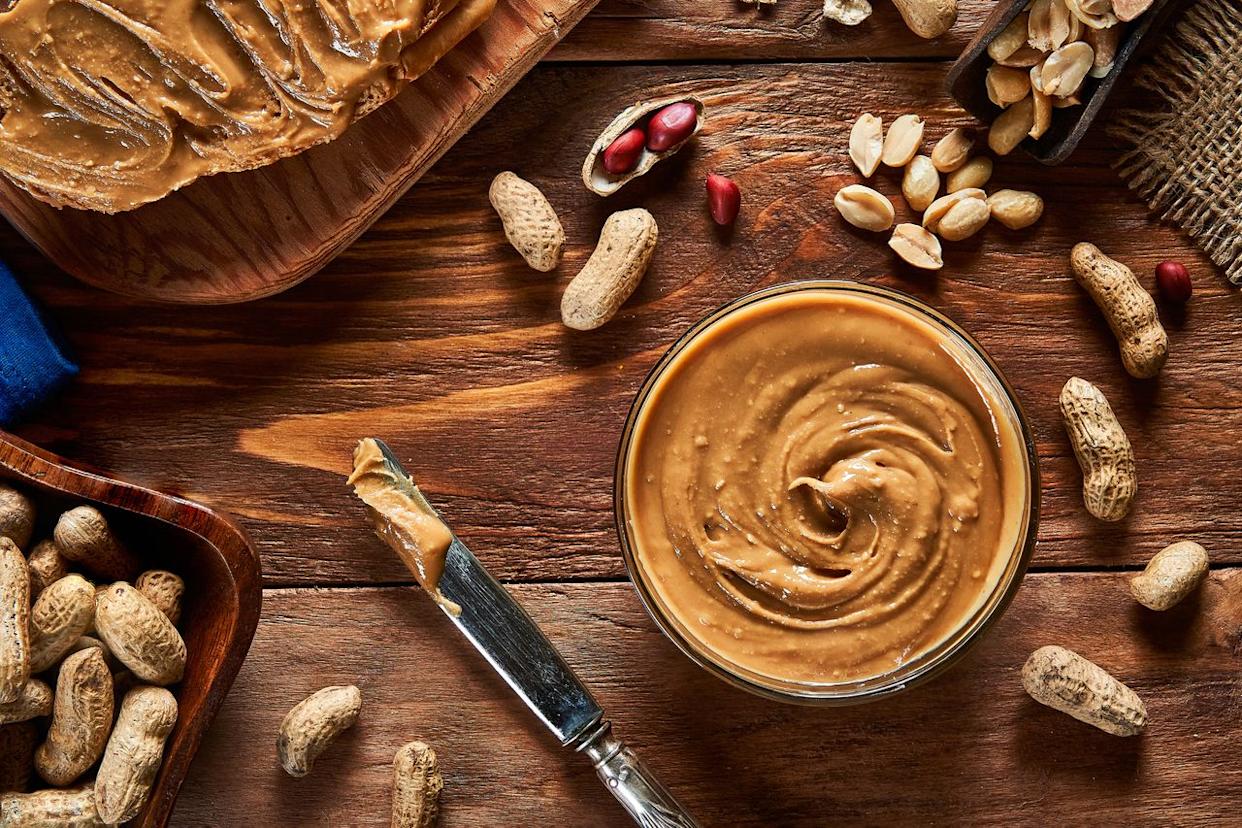
Credit: Helen Camacaro / Getty Images
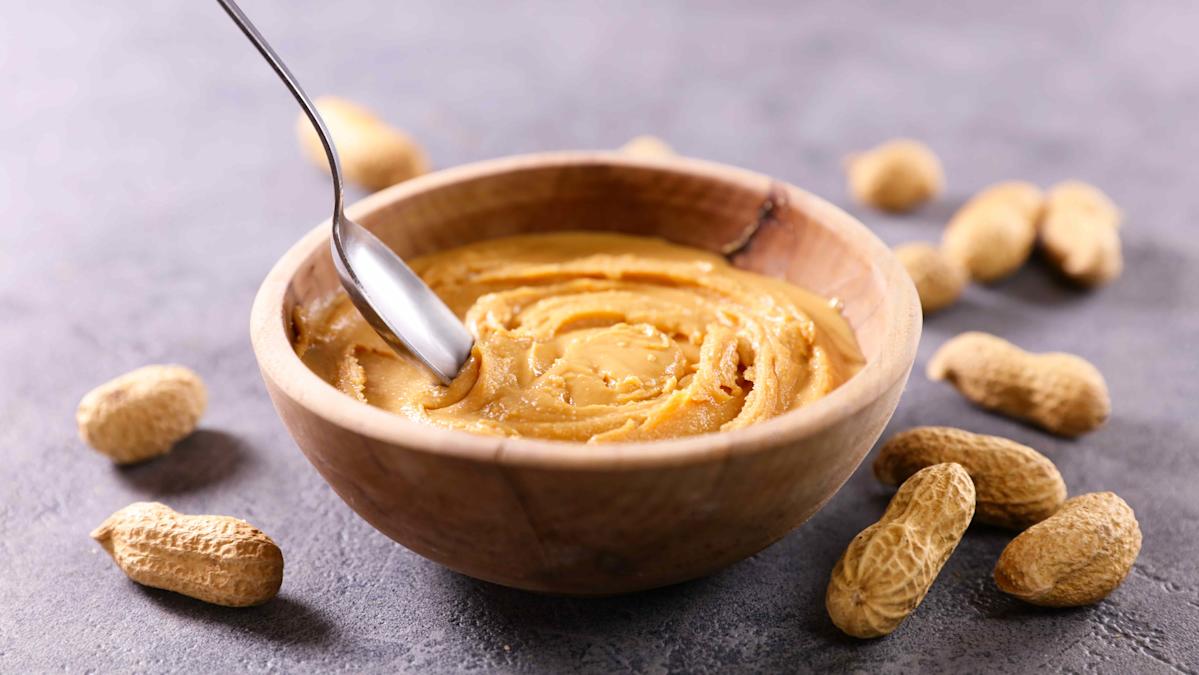
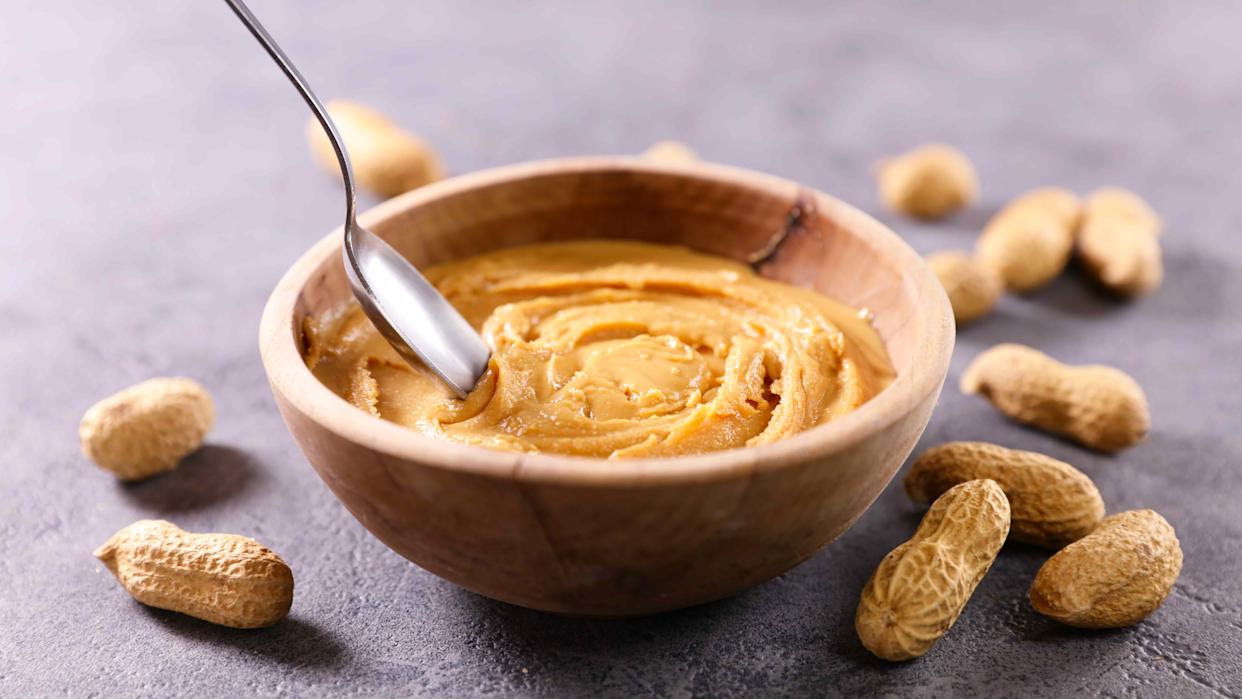
Peanut butter is a high-protein spread you can pair with fresh fruit or mix into snacks like Greek yogurt. A 32-gram squeeze pack of Once Again Organic Creamy Peanut Butter contains 8 grams of protein.
Tips for Choosing Snacks
When choosing high-protein snack options for busy days, keep the following recommendations in mind:
Choose premade snacks: Prepackaged snacks like cheese sticks, protein bars, or roasted edamame are easier to take on the go.
Purchase snacks made with whole ingredients: Avoid additives like added sugar and salt.
Opt for nutritionally balanced snacks: This can mean pairing a turkey stick with a piece of fresh fruit and nut butter, covering your bases for protein, fat, and carbohydrates.
Consider your health goals: For example, someone following a low-carb, high-protein diet will want to choose snacks lower in carbohydrates and higher in protein.
Pay attention to overall daily protein intake: While individual needs vary based on factors like age and weight, the Recommended Dietary Allowance (RDA) for protein is 0.8 grams per kilogram of body weight (0.36 grams of protein per pound), and even higher for people who exercise regularly.
Consult a healthcare provider if you have questions: A doctor or registered dietitian can help you decide how much protein to consume and recommend meals and snacks if needed.
Read the original article on Health