
March 26 marked the 47th anniversary of the signing of the peace treaty with Egypt. The treaty was the culmination of a process that began approximately a year and a half earlier when President Anwar Sadat made his historic visit to Israel on November 19, 1977. That’s a date I will never forget, because as Sadat’s plane was touching down at Ben-Gurion Airport, my firstborn entered this world. In recent years, Yariv has worked to promote Israeli innovation with global corporations and foreign governments, and since October 7 he has struggled to contend with the deterioration in Israel’s international standing. Throughout Yariv’s lifetime, however, relations with Egypt have remained stable and constitute one of the few pillars of foreign policy to have weathered almost two decades of Netanyahu rule.
Although it is often derided as a “cold” peace, the agreement with Egypt survived the Sadat assassination, the fall of Husni Mubarak, a year of rule by Muslim Brotherhood leader Mohamed Morsi, and concerns about possible Israeli violations along the border with Egypt during the Gaza war. Diplomatic relations have often been strained in reaction to Israeli-Palestinian hostilities, but there have been no state-level wars since the treaty was signed, and the number of border clashes and security incidents can be counted on two hands.
In 1978, while the Israel-Egypt negotiations were in high gear, Israel launched the Litani Operation aimed at uprooting the PLO bases in southern Lebanon and pushing the PLO north of the Litani River. The operation ended with the establishment of a “security zone” along the border to be overseen by UNIFIL peacekeeping forces. Unsurprisingly, the zone failed to deliver security. Palestinian militias slipped back into the region and continued to use it as a base for attacks.
My second child was a newborn infant in 1982, when then Defense Minister Ariel Sharon launched Operation Peace for Galilee following the attempt to assassinate the Israeli ambassador to the UK. This operation, also known as the First Lebanon War, ended with the expansion of the “security zone” deeper into Lebanon and the deployment of Israeli forces there. The PLO was indeed driven out of Lebanon, but its place was quickly filled by Hezbollah.
Artillery attacks on Israel’s northern cities following the war led to two more military campaigns — Operation Accountability and Operation Grapes of Wrath — before Prime Minister Ehud Barak finally admitted that the Israeli deployment in southern Lebanon was ineffective and too costly and decided to withdraw the troops in 2000.
Sporadic fighting continued over the following years, eventually erupting in the Second Lebanon War in 2006 following a cross-border Hezbollah attack in which eight Israeli soldiers were killed and two kidnapped. The war that ensued ended with no decisive victory and a strategic decision to lean on deterrence to avoid another full-scale war. This position held until Hezbollah attacked Israel on October 8, 2023, in solidarity with Hamas. The barrages gradually escalated, leading to an Israeli invasion of Lebanon in October 2024, the sixth since 1978.
That operation ended in November 2024 with a ceasefire agreement that was supposed to lead to the disarmament of Hezbollah and a full Israeli withdrawal from southern Lebanon. Neither happened. The Lebanese Army wasn’t up to the task of disarming Hezbollah, and Israel decided to maintain five key positions close to the border which it deemed essential for ensuring the security of Israel’s northern communities until the Lebanese Army proved itself capable of taking control of the area.
Remember my daughter, Likush, who was born just before the launch of the operation that was supposed to bring peace to the Galilee? She marked her 44th birthday on March 2, as Hezbollah rained rockets down on northern Israel in response to the joint Israel-US strikes on Iran and the assassination of Supreme Leader Ali Khamenei. As of March 25, 2026, Hezbollah was reported to have fired more than 3,500 rockets, missiles, and drones into Israel, including the Galilee. The Upper and Western Galilee have come under constant barrages, with some resulting in injuries and even fatalities.
While the anniversary of the peace agreement with Egypt passed with barely a mention, Israel marked the 44th anniversary of the Litani Operation by blowing up bridges on the Litani River to create… guess what? A “security zone!”
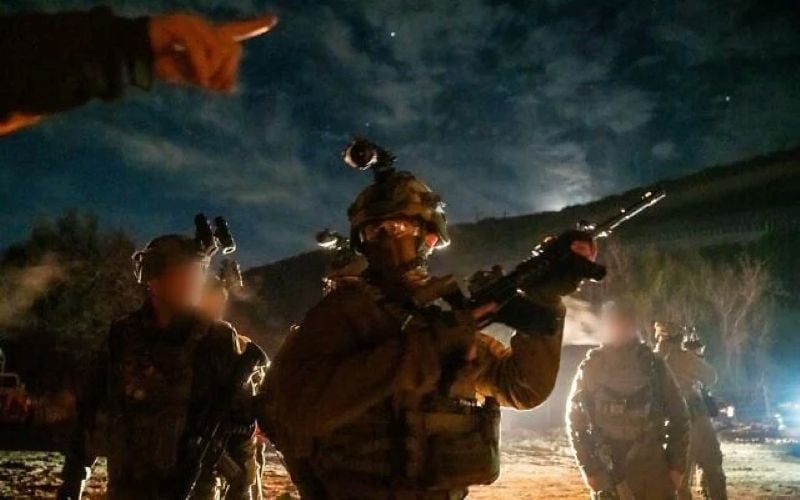
But this time, Prime Minister Netanyahu has assured us, it will be a “real” security zone. What will be different? Well, having mastered the art of scorched earth and population displacement in the Gaza Strip, the government’s plan is to apply the “Gaza model” to Lebanon. Our leaders speak without reservation about ordering the army to flatten all the villages south of the Litani and force the entire population northward.
Even the leader of the so-called opposition talks the same talk. In an interview to i24, Yair Lapid likened the security zone to the Yellow Line that splits Gaza in two, with the eastern side basically depopulated and under the control of the IDF and the Hamas-controlled western side housing (and I use the term loosely) most of the population that lived in the Strip prior to October 7. Lapid conceded that this may not be “pleasant” for the Lebanese, but he asserted that “they brought it upon themselves.” Not only the same inhumane policies employed in Gaza, but the same shameful justifications.
Meanwhile, Minister Bezalel Smotrich has called for making the Litani Israel’s new border with Lebanon. It is easy to dismiss Smotrich as representing an extremist view, but the only real difference between his position and that of the cabinet and military leadership is that he speaks openly of permanent occupation whereas the others say it will be a temporary move until the security of Israel’s northern communities is ensured. I will spare my readers the timeworn lectures about what “temporary” means in the Middle East and what Israel is perpetrating in the name of “security.” Suffice it to say that approximately one-fifth of the population of Lebanon has been displaced in the past month and more than 1,000 people have been killed, including 121 children.
Reported but with little fanfare was the news that Lebanese President Joseph Aoun had accepted a French initiative to end the fighting. As opposed to previous arrangements, the French did not put forward a mere ceasefire proposal but a plan that includes negotiations leading to an Israel-Lebanon peace treaty. Nonetheless, the report didn’t even make a dent in the Israeli public’s enthusiasm for the IDF push into Lebanon, which today stands at close to 70%. For his part, Netanyahu dismissed the Lebanese overtures with the argument that diplomacy may follow a military victory but cannot replace it.
Taking Trump’s “peace through strength” motto a step further, Netanyahu is pursuing regional dominance through strength, with peace relegated to the status of a nice-to-have. In that same twisted spirit, the media is flooded with headlines that scream “Israel fears Trump could announce Iran ceasefire” and “Israel vows to continue operations against Hezbollah regardless of any Iran deal.”
Rather than challenging this approach, the vast majority of the Israeli public has accepted it as conventional wisdom, taking the treaty-based quiet on the Egyptian border for granted while putting its faith in yet another incursion into Lebanon in the hope that this time the IDF will deliver a knockout blow.
The desperation of the residents of northern Israel is understandable, and the need to disarm Hezbollah is clear; however, Netanyahu’s choice of combat when a peace initiative is on the table is indefensible. “No more war, no more bloodshed” was the pledge given by Menachem Begin and Anwar Sadat at the conclusion of their talks in November 1977. They delivered on that promise, and there is every reason to believe that it will still be valid next year when Yariv celebrates his 50th birthday. What remains to be seen is whether Sharon’s promise of peace for the Galilee will finally be realized by the time Likush’s 45th birthday rolls around next year. For that to happen, we need a new leadership that will show the public that signed treaties are a better guarantee of security than the occupation of territories that belong to others.
Susie Becher is Managing Editor of the Palestine-Israel Journal, a collaborative quarterly published in Jerusalem; is Communications Director of the Policy Working Group, a team of senior academics, former diplomats, human rights defenders, and media experts who advocate for an end to the occupation and a resolution of the Israeli-Palestinian conflict; and serves on the Steering Committee of Zulat, an activist think tank advocating for human rights and equality in Israel.