
On the marketing side, he proposed targeted co-payment schemes to stimulate domestic travel, particularly to secondary cities. However, he acknowledged that budget constraints may limit such initiatives, suggesting instead a focus on high-spending domestic tourists travelling shorter distances or opting for premium destinations.
He also stressed the need for proactive communication campaigns to restore confidence among both Thai and international travellers, particularly following warnings issued by the Malaysian consulate in Songkhla advising caution over fuel availability in southern Thailand.
Meanwhile, the Department of Energy Business said preparations are underway to ensure sufficient fuel supply during the festival. Director-general Sarawut Kaewtathip confirmed that oil companies have been instructed to increase reserves and deploy mobile fuel storage units to support peak travel demand.
As of March 23, diesel (B7) production stood at 90.7 million litres, with reserves of 43 million litres. Authorities are also developing a digital dashboard to track fuel distribution from refineries to service stations, allowing the public to monitor supply more transparently.
Additional measures include increasing fuel supply into the system by adjusting reserve ratios and extending transport hours to accelerate nationwide distribution. More than 7 million litres have also been allocated to wholesalers to ease congestion at petrol stations.

Despite the headwinds,TAT governor Thapanee Kiatphaibool said the agency expects the “Maha Songkran World Water Festival 2026” period to generate around 30.35 billion baht in tourism revenue, up 6% year-on-year.
International arrivals are projected at around 500,000 visitors, generating 8.1 billion baht, representing increases of 4% and 2% respectively. However, these figures are lower than potential due to flight restrictions, rising oil prices and higher aviation costs linked to the US-Iran conflict. Without these factors, foreign arrivals could have grown by up to 7%.
Domestic travel is expected to reach 5.96 million trips, generating 22.25 billion baht in revenue—up 7% and 8% respectively. However, higher fuel costs and supply concerns are prompting many Thais to opt for shorter trips or cancel travel plans altogether. Without the current crisis, domestic travel could have risen by as much as 10%.
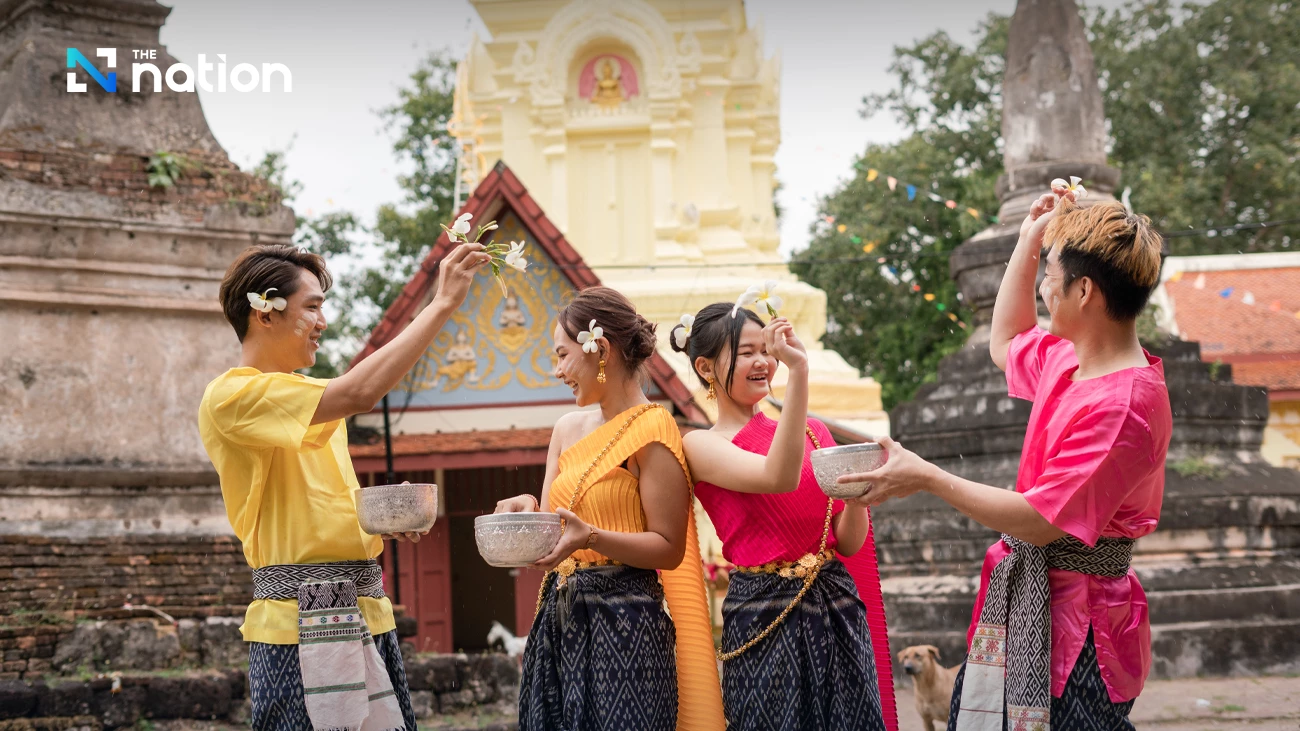
TAT is pressing ahead with major Songkran events nationwide to stimulate tourism. In Bangkok, the “Maha Songkran World Water Festival 2026” will take place from April 11–15 at Benjakitti Park and the former Tobacco Factory, featuring parades, drone shows, cultural performances and EDM concerts.
Additional events include “Saneh Art by Songkran Festival 2026” from April 10–30 at Benjasiri Park and Lan Khon Mueang, showcasing large-scale contemporary Thai art installations and workshops.
Across the country, regional celebrations—from Chiang Rai and Sukhothai in the North to Khon Kaen and Udon Thani in the Northeast, and Pattaya, Samut Prakan and Koh Chang in the Central and Eastern regions—aim to attract both domestic and international visitors. Southern destinations such as Koh Samui and Phuket are also hosting cultural and safety-focused events.
Air traffic is expected to remain steady, with Aeronautical Radio of Thailand forecasting around 25,620 flights between April 10 and 19, up 1.8% year-on-year. Most of the increase will come from domestic and regional routes.
However, officials caution that the ongoing conflict and volatile oil prices remain key variables that could ultimately determine the strength of this year’s Songkran tourism season.