
While the government has taken short-term measures to manage the situation, structural and external pressures are making stability difficult to sustain.
TBS Report
28 March, 2026, 11:10 am
Last modified: 28 March, 2026, 12:36 pm
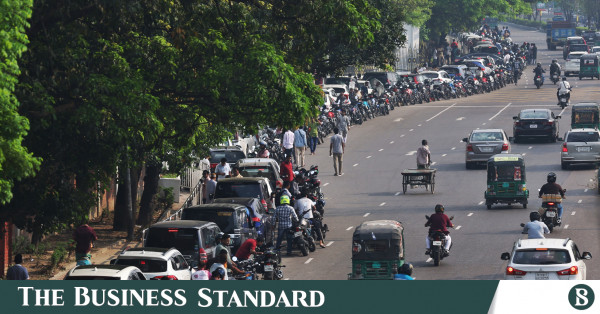
Motorcycles and cars wait in a long queue for fuel on the road in front of the Trust oil pump in Tejgaon. Photo Mehedi Hasan
“>
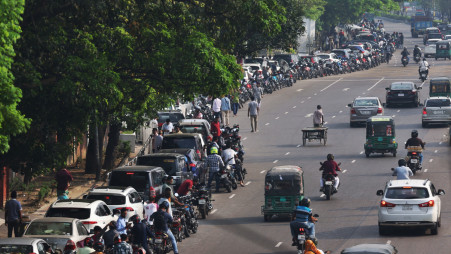
Motorcycles and cars wait in a long queue for fuel on the road in front of the Trust oil pump in Tejgaon. Photo Mehedi Hasan
Bangladesh is facing mounting challenges in maintaining a stable fuel supply as global energy disruptions linked to the Middle East conflict continue to strain imports, finances and reserves.
While the government has taken short-term measures to manage the situation, structural and external pressures are making stability difficult to sustain.

Keep updated, follow The Business Standard’s Google news channel
Key reasons behind the struggle
Bangladesh remains heavily dependent on Middle Eastern oil and gas imports for its energy needs.
Disruptions in shipments through the Strait of Hormuz have affected regular fuel supply routes.
Major Gulf suppliers have declared force majeure and deferred scheduled fuel shipments.
The country has been forced to rely more on costly fuel purchases from the spot market.
Rising import costs, particularly for LNG cargoes, have increased overall energy expenditure.
Spot market LNG purchases have added Tk4,500 crore to Petrobangla’s pre-war budget.
Higher fuel import bills are putting significant pressure on foreign exchange reserves.
A fragile fiscal position, driven by weak revenue growth, limits the government’s response capacity.
Rising public debt has reduced financial flexibility in managing external shocks.
The government is spending around Tk167 crore daily on fuel subsidies to ease public pressure.
Domestic fuel prices have been kept unchanged, increasing the burden on public finances.
Fuel reserves remain limited, prompting efforts to build a 90-day strategic stockpile.
Global price volatility makes it difficult to plan long-term fuel procurement strategies.
Bangladesh is turning to alternative and less familiar fuel sources amid supply uncertainty.
Risks to remittance inflows from the Middle East add further strain to the overall economic situation.