
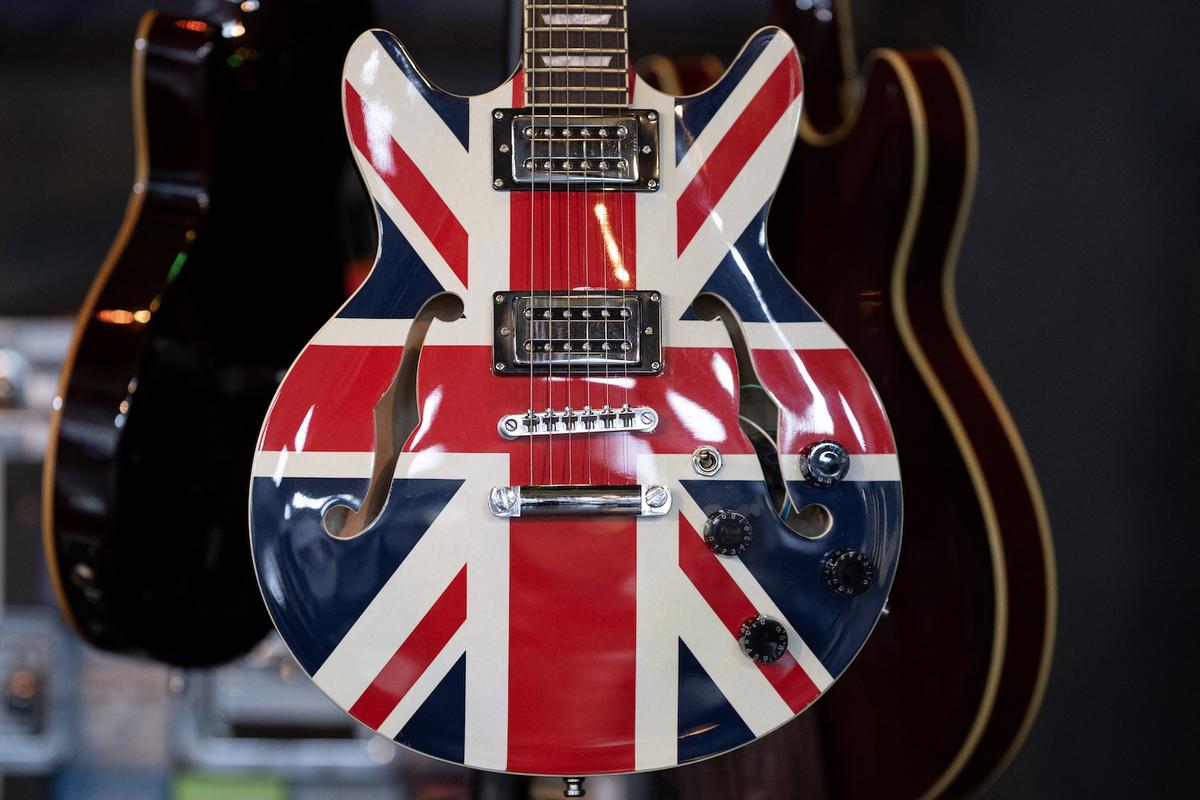
The British Invasion was properly named. A story titled “Redcoats Revisiting” in the April 4, 1964, issue of Billboard noted that they currently held a whopping 19 spots on the Hot 100.
The Beatles led the way, of course, but Peter and Gordon, the Animals, Manfred Mann, Petula Clark, Freddie and the Dreamers, Wayne Fontana and the Mindbenders, Herman’s Hermits, the Troggs, Donovan and (of course) the Rolling Stones had all topped Billboard’s singles chart by 1966.
American acts like the Supremes gamely fought back. An astonishing nine of of their 12 ’60s-era chart-topping singles were preceded or followed to No. 1 by acts from the U.K. Five of them were No. 1 songs by the Beatles or the Rolling Stones. But the onslaught was relentless. One of the Supremes’ chart-toppers was actually sandwiched between No. 1 singles by both the Beatles and Rolling Stones.
Which Four Bands Defined British Rock?
Before this, rock had been dominated by American acts. Now the stage had been set for every generation that followed – and followed they did, with subsequent waves in the ’80s and ’00s. But which ones emerged as the ‘Big 4’ of British rock bands?
The focus here is on bands, so some very worthy individual performers didn’t make the list, including David Bowie, Elton John and Elvis Costello, among many others. But even with a tighter selection criteria, narrowing this rich musical legacy to the four biggest contributors inevitably leaves out a number of very worthy groups, too.
READ MORE: Top 50 American Bands
Some were simply more popular in the U.K. than they ever were in the U.S. and elsewhere around the world. Others may have only dabbled in rock, or worked around the genre’s quite interesting edges. Still others were entirely worthy candidates and simply got passed over. Reasonable rock fans can agree to disagree.
In the end, however, the following countdown of the ‘Big 4’ of British Rock includes some undeniable names. They may not be your favorites – in fact, you might be quite tired of them by now – but their cultural impact, musical influence and blockbuster sales helped them rise to the toppermost of the top in rock.
No. 4. Led Zeppelin
Did they pioneer heavy metal with songs like “Communication Breakdown”? Perhaps. Did they lead the way for ponderous multi-part prog explorations with “Stairway to Heaven”? Probably. Could they blow the roof off of an arena with the aptly named “Rock and Roll”? Definitely. That’s the power and magic of Led Zeppelin. They never had an album finish lower than No. 6 in the U.K.; they proceeded to reel off seven straight No. 1 LPs. They’ve also sold more records in the U.S. than superstar acts like Elvis Presley and the Beatles.
Very much an album act, Led Zeppelin helped usher in the long-form era. They moved effortlessly from brawny rock to exotic instrumentation from guitarist/producer Jimmy Page and multi-instrumentalist John Paul Jones, decorating it all with Robert Plant‘s opaque and mysterious lyrics. Who knows where it all might have led? Unfortunately, John Bonham‘s too-early death ended the group as a creative entity.
Evening Standard / Hulton Archive, Getty Images
Evening Standard / Hulton Archive, Getty Images
No. 3. Pink Floyd
Pink Floyd moved through three discrete eras based on the group’s principal creative forces, with Syd Barrett, Roger Waters and then David Gilmour. Without Pink Floyd, there’d be no Radiohead (among others). But by the time Thom Yorke was sheepishly admitting to being a creep, 1973’s diamond-certified Dark Side of the Moon had long-since set up shop among the Top 5 best-selling rock albums of all time.
They made popular and often important records across the decades, moving from whimsy to cutting social commentary to explorative soundscapes. Here’s how big Pink Floyd was at their peak: The band’s second-best-selling album, 1975’s Wish You Were Here, still sold 10 million copies in the U.K. and America alone. Through it all, Pink Floyd never lost a uniquely British sense of musical idiosyncrasy and dark humor. Gilmour’s guitar, by turns guttural and shimmering, tied it all together.
Michael Ochs Archives, Getty Images
Michael Ochs Archives, Getty Images
No. 2. Rolling Stones
The Rolling Stones became rock stars on the heels of the Beatles, while scoring an early U.K. hit single with a cover of their song “I Wanna Be Your Man.” That’s where the similarities ended. The Stones were all rough edges, whether that meant their music, their attitude or their looks. It was all built atop the creative tandem of Mick Jagger and Keith Richards. Friends since childhood, they formed a sturdy band nucleus that quickly pushed out deeply talented contributors like Brian Jones and Mick Taylor.
The Beatles came and went too, but the Rolling Stones – however improbably – remained. A canny blend of bad-boy swagger, chunky riffs, boozy excess and overt salaciousness helped the group top the U.K. album charts in the ’60s, the ’70s, the ’80s, the ’90s, the ’10s and the ’20s. They had more than 40 U.S. Top 40 singles. Along the way, the Stones came to define the idea of a rock band – no matter where they came from.
Keystone, Getty Images
Keystone, Getty Images
No. 1. The Beatles
Just because it’s the most obvious answer doesn’t make it the wrong one. They initially presented as squeaky-clean teen heartthrobs, but the Beatles were actually battled-hardened rockers from their Hamburg club days. They also wanted for more. Over just a few years, they burst through every boundary in pop and rock, setting new standards for sheer ingenuity, blockbuster commerce and ear-wormy fun. Together with pioneering producer George Martin, they leveraged studio spaces like a conductor leading an orchestra.
In any other band, George Harrison would have been a huge star. In this one, he was a distant second fiddle as John Lennon and Paul McCartney became the best-loved and most-honored songwriting duo in music history. Sure, they’re overexposed, over-hyped and remorselessly commercialized. Sure, finding them at this spot is hardly unexpected. But six decades later, nobody has topped their records for Billboard No. 1 singles, most singles sold in the U.K. and or most units sold worldwide.
Central Press / Hulton Archive, Getty Images
Central Press / Hulton Archive, Getty ImagesTop 100 Classic Rock Artists
Click through to find out how they stack up, as we count down the Top 100 classic rock artists.
Gallery Credit: UCR Staff
They Hated Their Own Albums