
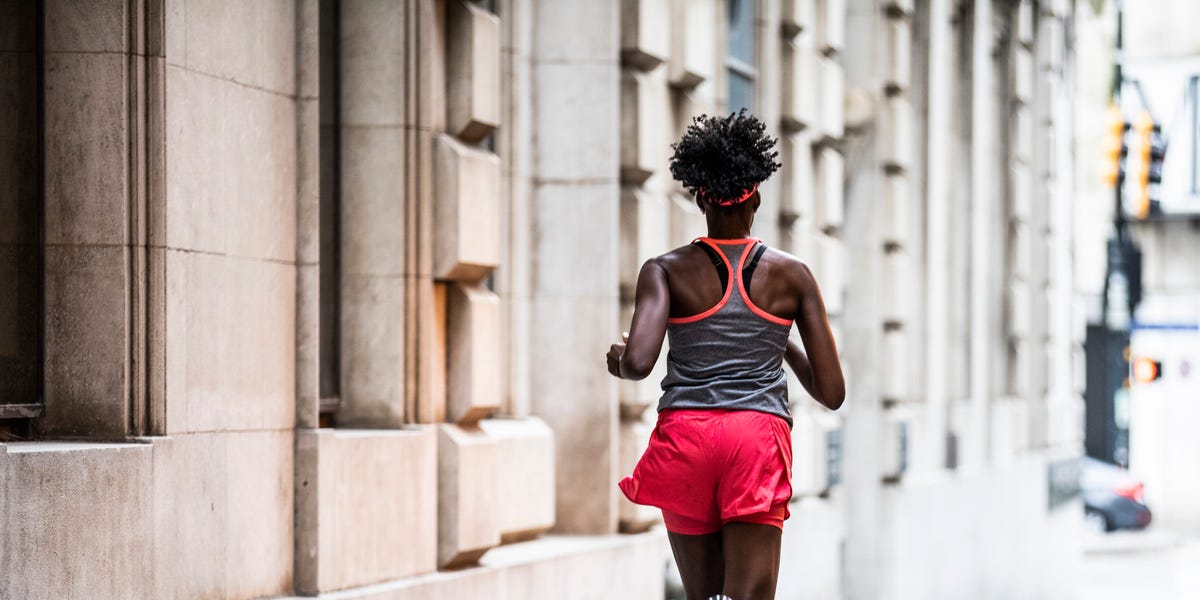
No runner is likely to consider themselves a couch potato. However, the time you spend binge-watching Netflix or sitting at your desk in between runs might cause a serious problem for your performance and overall health.
Runners who sit a lot or don’t do glute exercises need to watch for ‘dead butt syndrome’, also known as gluteal amnesia. Basically, your butt forgets how to be a butt.
‘While the name might sound funny, it can cause problems and be a real pain in the butt to runners and non-runners alike,’ Amie Dworecki, a RRCA- and USATF-certified running coach and personal trainer, tells Runner’s World.
There are four glute muscles on each side of your body: the gluteus maximus (the most superficial of the glutes), the gluteus medius (sits at the top of the butt, and is partially covered by the maximus), the gluteus minimus (completely covered by the other muscles) and the tensor fascia lata (which runs down the thigh). Together, these muscles support your balance when you stand up by keeping your pelvis stable and allowing your legs to move with power.
Strong, shapely glutes help to keep you moving and contribute to powerful athletic performance, like running and jumping. Meanwhile, sitting too much leads to weak glutes, which can not only dampen your running performance, but also lead to an inability to stand without support as you age. In fact, a 2025 University of Westminster School of Life Sciences study found that changes in butt shape over time may indicate issues such as frailty and osteoporosis, as well as type 2 diabetes, in both men and women.
Here’s what you need to know about dead butt syndrome, along with the best lower-body strength moves to build into your weekly workout routine. These exercises will improve your running and help you to stand tall and walk strong as you age.
What is dead butt syndrome?
‘Dead butt syndrome is when your gluteal muscles, particularly the gluteus medius and maximus, essentially ‘forget’ how to do their job,’ says Dworecki. This tends to happen if you sit for long periods, so they can “switch off’, becoming numb or sore.
Dead butt syndrome doesn’t present like your typical injury, Anuja Ghate, D.P.T., a physical therapist who works with runners at Replay PT in New York City, tells Runner’s World. ‘For example, if you have a hamstring injury, you would feel pain in your hamstring area,’ continues Ghate. With dead butt syndrome, the pain will be felt in the muscle groups that are being overworked due to glute inactivity, such as the lower back.
Also, notes Ghate, the pain is cumulative. ‘It starts off as a slight discomfort that goes away and then eventually becomes persistent and more constant,’ she says. If you have lower back pain that doesn’t go away after a couple of weeks, consider seeing a physical therapist.
Runners who alternate between intense bouts of training and prolonged periods of sitting are particularly vulnerable to dead butt syndrome. The repetitive motions of running often amplify strength imbalances between the glutes and the other muscles used in running, while tight hips from sitting can limit glute engagement, says Dworecki.
Your risk of dead butt syndrome is even higher if you don’t incorporate targeted glute exercises into your strength workouts, explains Ghate.
How does dead butt syndrome impact running?
Given the pivotal roles that your glutes play in running, dead butt syndrome can have significant effects on your performance and injury risk.
The primary glute muscles used when you run are the gluteus maximus and gluteus medius. The gluteus maximus extends your hip as your foot pushes off the ground, while the gluteus medius keeps your hips and pelvis level when landing on one foot, per Gait & Posture. When these muscles don’t fire correctly, the body shifts the workload to the hip flexors, hamstrings and lower back muscles. The overworked and fatigued muscles change your running stride and make it harder to maintain proper form. ‘These factors can reduce your overall running economy, making you tire more quickly and limiting how far or fast you can comfortably go,’ says Dworecki.
It also increases your risk of pain and injury. ‘Any time one muscle group isn’t firing properly, other muscles will compensate – over time, these muscle imbalances can lead to injury,’ Ghate tells Runner’s World. ‘For example, if your glutes aren’t firing properly, your lower back muscles could end up picking up the slack and eventually develop a chronic backache.’
If you’re battling unexplained aches and pains, see a physiotherapist to find out if dead butt syndrome is the culprit. This way, you can get a proper diagnosis and treatment plan.
What helps to prevent dead butt syndrome?
Dworecki suggests a two-part strategy to prevent dead butt syndrome: minimise the causes and strengthen the glutes so that they stay active and engaged. This means sit less and do glute exercises during your workouts.
To keep your glutes from falling asleep, break up prolonged periods of sitting by setting reminders to get up, stretch or walk around every 30 to 60 minutes, says Dworecki. Also, consider using a standing desk and periodically switching the type of chair in which you sit. This can help to reduce the strain on any one part of your body, adds Dworecki.
Ghate also recommends performing a sprint workout once a week. ‘Sprinting works the fast-twitch, type 2 muscle fibres, which will help to increase the strength of your large glute muscles,’ she says.
Next, supplement your running with cross-training workouts to ensure that your glutes aren’t constantly over- or under-worked. Activities like yoga, Pilates, swimming and walking up an incline reinforce balanced hip strength. Meanwhile, hip flexor stretches and foam roller exercises loosen the hips for better glute activation, says Dworecki.
When it’s time to run, perform a dynamic warm-up that includes the three exercises detailed below to activate the glute muscles. ‘People shouldn’t be running and thinking of squeezing their butt as they’re doing it,’ says Ghate. Instead, before a run, do glute-centric exercises regularly to wake up those muscles fibres so that they fire more. This will also help them to fire correctly when you run – and you won’t have that muscle imbalance as a consequence.
3 best moves to activate your glutes
Dworecki suggests doing 10 to 20 reps per side of each exercise as a circuit. Then, repeat.
1. Glute bridges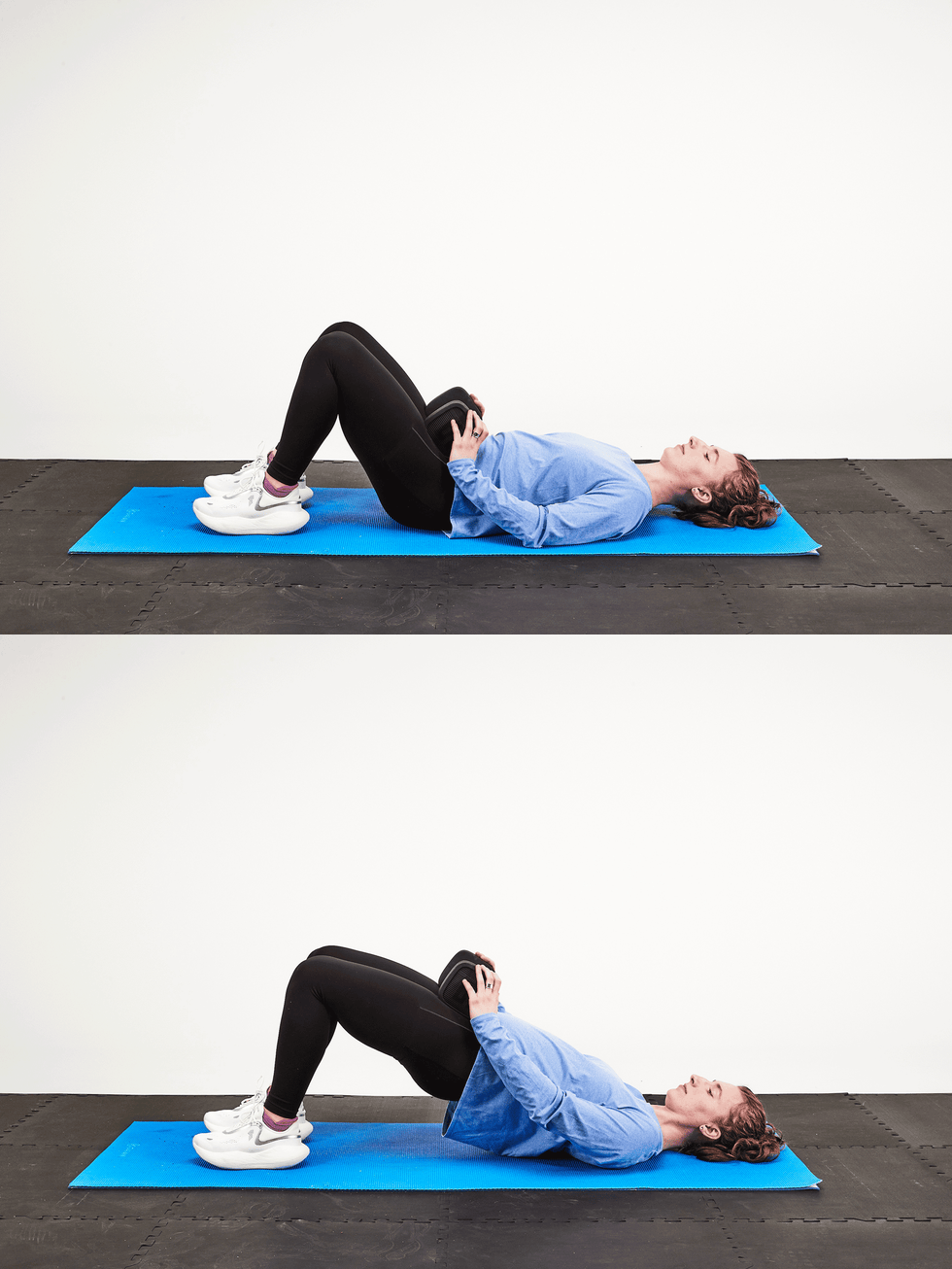 Trevor Raab
To advance this move, put a dumbbell across your upper thighs
How to do itLie on your back with your knees bent and feet flat on the ground.Squeeze your glutes and lift your hips off the floor to form a straight line from your knees, hips and shoulders.Hold briefly before lowering your hips to the floor.2. Donkey kicks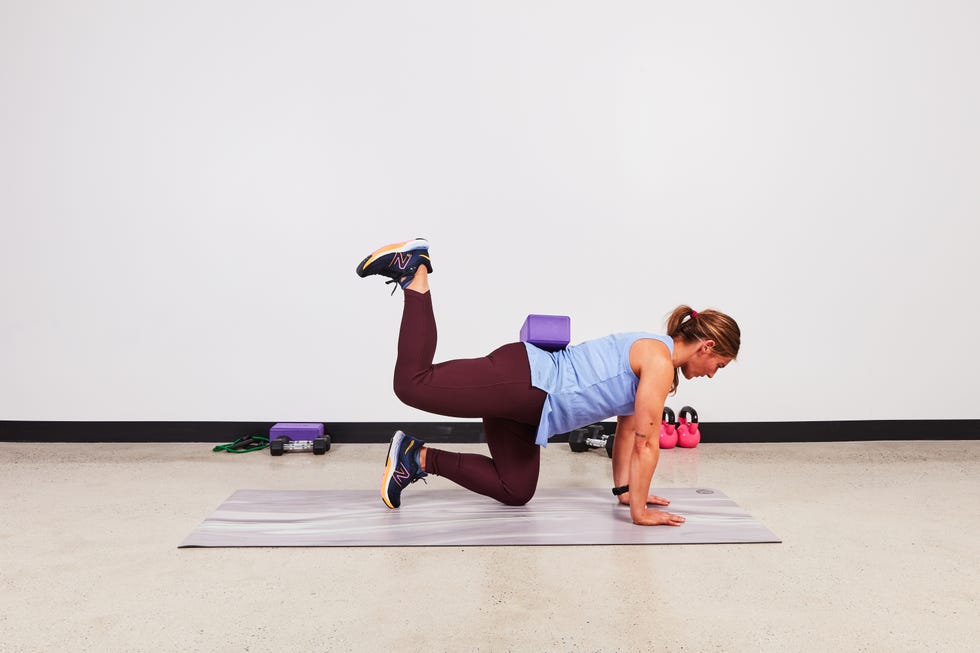 Trevor Raab
You don’t need to keep a yoga block on your back, but it is a great way to make sure that you are isolating the glute muscles
How to do itStart on your hands and knees, with your hands under your shoulders and your knees under your hips. Engage your abs.Keeping your back flat, lift your right leg and bend your knee. Engage your right glute and press your right foot toward the ceiling.Squeeze your glute at the top of the move before returning your knee to the ground.3. Clamshell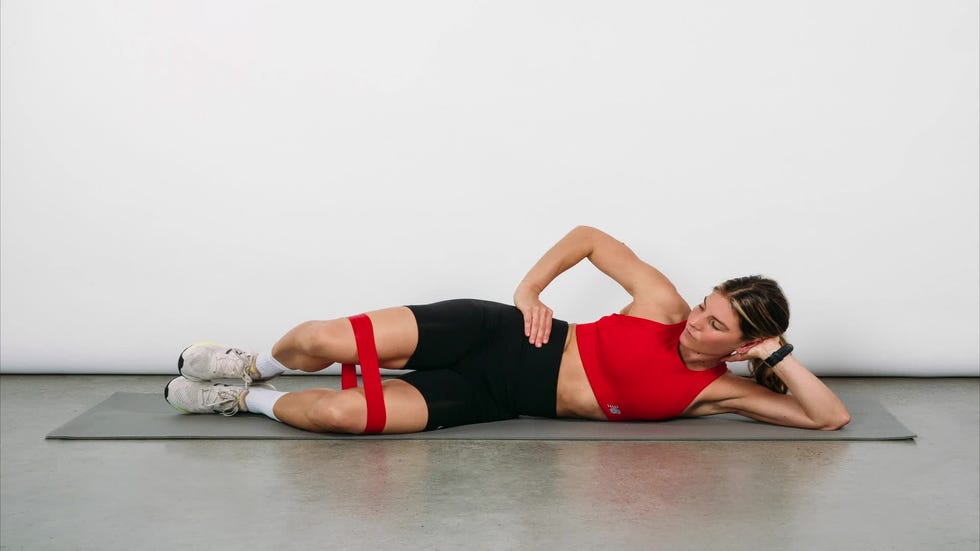
To further challenge the glutes, add a resistance band around your legs
How to do itLie on your side with your legs stacked and knees bent to 45 degrees.Engage your abs. Then, keeping your heels together, raise your top knee as high as possible without tilting your pelvis forward or backward.Hold briefly before returning your knee to the start position.Related Story