
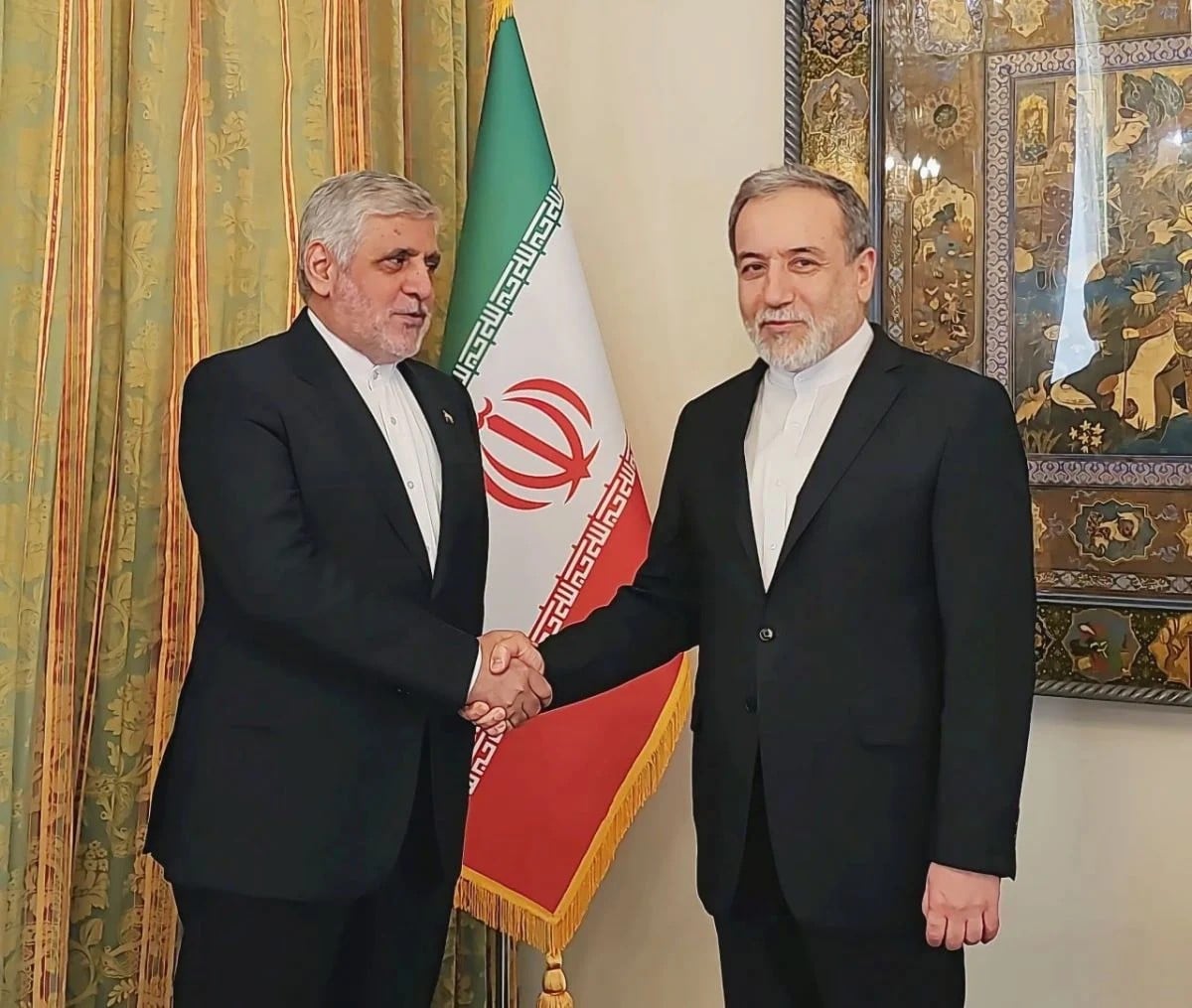
BEIRUT, Lebanon — Iran’s ambassador will not leave Lebanon despite being declared persona non grata and ordered to leave the country by Sunday, an Iranian diplomatic source told AFP.
“The ambassador will not leave Lebanon, in accordance with the wishes of the speaker of parliament Nabih Berri and of Hezbollah,” the source said, speaking on condition of anonymity.
The Lebanese terror group had denounced the decision to expel Iranian envoy Mohammad Reza Sheibani, while Berri’s Amal party joined Hezbollah ministers in boycotting a cabinet session this week to protest the order.
The foreign ministry on Tuesday gave Tehran’s envoy until Sunday to leave in the latest unprecedented step by Lebanese authorities since Hezbollah instigated a new war with Israel at the start of March.
The ministry accused the ambassador of making statements “interfering in Lebanon’s internal politics.”
Get The Times of Israel’s Daily Edition
by email and never miss our top stories
By signing up, you agree to the terms
Israeli Foreign Minister Gideon Sa’ar praised Beirut for the move, calling it a “justified and necessary step toward the country responsible for violating Lebanon’s sovereignty, for its indirect occupation through Hezbollah, and for dragging it into war.”
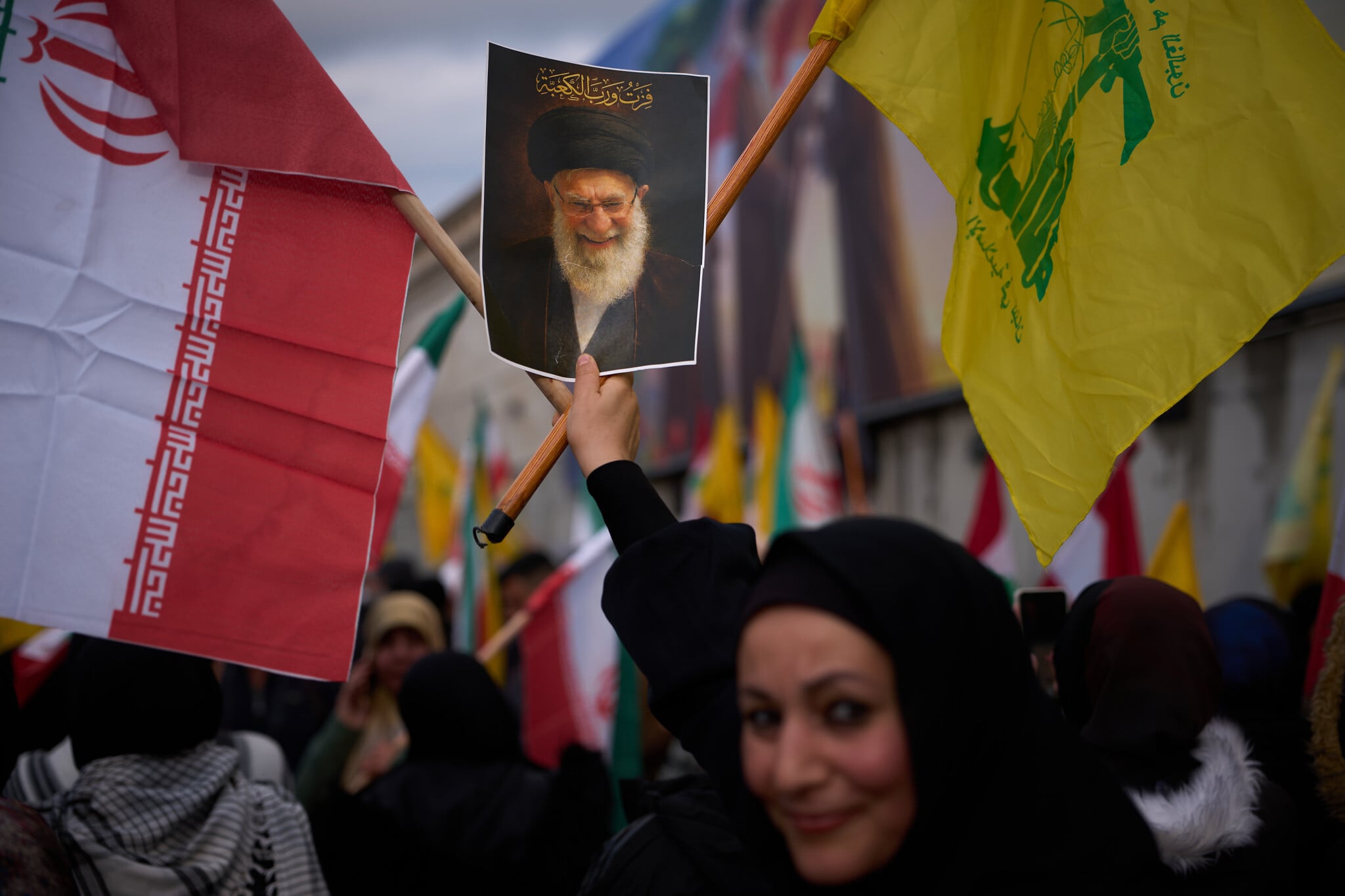
A woman holds a portrait of Iran’s late supreme leader Ayatollah Ali Khamenei during a protest outside Iran’s embassy, where dozens of people gathered waving Hezbollah and Iranian flags in solidarity with the Islamic Republic, in Beirut, Lebanon, March 26, 2026. (AP/Emilio Morenatti)
French Foreign Minister Jean-Noel Barrot also lauded Lebanon’s government, calling the expulsion “a courageous decision.”
The Lebanese authorities have already banned Hezbollah’s military activities, though it has not taken action on the ground to disarm the group.
It has also banned the presence and operations of Iran’s Islamic Revolutionary Guard Corps, which Lebanese Prime Minister Nawaf Salam accused of directing Hezbollah operations against Israel.
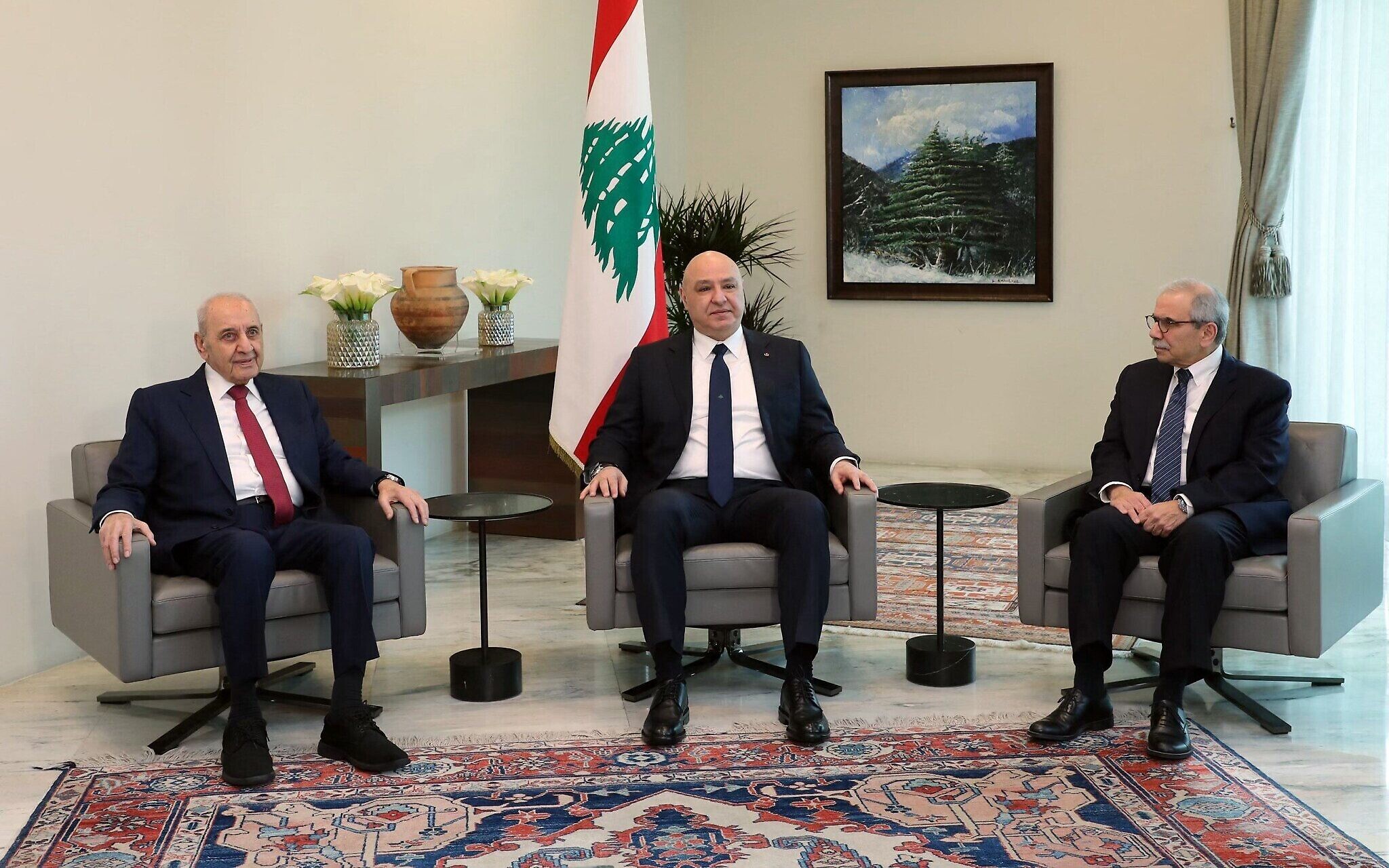
This handout picture released by the Lebanese presidency shows President Joseph Aoun (C) meeting with Parliament Speaker Nabih Berri (L) and Prime Minister Nawaf Salam, at the presidential palace in Baabda, east of Beirut, after the first meeting of Lebanon’s new government on February 11, 2025. (Lebanese Presidency / AFP/ File)
Hours after Lebanon’s Foreign Ministry announced it had withdrawn the accreditation of Iran’s ambassador, Iran fired a missile that was intercepted over Lebanon, an unprecedented development.
Lebanon has been drawn into the ongoing regional war by Hezbollah, which has resisted the government’s demands to disarm and has been attacking Israel daily as a proxy of Iran’s over the past month. That has led to an intense Israeli bombing campaign and ground operation in southern Lebanon and in the capital of Beirut, resulting in the displacement of over a million people.
An uneasy ceasefire had been in place between Israel and Hezbollah since November 2024. The ceasefire agreement obligated the Lebanese national government to exercise a monopoly of force between Israel and the Litani River.
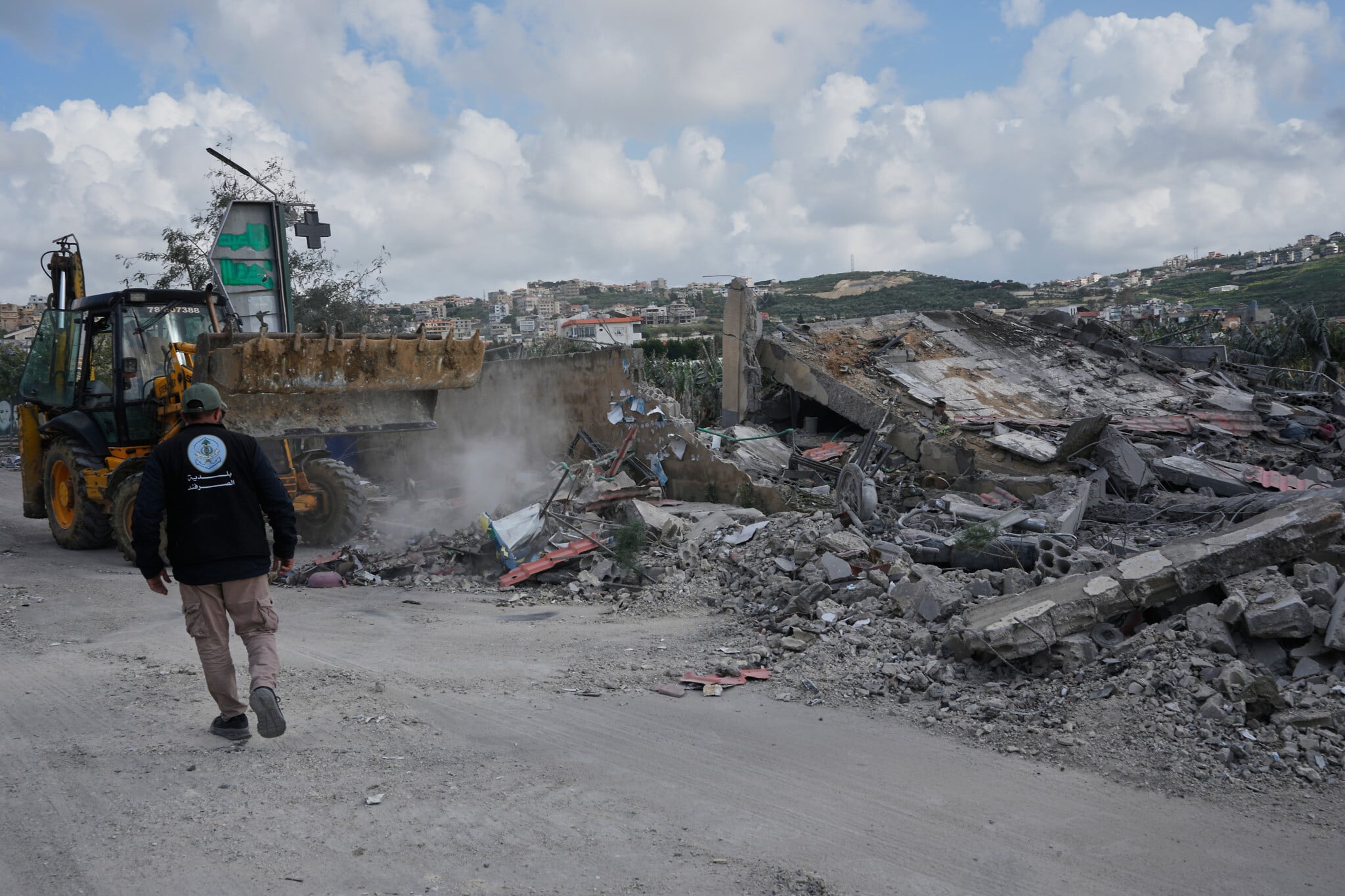
A man passes in front of a destroyed house that was hit in an Israeli airstrike in Sarafand village, south Lebanon, on March 27, 2026. (AP/Hussein Malla)
Hezbollah resumed its rocket attacks on Israel on March 2, in retaliation for the killing of Iranian supreme leader Ali Khamenei in a wave of Israeli strikes on the first day of the US-Israeli war with the Islamic Republic.
Lebanese President Joseph Aoun claimed that Hezbollah had fired rockets from areas north of the Litani River, outside the area where Lebanese troops had claimed to be in full control.
Israel has insisted that Hezbollah had a significant presence in south Lebanon before fighting erupted, in violation of the ceasefire. During the 2024-2026 truce, the IDF carried out near-daily strikes on Hezbollah operatives it said were attempting to restore the terror group’s infrastructure in southern Lebanon. Since the fighting resumed, it has been fighting Hezbollah gunmen near the border.
Hezbollah has been firing hundreds of rockets per day, according to the IDF. However, the vast majority of the daily rocket fire has been directed at Israeli forces operating in southern Lebanon, with only a few dozen projectiles crossing the border into Israel.
The IDF believes Hezbollah still possesses thousands of short-range rockets, along with hundreds of longer-range projectiles. The IDF has said that Hezbollah is now launching most of its attacks from deeper within southern Lebanon, and not from near the border.
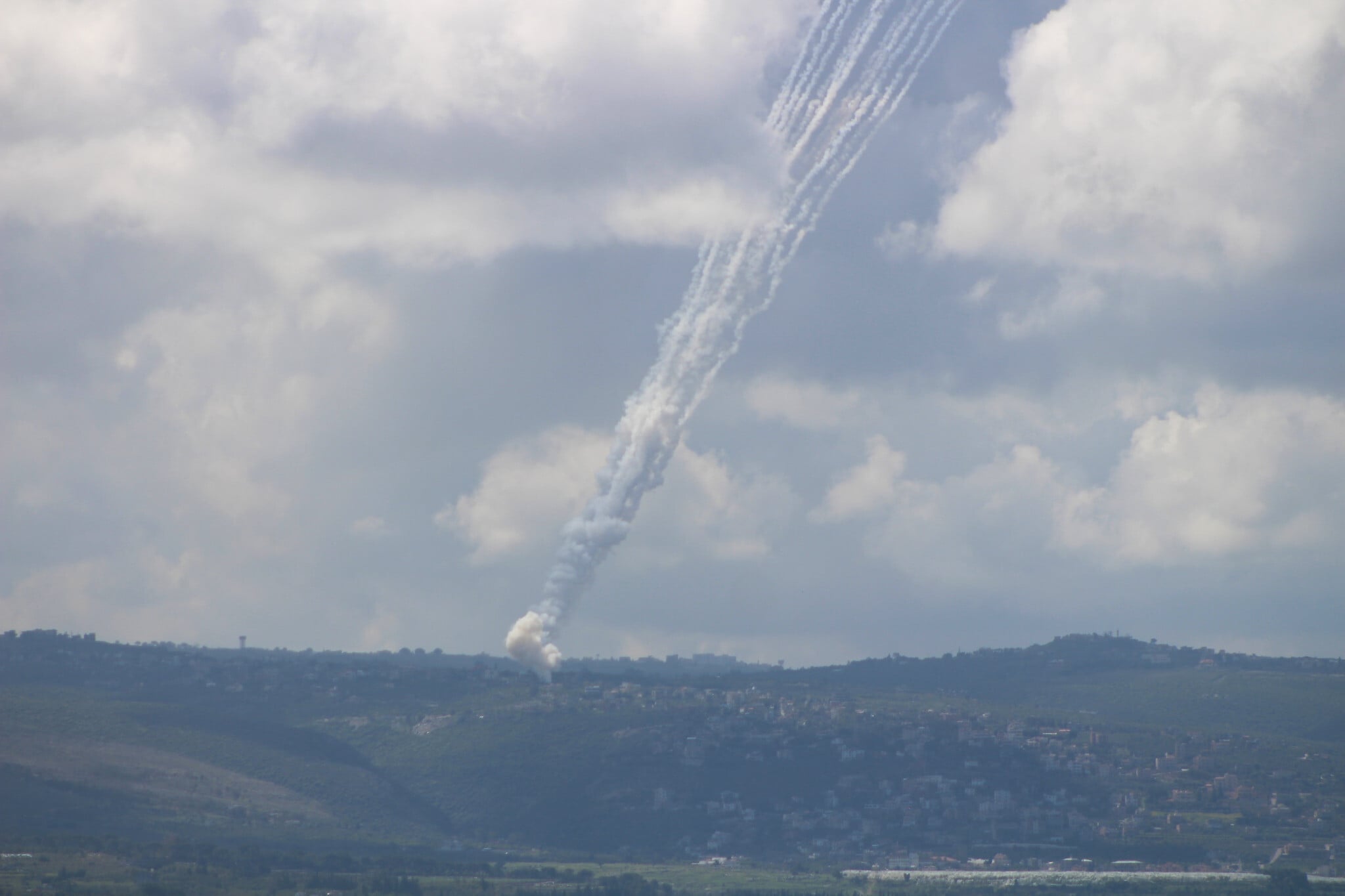
Rockets fired from Lebanon at Israel on March 24, 2026, as seen from the southern city of Tyre, Lebanon. (KAWANT HAJU / AFP)
Hezbollah’s decision to restart its war with Israel drew unusually sharp criticism even from its Shia base, after years of steadily losing popular support in Lebanon. In January 2025, Lebanon’s parliament elected former army chief Aoun, a Hezbollah opponent, as the country’s president.
A poll conducted in January 2026 by the Council for a Secure America found that 73% of Lebanese strongly or somewhat support the president’s efforts to disarm Hezbollah, while only 9% said they strongly or somewhat oppose the process.
On March 9, amid the steadily expanding Israeli offensive against Hezbollah, Aoun proposed direct talks with Israel, a call later joined by Lebanese Prime Minister Nawaf Salam. Israel has said there are no talks planned, but the US and other Western nations have welcomed the proposal and expressed hopes that Israel will take Beirut up on the offer.
Hezbollah chief Naim Qassem urged Lebanon’s government to reject negotiations with Israel in a televised speech read on his behalf on March 25.
You appreciate our wartime journalism

You clearly find our careful reporting of the Iran war valuable, at a time when facts are often distorted and news coverage often lacks context.
Your support is essential to continue our work. We want to continue delivering the professional journalism you value, even as the demands on our newsroom have grown dramatically during this ongoing conflict.
So today, please consider joining our reader support group, The Times of Israel Community. For as little as $6 a month you’ll become our partners while enjoying The Times of Israel AD-FREE, as well as accessing exclusive content available only to Times of Israel Community members.
Thank you,
David Horovitz, Founding Editor of The Times of Israel