
Watching the unloading of his latest catch on Darwin’s wharf, seafoods supply business manager Michael O’Brien was dreading the cost of sending the trawler back to sea, after major diesel price hikes this month.
“In two weeks we burn 40,000 litres of fuel,” Mr O’Brien said.
“On the first of March it was costing me $58,000, now it’s costing me $98,000 to put 40,000 litres of fuel onboard.”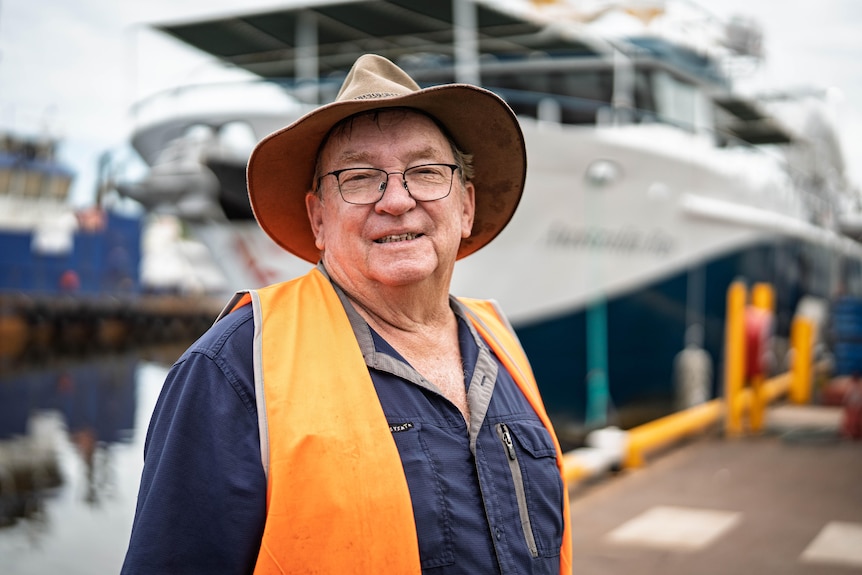
Michael O’Brien is worried he may not be able to get fuel by the end of April. (ABC News: Marcus Kennedy)
The general manager of Australia Bay Seafoods, Mr O’Brien said the business could not absorb the increase, or the doubling of trucking charges to send the fish to southern cities including Sydney.
“Sadly, we don’t now have any choice but to pass it on to the wholesalers and the buyers,” he said.
“It’s big figures, but if we don’t, we don’t go fishing.”
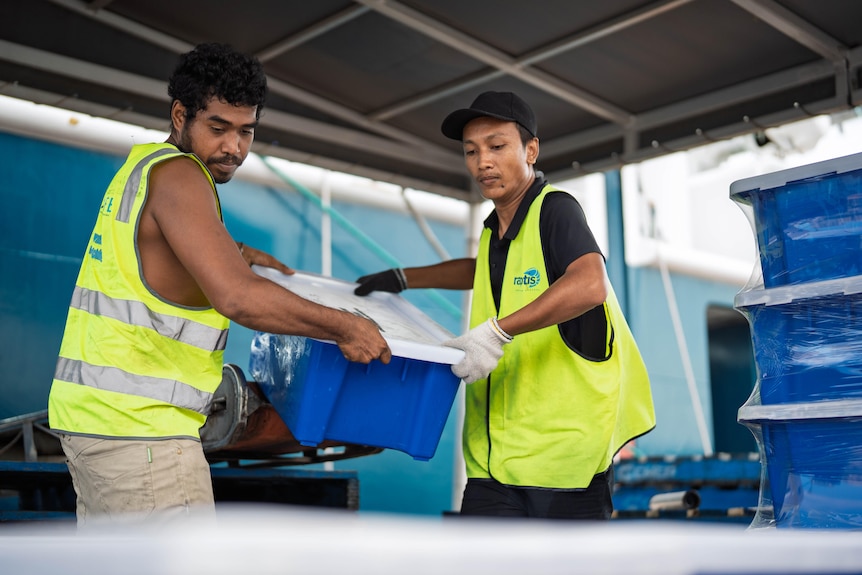
The fishing industry is warning a doubling of diesel costs will push up fish prices. (ABC News: Marcus Kenned)
He called for the federal and state governments to consider more primary industry subsidies.
“Our big concern is, will we have the support to keep food security — being fish on the table for everybody — over the coming months?” he asked.
“It’s just not fishing, it’s farming, all of our food chain needs to be looked after.”
Growers reconsidering planting crops
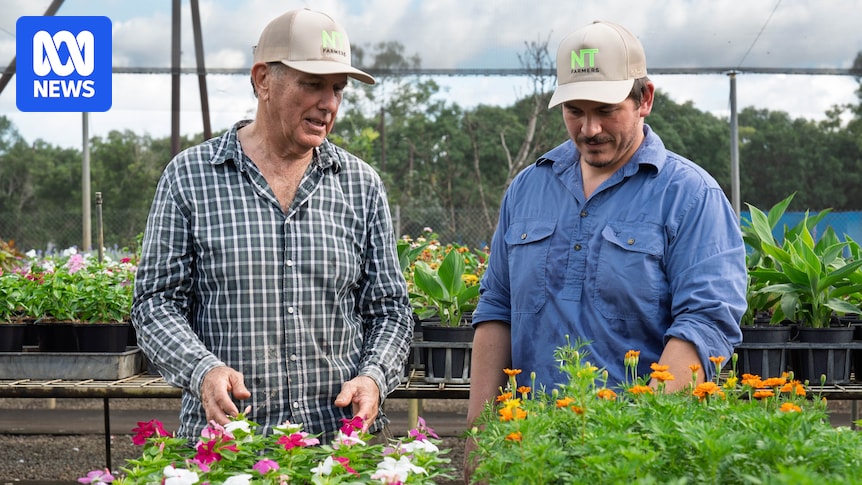
On his plant nursery outside Darwin, the NT Farmers Association president Simon Smith said trucking costs for his produce had also nearly doubled.
“Everything we bring in, we’re now paying 30 per cent more in levies, and it’ll soon be a 50 per cent fuel levy, and on anything we send out, we pay the same,” Mr Smith said.
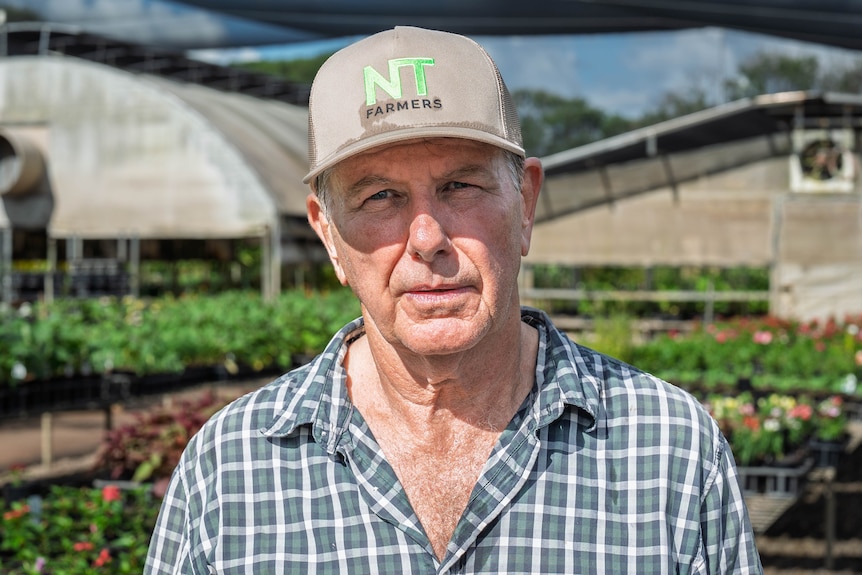
Simon Smith says many growers may not plant crops this year. (ABC News: Marcus Kennedy)
He said vegetable to melon farmers across the Northern Territory were facing the same cost rises.
“We’ve got growers who will consider whether or not they’ll plant a crop this year, or scale back,” Mr Smith said.
NT Farmers has appealed to the Federal Government to offer subsidies for transport costs, or tax relief, and to ensure that available fuel gets to farming areas.
“We’d all certainly benefit from assistance with costs, and definitely running out of fuel is a death knell for farmers,” he said.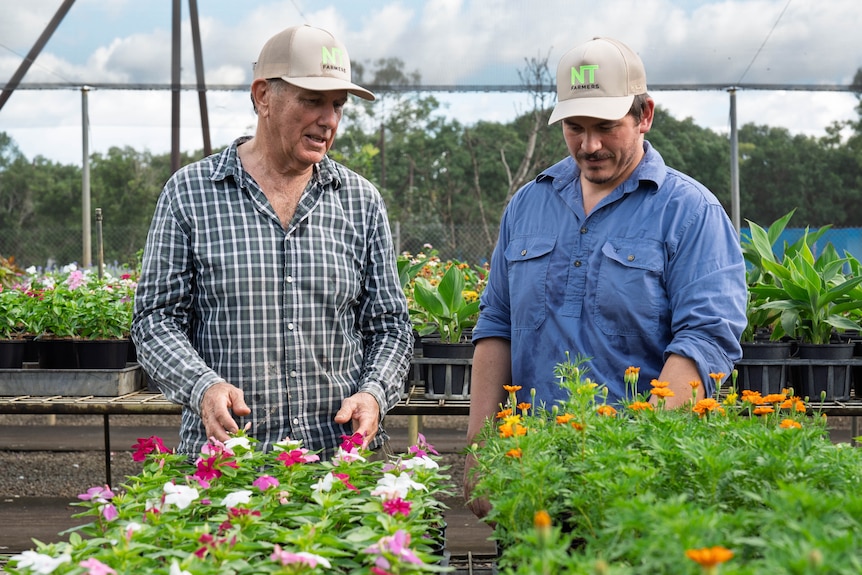
Simon Smith and Andrew Bourne from the NT Farmers Association want transport cost subsidies for their industry. (ABC News: Marcus Kennedy)
Calls for transport subsidies, welfare payments
The NT Chamber of Commerce Central Australia head Brad Gaddes was advocating for federal government transport subsidies.
“The federal government is in charge of the excise, and the road user charges; anything that relies on transport is at risk here — retailers, tourism, our trucking companies, as those prices continue to drive forward, we’re going to see the impact on the prices we pay as consumers,” Mr Gaddes said.

Brad Gaddes says the fuel cost increases will push up the price of most things consumers buy. (ABC News: Xavier Martin)
Indigenous community leaders have called on the federal government to increase welfare payments for remote residents already struggling to afford enough food.
The Central Land Council’s Josie Douglas said the current $9.10 per week extra that remote residents get on their welfare payments wasn’t nearly enough.
“There is no buffer for Aboriginal people living in remote communities when the cost of fuel goes up and the cost of food goes up,” Ms Douglas said.
“The remote area allowance needs to be immediately indexed for CPI and the base rate of the allowance needs to be substantially increased to offset the real cost of living for remote.”

Josie Douglas says remote residents won’t be able to afford enough food without welfare increases. (ABC News: Xavier Martin)
Fears diesel to soon run short
Back on Darwin’s wharf, the NT Seafood Council’s chief executive Daniel Capps said his industry was expecting diesel to start to run short next month.

Daniel Capps says Australia will be in fierce competition for fuel from Singapore and Malaysia. (ABC News: Marcus Kennedy)
He called on the federal and state governments to prioritise making sure food producers had fuel.
“It’s all very well saying we’re getting supply into Australia but we need to look at Singapore and Malaysia where our supply comes from, and that supply is contracting,” Mr Capps said.
“Beyond April we’re probably looking at significant contractions in supply unless something happens with the war in Iran.
“Even if that war stopped tomorrow we’re probably looking at several months before supply gets back to what we would consider normal.”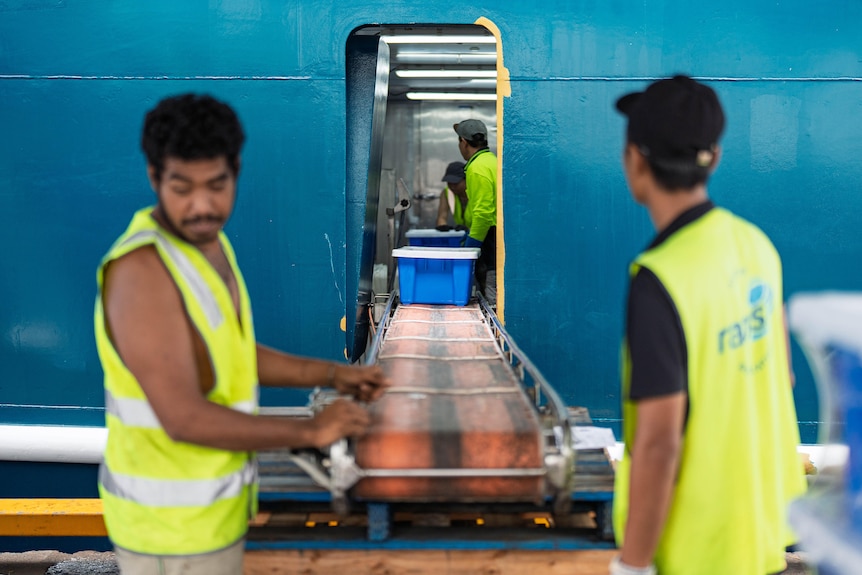
Jobs in the fishing industry are now uncertain. (ABC News Marcus Kennedy)
Mr Capps said Australia would soon be in a situation of facing intense competition for fuel with other countries.
“Singapore and Malaysia with other countries are supplying on an ad hoc basis; it’s a capitalist market, so we are going to be competing on that level,” he said.
Mr O’Brien said his conversations with fuel suppliers, and what that meant for the people working in his industry, had made him very worried as a business manager.
“They’re saying that come mid-April, towards the end of April, we could be on fuel restrictions,” he said.
“People don’t know if they’ve got jobs in six months’ time.”