
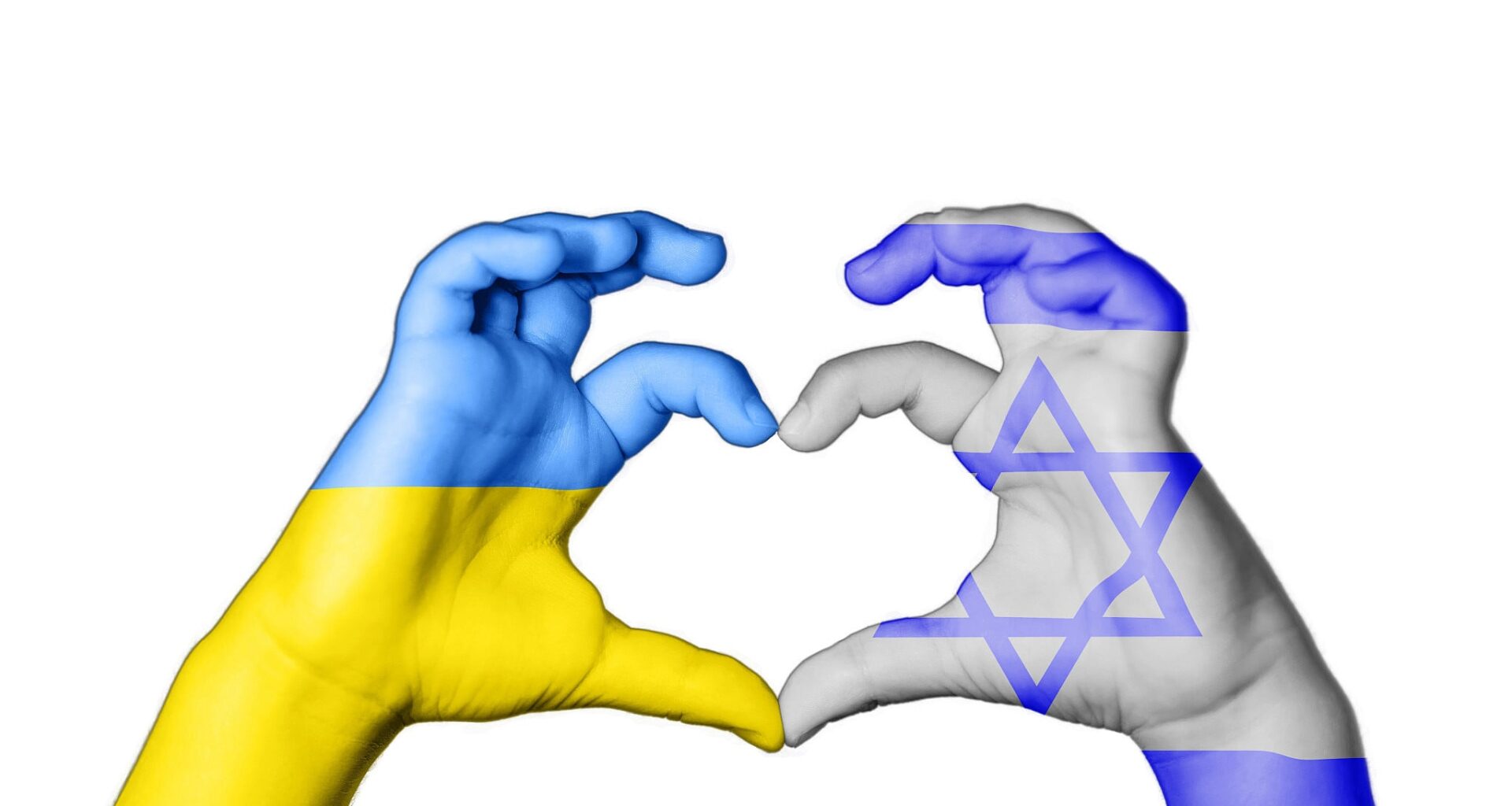
At first glance, the war in Ukraine and the war between Israel and Iran seem fundamentally different.
One is a territorial invasion in Eastern Europe. The other, a multi-front regional war rooted in decades of ideological hostility.
But if you strip away the geopolitics what remains is something painfully familiar for citizens of both countries:
The sound of a siren.
The race to shelter.
The quiet question every civilian asks: Will I survive this one?
A Life Interrupted
In Ukraine, civilians have endured years of relentless attacks—missiles, drones, and aerial bombs striking cities far from the front lines. Homes, hospitals, and power stations have all become targets.
In Israel, the rhythm is not so different—and no less jarring.
Missile barrages from Iran and its proxies force millions into shelters within seconds. Life is measured in the time it takes to reach a safe room. Sleep is interrupted not occasionally, but routinely.
The geography is different. The languages are different. But the interruption of life is identical.
The Illusion of Distance
One of the most dangerous misconceptions about modern war is that distance from the battlefield equals safety.
The war in Ukraine shatters that illusion.
Cities far from the front—Kyiv, Dnipro, Lviv—have all been struck. Long-range missiles and drones have turned the entire country into a battlefield.
Israel lives this reality too and in real time.
Missiles launched from hundreds—or even thousands—of kilometers away do not distinguish between soldier and civilian. A family home, a school corridor, a synagogue—each becomes a potential target. Distance offers no protection anymore.
War has become ambient.
The Unequal Math of Survival
There is, however, one stark difference between the two wars:
The probability of survival.
Israel’s early warning systems, shelters, and missile defense infrastructure save lives. Civilians often have seconds—but those seconds matter.
Ukraine has far fewer layers of protection. Infrastructure is not just collateral damage—it is often the target itself. Survival is less predictable, more fragile. And yet, this difference creates a dangerous misconception that Israelis suffer less.
And here is the imporant message. Survival does not erase trauma.
The Psychology of the Siren
In both Ukraine and Israel, civilians live in a state of anticipatory anxiety.
In Ukraine, it is the expectation of nighttime drone attacks. In Israel, it is the sudden blare of a siren—sometimes with less than a minute to react.
You are never fully at rest.
Routine becomes performance. Calm becomes temporary. Even silence feels deceptive. Children learn where to run before they understand why they are running. And parents carry an invisible burden: how to protect their children not just from missiles—but from fear itself.
The Selective Empathy of the Left
And yet, when we move from lived experience to global reaction, something shifts. Its a dramatic shift. There is an uncomfortable truth that needs to be confronted.
The same progressive voices that speak with moral clarity about Ukraine often speak with moral confusion about Israel.
When Russia invaded Ukraine, the response was immediate and unequivocal. Ukraine’s right to defend itself was non-negotiable. Civilian suffering was centered—not qualified. No one asked Ukrainians to demonstrate proportionality while under missile fire. No one suggested that Russia’s security concerns justified attacks on Kyiv. No one demanded negotiations as missiles were falling.
But when Israelis face sustained attacks, now and on October 7—from Iran and its proxies—the language changes.
Self-defense becomes “escalation.” Civilian protection becomes “militarization.” Responsibility becomes blurred—often redirected back onto Israel itself.
This is not nuance. It is inconsistency.
Or more precisely: selective empathy.
When Context Matters—Except When It Doesn’t
Progressive discourse prides itself on context—history, power dynamics, narratives. However context is not being applied evenly.
In Ukraine, history reinforces legitimacy: a sovereign nation defending itself. In Israel, history is often used to dilute legitimacy: a state whose right to defend itself is treated as conditional.
Why is one nation’s security accepted at face value—while another’s is endlessly interrogated? Why is empathy automatic in one case—but debated in another?
These are not intellectual distinctions. They are ideological ones.
The Politics of Who Gets to Be a Victim
At the heart of this inconsistency lies a deeper problem:
Not all victims are treated equally.
Ukraine fits comfortably into a moral framework of oppressed versus aggressor.
Israel does not.
It is seen as strong, advanced, militarily capable—and in today’s progressive worldview, power complicates innocence.
But missiles do not care about ideological frameworks.
A child running to a shelter in Ashkelon is no less a civilian than a child sheltering in Kharkiv.
And yet, only one is consistently granted unquestioned empathy.
The other is often viewed through suspicion—its suffering contextualized, qualified, or minimized.
The Danger of Moral Inconsistency
This double standard is not just intellectually flawed—it is dangerous.
Because when the right to self-defense becomes selective, it ceases to be a principle and becomes a political tool. When empathy becomes conditional, it stops being empathy altogether.
The result is a world where entire populations feel that their suffering must be justified before it is acknowledged.
That is not moral clarity. That is moral fragmentation.
The Shared Human Truth
If there is one lesson that emerges from both wars, it is this: Modern warfare no longer happens at the front. It happens in living rooms. In stairwells. In shelters.
Ukraine shows us what prolonged, systemic civilian targeting looks like over years.
Israel shows us what high-intensity, multi-front civilian threat feels like compressed into weeks and months.
So what we see are two different wars. However, they share the same fears. Same instincts. Same fragile hope that the next siren will end like the last one did:
With survival.
We often compare wars to understand strategy, alliances, and outcomes.
But perhaps the more urgent comparison is this: Not how nations fight—but how civilians endure.
And not just how they endure war— but how the world chooses to see their suffering.
Because in Kyiv and in Tel Aviv, in Kharkiv and in Haifa, the question is not geopolitical. It is human.
So here is a closing question: Will anyone recognize our fear the same way they recognize theirs?
And if the answer depends on politics—then it is not just war that is broken.
It is our capacity for empathy itself.