
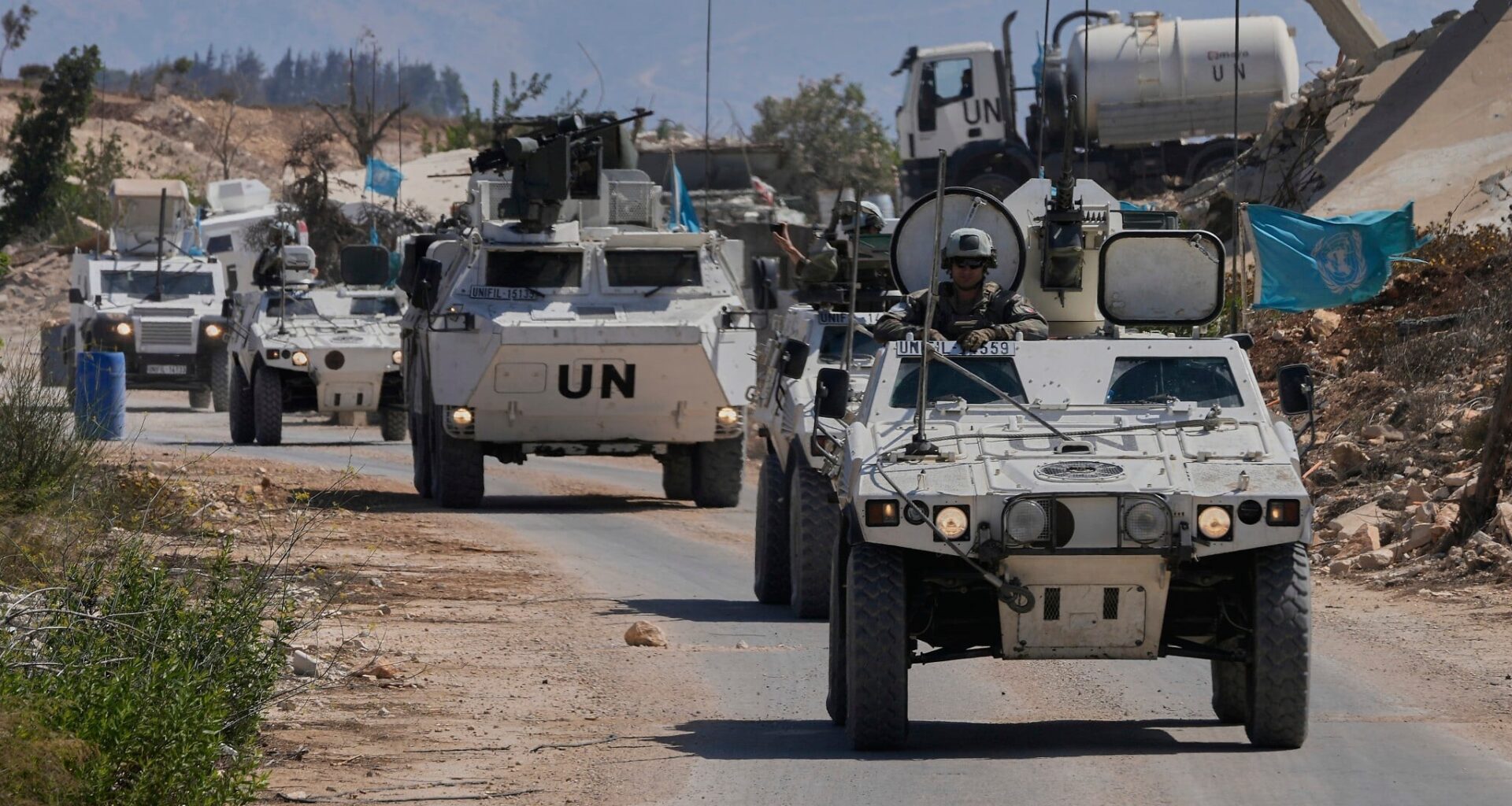
The UN peacekeeping mission in Lebanon (UNIFIL) said a peacekeeper was killed when a projectile exploded at one of its positions near the southern Lebanese village of Adchit al-Qusayr on Sunday.
Another peacekeeper was critically injured, it said in a statement early on Monday.
Contacted by The Times of Israel regarding the incident, the military said it was looking into it.
Indonesia’s foreign ministry said the deceased peacekeeper was one of its citizens and that three others were injured by indirect artillery fire in the vicinity of the Indonesian UNIFIL contingent’s position near Adchit al-Qusayr.
“We do not know the origin of the projectile. We have launched an investigation to determine all of the circumstances,” UNIFIL said.
Get The Times of Israel’s Daily Edition
by email and never miss our top stories
By signing up, you agree to the terms
“Once again, we call on all actors to uphold their obligations under international law and to ensure the safety and security of UN personnel and property at all times, including by refraining from actions that may put peacekeepers in danger,” UNIFIL said. “No one should ever lose their life serving the cause of peace.”
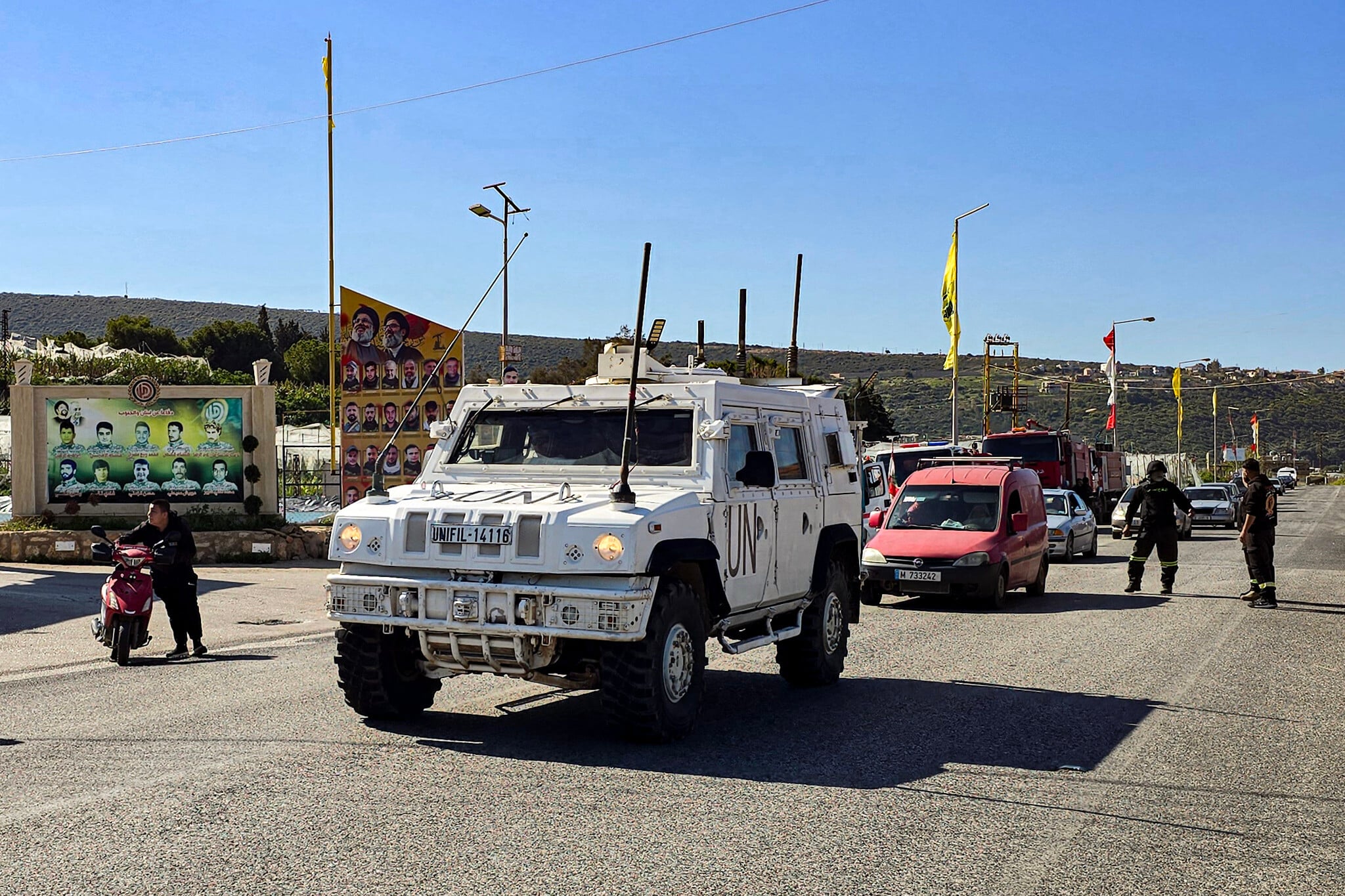
Vehicles of the United Nations Interim Forces In Lebanon (UNIFIL) escort a convoy of residents from the Christian village of Alma al-Shaab evacuating from the village in southern Lebanon through the area of Naqura on March 10, 2026 (KAWNAT HAJU / AFP)
Indonesia condemned the incident and said any harm to peacekeepers is unacceptable, while reiterating its condemnation “of Israel’s attacks in Southern Lebanon.”
The town of Adchit al Qusayr lies near Lebanon’s southern border with Israel, where Israeli forces have been battling fighters from Hezbollah for nearly a month.
The war in the Middle East spread to Lebanon in early March after Iran-backed Hezbollah began firing rockets and drones at Israel. The attacks prompted a new IDF offensive.
The UN peacekeeping mission known as UNIFIL is stationed in southern Lebanon to monitor hostilities along the demarcation line with Israel — an area that is at the heart of clashes between Israeli troops and fighters from the Iran-backed Hezbollah terror group.
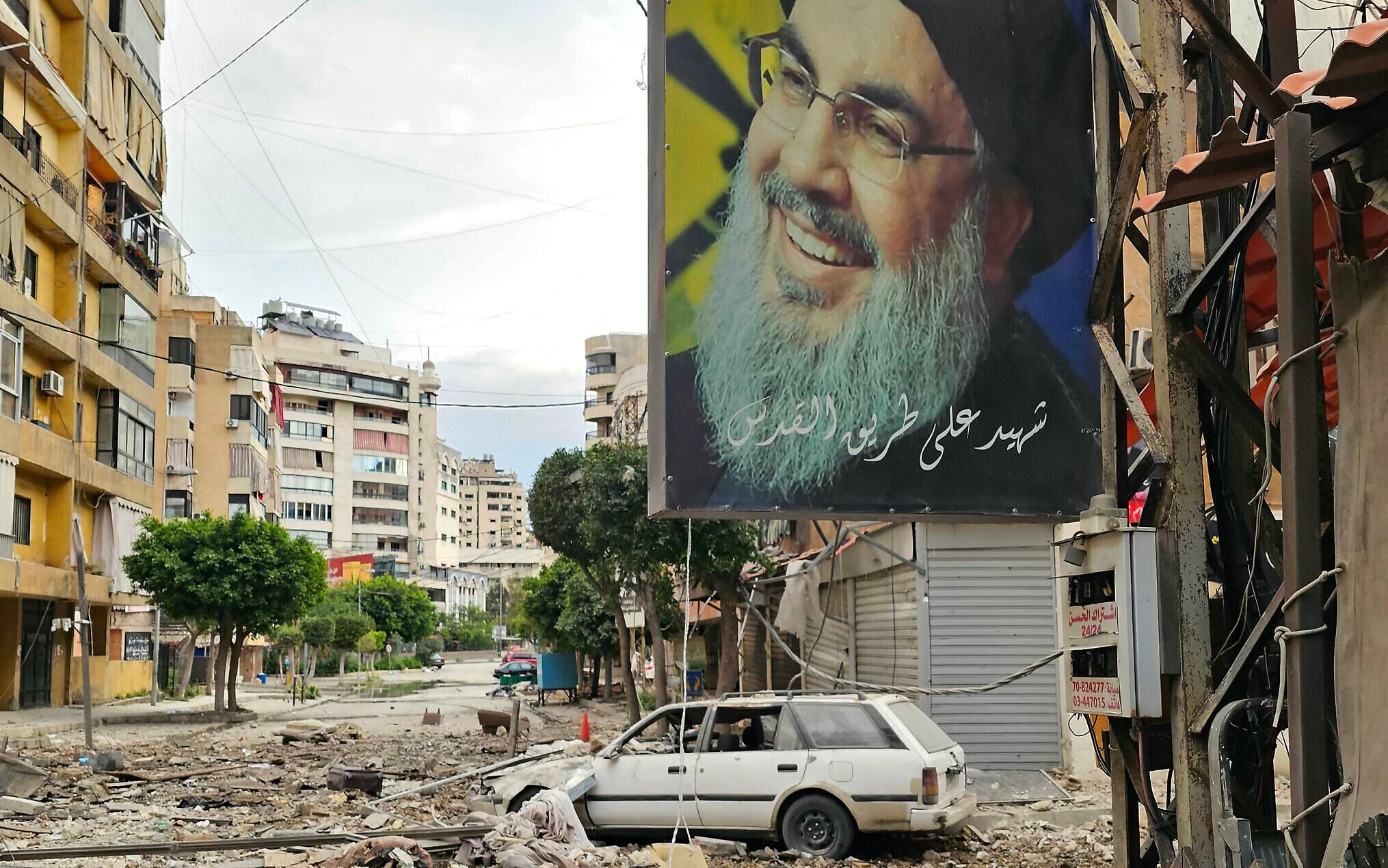
A banner bearing the image of Hassan Nasrallah, the assassinated leader of the Lebanese Shia terror movement Hezbollah, hangs from a building along a street littered debris after an overnight Israeli airstrike that targeted a neighborhood in Beirut’s southern suburbs on March 25, 2026. (AFP)
The mission, which will be halted at the end of 2026, has been sporadically caught in the crosshairs of both Israel and Hezbollah over the last couple of years.
On March 6, Ghana’s armed forces said the headquarters of its UN peacekeeping battalion in Lebanon was hit, leaving two soldiers critically injured.
Israel’s military later acknowledged that its tank fire had hit a UN position in southern Lebanon that day, wounding the Ghanaian peacekeepers. The military said its troops had been responding to anti-tank missile fire from Hezbollah, which had moderately wounded two of its soldiers.
UN Security Council Resolution 1701, which ended the 2006 war between Israel and Hezbollah, and formed the basis of the November 2024 ceasefire with the Iran-backed terror group, among other provisions, states that no armed forces should be operating in southern Lebanon except the UN peacekeepers and the Lebanese military.
Israel has long argued that the observer force has failed in its mission, doing little to block Hezbollah from building up its forces near the Israeli border over decades.
Since March 2, when Hezbollah began attacking Israel in response to the killing of Iran’s supreme leader Ali Khamenei, the terror group has been firing hundreds of rockets per day, according to the IDF. However, the vast majority of the daily rocket fire has been directed at Israeli forces operating in southern Lebanon, with only a few dozen projectiles crossing the border into Israel.
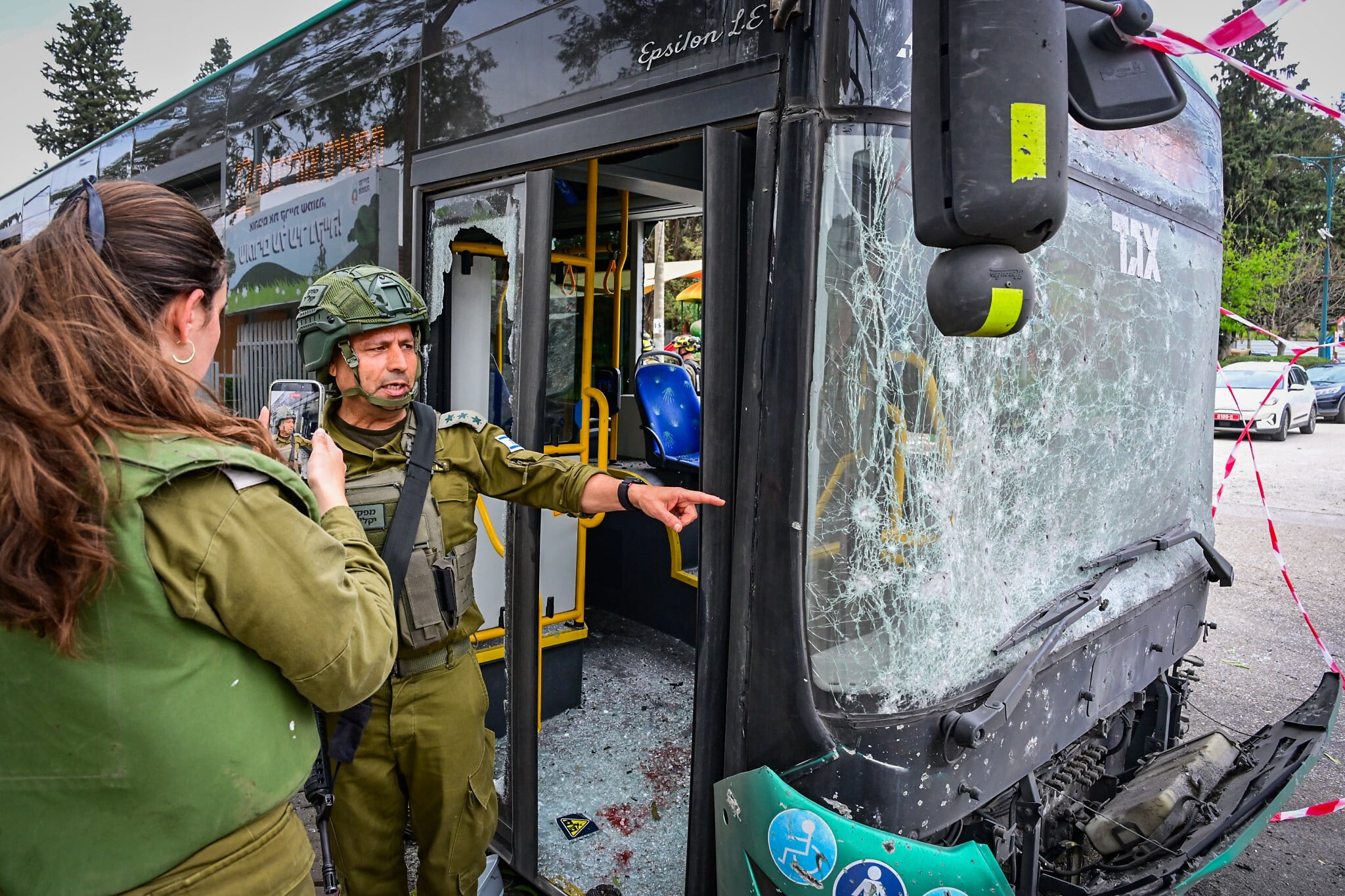
Israeli security and rescue forces at the scene where a missile fired from Lebanon caused damage in the northern Israeli city of Kiryat Shmona, March 23, 2026. (Michael Giladi/Flash90)
The IDF believes Hezbollah still possesses thousands of short-range rockets, along with hundreds of longer-range projectiles. The IDF has said that Hezbollah is launching most of its attacks from deeper within southern Lebanon, and not from close to the border.
The attacks came following a period of relative quiet after a November 2024 truce agreement mostly ended a previous round of fighting, which had begun when Hezbollah attacked Israel on October 8, 2023, one day after the Hamas-led invasion of southern Israel.
Israel has repeatedly accused Hezbollah of trying to rearm and the Lebanese armed forces of failing to disarm the Iran-backed terror group.
You appreciate our wartime journalism

You clearly find our careful reporting of the Iran war valuable, at a time when facts are often distorted and news coverage often lacks context.
Your support is essential to continue our work. We want to continue delivering the professional journalism you value, even as the demands on our newsroom have grown dramatically during this ongoing conflict.
So today, please consider joining our reader support group, The Times of Israel Community. For as little as $6 a month you’ll become our partners while enjoying The Times of Israel AD-FREE, as well as accessing exclusive content available only to Times of Israel Community members.
Thank you,
David Horovitz, Founding Editor of The Times of Israel