
By the seafront in the southern Lebanese city of Saida, a family discusses the possibility of a new prolonged Israeli occupation.
“Israel cannot dare to take any centimetre of our land, we’ll put our blood in the street,” declares Sobhaya, a 75-year-old with a wizened face and a young grandson holding one hand. “I will fight Israel with my hands, with my feet, with my fingers.”
She recalls the last Israeli occupation, which lasted from 1982 to 2000, when Sobhaya says she threw stones and boiling oil at Israeli solders. At the time, Israel also said it was creating a “security zone”, something Sobhaya says she is unwilling to go through again. “We will die or we will stay [on our land], this is our promise.”
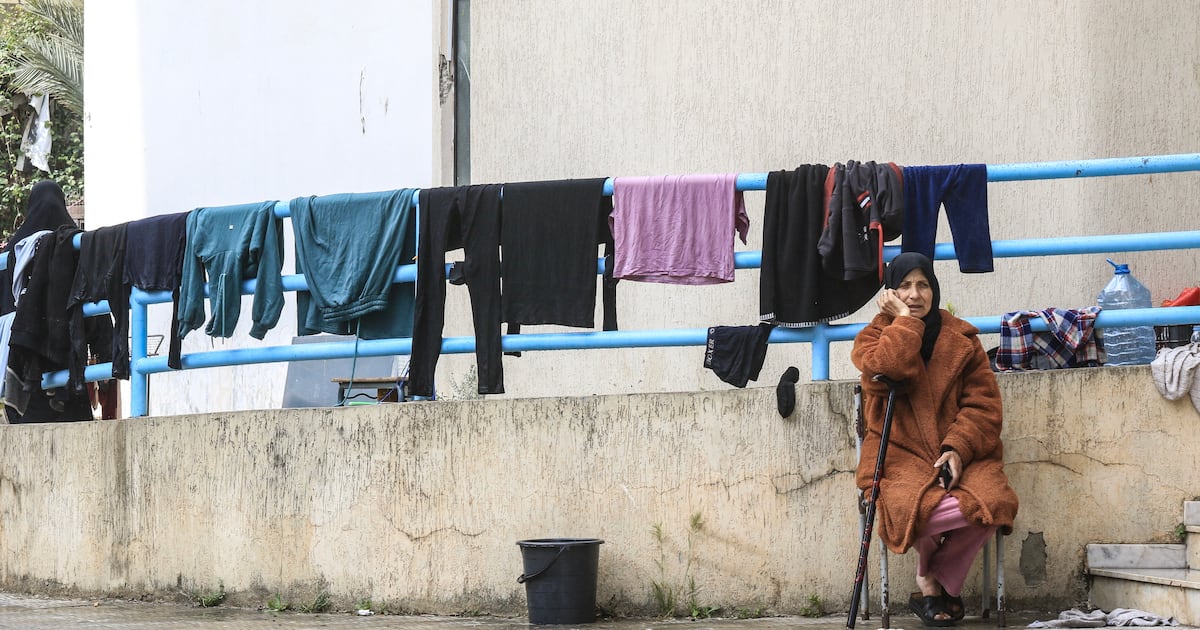
Her family is displaced from Nabatiyeh district, a border area southeast of Saida where air strikes are heavy these days. They sleep in their cars at night, and after they wash their clothes they hang them to dry on the metal railings nearby.
Sobhaya’s daughter Fayzi (56) sleeps in a vehicle with her 14-year-old son. She has memories of the last Israeli occupation too, when she was in Syria and suddenly “had to get a permission” to come home. “I remember every step. They were entering our houses, searching for people accusing them of being terrorists, taking young people.”
She remembers “dancing in the street” in 2000, when Israeli forces finally withdrew.
More than one million displaced
More than 1,200 people have been killed in Lebanon since the return to all-out war between Israel and Hizbullah on March 2nd, including 124 children and 52 medical workers, according to the country’s ministry of health. More than one million people are registered as displaced, and many have no idea when – if ever – they can return home.
Last week, Israel’s defence minister Israel Katz said Israeli forces are planning to occupy the area south of the Litani river – up to 30km inside Lebanese territory in some places – and create a “defensive buffer”.
According to Human Rights Watch, that area is roughly 8 per cent of Lebanon – making it larger than Bahrain, New York City or Singapore, and twice the size of Gaza. Hundreds of thousands of people usually live there. Katz said the displaced will not be allowed to return “until security for Israel’s northern residents is ensured”.
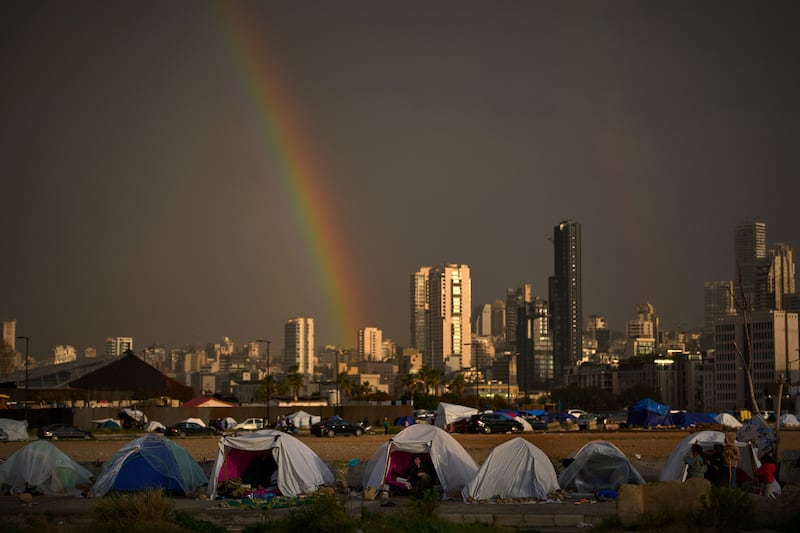 Displaced people who fled Israeli strikes in southern Lebanon sit inside tents near Beirut. Photograph: Emilio Morenatti/AP
Israeli foreign minister Gideon Saar says about 5,000 rockets, shells and drones have been launched at Israel from Lebanese territory since March 2nd, when Hizbullah fired rockets towards Israel in retribution for the assassination of Iran’s supreme leader Ali Khamenei.
Hizbullah’s supporters say the Iranian-backed group were responding to Israeli aggression and near daily attacks during the 15-month ceasefire.
Israeli forces, however, accuse Hizbullah of trying to rebuild and say efforts by the Lebanese state to disarm Hizbullah to date are insufficient. The Israel Defense Forces has continued a campaign of destruction in Lebanon’s border areas, including demolishing and blowing up Lebanese homes and preventing local residents from returning to their villages.
Now, the Israeli military is attempting to isolate the south from the rest of Lebanon, including by destroying bridges that cross the Litani river, saying Hizbullah uses them “for the passage of terrorists and weapons”. International law generally prohibits attacks on civilian infrastructure.
Israeli authorities have compared their campaign in Lebanon to the military offensive in Gaza, where Israeli forces are accused by a United Nations commission of committing genocide against Palestinians. The references included dropping leaflets in Beirut referring to the “success in Gaza”. In early March, far-right Israeli finance minister Bezalel Smotrich said Beirut’s southern suburbs would soon look “like Khan Younis”.
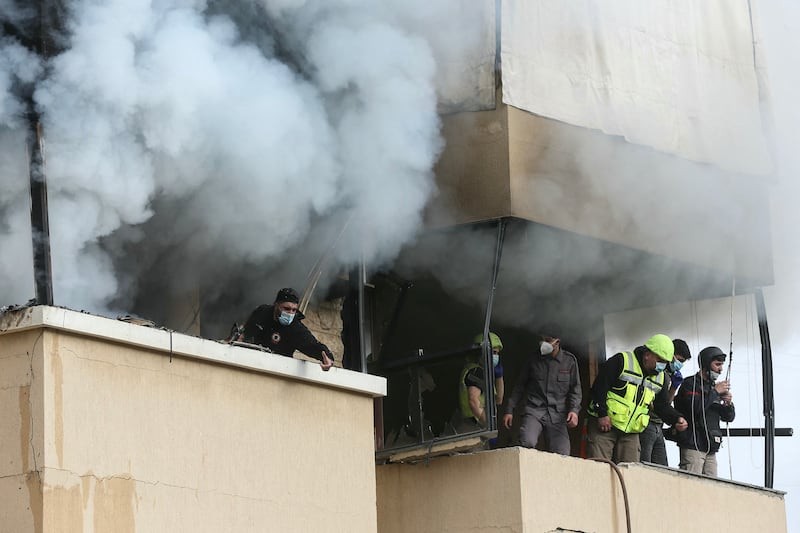 Emergency personnel at the site of an Israeli airstrike that targeted an apartment building in the southern Lebanese town of Saida. Photograph: Mahmoud Zayyat/AFP/Getty Images
 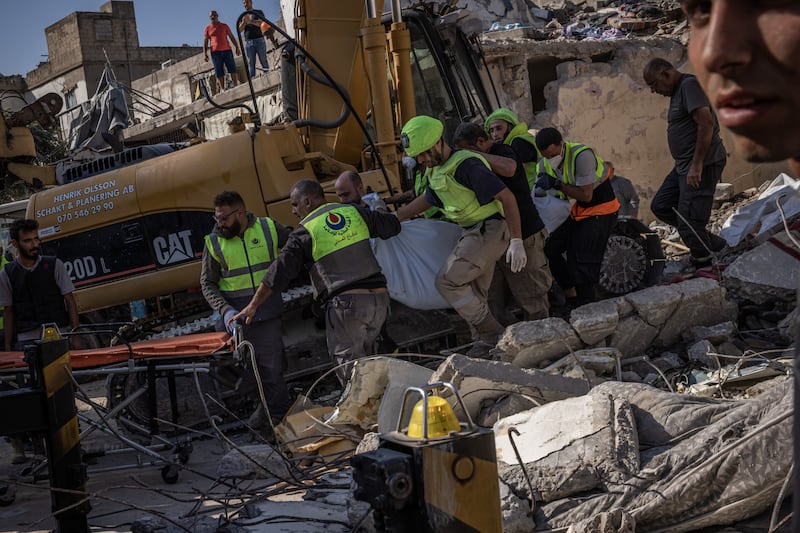 Emergency responders carry a body after it was extracted from a building that was destroyed in an Israeli airstrike a day earlier in Saida, Lebanon. Photograph: Ed Ram/Getty Images
On Sunday, Israeli prime minister Binyamin Netanyahu said he had ordered his military to “further expand the existing security belt” in Lebanon, which he said would “thwart the threat of invasion” and push anti-tank missile fire away from the border. It was not clear whether this would expand on the area already suggested by Katz.
Evacuation warnings
Aid agencies estimate that more than 100,000 people could still be living in the area south of the Litani river. Some refuse to move, saying they are worried that, if they leave their homes, they will never be allowed back to them.
Saida is roughly 24km north of the Litani river, though current sweeping Israeli evacuation warnings cover an area up to the Zahrani river, about 6km south of Saida. The city has filled with displaced people, who worry about their future and reminisce about their homes.
“Israel wants everything for herself because they don’t have the treasure that we have in the south,” says Sobhaya.
“This is the most beautiful country in the world,” says Ali (30). “You can be in the snow in 30 minutes and the sea in 30 mins.” If Israel tries to occupy their land, “we will smash out their eyes with our fingers.”
The previous Israeli occupation was a primary factor in the formation of Hizbullah in the 1980s: its fighters waged a guerrilla campaign against Israeli forces.
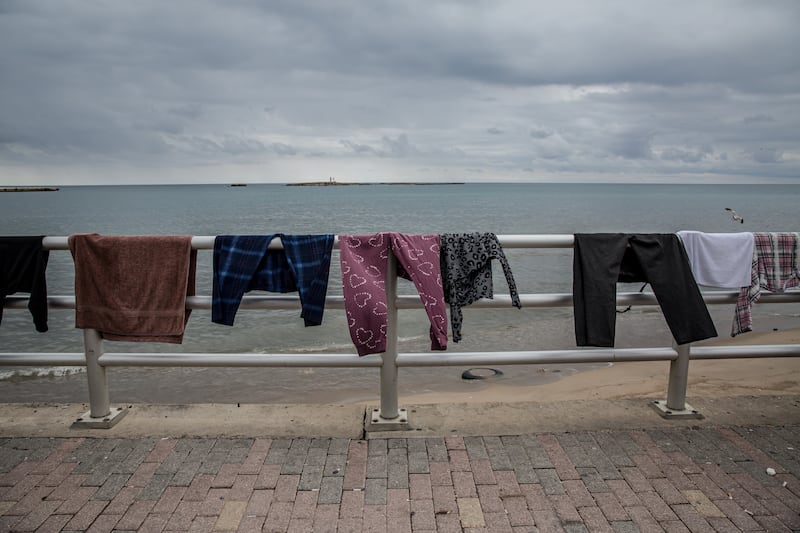 Clothing owned by displaced people hangs out to dry on the seafront in Saida, southern Lebanon. Photograph: Sally Hayden
“Hizbullah is protecting us now, we don’t trust anyone, not the president, not the prime minister,” says another member of the same family called Ali (38). He pulls up a picture on his phone of his neighbours – a family with four children – who he says were just killed by an Israeli strike. He says there is no possibility any more of a “handshake” with Israel. The best Lebanese people can hope for is no “communication, no tourism, you stay in your land and we stay in our land. But we don’t believe that will happen, we cannot trust it.”