
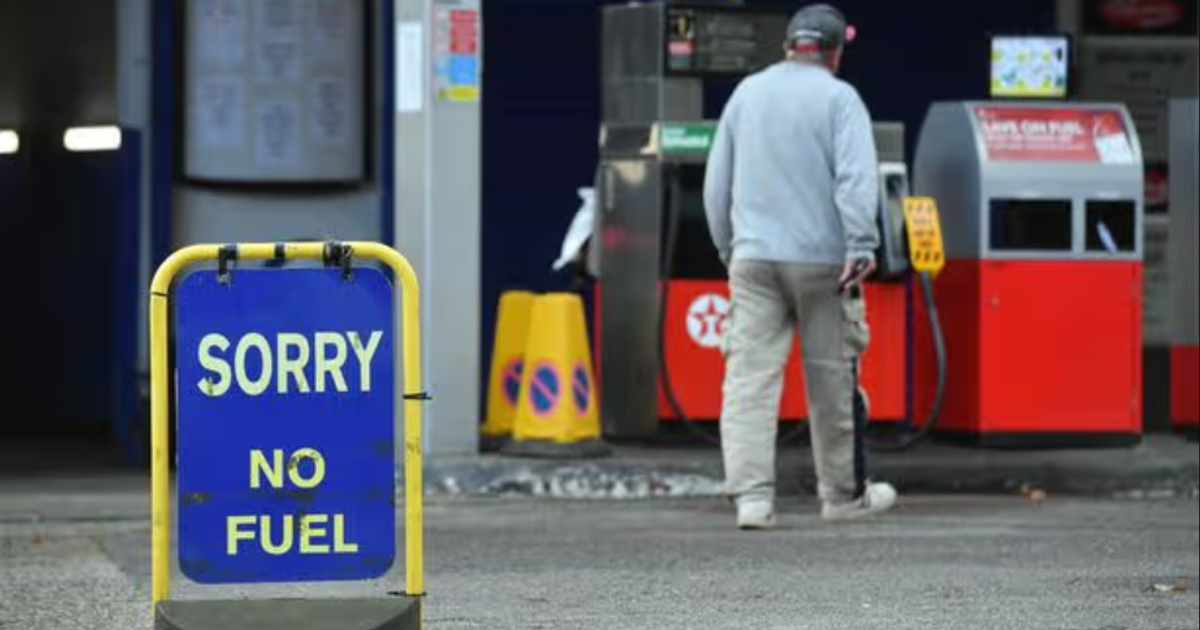
The strain comes as South Africa, heavily reliant on fuel imports, faces rising costs linked to disruptions around the Strait of Hormuz.
President Cyril Ramaphosa said the government is exploring measures to cushion the impact, citing Central Energy Fund estimates that petrol could rise by about R5 per litre (≈$0.25) and diesel by around R8 per litre (≈$0.40) from April 1.
Finance Minister Enoch Godongwana is also concerned about the surge, driven by Middle East tensions, higher oil prices, and a weaker rand.
Business Tech reports that some fuel stations may be deliberately withholding stock to sell at inflated prices once the hike comes into effect.
Siganeko Magafela, head of security of supply at the Fuels Industry Association of South Africa, explained, “The logistics can’t keep up with the demand at the service stations currently. Some companies are reporting the demand [for volumes] is three times more than they normally [handle].”
“While depots still have fuel available, delivery systems are under strain, and forecourts are bearing the brunt. “The chances of recovery in terms of the backlog are high… it’s just a matter of timing,” he added.
Global crises bite local markets
The shortage comes amid heightened concerns over international energy markets. Tensions involving Iran and the closure of the Strait of Hormuz, a critical oil shipping route, have sent shockwaves through global supply chains.
Despite sourcing most of its crude from Africa and the Atlantic basin, the country is heavily reliant on imported refined diesel from India, Oman, the UAE, and Saudi Arabia, making it vulnerable to global price shocks.
Dr Mark Burke, finance spokesperson for the Democratic Alliance, warned of the wider economic impact: “Petrol price increases will drive up taxi fares, they will drive up food prices and they will drive down growth. We need to protect South Africans from them, especially if the price we pay is less patronage.”
“Despite the heightened geopolitical risk, South Africa’s current petroleum supply security arrangement remains robust,” he told Parliament, noting that overall supply remains stable despite panic buying at forecourts.
The crisis highlights why many African nations are disproportionately affected by global energy shocks: dependence on imported refined products, coupled with local logistical bottlenecks, leaves consumers exposed to sudden price surges even when domestic crude supply is secure.