SINGAPORE – New Integrated Shield Plan (IP) rider premiums, which cost 35 per cent to 40 per cent lower on average, will help break the cycle of over-servicing, over-consumption and rising costs, making private healthcare sustainable in the long term, said Health Minister Ong Ye Kung.
“For many, the premiums saved every year will be more than enough to offset the higher co-payment for the occasional hospitalisation episode,” he said in a Facebook post on April 1.
“The new IP riders continue to serve their main objective – to protect ourselves against very large bills due to catastrophic health episodes.
“This is a meaningful step to unravelling the IP rider Gordian knot.”
All seven IP insurers launched new riders on April 1 to meet the Ministry of Health’s (MOH) new requirements, which bar them from covering the minimum deductibles set by the ministry, and double the co-payment cap to $6,000.
In response to media queries, MOH said it welcomes the introduction of the new riders, in which premiums have been lowered by around 35 per cent to 40 per cent compared with legacy riders – existing riders that do not meet MOH’s requirements and whose sales have been ceased from April 1.
The reduction in premiums could be as much as 68 per cent, according to MOH.
All Singaporeans are insured under the national MediShield Life scheme, which covers expenses from hospitalisation and certain outpatient treatments such as radiotherapy and kidney dialysis.
An IP is an optional health coverage provided by private IP insurers on top of MediShield Life, typically to cover stays in A- or B1-type wards in public or private hospitals.
On top of the IP, insurers sell riders, which are generally meant to cover the patient’s share of the bill – the deductible and the remainder of the bill not covered by MediShield Life and IPs.
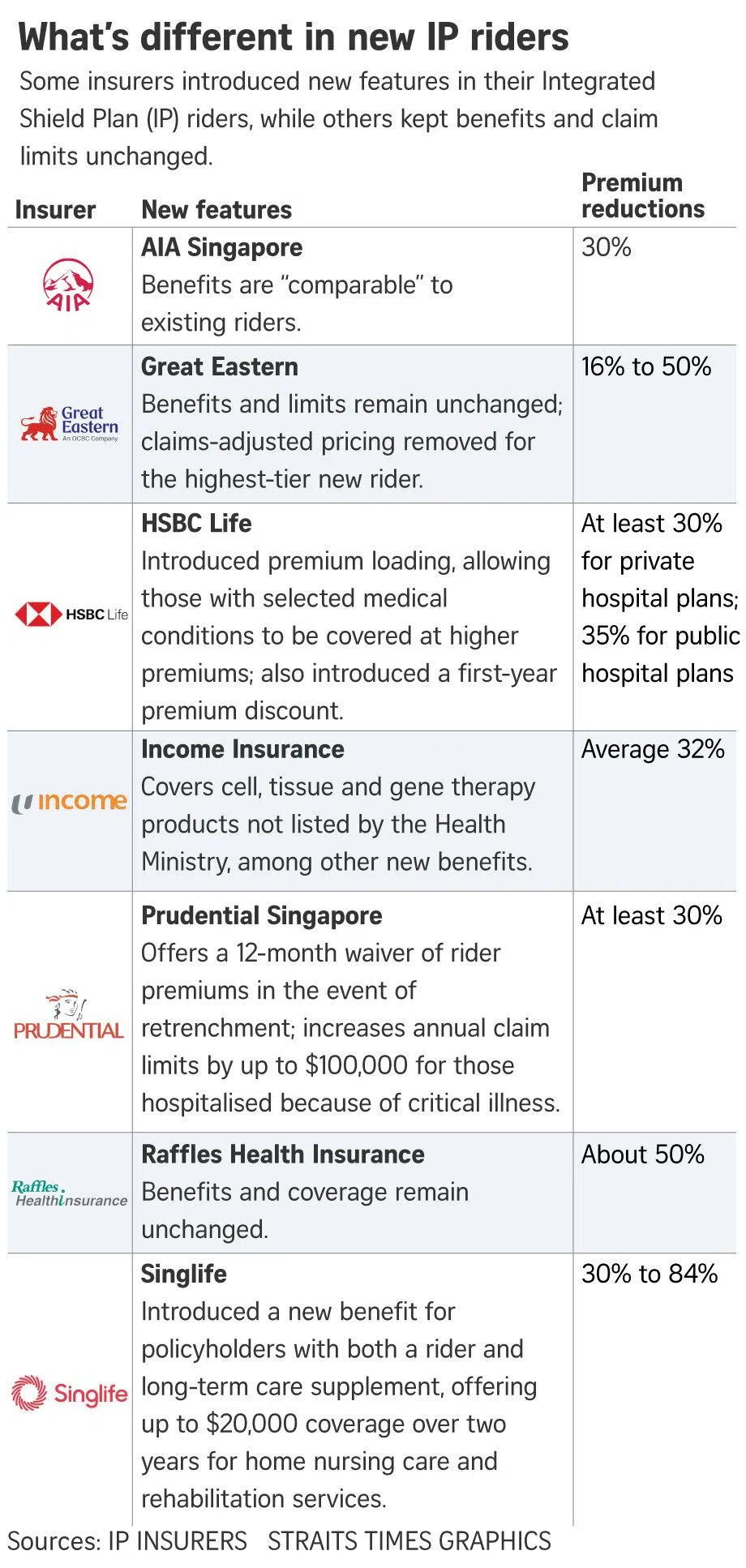
Based on insurers’ responses to The Straits Times, the new riders are 16 per cent to 84 per cent cheaper than previous versions. The figures compared each insurer’s new product with one of its existing products of similar coverage.
MOH told ST that its figures of 35 per cent to 40 per cent savings, and maximum savings of 68 per cent, refer to the weighted average of savings across all insurers. This is derived from calculations that assign weightage based on the number of policyholders that each insurer has on its respective private hospital riders with maximum coverage.
This means an insurer with more policyholders on the maximum-coverage riders will be assigned a larger weighting when calculating the weighted average premium reduction.
MOH said the new riders continue to provide consumers with peace of mind by maintaining good protection against catastrophic medical expenses.
It also reiterated that IP rider policyholders can continue to tap their MediSave to offset the co-payment amounts for their hospital bills, up to the withdrawal limits.
Mr Ong said IP riders that are too generous will undermine cost discipline and drive up private healthcare costs and premiums.
He reiterated his previous call for Singaporeans to speak to their financial advisers on the new rider options.
“These changes ensure that healthcare remains accessible while putting private health insurance on a more sustainable footing for everyone,” said Mr Ong, who is also Coordinating Minister for Social Policies.