
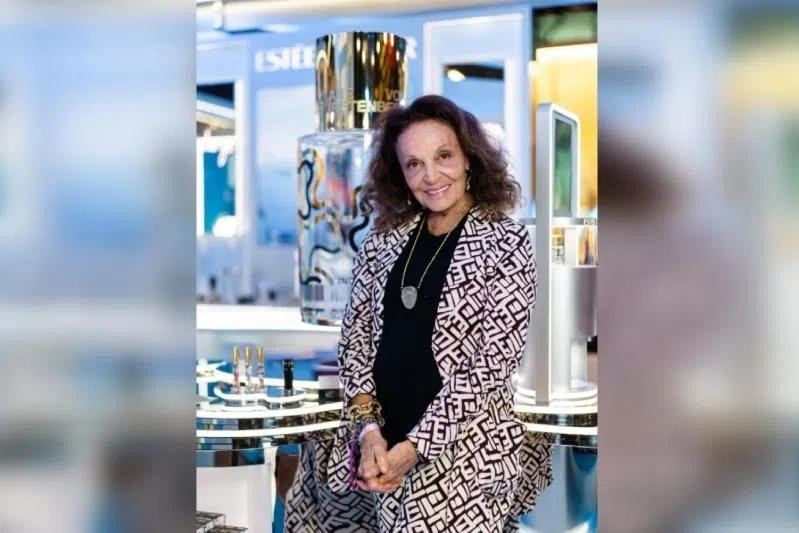
SINGAPORE – Diane von Furstenberg is modest when we meet.
Seated on an enormous white couch in the parlour of a Singapore Edition suite, the Belgian fashion designer and modern-day inventor of the wrap dress is eager to disavow responsibilities at her namesake fashion brand, which she took back control of from a Chinese company in 2024.
“I don’t know if I’m running it. I try to pretend I’m not,” she says.
The self-effacement is odd for a woman who has built a personal brand around being at the helm. The 2024 Hulu documentary of her life is titled Woman In Charge, her advocacy platform and podcast are named InCharge, and she wears a gold and diamond InCharge necklace.
The one word epithet is also the name of her new Estee Lauder beauty collection that she was in town on March 31 to promote, for which a pop-up at Changi Airport will be open till April 9.
In the 20-minute audience she grants to The Straits Times, it emerges that the endearing inconsistency is pure von Furstenberg – in keeping with her life’s epic contradictions.
The 79-year-old is the child of Holocaust survivors who married a German prince, and the creator of a dress both sexy and proper.
The wisdom of a front-opening wrap dress, with ties at the waist for a cinched middle, was a minor revolution in dressmaking. Flirty yet professional enough to become the career dress of the 1970s, it codified the feminine and feminist values of the time.
You believe her when she says she craved success, “to be in charge”, as a little girl, but never planned for it.
She has sold 15 million to 20 million wrap dresses in the last 50 years though she never studied design, picking up the trade in the factories of Italian garment-maker Angelo Ferretti in her early 20s.
Then, she discovered New York on a visit to the United States to see her former husband and then boyfriend, the late Prince Egon von Furstenberg. She returned with a suitcase of dress samples.
Politely dismissed in the papers as a Park Avenue princess at first, her eureka moment came when she saw former US president Richard Nixon’s daughter defending him during Watergate in a DVF wrap top and skirt.
Diane von Furstenberg had only to join the pieces in 1974 to become a sensation by 27.
She says: “The dress was what gave me independence. It made me buy my house in the country and my apartment. It became like the flag of my freedom, but because it was a dress that women could buy and that was not too expensive, it became their flag of freedom too.”
Now in the dress’ 52nd year and her approaching 80th, the fate of that banner is up in the air.
The pandemic-era retail slump shuttered the brand’s British and French operations, and 18 out of the 19 US stores. In 2024, The New York Times ran a feature questioning the dress’ cultural lifespan.
And von Furstenberg’s granddaughter, Ms Talita von Furstenberg, who had reportedly been earmarked for succession, has since left the business.
“She got a little burned, but I’m sure she will be okay eventually,” says the designer, who has two children.
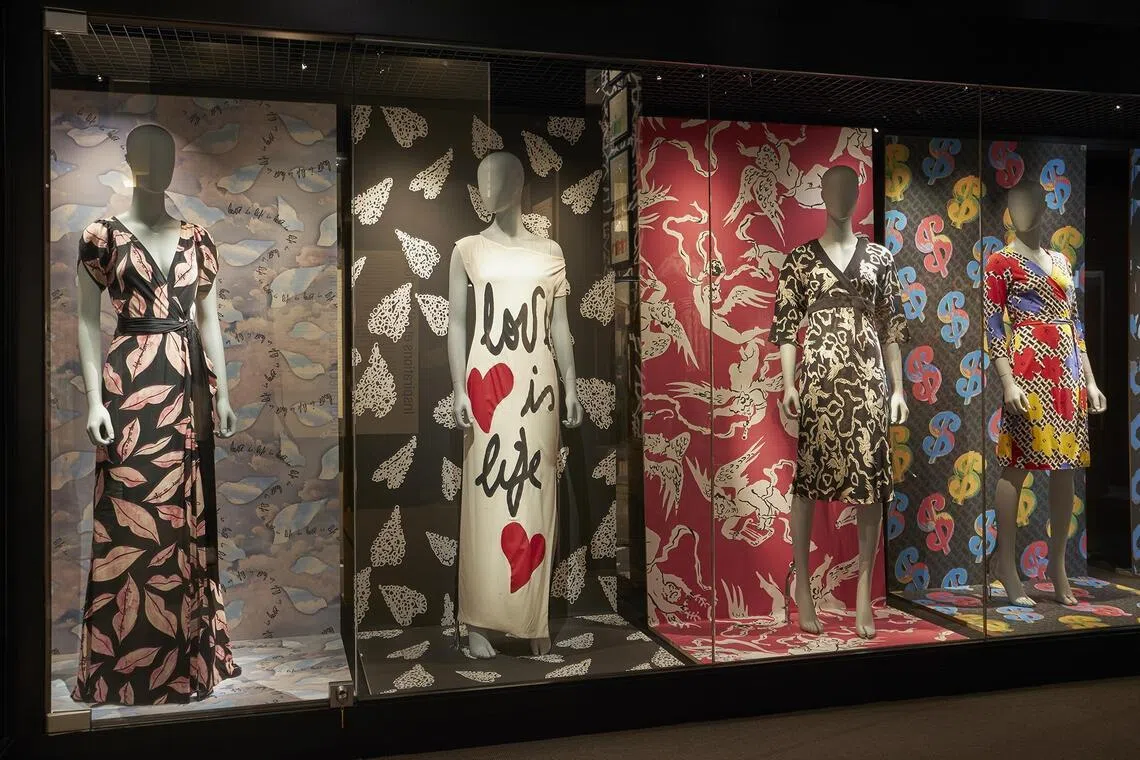
DVF wrap dresses at the Fashion & Lace Museum, Woman Before Fashion show in 2023.
PHOTO: FASHION & LACE MUSEUM
She glances over these bumps with no discernible resentment. The wrap dress had already been resurrected once anyway, when she relaunched the company in 1997, after noticing that a new generation of young women had rediscovered the three-quarter-sleeved jersey sheaths in their mothers’ closets.
This much coveted demographic was one she had never dreamt of reaching. Fashion is mysterious like that, and the mystifying longevity of the dress proves there is something special about it.
It is a hardy dress that can be handed down two, even three times. “A hundred per cent silk jersey, you can’t destroy it.”
A young staff designer has since told her it could be a party dress, another head-scratcher for von Furstenberg.
But marketing to Gen Z rubs her the wrong way, says von Furstenberg. “It just always feels a little fake.”
The very idea of “marketing” feels offensive when her true campaign is to have women be themselves, doing what they like, without having their tastes manipulated.
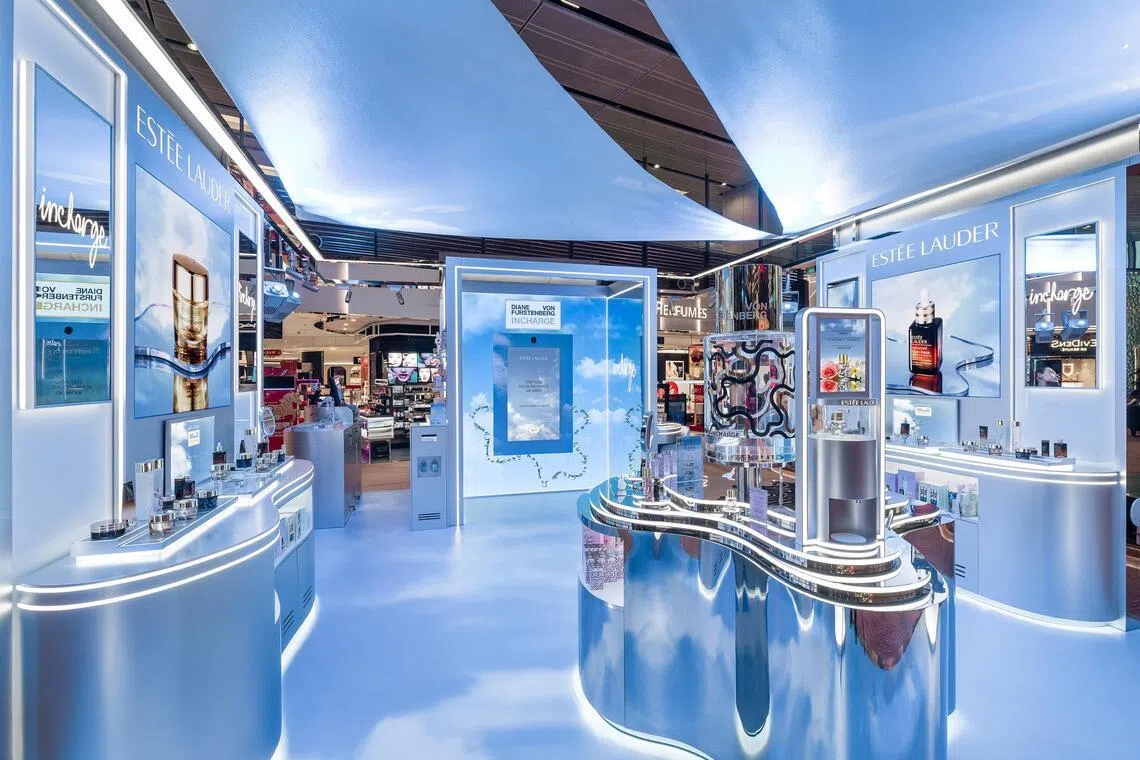
InCharge Own Your Journey outpost at Changi Airport.
PHOTO: ESTEE LAUDER
The topic of legacy feels like a layered one for the designer.
On the one hand, von Furstenberg is reckoning seriously with the dress’ significance now, having returned to the company at what she calls her “ridiculous” age to “design its legacy” – a rescue job after outside management overdosed on commercialism at the expense of quality.
On the other hand, she rolls her eyes at the cliched assumption that what she dubs “the little dress” is the sum of her.
“For a long time, I said, ‘Okay, okay, I’ve done this and that, why always the wrap dress?’”
But to meet von Furstenberg, who in 2015 was named an icon by Time magazine, is also to realise that her most brilliant invention is her personality.
Her family calls her the oracle, or the goat – presumably a play on the symbol of her star sign Capricorn and Gen Z slang for “Greatest of All Time”.
In throwaway lines, she paints with broad strokes a Balinese love affair in the 1980s, when she fell in love with a Brazilian man “in a wooden house” for whom she conjured a perfume, Volcan d’Amour (Volcano of Love).
She sold her cosmetics company just as it was released, “so it was a volcano that never erupted”, she says.
Her beauty take two with Estee Lauder Companies arose from an invitation by the group’s chief executive Stephane de La Faverie to collaborate. The pair met when he was awarded a prize by Vital Voices, a non-profit for women that von Furstenberg sits on the board of.
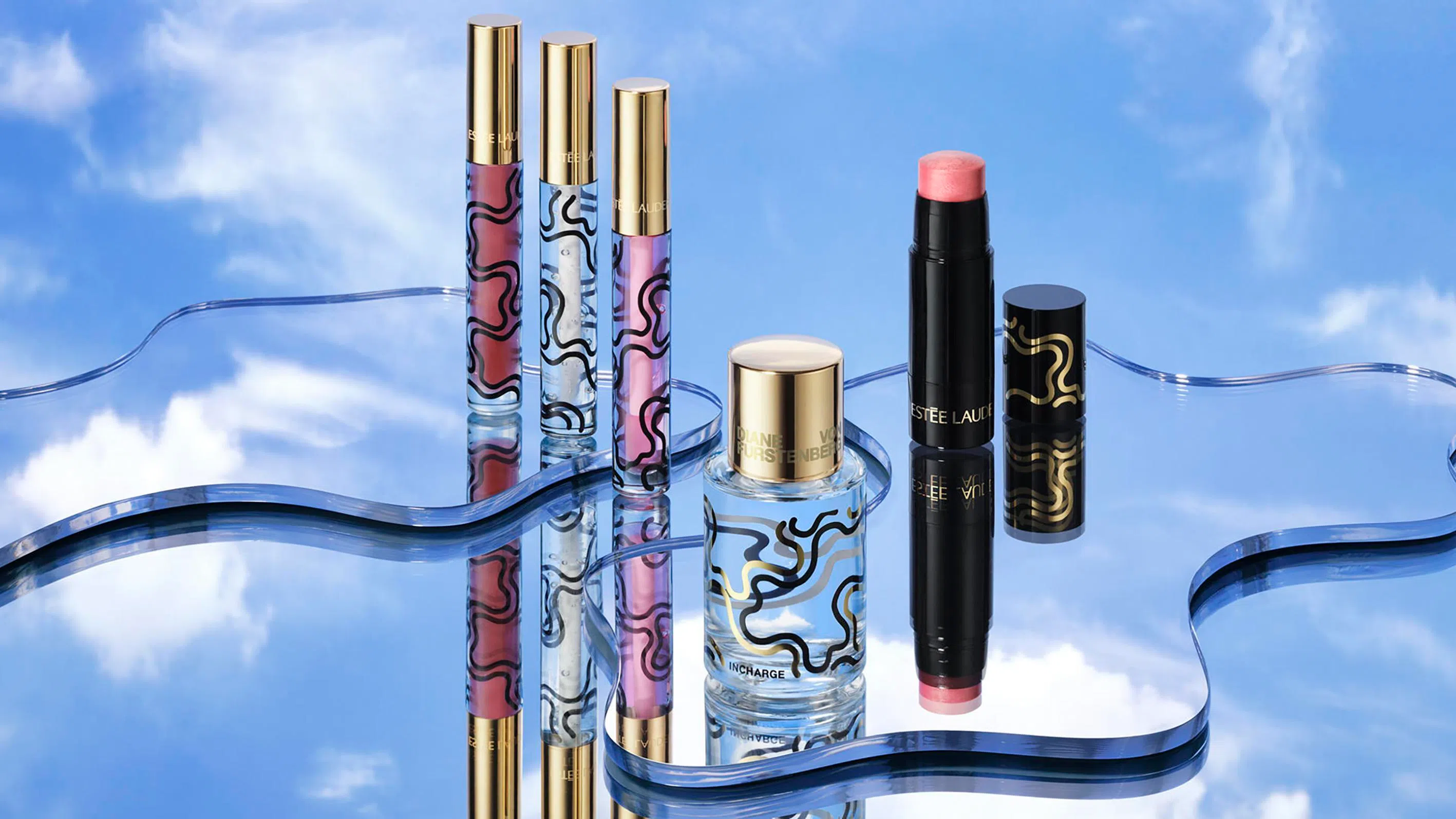
(From left) InCharge trio of lip oils, Essence d’Eau water-based perfume and blush stick.
PHOTO: ESTEE LAUDER
She invited him to her office and gave him the rundown of her history with beauty. A water-based perfume she had worked on in the past but never released became the InCharge Essence d’Eau ($134) in the collection.
The collection also includes a trio of lip oils ($58) and a blush stick ($45), which von Fursternberg – with her mighty cheekbones – considers the most important piece of make-up one can have.
For someone launching a beauty collection, she is also unusually frank about age, repeatedly calling herself “very old”. She finds the current panic around wrinkles and signs of wear pathetic, she says.
“Even a bump on a piece of furniture is a reflection of something. So yes, you try to be as fresh and healthy as possible and whatnot. But I would hate to look like somebody else.
“I prefer to be me than not be me.”
Besides, ageing has its perks for a woman in charge. “You have many, many, many more layers right?” In her 20s, she simply acted the part, kitted out in the right clothes and the right attitude. With time, the act has become obsolete.
“You fake it till you make it. And then, you make it.”