
Almost three dozen countries will hold a virtual meeting on Thursday in an effort to exert diplomatic and political pressure to reopen the Strait of Hormuz, a vital shipping route that has been choked off by Iran after the US and Israel struck the Islamic Republic on February 28.
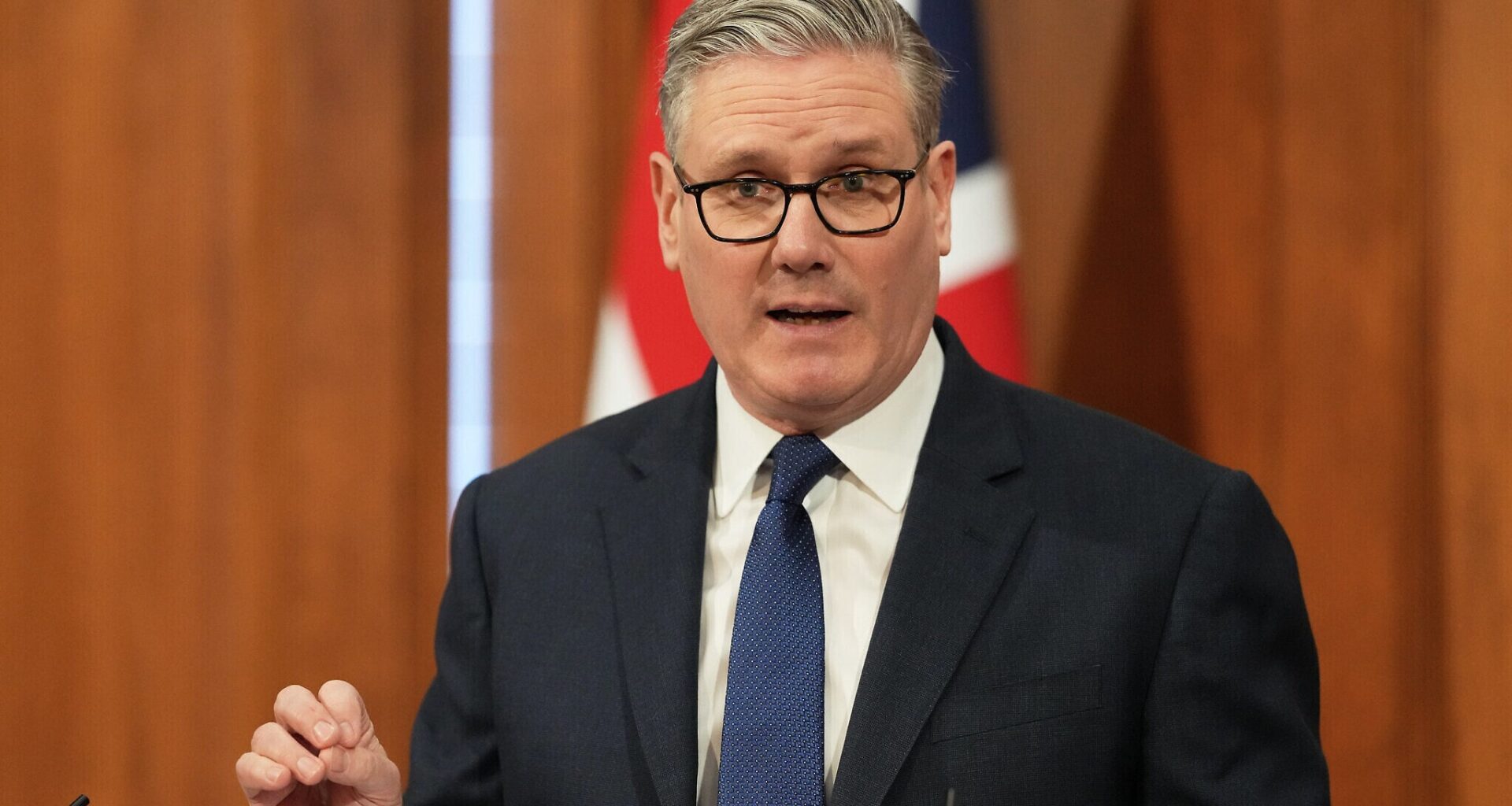
British Prime Minister Keir Starmer said the meeting, chaired by Foreign Secretary Yvette Cooper, “will assess all viable diplomatic and political measures we can take to restore freedom of navigation, guarantee the safety of trapped ships and seafarers and to resume the movement of vital commodities.”
Iranian attacks on commercial ships, and the threat of more, have halted nearly all traffic in the waterway that connects the Persian Gulf to the rest of the globe’s oceans, shutting a critical path for the world’s flow of oil and sending petroleum prices soaring.
A fifth of the world’s oil and liquefied natural gas passes through the strait.
The US is not among the countries attending Thursday’s meeting.
Get The Times of Israel’s Daily Edition
by email and never miss our top stories
By signing up, you agree to the terms
Trump had singled out Britain and France as unhelpful in the month-long war.
“All of those countries that can’t get jet fuel because of the Strait of Hormuz, like the United Kingdom, which refused to get involved in the decapitation of Iran, I have a suggestion for you: Number 1, buy from the U.S., we have plenty, and Number 2, build up some delayed courage, go to the Strait, and just TAKE IT,” Trump said in a Truth Social post on Tuesday.
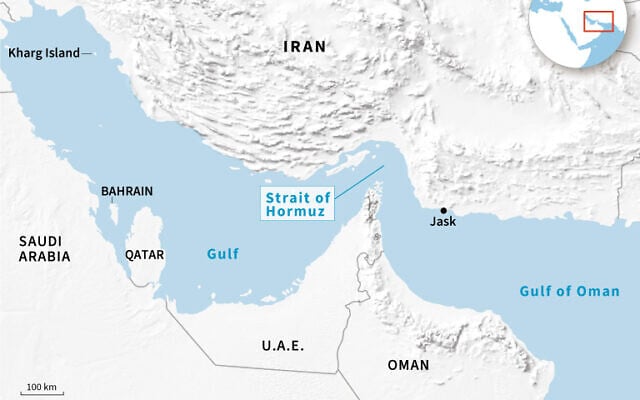
A map of the Gulf locating the Strait of Hormuz and the ports of Jask and Kharg Island in Iran. (Laurence SAUBADU/AFP)
“You’ll have to start learning how to fight for yourself, the U.S.A. won’t be there to help you anymore, just like you weren’t there for us. The hard part is done. Go get your own oil!”
No country appears willing to try and open the strait by force while fighting rages, and Iran can target vessels with anti-ship missiles, drones, attack craft and mines. But Starmer said Wednesday that military planners from an unspecified number of countries will meet soon to work on how to ensure security for shipping “after the fighting has stopped.”
Thursday’s meeting is considered a first step, to be followed by “working-level meetings” of officials to hammer out details.
Starmer said resuming shipping “will not be easy,” and will require “a united front of military strength and diplomatic activity” alongside partnership with the maritime industry.
In the meantime, 35 countries, including the UK, France, Germany, Italy, Canada, Japan and the United Arab Emirates, have signed a statement demanding Iran stop its attempts to block the strait and pledging to “contribute to appropriate efforts to ensure safe passage” through the waterway.
Last week, Cooper urged a “swift resolution” to the Middle East war, accusing Iran of holding the global economy hostage by blocking shipping through the strait, ahead of a meeting of G7 foreign ministers in France attended by US Secretary of State Marco Rubio.
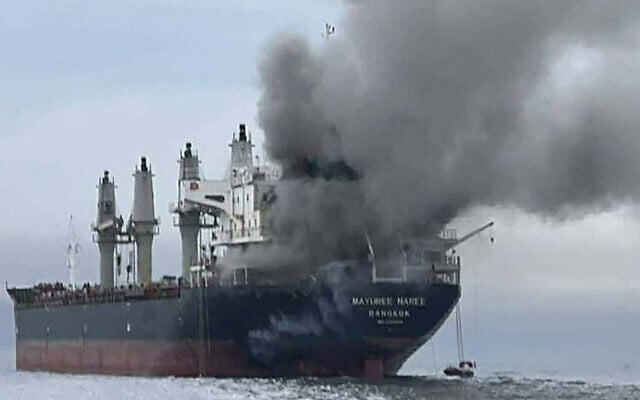
This handout photo taken on March 11, 2026, and released by the Royal Thai Navy, shows smoke rising from the Thai bulk carrier ‘Mayuree Naree’ near the Strait of Hormuz after an attack. (Handout / Royal Thai Navy/AFP)
Ebrahim Azizi, head of the Iranian Parliament’s National Security Commission, warned on Wednesday that the US will not regain access to the Strait of Hormuz and that from now on only “those who comply” with Iran’s terms will be allowed to pass vessels through the key strait.
“The Strait of Hormuz will certainly reopen, but not for you; it will be open for those who comply with the new laws of Iran,” Azizi wrote on X, without elaborating on what these new terms are.
“The 47 years of hospitality are over forever,” he added.
The international effort idea has echoes of the international “coalition of the willing” that has been assembled, led by the UK and France, to underpin Ukraine’s security after a future ceasefire in that war. The coalition is, in part, an attempt to demonstrate to the Trump administration that Europe is stepping up to do more for its own security.
The urgency of stronger continental defenses has been reinforced by Trump’s renewed suggestion that the US could pull out of NATO.
Bahrain at the UN
Meanwhile, Bahrain’s effort to secure a UN resolution to authorize “all necessary means” to protect commercial shipping in and around the Strait of Hormuz ran into new obstacles Wednesday, underscoring divisions over how to deal with Iran’s effective closure of the waterway that has resulted in the worst energy-supply disruption ever.
Bahrain, which took over the presidency of the 15-member UN Security Council for the month of April, had circulated a fresh version of a draft resolution that dropped a previous explicit reference to binding enforcement, hoping to overcome objections from other nations, particularly Russia and China.
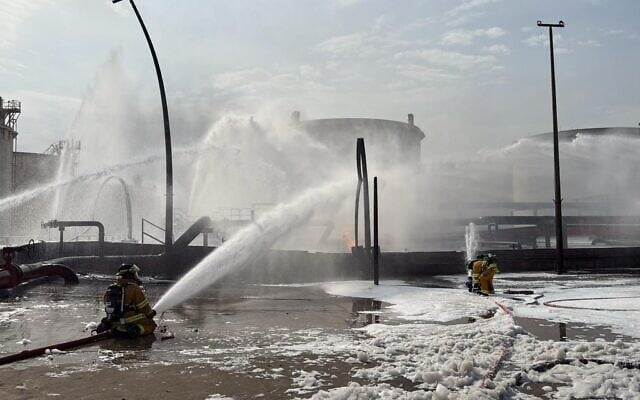
Illustrative: This image released by Bahrain’s Interior Ministry shows firefighters extinguishing flames after an Iranian projectile struck an industrial area in Ma’ameer, Bahrain, Monday, March 9, 2026. (Bahrain Interior Ministry via AP)
But a UN diplomat said China, Russia and France raised issues with the new draft before it would have gone into final form at noon on Wednesday under a so-called silence procedure – where a resolution is adopted if no member objects.
Bahrain’s UN ambassador Jamal Fares Alrowaiei told reporters the resolution still required “a lot of work.”
Major Gulf and Western powers still do not have a concrete plan to reopen the waterway, which has been effectively shut since the conflict began a month ago, sending energy prices soaring. Roughly one-fifth of the world’s oil and gas normally transits the crucial strait.
“There are ongoing communications and discussions with the Council members to bring a convergence of views and find a draft that can garner consensus, so that it can be adopted soon,” Alrowaiei said.
You appreciate our wartime journalism

You clearly find our careful reporting of the Iran war valuable, at a time when facts are often distorted and news coverage often lacks context.
Your support is essential to continue our work. We want to continue delivering the professional journalism you value, even as the demands on our newsroom have grown dramatically during this ongoing conflict.
So today, please consider joining our reader support group, The Times of Israel Community. For as little as $6 a month you’ll become our partners while enjoying The Times of Israel AD-FREE, as well as accessing exclusive content available only to Times of Israel Community members.
Thank you,
David Horovitz, Founding Editor of The Times of Israel