
It says everything about the moon and its mysteries that nobody has seen, with their own eyes, the whole of the far side. We had no idea what much of it looked like until a Soviet probe sent back pictures in 1959. But, if all goes to plan, this gap in our lunar experience will soon close. When Nasa’s Artemis II mission flies around the moon, its four crew members will become the first people to observe the entirety of its reverse hemisphere, with Earth’s sole natural satellite appearing “roughly equivalent to a basketball held at arm’s length”. This is not the most poetic image the space agency has ever conjured up, but the moon can take it – it’s been compared to worse things.
We have never quite been able to get a handle on the moon. From Earth, we only see one side, but in our culture, it has two faces. It is constant yet variable, beautiful yet harsh, magnificent yet desolate. It represents both distance and proximity, stability and instability, the order of time and chaos of the mind, wild fantasy and dull cliche. It is brilliant in the night sky, but emits no light of its own. To some, a full moon means a broken night’s sleep; to others, it signifies a beach party.
Our neighbour is a rock on which 12 men have walked, but it is also a celestial body that has retained its secrets. Emily Dickinson personified it as an elusive stranger – the Lady in the Town – in her poem I Watched the Moon Around the House. James Joyce referred to the “inscrutability of her visage”. Alan Shepard, fifth man on the moon, thought it “a neat place to whack a golf ball”. We are simultaneously obsessed and bored by it. This occasionally faint smudge, this basketball in the window of a crew capsule, is not Earth, yet it came from it, and it is inching away from us even as we try to reach it again.
On a forlorn morning last November, I found myself on Neil Armstrong Way. This was not the stuff of science fiction, just a drizzly Sunday in Tralee. The parkland path bears a monument dedicated to “an chéad fhear” (the first man) and helpful signage explaining how the town pulled off the “extraordinary coup” in 1997 of persuading the lesser-spotted Armstrong to open an exhibition about space flight at Kerry County Museum. “By walking on this path, never forget that you are walking in the footsteps of the man who took the first footsteps on the moon,” it reads.
There is an absurdity to this instruction. Still, umbrella up, I followed the leaf-strewn path, thinking that for all Armstrong had to contend with in July 1969 – alarms going off in the lunar module, fuel running low as he flew over uneven terrain – at least there was no rain on the moon.
And yet, daftly, the bleakness of the day contrived to make the park more evocative of the so-near-yet-so-far moon than grander tributes I have sought out. The Moonwalkers: A Journey with Tom Hanks is an immersive exhibition that renders the Apollo voyages in dazzling, Instagram-worthy visuals. It’s got nothing on the unexpected bathos of stumbling across the fact that the late Armstrong, a space pioneer of unusual stoicism, was once awarded the freedom of Tralee.
Irish lunar content is not new. Carvings at Knowth, the neolithic passage tomb in Co Meath, are thought to show the phases of the moon. One stone believed to illustrate the moon’s maria – its “seas”, or solidified lava plains – is estimated to date back 4,800 years, making it the oldest-known lunar map in the world.
These vast, dark plains create the “man on the moon” effect. Despite that gendering, the “moon lore” derived from millenniums of moongazing often codes the moon as feminine. Artemis, sometimes called Phoebe or Cynthia, was a Greek goddess associated with the moon, while Selene was its personification. Their equivalents in Roman mythology were Diana and Luna, the Latin word for moon.
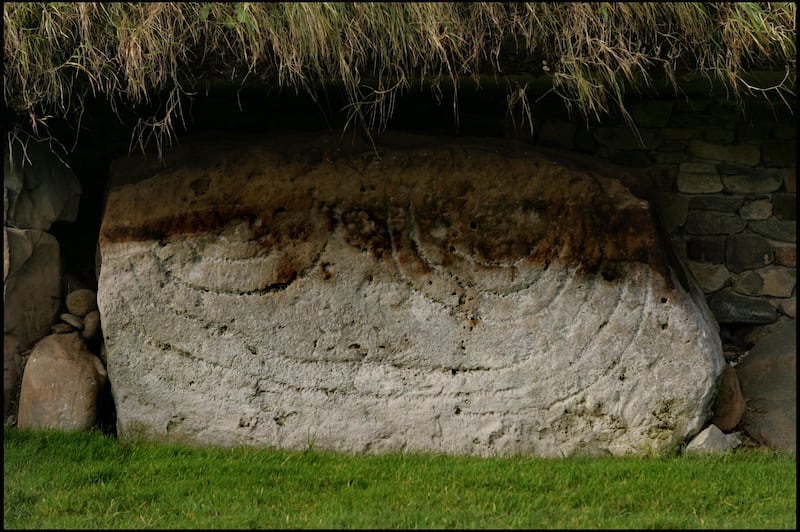 Carvings at Knowth, the neolithic passage tomb in Co Meath, are thought to show the cycles and phases of the moon. Photograph: David Sleator
“Lunatic” and “lunacy” duly derived from ancient beliefs that the moon could induce people to madness. The potency of these “moonstruck” myths shouldn’t surprise us, given the moon’s prominence. Its phases have given us a unit of time, its gravitational pull is the dominant influence on our tides and a coincidental ratio gives it the power to fully eclipse the sun. A little folkloric imagination, or a spot of illusory correlation between its appearance and our behaviour, seems understandable.
In the surreal whimsy of Italo Calvino’s 1965 short story The Distance of the Moon, the moon has a scaly underbelly that can be touched from the top of a ladder. This dream-like fable sprang from the knowledge that the moon was once much closer to Earth, though not, sadly, somewhere you could leap in pursuit of “moon-milk”. In the moon’s young life – the reigning formation hypothesis is that a Mars-sized object crashed into Earth 4.5 billion years ago, flinging out debris – our planet spun more rapidly on its axis than it does now. Days were short. Through its tidal interaction with Earth, the moon slowed us down and gained the energy to move into a higher orbit. It continues to drift away by 3.8cm a year.
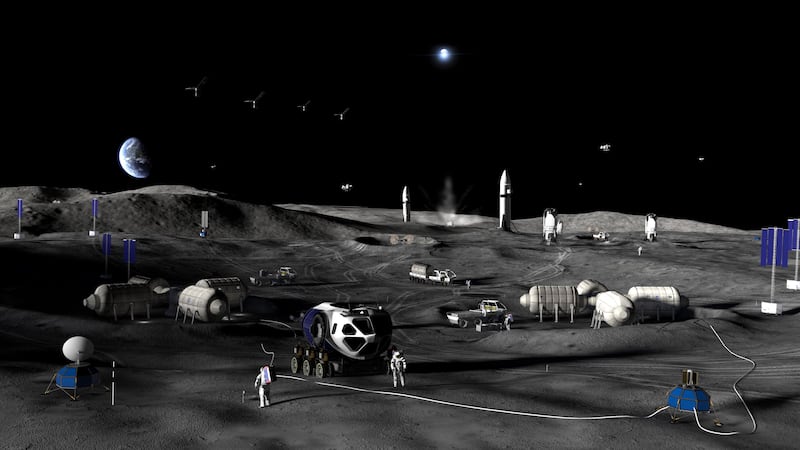 An artist’s concept of phase three of Nasa’s proposed moon base as leaders of the space agency set out specific plans and timelines for the next decade. Photograph: Nasa via The New York Times
Conditions on the moon mean it has preserved billions of years of impacts from passing asteroids, meteoroids and comets; Nasa describes its surface as “a cosmic guestbook”. This makes the moon a pockmarked reminder of the fragility of life. But without the moon it is unlikely we would be here at all. The giant impact that formed it is thought to have led to the 23.5 degree tilt in Earth’s axis that gives us our seasons. The presence of the moon keeps that tilt stable. Without it, Earth’s “wobble” could become erratic and extreme.
And yet wobbly is also what the moon has made us. During the Blitz, full moons were ominous because bombers used their illumination to identify targets. “It’s not safe to be out alone when the moon is so bright,” is the first and last thing Stefan (Anton Walbrook) tells Carol (Sally Gray) in the film Dangerous Moonlight (1941). In Mysterious Kôr, Elizabeth Bowen’s 1944 story, full moonlight drenches London with “remorseless” effect. The city resembles “the moon’s capital – shallow, cratered, extinct”, Pepita thinks, while Callie, parting her blackout curtains, comes “face to face with the moon” as one might with an enemy. Conversely, as exemplified by the 1939 song They Can’t Black Out the Moon, moonlight in this era was a recurring musical motif symbolising resilience and romance.
Beyond wartime, the moon’s cultural resonance has waxed and waned in response to advances in astronomy. Invented 200 years earlier, telescopes underwent technological transformations in the 19th century, inspiring all sorts of fiction: in the Great Moon Hoax of 1835, New York newspaper The Sun published six articles claiming the English astronomer Sir John Herschel had discovered a “chain of 30 to 40 obelisk-shaped pyramids”, hordes of bison-like quadrupeds and “flocks of large winged creatures”.
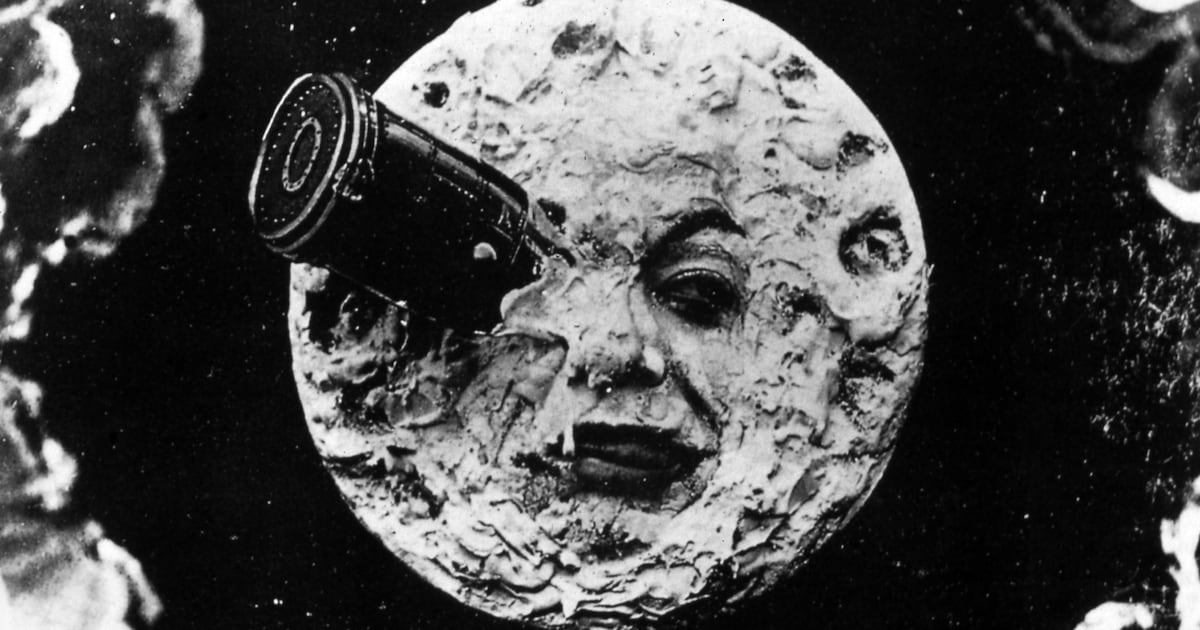
More soberly, Jules Verne, in his novel Auteur de la Lune (1869), depicted the moon as a place with “no appearance of a living world, everything of a dead one”. It was, he wrote, “an interminable Switzerland or Norway”. HG Wells, however, couldn’t resist aliens. In The First Men in the Moon (1901), two men travel “moonward” and are imprisoned by insect-like “Selenites” inside a hollow moon. Selenites also feature in Le Voyage Dans La Lune, a 1902 film by George Méliès that drew on both Verne and Wells – his moon is home to tall, Wells-esque mushrooms.
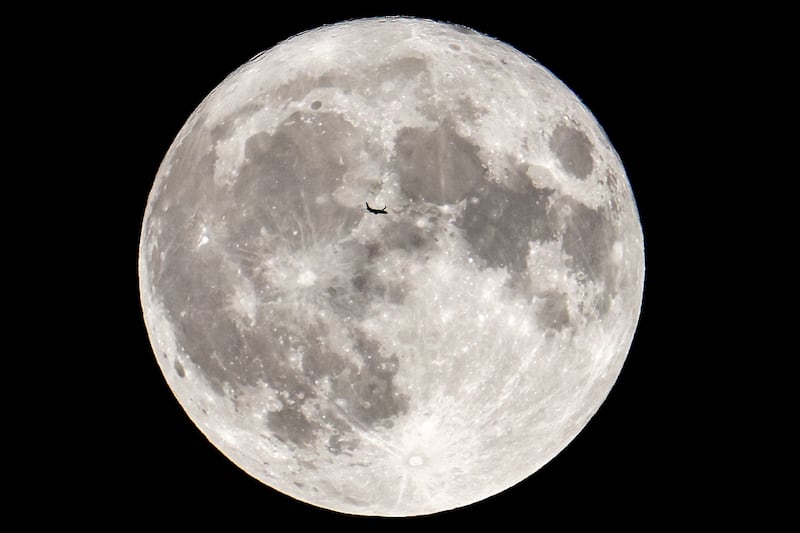 During the Blitz, full moons were ominous because bombers used their illumination to identify targets. Photograph: Charly Triballeau/AFP via Getty Images
When the space race began, lunar-themed fiction flourished. In Arthur C Clarke’s A Fall of Moondust (1961), the cruiser Selene vanishes into a “sea” of dust after a moonquake, which is all rather awkward for the Lunar Tourist Commission. This plot was conceived when there was “a very real fear” that a moon lander might sink, Clarke later said. Shortly before the Apollo missions, Robert A Heinlein published The Moon is a Harsh Mistress (1966), in which the moon has become a penal colony populated by “Loonies”. Luckily, they still have newspapers – one is called the Daily Lunatic.
Even after successive moon landings eroded the intrigue, novelists kept going back. As a child I loved Moonwind (1986), Louise Lawrence’s origin story for why early astronomers thought they saw clouds in the Mare Vaporum (Sea of Vapours); Gareth, a teen essayist who wins a prize of a stay on the moon, finds it “ruthless and lonely” but is agonised by his imminent return to Earth’s “mess”. In another young-adult novel from 1986, Paula Danziger’s This Place Has Atmosphere, the moon is a stand-in for any purgatory where parents might drag their kids. Aurora, separated from the earthbound boy she fancies, is dismayed that Luna City has no shopping malls. When she is brought to the plaque marking where Armstrong and Buzz Aldrin landed, she is grumpy: “The eagle has landed – that proves it. This place is for the birds.”
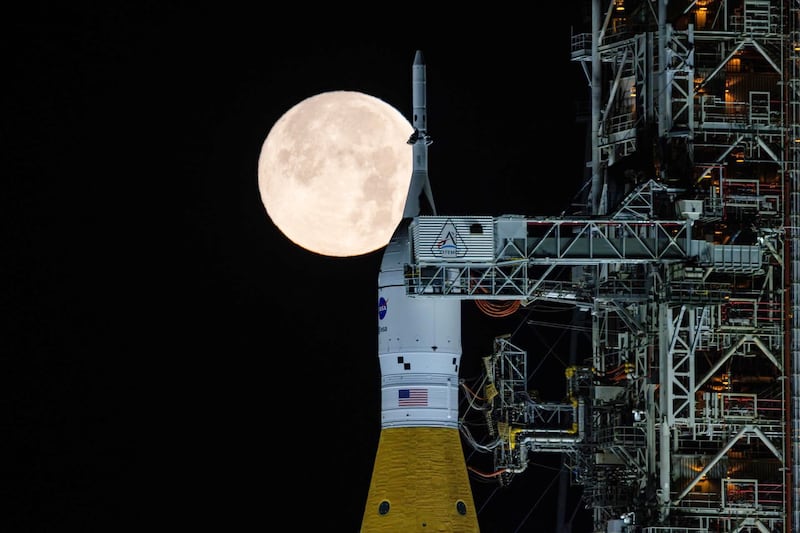 A full moon is seen behind Nasa’s space launch system at the Kennedy Space Centre in Florida. Photograph: Sam Lott/Nasa via AP
More recently, in Artemis (2017), Andy Weir presents a claustrophobic “bubble” city rife with inequality and corruption. But his is also a more fun vision of lunar inhabitation than most – in a nice reversal, his smuggler heroine, Jazz, spends much of her time trying to swerve deportation to Earth.
The moon is rarely a comfortable hangout on screen. It is the site of corporate duplicity and total detachment in Duncan Jones’s Moon (2009). In Damien Chazelle’s First Man (2018), a superb psychological portrait of Armstrong, it becomes the cratered outpost for his grief. With Earth in shadow, Chazelle conveys what Aldrin called “magnificent desolation” with a profound stillness, hinting at Armstrong’s subsequent disappointment when the urge to explore was lost.
Some 650 million people watched Apollo 11 land, but public jadedness soon took hold. In 1972, during the last of six moon landings, New York Times television critic John J O’Connor bemoaned the “barren moonscapes”, “scarcity of material” and “infrequent” moments of visual interest. We were over the moon, and not in the sense of being ecstatic. Claiming victory in the space race, the White House abandoned it.
[ Is For All Mankind the most overlooked series on TV?Opens in new window ]
Maybe it could have panned out differently. The Apple TV series For All Mankind (2019-) begins with terse Americans glued to their TV sets. They hard-stare as a suited-up man steps on the moon, then speaks Russian. The Soviets have got there first. The clever call in this alternate history is that losing puts a rocket under the Nixon administration and by 1973 Nasa astronauts are already finding ice in the Shackleton crater and establishing the first lunar base – an actual target for Artemis missions of the future.
Unromantic competition with China has motivated real-life acceleration in Nasa’s lunar ambition. But will its planned return to the surface in 2028 re-enchant us with the moon? Photographs taken with a telephoto lens can massively exaggerate its size in the sky. Perhaps these images reflect a desire for the moon to assume a bigger role in our lives than it already does. A geologist’s playground, an elite retreat or a staging post to a new frontier? It may be lunacy, but we haven’t stopped shooting for the moon.