
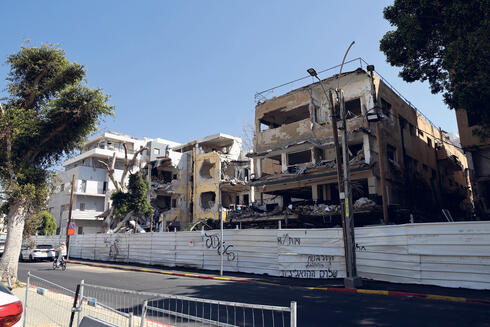
Nine months after Iranian missiles tore through some of Israel’s densest urban centers, the destruction remains not only visible but largely untreated. Across multiple cities, homes stand abandoned, businesses remain shuttered, and entire neighborhoods are frozen in the aftermath, exposing a reconstruction system that was unprepared for the scale of the damage and has struggled to respond ever since.
A Calcalist examination of reconstruction efforts at sites damaged during the previous round of fighting in June 2025 shows that the state was not only unprepared to handle large-scale property damage, but is also struggling to draw lessons and improve. Hundreds of families who were forced to leave their homes nine months ago have yet to receive meaningful assistance. In some locations, including major commercial centers, the areas surrounding missile impact sites remain scarred and neglected, little changed since the day they were hit. Visiting the hardest-hit areas in Bat Yam, Ramat Gan, Tel Aviv, Be’er Sheva, and Rehovot makes it difficult to reconcile the reality on the ground with the government’s narrative of recovery.
3 View gallery
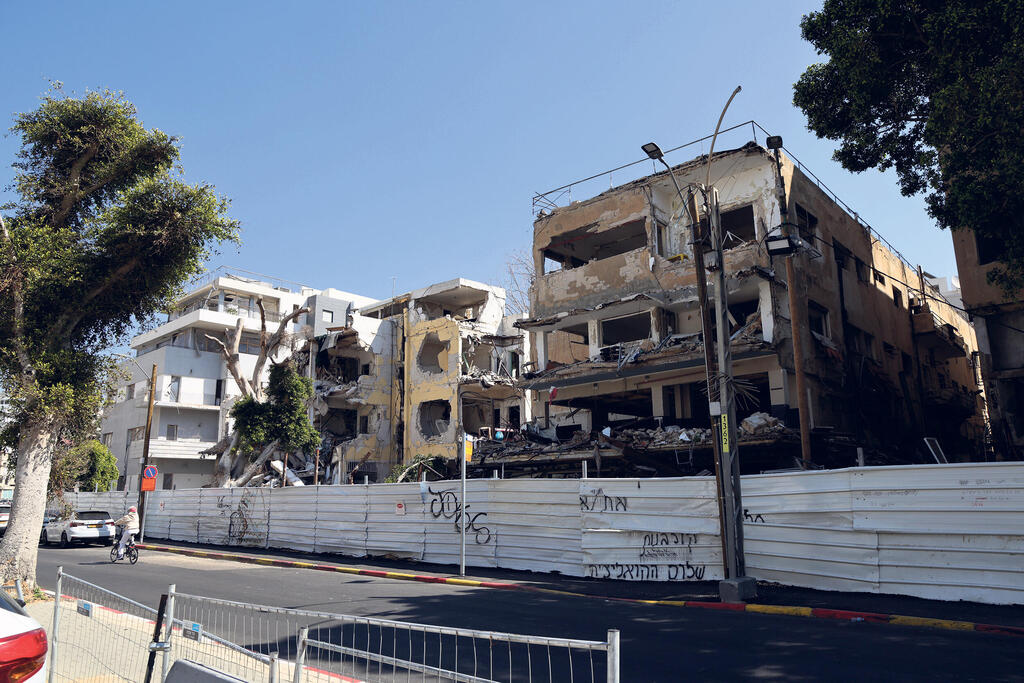
Remains of buildings damaged in June at the corner of Pinsker & Allenby streets in Tel Aviv
(Yariv Katz)
Even after it became clear that the existing property tax compensation framework was inadequate for the new scale of damage, the government continued to respond slowly. At key national institutions such as Soroka Medical Center in Be’er Sheva, where an entire wing was destroyed, reconstruction work has yet to begin and is not expected to start anytime soon.
The damage falls into three broad categories. In cases of minor damage, such as shattered windows or destroyed furniture, compensation was generally paid relatively quickly, allowing residents to carry out repairs independently. However, in cases of severe structural damage that did not require full demolition, or in buildings slated for demolition as part of urban renewal plans, the situation is far more complex.
While the official policy is to restore properties to their previous condition, real-world complexities have left authorities without workable solutions. In many cases, damaged buildings differ in legal and planning status, some are already part of urban renewal processes, while others lack permits or are structurally unsound, making simple restoration impractical. No comprehensive framework has been introduced to coordinate compensation mechanisms with urban renewal policies. As a result, the system responsible for reconstruction has been exposed as inadequate.
Bat Yam city engineer Yishay Valenci says that without enabling legislation, meaningful progress cannot begin. “Our city is waiting for legislation that will allow us to move forward,” he said. “Without it, we risk years of delays, leaving residents without solutions and public spaces in disrepair. Even in the most optimistic scenario, it will take four to five years before residents receive new apartments.”
Appraiser Erez Cohen argues that such legislation would benefit all parties. “The state would reduce its direct costs, residents would receive new homes, and developers would gain building rights,” he said. “But implementation has been poor, and the system is failing the test.”
The shortcomings are particularly evident at Soroka Medical Center. According to director Prof. Shlomi Codish, restoring facilities to their previous condition is no longer viable. “Rebuilding outdated infrastructure does not meet current standards,” he said. “Compensation mechanisms do not reflect the cost of modern medical equipment or facilities, and it remains unclear how reconstruction will be funded.”
3 View gallery
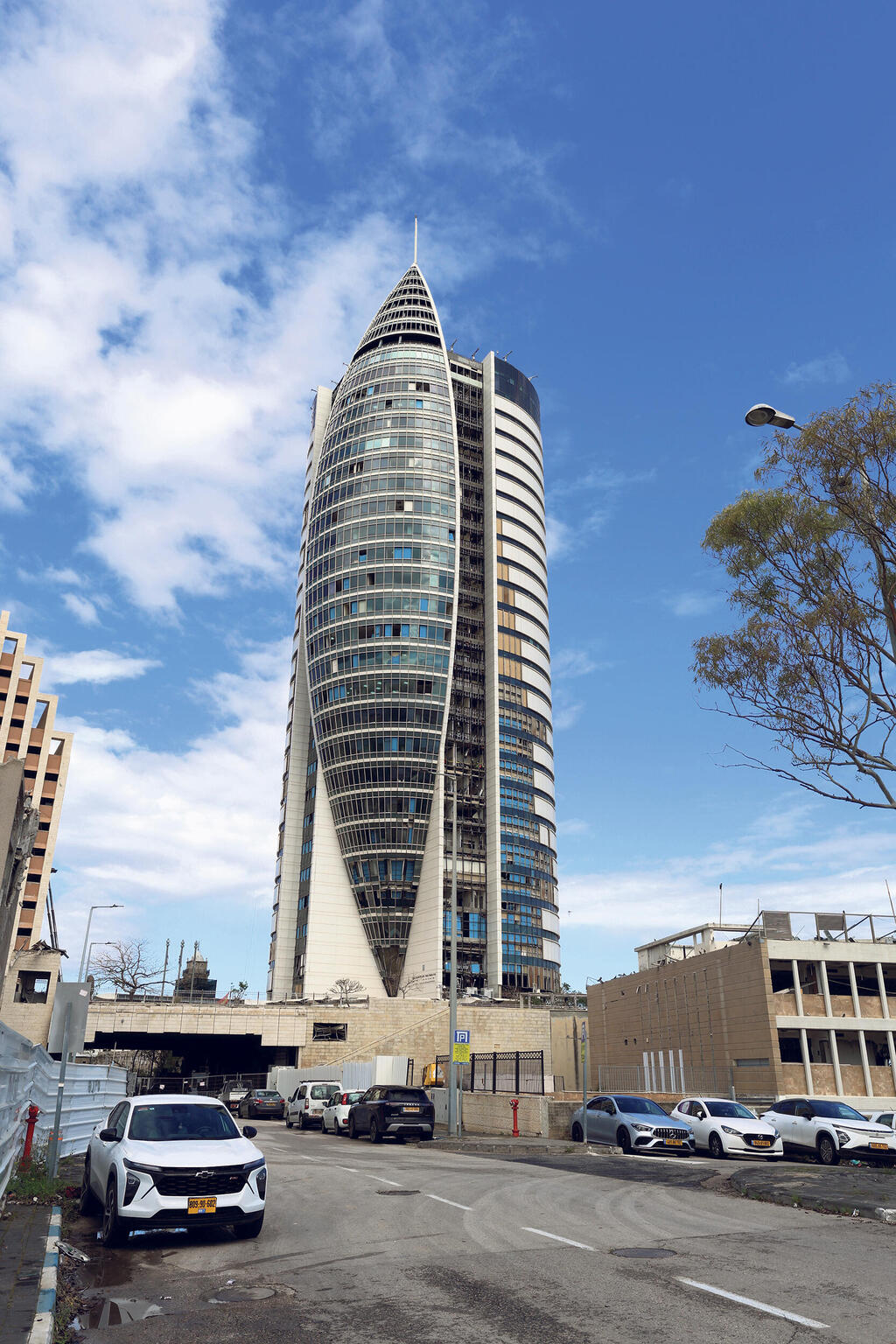
Haifa’s HaMifras Tower
(Elad Gershgoren)
In some cases, current policy leads to impractical outcomes. In Rehovot, city engineer Dalit Harel cited a damaged building ordered for partial reconstruction despite lacking basic protective infrastructure. “How can residents return to a building without safe rooms?” she asked. “Urban renewal would be a more appropriate solution.”
Municipal frustration is also evident in Bnei Brak. CEO Israel Irenstein said that repeated delays in approving budgets have stalled projects. “We receive partial advances and endless meetings, but no final approvals,” he said. “Until funding is confirmed, we cannot begin construction.” He also noted that disrupted planning processes and frequent changes in personnel have forced municipalities to restart procedures multiple times.
Private residents report similar difficulties. One apartment owner in Tel Aviv said initial promises of a quick return proved unrealistic, while compensation assessments underestimated structural damage. Others say compensation for personal property falls far short of actual losses. “What we received is a fraction of the real value,” said one resident. “It doesn’t come close to covering the damage.”
Officials acknowledge that some oversight is necessary to prevent abuse, but concede that bureaucratic inefficiencies have slowed legitimate claims and delayed recovery.
Across multiple cities, including Haifa, Ramat Gan, Bat Yam, Holon, Tel Aviv, Petah Tikva, Rehovot, Ness Ziona, Be’er Sheva, and Bnei Brak, the picture is consistent: while minor repairs have largely been completed, complex reconstruction projects remain stalled. Thousands of residents are still displaced, and in some cases, full recovery is expected to take years.
A proposed law aimed at accelerating rehabilitation through urban renewal could provide a solution. The legislation would grant local authorities greater planning powers, streamline approval processes, and introduce mechanisms such as buyout options and state-backed financing. It would also lower the approval threshold for projects to 51% of residents, reducing delays.
3 View gallery
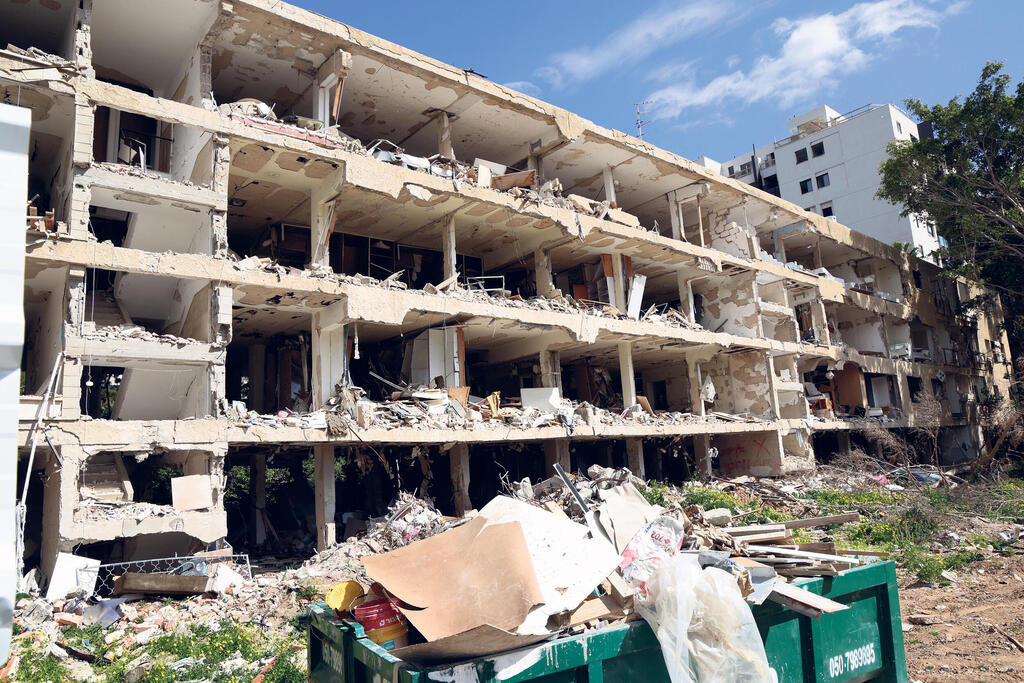
Senior living facility hit in Tel Aviv
(Yariv Katz)
However, the legislation remains pending, and many argue it should have been enacted years ago. Without it, large-scale reconstruction efforts risk remaining stuck in bureaucratic limbo.
The broader lesson is clear: the current crisis has exposed fundamental weaknesses in Israel’s approach to post-war reconstruction. Without structural reform, similar failures are likely to repeat in future conflicts.