

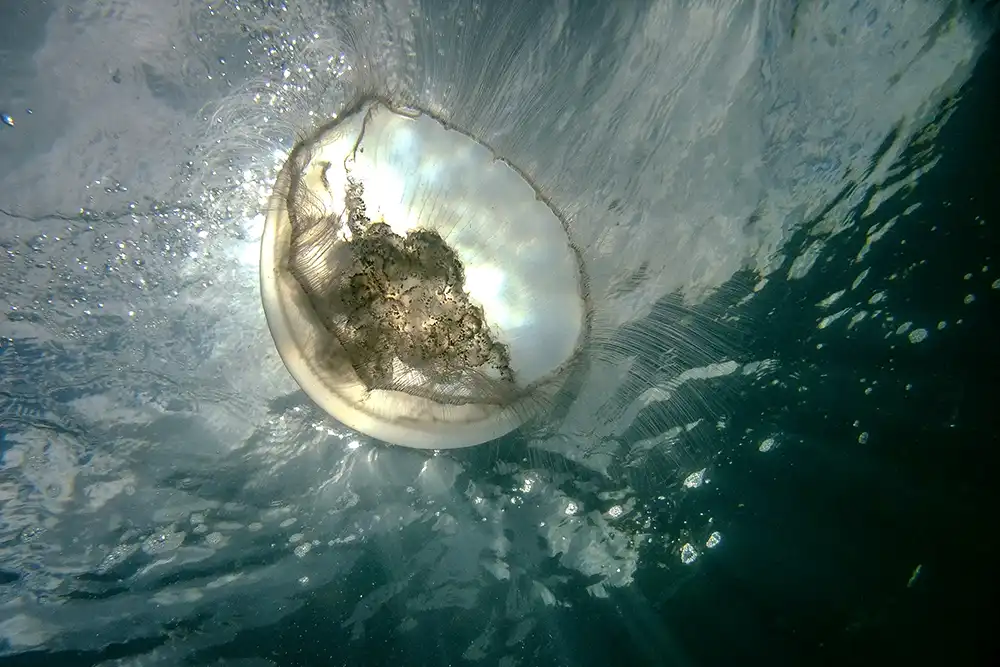
 Moon jellyfish were the most commonly sighted jellyfish over 2024-2025 (Photo: Peter Bardsley/MCS)
To help scientists learn more about how the UK’s waters are changing, this summer the Marine Conservation Society (MCS) is asking volunteers to report jellyfish sightings as part of its nationwide recording initiative, JellyWatch.
Because jellyfish are highly sensitive to their environments, their presence and abundance can reveal changes in water temperature, currents, salinity and pollutants, making them natural indicators of ocean health.
Although sightings are most common during the warmer months, reports to the database can be made at any time of year, enabling the JellyWatch programme to capture how jellyfish populations change across the seasons.
As they grow in numbers in the UK’s waters, the population blooms are often accompanied by leatherback turtles, which migrate to UK waters in the summer to feed almost exclusively on jellyfish blooms.
‘Jellyfish have a bit of an image problem, but they’re actually one of the most fascinating and important animals in our seas – and in my opinion, one of the most beautiful and awe-inspiring,’ said Anna Bunney, Citizen Science Programme Developer at the Marine Conservation Society.
‘They give us vital clues about what’s happening beneath the surface, from warming waters to changes in marine food webs. By getting outside and spotting jellyfish this summer, people can play a direct role in helping us to build a clearer picture of how our ocean is changing – and if you do see large numbers of jellyfish, keep an eye out – it could also mean leatherback turtles aren’t far behind.’
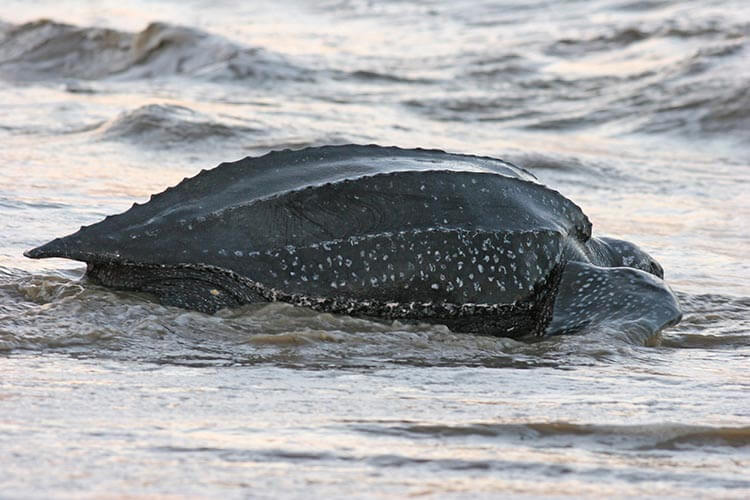 Leatherback turtles follow the jellyfish to UK waters (Photo: Shutterstock)
Data from the MCS, which has been recording jellyfish and turtle sightings for more than 20 years, showed the two most recorded species in the UK last year were moon jellyfish (24 per cent of reported sightings) and barrel jellyfish (23 per cent), which both have mild, harmless stings.
Sightings of both moon and barrel jellyfish peaked in July. Barrel jellyfish numbers also rose sharply from the previous year and were most commonly recorded along the west coast of the UK, while moon jellyfish were most frequently spotted around the south-west and south-east coasts.
As sea temperatures rise in spring, jellyfish respond by forming blooms, and their arrival in UK waters is often one of the first signs that summer has begun.
The warmer water provides ideal conditions for jellyfish to reproduce, allowing more young jellyfish to develop and contributing to larger, more frequent blooms – this is reflected in the charity’s data, which saw a 68 per cent rise in moon jellyfish blooms during the marine heatwave of 2025.
As well as indicating warmer waters, jellyfish blooms are more likely to occur in certain conditions, including excess nutrients and overfishing of competitor species.
They can also reveal hidden pollutants in the waters, such as metals and microplastics – because they readily accumulate substances from the water column, moon jellyfish have been used in scientific studies as indicators of mercury and other pollutants in marine environments.
Each jellyfish sighting helps scientists track changes in the UK’s waters in our ocean and uncover the wider impacts of human activities on marine life.
MCS is asking anybody visiting the beach to report jellyfish sightings – whether they be washed ashore or still in the water – through the online form below. A handy guide to jellyfish ID is available to download from the MCS website.
Some caution is urged – all jellyfish have stinging cells and although most of the species found in UK waters are relatively harmless, some can inflict a painful sting, even when stranded.
Volunteers should avoid touching the jellies and we wary of stray tentacles, and follow NHS guidance if stung.
Beachgoers should especially be on the lookout for Portuguese man o’ war, a type of siphonophore that looks like jellyfish, with long tentacles and a sting that can be dangerous to humans.
For more information, downloadable resources and to report a sighting, head to www.mcsuk.org/sightings
Related articles