
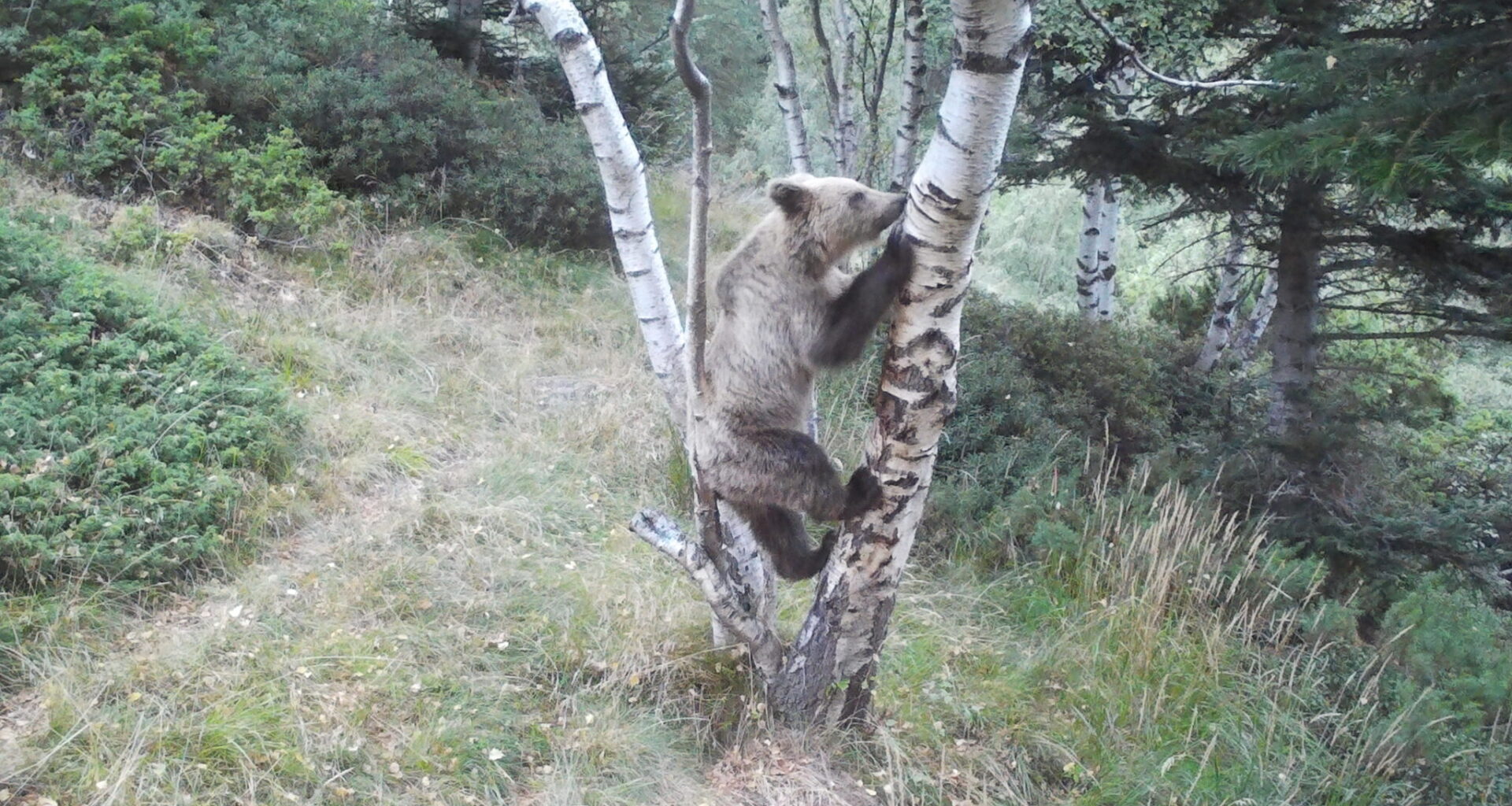
The annual census of brown bears in the Pyrenees mountain range of Spain, France and Andorra estimated that 130 bears are now living in the region with an average annual population growth rate of more than 11% over the last 18 years.
The subpopulation of Pyrenees brown bear (Ursus arctos arctos) has been steadily increasing in the mountain range since it reached near extinction in the mid-1990s, when the local population reached a low of just five individuals.
Since 1996, 11 bears have been reintroduced from Slovenia to help save the population. But just three of those bears had most of the babies: 85-90% of the Pyrenees bears alive today descend from two females and one male. Inbreeding is a growing risk as the bears enter their third or fourth generation with few unrelated bears available to mate with.
“We can no longer turn a blind eye, it is urgent to stop inbreeding, at the risk that it will become uncontrollable and permanently harmful to the population of brown bears,” Alain Reynes, director of Pays de l’Ours – Adet, a French conservation organization focused on bears, wrote in a statement. “There is still time, but inaction is no longer an option.”
In 2025, eight cubs were born, down from 24 cubs the year before. Only two are not related. The other identified cubs have an inbreeding rate of 20-28%, similar to that of first cousins.
The inbreeding rate shows us high levels of consanguinity which may affect the future of the species by lowering the birth rate and making cubs more vulnerable and susceptible to disease,” Pau Vázquez, a spokesperson with ADLO Pirineo, a Catalan bear and wolf association, told Mongabay by email. “This decline in the birth rate is a warning.”
Pays de l’Ours has suggested that the French government introduce an additional 30 bears into the Pyrenees by 2040 to improve the subpopulation’s genetic health.
Researchers estimated the 2025 population and determined the inbreeding problem using genetic analyses of 801 hair and excrement samples collected across the Pyrenees Mountains of France, Spain and Andorra.
They also mapped the location of the bears: While 30% of them appear to cross national borders, 41% were detected only in France and 29% only in Spain or Andorra.
Another concern closely monitored by the government agencies are attacks on cattle and beekeeping facilities. A total of 321 bear attacks on cattle were counted across the Pyrenees in 2025, mostly in France.
According to ADLO Pirineo, Spain had 48 bear attacks, 32 on cattle and 16 on beehives in 2025. The local governments compensated farmers for losses, spending around 12,500 euros ($14,420) for injury and losses to cattle and another 3,412 euros ($3,940) paid for damages to beekeeping.
Banner image: Young bear seen via a camera trap. Image courtesy of ADLO Pirineo
