
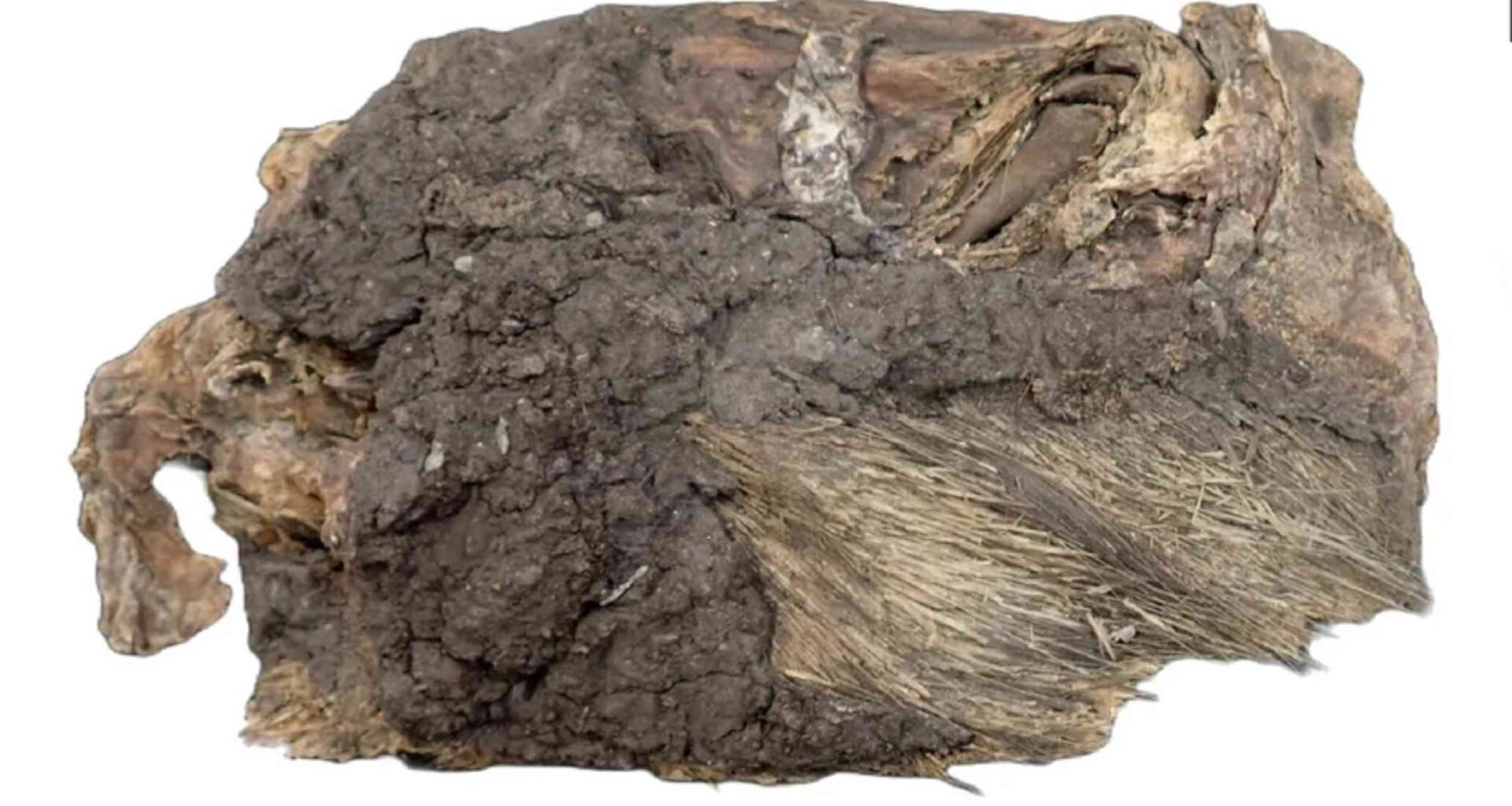
Scientists have identified a 3,000-year-old porcupine mummy preserved in permafrost and reconstructed its genetic sequence.
The finding extends direct evidence of porcupines into the far northwest and shows that frozen ground can preserve younger animals, not only ice age species.
Getting DNA from a porcupine mummy

Inside a dried slab of skin roughly 12 by 8 inches, coarse hairs and flesh preserved a clear biological record of the animal.
By analyzing that tissue, Sofia Selvatici at Sapienza University of Rome documented that the specimen belonged to the North American porcupine.
That identification establishes the first known mummified remains of this species from ancient permafrost deposits.
The result fixes both the animal and its place in time, setting up the unexpected age revealed next.
Age broke expectations
The biggest surprise was not the species but the clock, which placed the animal around 3,000 years old.
Two rounds of radiocarbon dating, which estimates age from radioactive carbon left in tissue, landed almost on top of each other.
Researchers had expected a relic from the last ice age, because the same mining ground often yields mammoths, bison, horses, and sheep.
Finding a much younger mummy meant the frozen ground had preserved a very different chapter of Yukon history.
Porcupine mummy’s DNA gave answers
Millions of DNA fragments then sorted the animal from a crowd of likely mammals that lived in North America.
Against 18 reference genomes, porcupine DNA won easily, with 21,454 reads landing on Erethizon dorsatum and far fewer elsewhere.
A separate metagenomic check, which sorts mixed genetic scraps by species, pointed to the same animal again.
Using two routes to the same answer mattered, because the flesh had lost the obvious body features that usually settle identification.
What the genome shows
From that tissue, the team rebuilt a mitochondrial genome, the small ring of DNA inside cell powerhouses.
Coverage reached 98%, enough to recover nearly the entire sequence and compare it with the only other full one known.
Its place in the phylogeny, a family tree built from DNA differences, set the mummy squarely among living porcupines.
Yet 440 DNA changes hint that western porcupines may have followed a path somewhat separate from populations farther east.
A male individual
Another puzzle fell when chromosome counts showed that the mummy was male, despite the species being hard to sex.
Living porcupines hide much of their anatomy, so DNA offered a cleaner route by comparing X and Y patterns.
Because the sample carried only low amounts of the animal’s own DNA, that agreement across several tests mattered.
That extra certainty lets researchers talk about one real animal, not just anonymous tissue in a museum drawer.
Forests changed the map
Porcupines likely reached Yukon only after spruce-rich forest moved north at the end of the last glacial era.
Those woods mattered because porcupines eat bark, needles, buds, and leaves, and they spend much of life climbing.
Open grass-and-shrub country would have offered little cover and fewer trees, making the far northwest a poor long-term home.
That ecological timing helps explain why this mummy appears thousands of years after the great ice age mammals.
Signs of a newcomer
“Fossil records of porcupines are virtually absent from the region,” wrote Sofia Selvatici, a Sapienza University of Rome researcher and first author.
Even so, older droppings from caves in Alaska and northern Yukon suggest the animal arrived at least 4,000 years ago.
That earlier sign fits the new mummy, which shows porcupines were already part of northern forest wildlife by 3,000 years ago.
For now, the record still looks thin, which keeps the exact timing and route of that northward spread unsettled.
People and Ts’ey
People were already living in Yukon when porcupines moved into the region, so this was a shared northern story from the start.
For the Tr’ondek Hwech’in, a First Nation in Yukon, the porcupine, known as Ts’ey in the Hän language, matters as food, medicine, and a source of quills for intricate clothing and art.
Older quillwork traditions used berry dyes and careful folding, wrapping, and stitching that turned sharp barbs into decoration.
Placing this animal in that human landscape gives the mummy cultural weight, not just scientific value.
Young mummies matter
Most Arctic animal mummies come from colder stretches of the ice age, not the relatively mild span that followed.
That pattern makes this young porcupine notable, because it shows soft tissue can sometimes survive in post-ice-age ground too.
Rapid burial probably helped by shutting out scavengers, oxygen, and decay microbes before the remains broke apart.
As thaw and mining keep exposing old deposits, scientists may find more recent animals that were once written off as impossible.
Why this matters
A ragged piece of hide has become evidence that genes, climate, landscape, and culture can meet in one small animal.
“Additional research is needed to further resolve the history of colonization and dispersal,” wrote Selvatici and colleagues in the study.
The study is published in Scientific Reports.
—–
Like what you read? Subscribe to our newsletter for engaging articles, exclusive content, and the latest updates.
Check us out on EarthSnap, a free app brought to you by Eric Ralls and Earth.com.
—–