
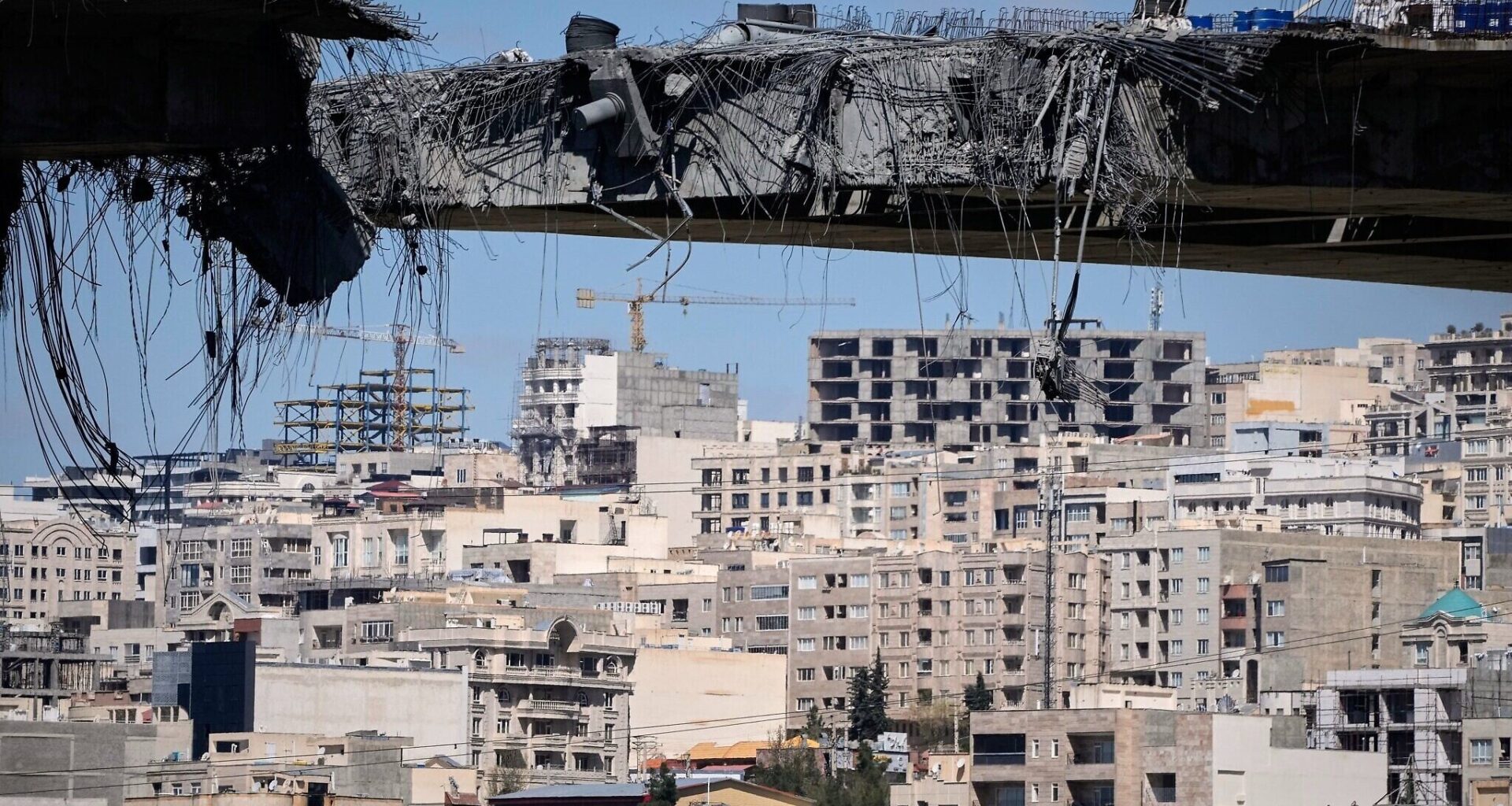
Current mediation efforts led by regional countries, including Pakistan, to broker a ceasefire between the United States and Iran have reportedly reached a dead end, as the war against the Islamic Republic was set to enter its sixth week, approaching the timeline US President Donald Trump set for the conflict.
Iran has officially told mediators that it is unwilling to meet US officials in Islamabad in the coming days and considers US demands unacceptable, The Wall Street Journal reported on Friday, adding that Turkey and Egypt are seeking a way out of the diplomatic cul-de-sac and looking at alternative sites to host the talks, such as Qatar or Istanbul.
But Qatar has resisted efforts by the United States and Middle Eastern countries to serve as the key mediator in ceasefire talks between the US and Iran, the Journal also reported, complicating the push to move forward with negotiations on ending the war.
Citing officials with the matter and mediators, the report said Qatar, which has served as a mediator with the Taliban, and also in negotiations to end the Israel-Hamas war, told the US last week that it isn’t eager to mediate in these negotiations.
The reports came as the war continued to escalate, as it was set to enter its sixth week. Friday marked the first time since February 28 that the US lost an aircraft in Iranian territory, after Iran shot down an American F-15E Strike Eagle fighter aircraft.
Get The Times of Israel’s Daily Edition
by email and never miss our top stories
By signing up, you agree to the terms
One crew member was rescued on Friday, and searches were ongoing for the second after an American F-15E Strike Eagle fighter aircraft was shot down in Iran, according to a US and an Israeli official.
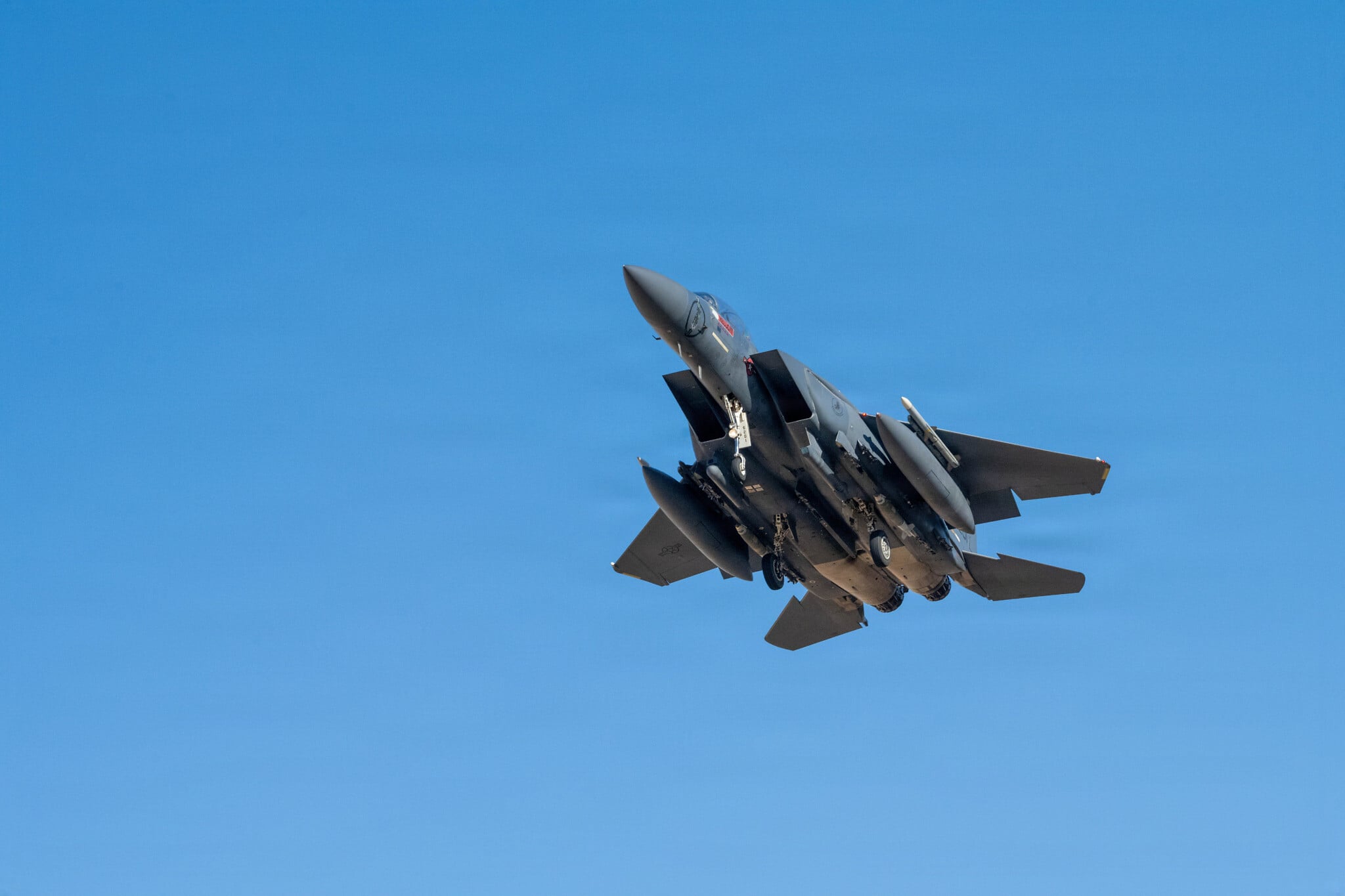
A US Air Force F-15E Strike Eagle aircraft takes off for a mission during Operation Epic Fury, March 9, 2026. (US Air Force photo)
Trump told NBC News that the downing of the jet won’t affect negotiations over ending the month-old conflict with Iran.
“No, not at all. No, it’s war. We’re in war,” Trump told the broadcaster.
Separately, Trump was not yet ready to say what the US will do if the missing crew member shot is harmed, The Independent reported, citing a brief interview with him.
Trump said he could not comment on what his course of action might be if Iranian forces get to the downed airman, The Independent said.
“We hope that’s not going to happen,” Trump said.
The Kan public broadcaster reported Friday that Israel is prepared for another two weeks of war with Iran, noting that the time frame extends past the four to six weeks set by the White House.
Israeli officials told Kan that the war may even extend past two weeks, and preparations are being made for Israel’s Holocaust Remembrance Day, Memorial Day, and Independence Day under fire.
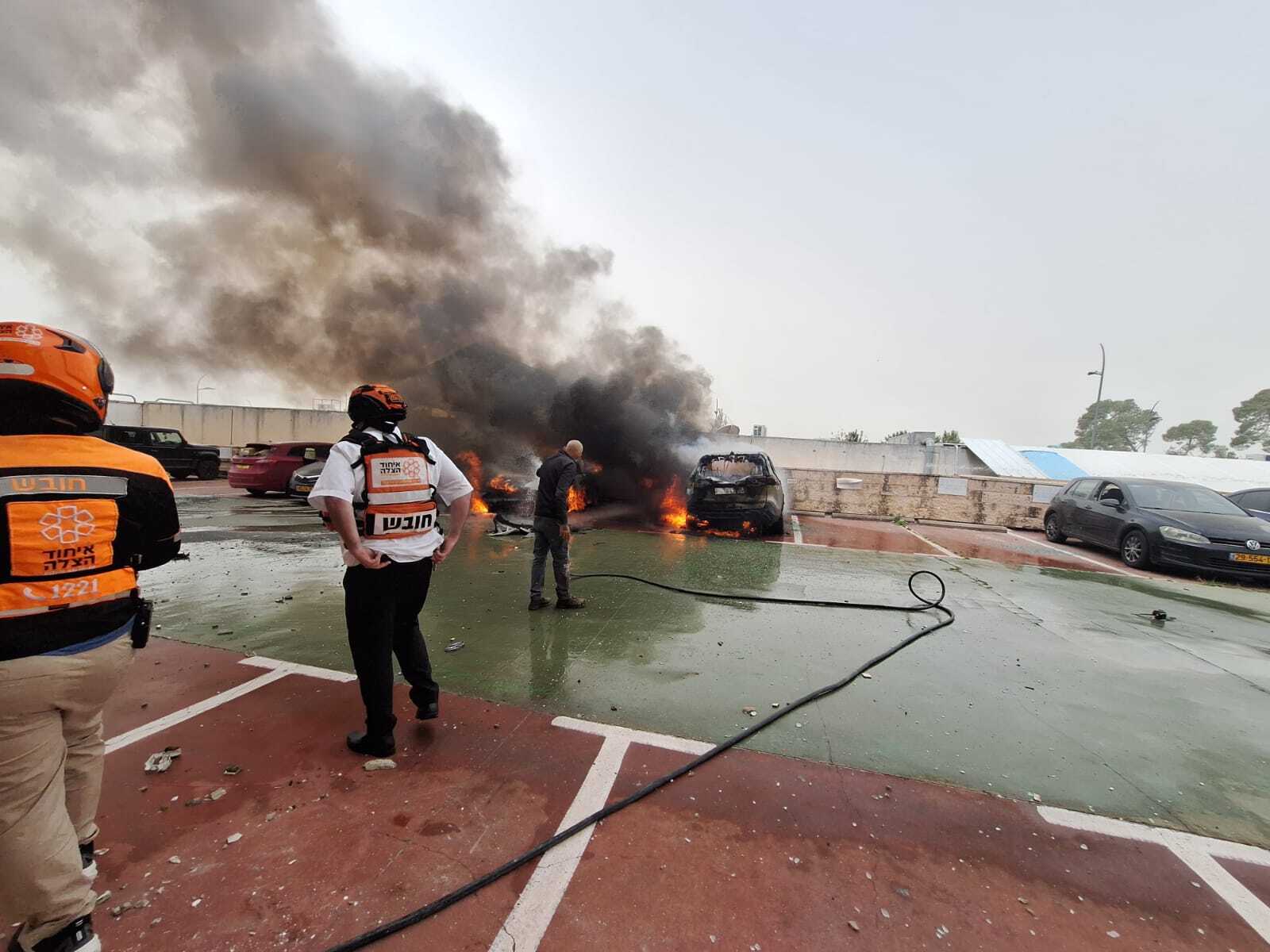
Emergency services respond to a cluster munition impact in Kiryat Ata following an Iranian missile attack on northern Israel, on April 3, 2026. (United Hatzalah)
The US and Israel launched a bombing campaign on Iran on February 28 in a bid to destabilize its regime and destroy its nuclear and ballistic missile programs.
US intelligence warns Iran unlikely to ease Hormuz Strait chokehold
Recent US intelligence reports warn that Iran is unlikely to open the Strait of Hormuz any time soon because its grip on the world’s most vital oil artery provides the only real leverage it has over Washington, according to three sources familiar with the matter.
The finding suggests that Tehran could continue to throttle the strait to keep energy prices high as a means of pressuring Trump to find a quick off-ramp to the war.
The reports also provide the latest indication that the war, intended to eradicate Iran’s military strength, may actually increase its regional sway by showing Tehran’s ability to threaten the key waterway.
Trump has sought to downplay the difficulty of reopening the Strait of Hormuz, which carries a fifth of the world’s oil trade. On Friday, he appeared to suggest that he could order US forces to reopen the passage.
“With a little more time, we can easily OPEN THE HORMUZ STRAIT, TAKE THE OIL, & MAKE A FORTUNE,” he posted on his Truth Social platform.
But analysts have long warned that trying to use force against Iran, which controls one side of the strait, could prove costly and draw the US into a protracted ground war.
“In the attempt to try to prevent Iran from developing a weapon of mass destruction, the US handed Iran a weapon of mass disruption,” said Ali Vaez, director of the Iran Project at the International Crisis Group, a conflict-prevention organization.
Tehran, Vaez said, understands its ability to drive world energy markets through its chokehold on the strait “is much more potent than even a nuclear weapon.”
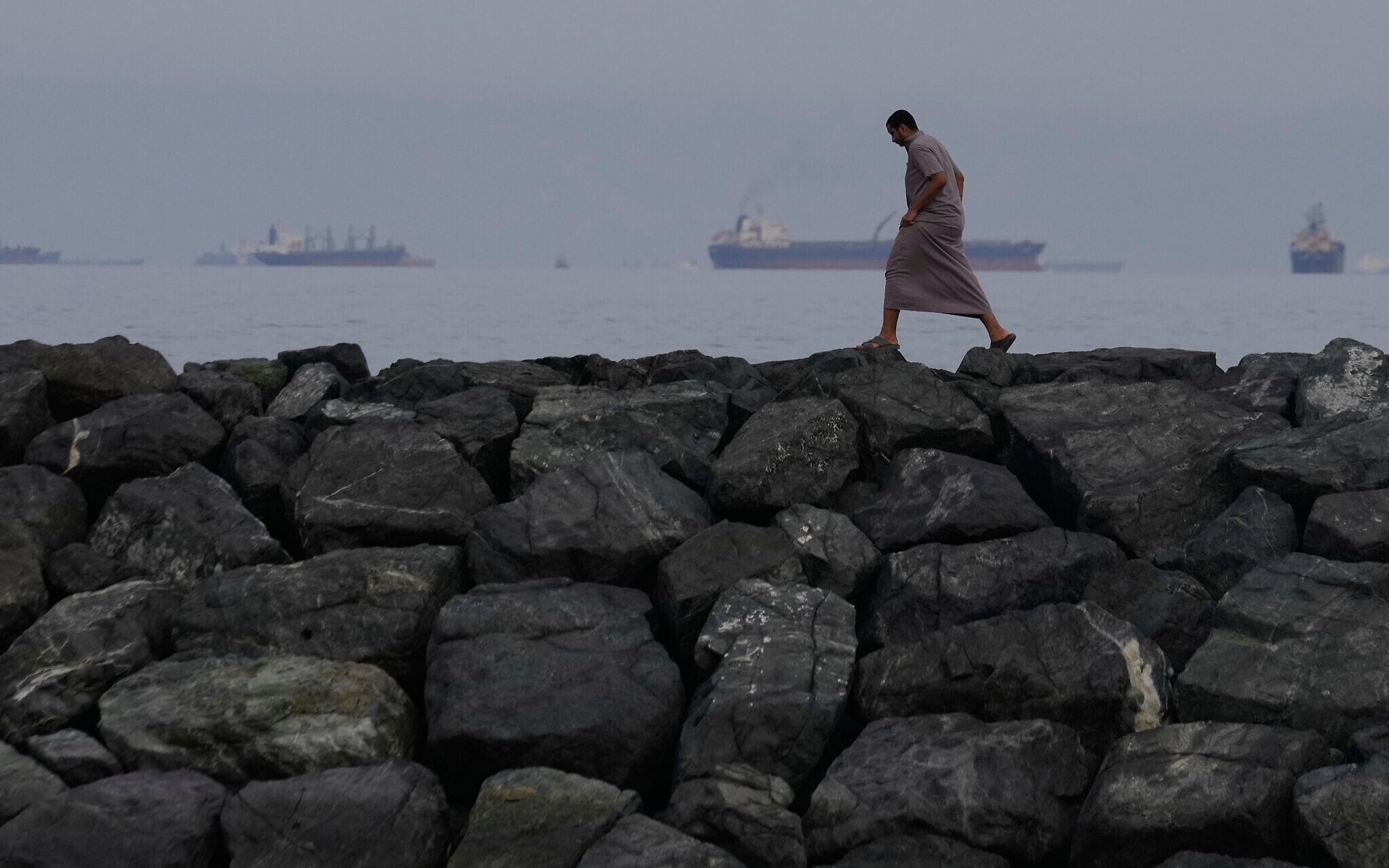
A man walks along the shore as oil tankers and cargo ships line up in the Strait of Hormuz, seen from Khor Fakkan, United Arab Emirates, March 11, 2026. (AP Photo/Altaf Qadri)
Trump’s stance on potential US involvement in reopening the strait has shifted. On one hand, he has made ending Iran’s chokehold a precondition for a ceasefire, but then he called on Gulf oil-dependent countries and NATO allies to take the lead in reopening it.
A White House official, who requested anonymity, said Trump is “confident that the strait will be open very soon” and has been clear that Iran would not be allowed to regulate waterway traffic after the war.
But the official noted that Trump also has said that other countries “have far more at stake in preventing this outcome” than the US.
The CIA did not immediately respond to a request for comment.
Iran, the recent intelligence reports warn, is unlikely to surrender that leverage any time soon, according to the three sources. They declined to elaborate on which agencies produced the assessments.
“It is certainly the case that now that Iran has tasted its power and leverage over the strait, it won’t soon give it up,” said one of the sources. All three requested anonymity to discuss the intelligence reports.
Even if US forces seize the southern Iranian coast and islands, the IRGC could attack them and maintain control of the waterway with drones and missiles launched from deep inside Iran, experts say.
“All it takes to disrupt traffic and deter vessels from passing through is one or two drones,” said Vaez.
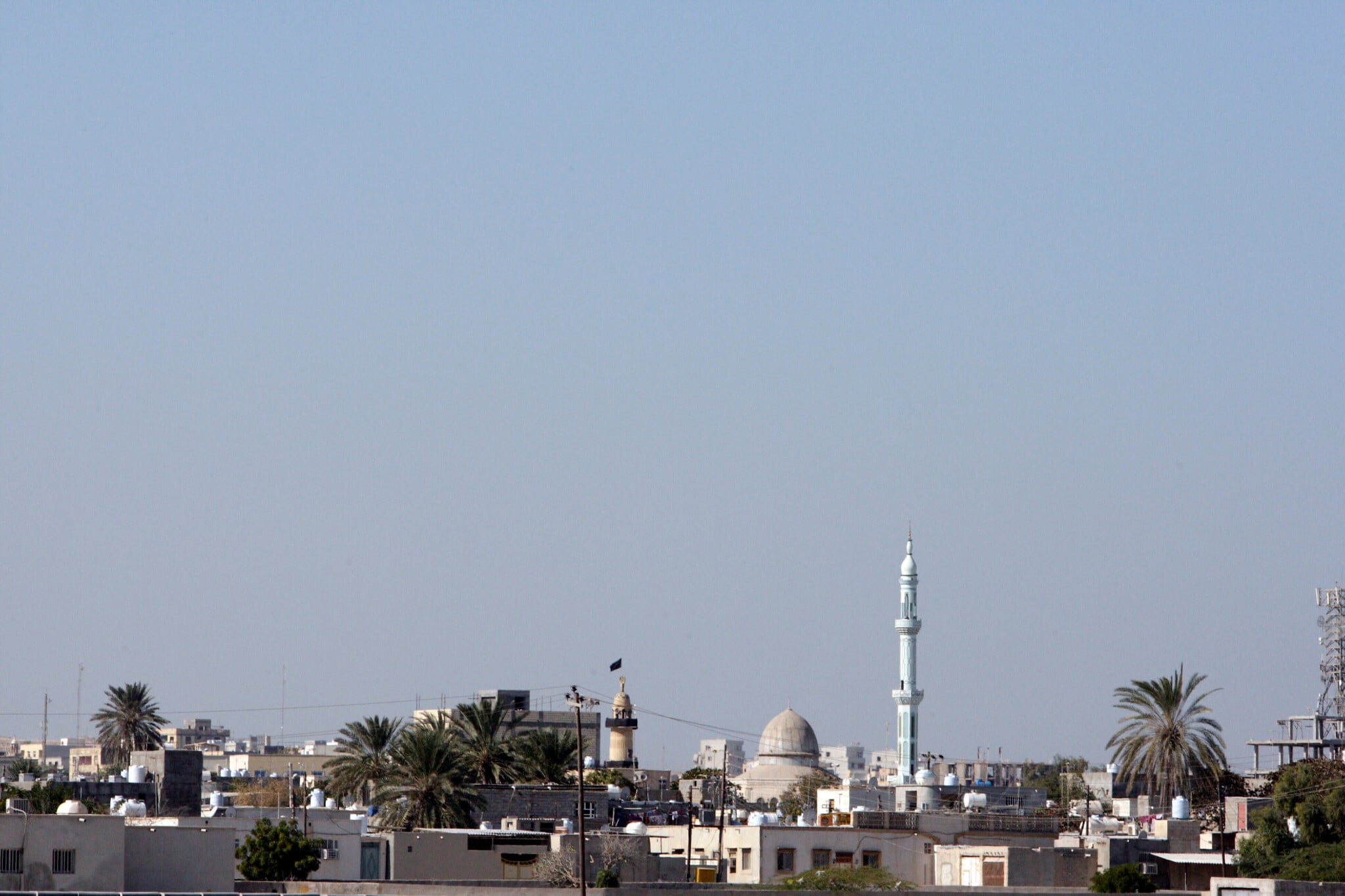
A view of the island of Qeshm, which oversees the strategic waterway of the Strait of Hormuz, Iran, on December 24, 2011. (AP Photo/Vahid Salemi, File)
Some experts said that even after the war, Iran is unlikely to give up its ability to regulate traffic through the strait because it will need to rebuild, and charging commercial shipping passage fees would be one means of raising reconstruction funds.
Tehran “is going to look to maintain the leverage that they have rediscovered by disrupting traffic” through the strait, former CIA director Bill Burns said in a Foreign Affairs magazine podcast on Thursday.
Iran, he said, will look to use its ability to throttle the waterway to win “long-term deterrence and security guarantees” in any peace deal with the US and to gain “some direct material benefits” like charging passage fees to fund its post-war recovery.
“That,” he said, “sets up a really difficult negotiation right now.”
In the meantime, three Omani-operated tankers, a French-owned container ship, and a Japanese-owned gas carrier have crossed the Strait of Hormuz since Thursday, shipping data showed, reflecting Iran’s policy to allow passage for vessels it deems friendly.
Oil and commodities markets are keen for signs that traffic is resuming. Several tankers and container ships have managed to escape the blockade in previous weeks, but activity was swiftly followed by days of complete paralysis.
A container ship owned by France’s CMA CGM transited the Strait on Thursday, the day that French President Emmanuel Macron said that only diplomatic efforts, not a military operation, could open the Strait.
The French vessel changed its Automatic Identification System destination to “Owner France” before entering Iranian waters, signalling its nationality to Iranian authorities.
The vessels appear to have switched off their AIS transponders during the crossing because their signal disappeared on vessel-tracking data.
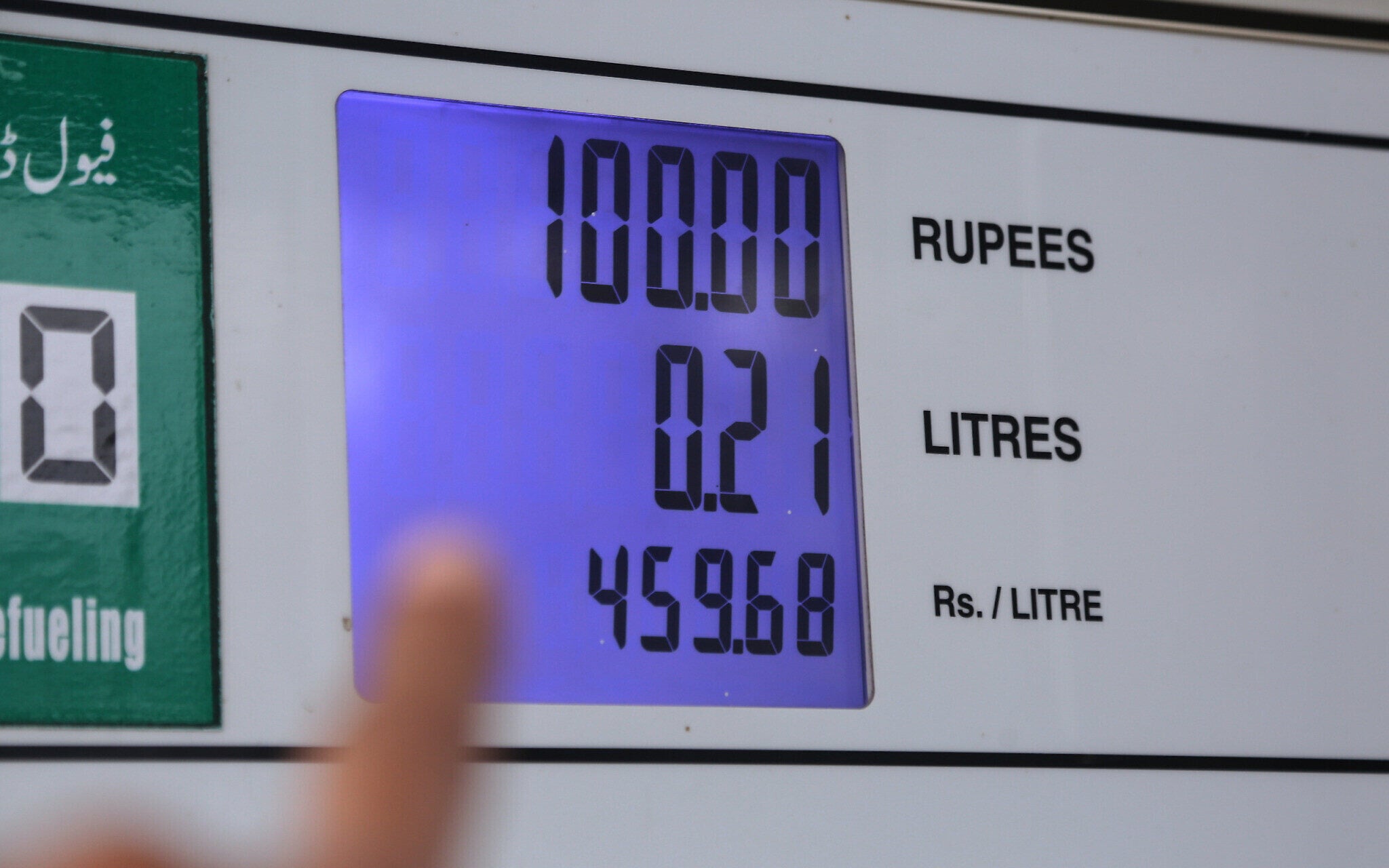
Illustrative: A motorcyclist points to the display at a fuel station as he buys fuel after the government increased fuel prices amid surging global oil prices due to the Iran war, in Peshawar, Pakistan, April 3, 2026. (AP Photo/Muhammad Sajjad)
Two very large crude carriers and one LNG tanker operated by Oman Shipping Management also exited the Gulf on Thursday, according to MarineTraffic and LSEG data.
Oman, which mediated talks between Iran and the United States before the attacks, has criticized the launch of strikes while the talks were ongoing.
Japan’s Mitsui OSK Lines said on Friday that the LNG tanker, Sohar LNG, which it co-owns, had crossed the Strait, making it the first Japan-linked vessel and the first LNG carrier to do so since the conflict began.
Its spokesperson declined to tell Reuters when the passage occurred or whether negotiations were required.
As of early Friday, around 45 ships owned or operated by Japanese companies remained stranded in the region, according to Japan’s transport ministry.
Another Mitsui-owned LPG tanker, Green Sanvi, left the Gulf via Iran’s territorial waters earlier on Friday, according to the shipping data.
The India-flagged ship signalled its destination as “India ship India crew.”
Also, Panama-flagged Danisa, a very large gas carrier, left the Gulf via the same route, heading to China, the data showed.