
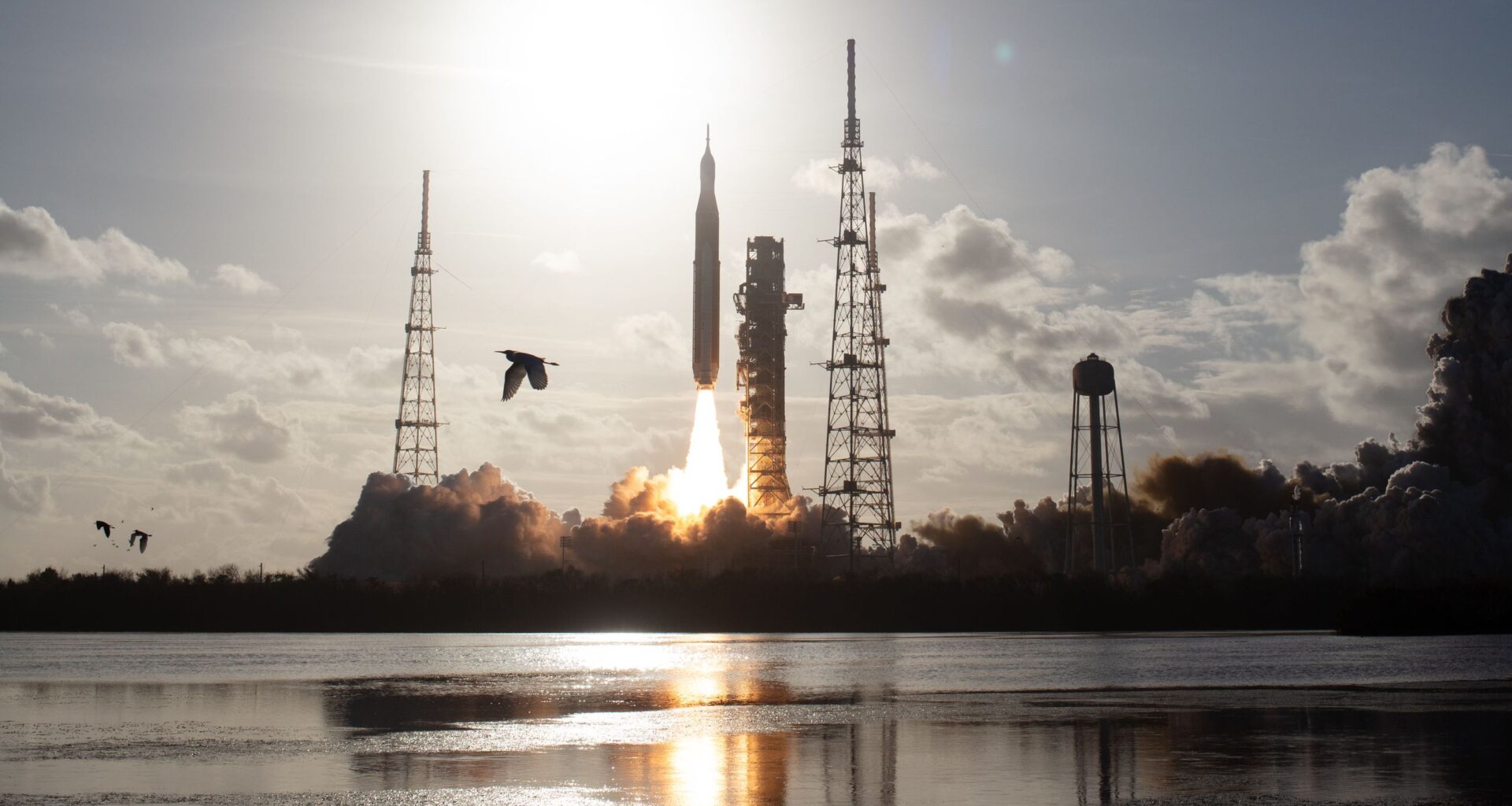
NASA has done something many people do: strapped on a GoPro when about to do something really cool.
More than 50 years have passed since humans have traveled to the moon for the sake of science – but beyond the space tech itself, the cameras the astronauts are using aboard Artemis II are wildly different than the Hasselblads that were abandoned on the lunar surface in 1969.
Between the GoPros and smartphones to the DSLRs and mirrorless cameras aboard the first manned mission towards the moon in over 50 years, the list of cameras aboard Artemis II reads nearly like a dossier on modern camera categories. It begs the question, could Artemis II be the most photographed human spaceflight in history?
Article continues below
You may like

A line of photographers prepare remote-operated cameras for the Artemis II launch (Image credit: NASA/Bill Ingalls)
There are at least 28 cameras aboard – and strapped to the outside – of the Orion for the Artemis II mission. That list includes cameras mounted to the spacecraft’s exterior and interior, as well as handheld cameras that the four astronauts aboard will use. (The unmanned Artemis I used 24 cameras.)
NASA astronauts trained with the Nikon D5. While it may seem strange to pack a ten-year-old DSLR on such a high-tech space flight, the D5 has already been used in space, so researchers were confident that the D5 could withstand the higher radiation and zero gravity of the space flight.
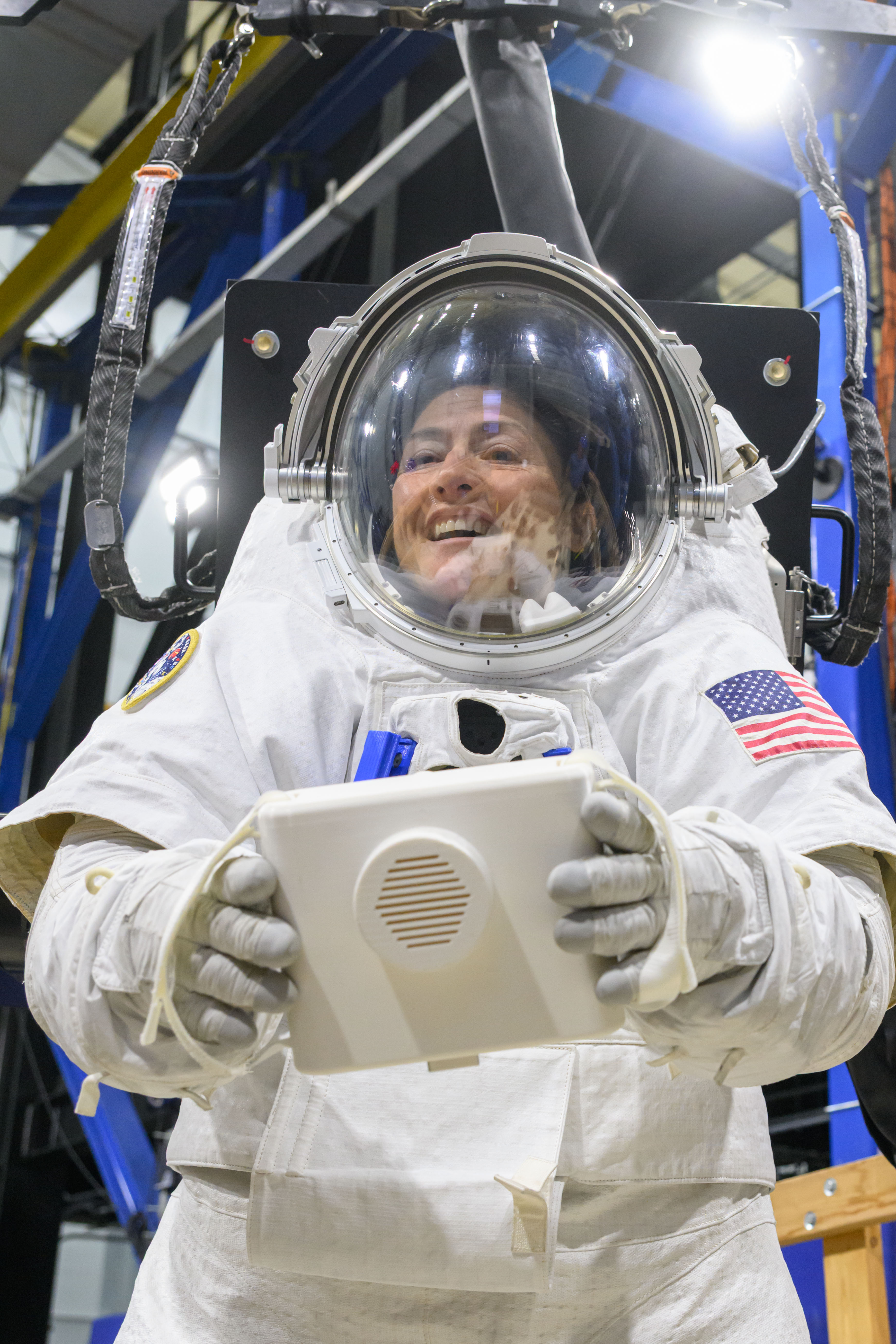
Astronaut Christina Koch with a mock-up camera during training in December 2025 (Image credit: Helen Arase Vargas NASA-JSC)
NASA astronauts did manage to get a more modern camera aboard ahead of the April 1 launch: A mirrorless Nikon Z9. While the Z9 doesn’t have the space history of the D5, Nikon says the Z9 is being prepped to be used aboard the Artemis III mission as well.
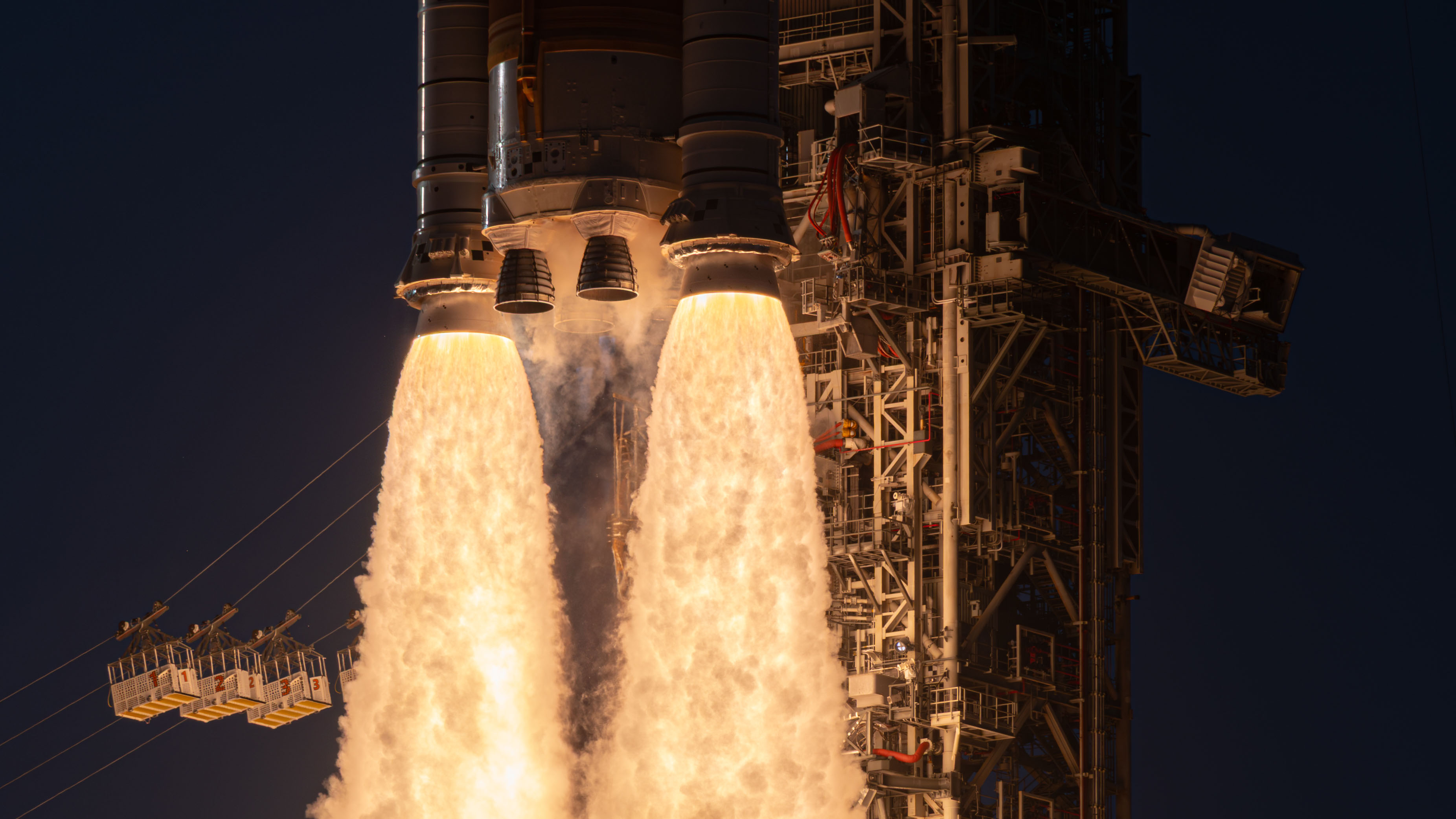
A close-up from the Artemis II launch from a remote operated camera (Image credit: NASA/John Kraus)
GoPro says that multiple action cameras are part of the Artemis II mission. That includes modified GoPros strapped to the outside of the Orion on the solar array wings, where they’ll record images of the spacecraft, Earth, and Moon. How’s that for a durability test?
The astronauts will also be using GoPros to record daily life aboard the mission, which will be used for a National Geographic project called Return to the Moon. National Geographic helped train the astronauts on using the POV cameras, so the four humans aboard will not only be filling their NASA roles but also acting as filmmakers during the duration of the approximately 10-day space flight.
Earlier this year, NASA approved the use of personal smartphones in space – marking Artemis II one of the first missions where astronauts also brought smartphones.
The Artemis crew tossing around their iPhones, floating in zero gravity 😂 https://t.co/8Xzjm5Njgz pic.twitter.com/mjghv2fz1IApril 2, 2026
It’s unclear yet if the 28+ cameras aboard the Orion for the Artemis II mission are a space record – but I suspect by the completion, the mission could be one of the most documented human moon missions in history. After all, the last time humans orbited the moon in 1972, astronauts were still using film.
The archives for all of the Apollo missions combined contain around 8,400 images. I wonder how many images and videos the four astronauts aboard the Artemis II will take?
Browse the best cameras for astrophotography.